
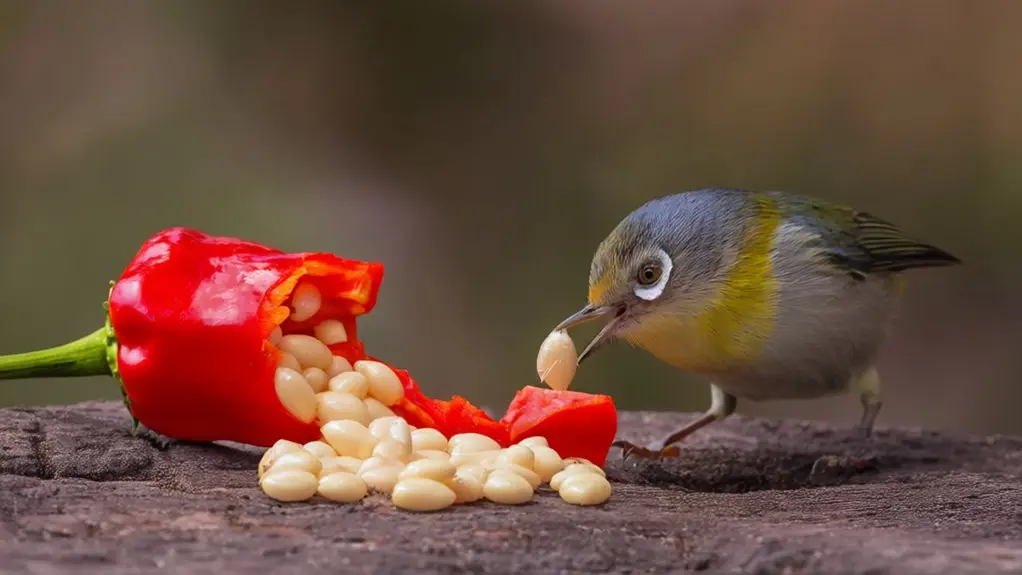
You can safely offer your bird small amounts of pepper seeds since they lack capsaicin, the heat compound found in pepper flesh. This makes the seeds minimally toxic. However, feeding too many seeds may cause digestive upset because of their fiber content.
So, think of them as occasional snacks, not staples. Be sure to avoid seeds from spicy peppers like jalapeños. And keep an eye out for any signs of discomfort.
Understanding these precautions helps guarantee your bird stays healthy and comfortable with peppers in their diet. Just a little care goes a long way!
Are Peppers and Pepper Seeds Safe for Birds?
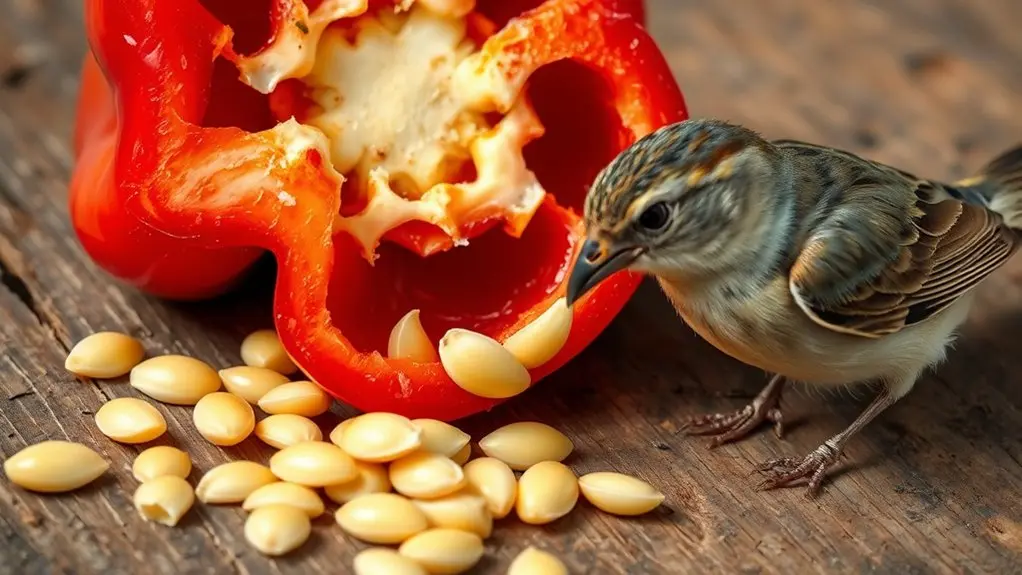
Although peppers contain capsaicin, the compound that gives them their heat, pepper seeds themselves do not, making them generally safe for birds to eat in small amounts. You’ll find seeds are non-toxic and don’t provoke the spicy sensation associated with the pepper’s flesh.
However, feeding birds too many seeds can lead to digestive upset, as their digestive systems may struggle with excess fiber or volume. It’s wise to treat pepper seeds as an occasional snack rather than a staple.
When introducing seeds into a bird’s diet, watch closely for any signs of discomfort or adverse reactions. This cautious approach guarantees you support their health while allowing them to enjoy this unique, non-toxic treat safely.
What Types of Peppers Can Birds Eat?
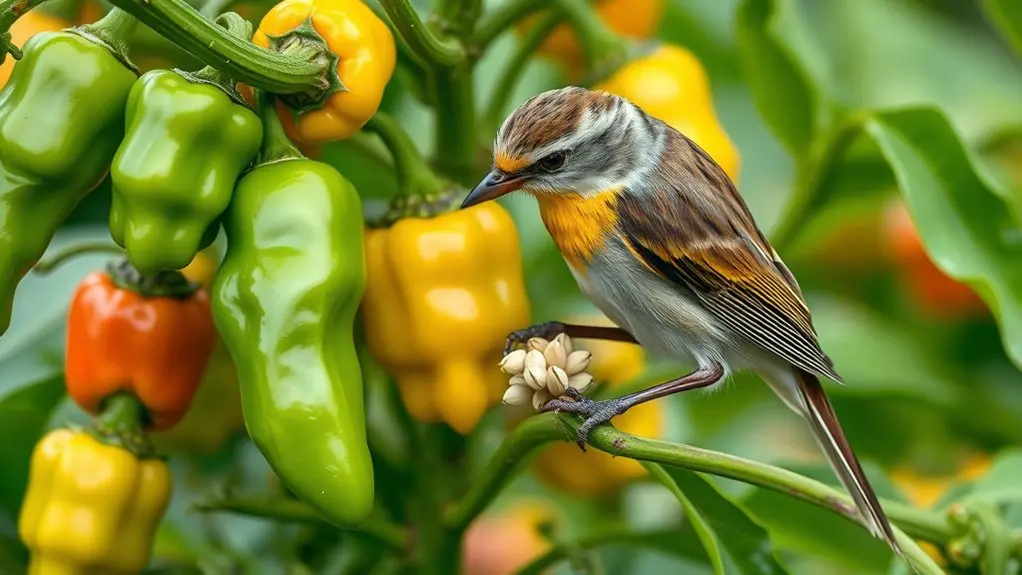
When selecting peppers for your birds, you should focus on varieties low in capsaicin, such as sweet bell peppers. These pose minimal risk to their digestive systems. Sweet bell peppers provide essential nutrients without causing irritation.
Mild peppers, like banana peppers, are generally safe in moderation. On the other hand, hot peppers contain capsaicin, which can harm birds.
| Pepper Type | Capsaicin Level | Safety for Birds |
|---|---|---|
| Sweet Bell | None | Safe, nutritious |
| Banana Pepper | Low | Safe in moderation |
| Jalapeño | High | Avoid |
| Cayenne | High | Avoid |
Just make sure the peppers are fresh and pesticide-free to keep them safe and nutritious for your feathered friends.
Pepper Varieties Birds Should Avoid
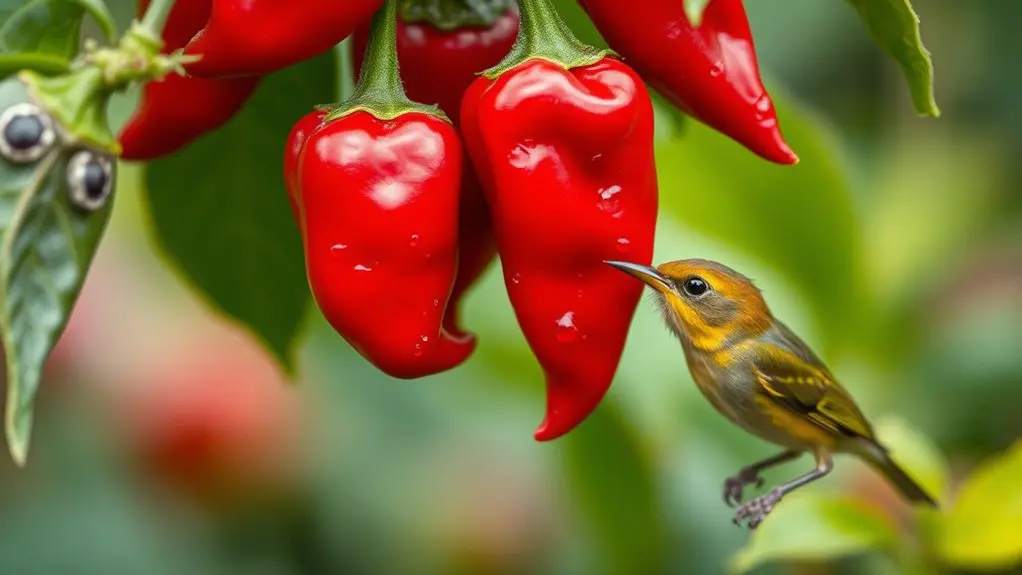
While some peppers offer safe nutritional benefits to birds, others pose significant risks because of their chemical properties. You should avoid feeding your bird seeds from spicy pepper varieties. These contain capsaicin, a compound that can cause irritation and digestive distress.
Here are three pepper varieties to avoid:
- Cayenne and Jalapeño seeds – They’ve high capsaicin levels that cause discomfort and possible toxicity.
- Seeds from dried or processed hot peppers – The capsaicin concentration increases, which raises the risk.
- Unknown or mixed pepper seeds – Since you can’t be sure about the spice levels, they might cause health problems.
Even if some non-spicy pepper seeds seem safe, eating too many can lead to stomach upset. When you’re unsure, it’s best to keep your bird from eating any pepper seeds to keep them safe.
How Much Pepper and Seeds Are Safe for Your Bird
Since pepper seeds contain compounds that may irritate a bird’s digestive system, you should limit their intake to small, occasional amounts. Even though birds can tolerate some seed consumption, excessive amounts risk gastrointestinal upset due to capsaicin and other irritants.
Offering a few seeds as a treat ensures minimal exposure to these compounds while you keep an eye on your bird’s reaction. Avoid making pepper seeds a regular part of their diet because repeated consumption might lead to digestive discomfort or respiratory issues in sensitive species.
Always watch your bird carefully after introducing pepper seeds, and look out for any signs of distress or unusual behavior. Before adding spicy or seed-based foods, it’s a good idea to consult an avian veterinarian.
They can help you figure out safe amounts based on your bird’s species, size, and health, so you can keep them healthy and happy.
Why Birds React Differently to Spicy Peppers
Because birds lack the specific receptors that detect capsaicin, the chemical responsible for the heat in spicy peppers, you’ll notice they don’t experience the burning sensation that mammals do. This difference comes from the absence of TRPV1 receptors in birds. Mammals use these receptors to sense capsaicin’s irritation.
Birds don’t feel the heat of spicy peppers because they lack the TRPV1 receptors mammals use to sense capsaicin.
Here’s why birds react differently to spicy peppers:
- Birds’ sensory neurons don’t have the TRPV1 receptors that trigger pain in mammals.
- Capsaicin doesn’t activate any neural response in birds, so they don’t feel heat or discomfort.
- This evolutionary adaptation lets birds eat spicy peppers and spread the seeds effectively. Meanwhile, mammals are deterred from eating the fruit.
Understanding this helps explain why spicy peppers rely on birds to disperse their seeds but discourage mammals from being predators. It’s a neat example of how plants and animals evolve together.
Signs Your Bird Is Uncomfortable After Eating Peppers
If your bird shows signs like fluffed feathers, tail bobbing, or excessive preening after eating peppers, it may be experiencing discomfort. You should observe changes in vocalization, such as increased agitation or silence, which signal distress. Gastrointestinal symptoms like diarrhea, vomiting, and lethargy also indicate a negative reaction.
Reluctance to eat or drink often comes with digestive upset. Notice any wing spreading or escape attempts, as these behaviors suggest pain or discomfort.
| Symptom Category | Observable Signs |
|---|---|
| Physical Behavior | Fluffed feathers, tail bobbing, wing spreading |
| Vocalization | Quieter or agitated calls |
| Gastrointestinal | Diarrhea, vomiting, lethargy |
Careful observation helps guarantee your bird’s safety after pepper ingestion. Keep an eye out and don’t hesitate to consult a vet if you’re worried.
How to Introduce Peppers Safely Into Your Bird’s Diet
Although peppers can offer nutritional benefits, you should introduce them to your bird’s diet cautiously by starting with small amounts of seedless, cooked, or finely chopped pieces. This careful approach helps you monitor your bird’s tolerance and digestion effectively.
Follow these steps:
- Remove all seeds and stems to prevent digestive irritation or obstruction.
- Offer a tiny portion initially, watching for any signs of stomach upset, allergic reaction, or behavioral changes.
- Gradually increase the amount only if your bird shows no adverse effects, ensuring peppers remain a moderate part of the diet.
Keep in mind that peppers are rich in vitamin C and antioxidants, which support immune health. But moderation and observation are key to safe dietary introduction.
When Should You Talk to a Bird Expert About Peppers?
Introducing peppers to your bird’s diet requires careful observation, but knowing when to seek expert advice can prevent health complications. You should consult a bird expert immediately if your bird shows gastrointestinal distress, such as vomiting or diarrhea, after ingesting pepper seeds.
If you’re uncertain about the safety of specific pepper varieties for your bird species, don’t hesitate to ask a professional. Additionally, contact a veterinarian if your bird consumes a large amount of seeds and displays unusual behavior or symptoms.
It’s especially important to speak with a specialist before introducing peppers if your bird belongs to a species sensitive to spicy foods.
If you suspect ingestion and are unsure about risks, prompt consultation with an avian expert guarantees accurate assessment and timely intervention.
Frequently Asked Questions
Can Pepper Seeds Affect a Bird’s Feather Color or Quality?
Pepper seeds won’t affect your bird’s feather color or quality because they lack pigments or nutrients that influence pigmentation.
Feather health mainly depends on genetics and a diet rich in carotenoids. So, eating pepper seeds won’t really make a difference.
It’s all about what your bird eats overall and their natural makeup, not just one type of seed.
Do Pepper Seeds Provide Any Nutritional Benefits to Birds?
You won’t find significant nutritional benefits in pepper seeds for birds, as their minimal fats and fiber don’t support essential vitamins or minerals.
Birds’ diets thrive better on specialized seeds like sunflower or millet instead. These seeds provide the nutrients birds really need to stay healthy and energetic.
Can Feeding Birds Pepper Seeds Attract Pests or Wildlife?
Yes, feeding birds pepper seeds can attract pests like squirrels and raccoons. They’re drawn by the scent, so it’s something to watch out for.
You should place feeders strategically and clean them regularly. This helps minimize unwanted wildlife while still providing safe nutrition for birds. Keeping things tidy makes a big difference!
Are Pepper Seeds Safe for Baby or Juvenile Birds?
You should know that baby birds’ digestive systems are 30% more sensitive, so feeding pepper seeds sparingly is safest. Capsaicin can irritate them, so remove seeds and introduce peppers gradually while monitoring their reactions closely.
It’s best to take it slow and watch how they respond. That way, you can avoid any upset tummies or discomfort. Just keep an eye on them and adjust accordingly.
How Do Birds in the Wild Handle Spicy Peppers Naturally?
You’ll find wild birds naturally tolerate spicy peppers because they lack capsaicin receptors, so they don’t feel heat. This lets them eat peppers comfortably, aiding seed dispersal while maintaining their digestive health effectively and efficiently.
It’s pretty fascinating, right? Since they don’t get that burning sensation, birds can enjoy spicy peppers without any trouble. This natural adaptation helps both the birds and the plants they feed on.
Conclusion
You might think all peppers are harmless for your feathered friend, but the truth is more complex. Some peppers and their seeds can be safe, while others might cause discomfort or worse. Before you toss that spicy slice into their bowl, remember birds react differently.
Subtle signs can reveal distress. So, proceed carefully and observe closely. When in doubt, consult an expert because your bird’s health depends on more than just a simple snack.