
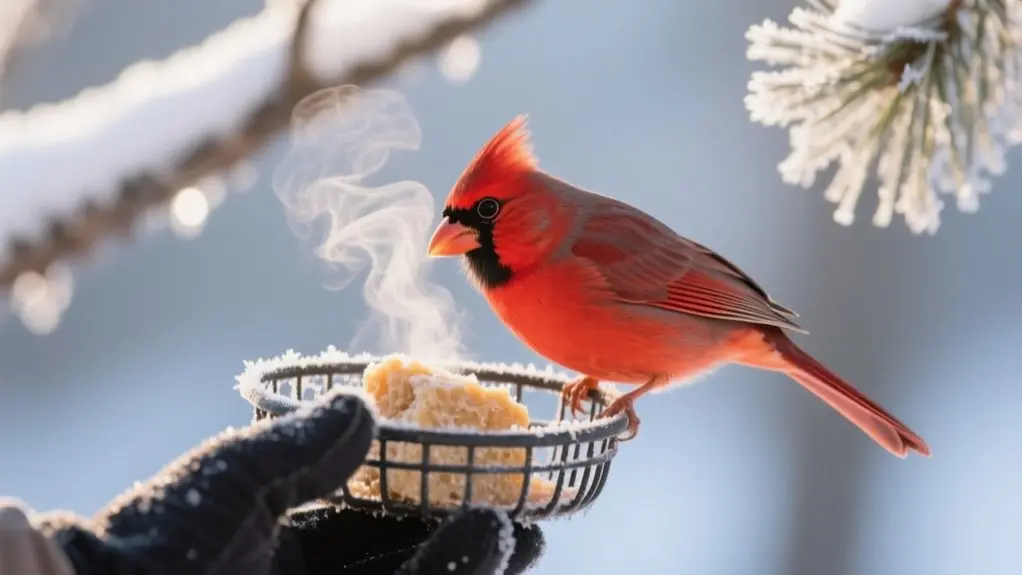
You can definitely feed birds frozen suet, as it provides essential fats and energy for their winter survival. Birds like woodpeckers and chickadees have strong beaks and special behaviors to peck through hardened suet.
However, frozen suet can be tough, so sheltering feeders and using no-melt options helps them access it better. Proper storage and feeder protection also keep it fresh and pest-free.
Keep going to discover how to optimize feeding and care for winter birds.
Why Birds Need High-Energy Frozen Suet in Winter
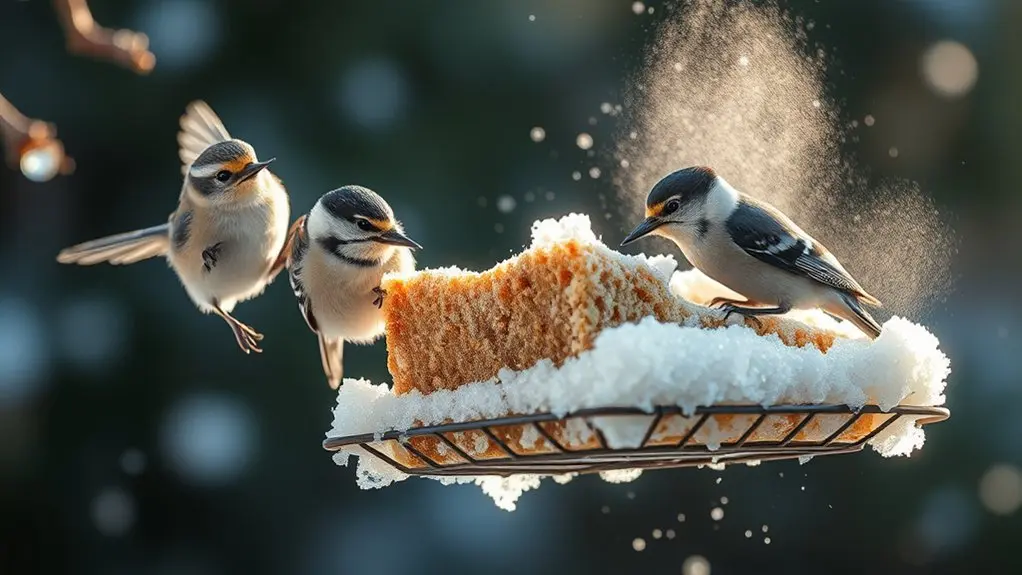
Although winter brings harsh conditions, birds rely on high-energy frozen suet to maintain their body heat and energy levels. You’ll find that suet provides essential fats and calories, which are critical for birds like chickadees and nuthatches facing cold weather.
When you offer frozen suet, you attract insect-eating birds that struggle to find natural food sources during winter. This suet not only supplies energy but also supports a well-rounded diet, complementing their natural foraging for insects and seeds.
To make sure birds get a consistent energy source without spoilage risks, you can use no-melt suet blends.
Can Birds Eat Suet When It’s Frozen?
You might wonder if birds can eat suet when it’s frozen. Well, the good news is that the nutritional value stays intact.
However, frozen suet can be a bit harder for birds to peck at, especially during cold weather.
But don’t worry—many birds adapt to these challenges or simply prefer softer suet to help keep their energy up.
Nutritional Value Maintained
Even when suet freezes, it keeps all its nutritional benefits that birds rely on during cold months. The nutritional value maintained in frozen suet means it still provides the essential fats and proteins birds need to fuel their metabolism and stay healthy.
Suet helps birds by delivering a high-energy food source, especially important when natural options are scarce. You don’t have to worry about freezing diminishing its quality. Frozen suet remains just as effective as fresh suet.
Birds like woodpeckers and chickadees are well adapted to cold conditions and can easily consume frozen suet.
Feeding Challenges In Winter
When temperatures drop below freezing, birds can still eat suet, but frozen suet becomes tough and harder for them to access. This poses feeding challenges in winter because birds need high-energy food to survive.
Frozen suet solidifies around 37°-40°C (98.6°-104°F), making it difficult for birds to peck and consume. To keep feeding birds effectively, you can offer suet that stays soft in cold or place feeders in sheltered spots.
Also, check and replace frozen suet regularly to maintain a steady food supply.
| Challenge | Cause | Solution |
|---|---|---|
| Hard suet texture | Freezing temperatures | Use soft suet recipes |
| Limited access | Solidified fat | Shelter feeders from wind |
| Energy intake drop | Birds can’t eat well | Replace frozen suet frequently |
| Reduced feeding time | Difficult to peck | Offer alternative foods |
| Food waste | Frozen leftovers | Monitor and refresh daily |
Bird Adaptations To Cold
Although frozen suet can be tough to eat, many birds have adaptations that help them access this essential food source during cold weather. When you observe bird feeding in winter, you’ll notice how they rely on these traits to survive harsh conditions and extract energy-rich suet, even when it’s frozen solid.
Here’s how birds manage it:
- They’ve a higher metabolic rate and thicker plumage to keep warm, making suet’s calories crucial.
- Strong beaks, like those of woodpeckers and nuthatches, let them chip away at frozen suet.
- Specialized feeding behaviors help them break down and consume hard suet efficiently.
With these adaptations, birds can keep going even when the suet is less accessible.
How Frozen Suet Impacts Birds’ Ability to Feed
Because frozen suet becomes too hard, birds struggle to feed effectively during cold weather. When suet freezes solid, birds find it tough to peck through, reducing their feeding success. They often avoid frozen suet because it lacks the soft texture they prefer.
To help birds, keep suet above freezing by placing feeders in sunny spots or using no-melt recipes.
| Condition | Bird Reaction | Feeding Success |
|---|---|---|
| Soft suet | Easy to peck | High |
| Frozen suet | Difficult to peck | Low |
| No-melt suet | Preferred texture | High |
| Suet in shade | Often frozen | Low |
How to Spot if Birds Are Struggling With Frozen Suet
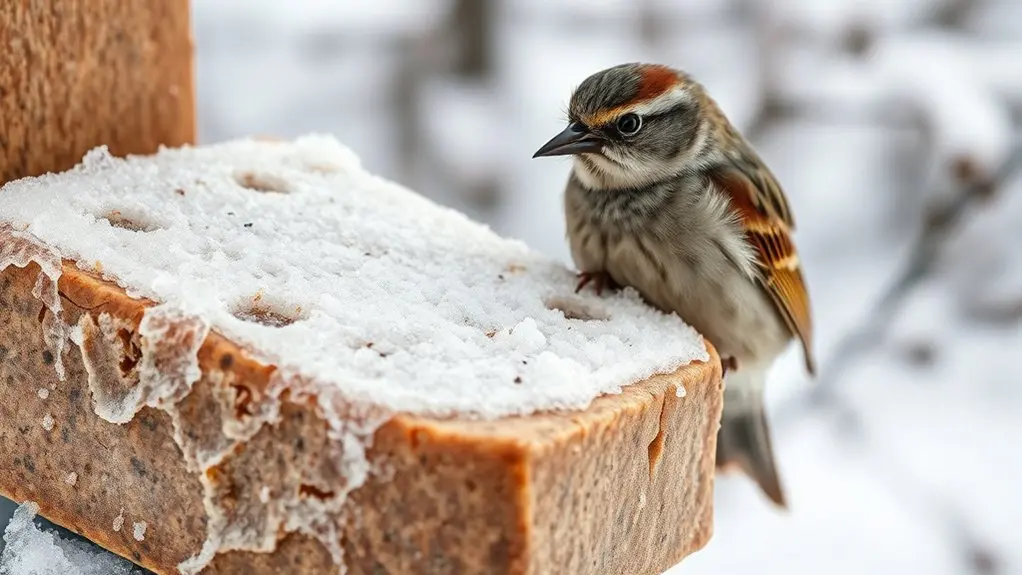
How can you tell if birds are struggling with frozen suet? Pay close attention to their behavior around your feeder. If the suet is too hard, birds may find it tough to peck and access the energy they need. You might notice fewer visits, signaling they’re avoiding the frozen suet.
Look for these signs to spot if birds are having trouble:
- Repeatedly pecking at the suet without success, showing frustration.
- Visiting the feeder often but not eating the suet.
- Shifting to other food sources like seeds or nuts, indicating the frozen suet isn’t providing enough nutrition.
Thawing Frozen Suet Safely Without Spoiling It
Noticing birds struggle with frozen suet means it’s time to help it thaw properly. Thawing frozen suet gradually at room temperature is the safest way to prevent spoilage and maintain its nutrition.
Avoid microwaving or using hot water, as rapid thawing can ruin its texture and make it less appealing to birds.
Once thawed, store the suet in a cool, shaded place. Direct sunlight causes it to melt and spoil quickly.
Hang or scatter the thawed suet within a few hours to keep it fresh and safe from bacterial growth. Regularly check its condition. If it becomes too soft or smells off, discard it immediately.
Proper thawing guarantees your feathered friends enjoy their treat without any health risks.
Using Mesh Feeders for Frozen Suet
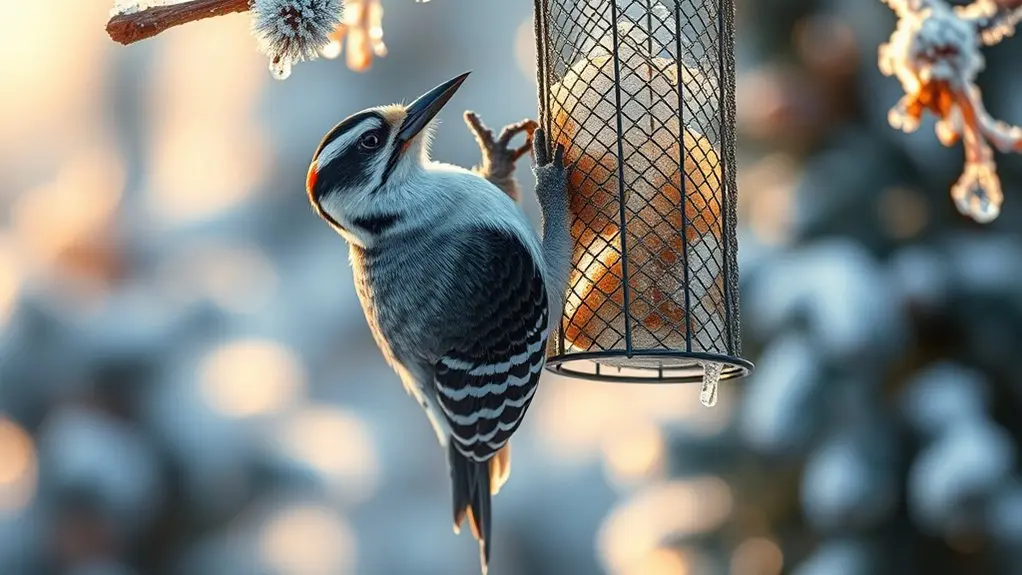
If you want to keep frozen suet fresh and accessible for birds, using mesh feeders is a smart choice. Their porous design allows excellent airflow, which slows down melting and preserves the suet’s quality.
Birds like woodpeckers and nuthatches find it easy to cling to the mesh surface, making feeding straightforward. Plus, mesh feeders help reduce waste and mess while deterring larger animals such as squirrels.
Woodpeckers and nuthatches cling easily to mesh feeders, which also minimize mess and keep squirrels away.
Here’s why mesh feeders work well for frozen suet:
- Promote airflow, keeping suet fresh longer
- Provide easy access for different bird species
- Discourage squirrels and bigger animals from stealing food
Remember to check and refill mesh feeders regularly, especially in colder months when birds need extra energy.
No-Melt vs. Regular Frozen Suet: What’s Best?
While both no-melt and regular frozen suet offer valuable nutrition for birds, choosing the right type depends on your feeding conditions and goals.
No-melt suet is specially designed to stay firm in warmer temperatures, making it perfect for year-round feeding without melting or becoming messy. It also handles temperature fluctuations well, so you won’t worry about spoilage as much.
Regular frozen suet, on the other hand, hardens in cold weather, potentially making it tougher for birds to access, especially below 45°-50°C. Birds can eat frozen suet, but they prefer softer food, so no-melt suet often provides a more accessible, high-energy option during winter.
If you want consistent quality and less maintenance, no-melt suet is usually the better choice.
Bird Species That Commonly Eat Frozen Suet in Winter
Choosing the right type of suet can influence which birds visit your feeder during winter. Many species rely on frozen suet to fuel their energy needs when natural food is scarce.
Suet feeders attract birds drawn to the high-fat content essential for staying warm and active.
You’ll often see these common visitors enjoying frozen suet:
- Woodpeckers, who cling to suet feeders and peck at the fat for energy.
- Chickadees, small but feisty birds that love the concentrated calories.
- Nuthatches, agile climbers that extract nutrients even from frozen suet.
Protecting Suet Feeders From Squirrels and Other Pests
To keep squirrels and other pests away from your suet feeders, you’ll want to use some effective deterrent techniques.
For example, squirrel-proof feeders and baffles can make a big difference.
Also, placing your feeders strategically helps a lot. Try putting them away from trees and high off the ground—that way, it’s harder for unwanted visitors to get to them.
You can even mix suet with hot pepper. Birds don’t mind it, but pests tend to avoid it, making it a clever little trick to protect your feeders.
Squirrel Deterrent Techniques
If you want to keep squirrels away from your suet feeders, installing baffle systems is a simple yet effective solution. It lets birds feed without interruption.
Using smart squirrel deterrent techniques guarantees your suet is enjoyed by birds, not pests.
Besides baffles, consider suet feeders with cages or mesh designs. They block larger animals while welcoming small birds.
You can also add cayenne pepper or use hot pepper suet to discourage squirrels from nibbling.
To maintain a squirrel-free zone, regularly clean and monitor your feeders.
Here are three effective squirrel deterrent techniques:
- Install baffle systems on poles or hanging feeders
- Choose suet feeders with protective cages or mesh
- Use spicy suet recipes with cayenne pepper
These tactics protect your suet while keeping your feathered friends happy.
Feeder Placement Strategies
Where you place your suet feeders can make all the difference in keeping squirrels and other pests at bay. Effective feeder placement strategies start by positioning feeders at least 5-6 feet off the ground. This makes it harder for ground-dwelling critters to reach them.
Avoid hanging feeders near tree branches or structures squirrels could use to leap onto them. Incorporate baffle systems or squirrel-proof feeders with mechanisms that block pests from accessing the suet.
Regularly check your feeders and adjust their placement as squirrels adapt their tactics.
Using Hot Pepper Suet
Although squirrels can be persistent when raiding suet feeders, using hot pepper suet offers an effective way to keep them at bay without harming the birds you want to attract.
Hot pepper suet contains capsaicin, which deters squirrels and pests since they can taste the spiciness, unlike birds. This means your favorite feathered visitors like chickadees and woodpeckers can enjoy the high-energy feed without competition.
You can easily use hot pepper suet in various feeder types, making it perfect for your backyard setup. To maximize benefits, replenish it regularly during colder months.
Here’s why you should try hot pepper suet:
- Keeps squirrels and pests away safely
- Attracts energy-loving birds without interference
- Versatile for different feeder styles
Storing Suet to Keep It Fresh During Cold Months
To keep your suet fresh during cold months, store it in a cool, dry place and use airtight containers or resealable bags to protect it from moisture and pests. Properly storing suet helps prevent spoilage caused by high temperatures and unwanted contamination.
If you make your own suet, freeze it in small blocks or cakes to extend its shelf life and make portions easier to handle. Be sure to label each package with the date it was made, as suet typically stays fresh for about six months in the freezer.
During cold months, keep suet below its melting point (45°–50°C) to maintain its solid form, which birds find most appealing.
Following these storing suet tips guarantees your feathered friends enjoy fresh, nutritious treats all winter long.
Combining Suet With Other Winter Bird Foods
Combining suet with other winter bird foods can boost its appeal and nutritional value, helping you attract a wider variety of birds to your feeder.
When you mix suet with ingredients like sunflower seeds, nuts, or dried fruits, you provide essential fats and proteins that birds need during cold months.
Adding cracked corn or millet makes your feeding stations inviting to seed-loving species, while high-energy additions like peanut butter or mealworms offer extra fuel for chilly days.
Try these combinations at your feeding stations:
- Suet mixed with sunflower seeds and dried fruits for balanced nutrition
- Suet blended with cracked corn or millet to attract diverse birds
- Suet combined with peanut butter or mealworms for high energy support
This variety keeps birds coming back all winter long.
Tips for Maintaining a Winter-Ready Suet Feeding Station
Keeping your suet feeding station in top shape during winter guarantees birds can easily access the high-energy food they need.
To maintain a winter-ready suet feeding station, use sheltered feeders that protect suet from freezing solid, ensuring it stays accessible.
Use sheltered feeders to keep suet from freezing, making it easy for birds to access all winter.
Opt for no-melt suet, which won’t freeze and provides birds with essential nutrients.
Check and refill feeders regularly to keep energy sources constant, especially during harsh weather.
Position feeders where squirrels and critters can’t reach them but still offer you a clear birdwatching view.
Don’t forget to clean feeders often to prevent mold and bacteria, which can harm birds relying heavily on suet in winter.
These simple steps keep your winter-ready suet feeding station safe and inviting for feathered visitors.
Frequently Asked Questions
Can Suet Attract Unwanted Wildlife Besides Squirrels?
Yes, suet can attract unwanted wildlife besides squirrels, including raccoons, opossums, bears, and rodents like mice.
To keep these critters away, you’ll want to use effective wildlife deterrents.
Try feeders with built-in baffles and switch to hot pepper suet, which birds tolerate but many mammals avoid.
Also, place your suet feeder away from dense vegetation and ground cover to minimize visits from unwanted animals.
Is Frozen Suet Safe for Baby Birds?
Frozen suet isn’t safe for baby birds if you feed it directly because it’s too hard for them to eat.
For proper baby bird nutrition, you should thaw the suet completely and make sure it’s soft and easy to digest.
Mixing it with softer foods can help provide essential fats and proteins they need to grow.
Always check that the thawed suet is fresh and mold-free before offering it to young birds.
How Often Should Frozen Suet Be Replaced in Feeders?
You should replace frozen suet in feeders like clockwork, every 1 to 2 weeks during winter to guarantee birds get consistent energy.
In warmer weather, swap it out every few days to prevent spoilage.
Regular feeder maintenance is key. Check for rancid smells or mold and refresh suet promptly.
Mixing flavors can attract more birds, making your feeder a vibrant hotspot.
Staying on top of maintenance keeps birds healthy and coming back.
Can Suet Cause Health Issues for Birds in Winter?
Yes, suet can cause health risks for birds in winter if it’s frozen solid.
When suet is too hard, birds might struggle to eat it, leading to poor nutrition.
Also, extremely cold suet can cause digestive issues since birds’ bodies aren’t designed to process frozen fat easily.
To avoid these health risks, you should use no-melt suet and regularly check feeders to keep the suet soft and safe for your feathered friends.
Are There Homemade Recipes for Frozen Suet?
If variety is the spice of life, you’ll find homemade frozen suet recipes just as flavorful.
You can whip up suet alternatives by mixing rendered beef fat or lard with oats, peanut butter, and birdseed.
Adding dried fruits, nuts, or mealworms boosts nutrition and attracts more birds.
Just melt the fat, blend in ingredients, pour into molds, and freeze.
This way, you control quality and give birds a tasty, healthy treat.
Conclusion
You can feed birds frozen suet, but you’ll want to thaw it a bit to help them eat easily. You’ll watch for signs they’re struggling, protect feeders from pests, and store suet properly to keep it fresh.
You’ll combine suet with other foods, maintain your feeding station, and enjoy watching birds stay energized all winter long. With a little care, you’ll keep your feathered friends happy and healthy.