
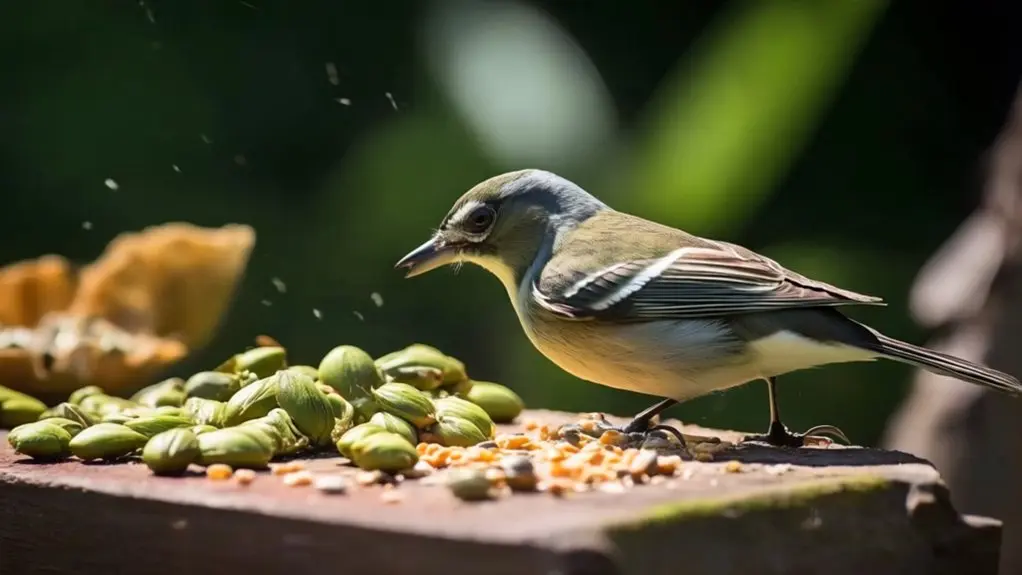
You can safely offer birds plain, unsalted pepita seeds in moderation. Just make sure to avoid roasted or seasoned varieties because they might have harmful additives. Pepitas are great since they provide beneficial fats, protein, and essential nutrients that support energy and immunity.
Larger birds like woodpeckers and finches especially enjoy them. To keep things safe, serve the seeds raw or dry. It’s a good idea to introduce them gradually and watch for any adverse reactions.
If you want, explore how to prepare these seeds properly and monitor how often you feed them. That way, you can keep your feathered friends healthy and happy!
Are Pepita Seeds Safe for Birds to Eat?
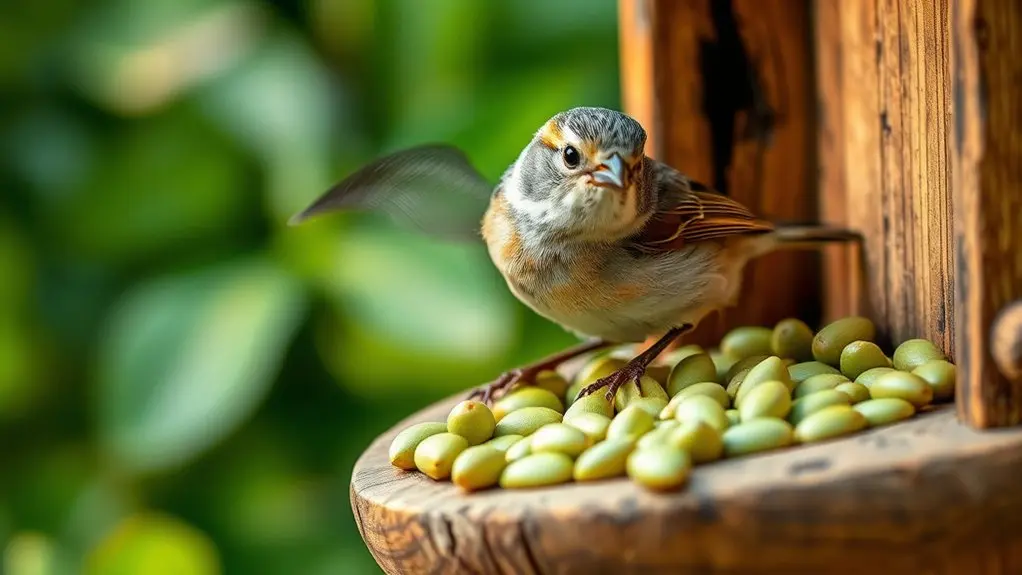
Although not all bird foods are created equal, pepita seeds are generally safe for birds to eat when offered in moderation and without added salt or seasoning. Species like woodpeckers, jays, and finches have been documented consuming raw, unsalted pumpkin seeds in natural settings.
Pepita seeds, raw and unsalted, are a safe and natural treat for woodpeckers, jays, and finches.
Nutritionally, pepita seeds supply healthy fats, protein, and essential nutrients that support avian health.
However, you should avoid feeding birds roasted, flavored, or heavily salted pepita seeds, as these additives may contain substances detrimental to their well-being.
When introducing pepita seeds into a bird’s diet, do so gradually and observe for any adverse reactions, ensuring their digestive tolerance and overall safety.
This measured approach helps maintain birds’ nutritional balance and prevents potential harm from unsuitable food types.
How Should You Prepare Pepita Seeds for Birds?
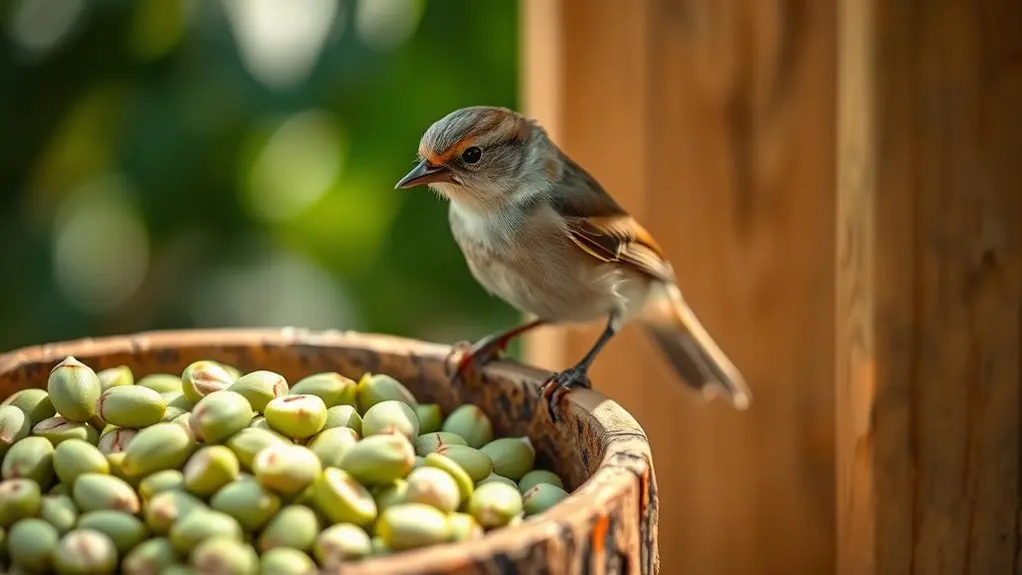
Ensuring pepita seeds are safe for birds means preparing them properly before offering. First, use only plain, unsalted pepita seeds to avoid exposing birds to sodium or chemicals.
Depending on the bird species, you might want to remove the shells. Some birds do just fine with whole seeds, while others do better with shelled seeds to prevent swallowing problems.
You can roast or dry the seeds to enhance texture and flavor, but skip any oils, seasonings, or additives—they could be harmful.
For smaller birds, crushing or kibbled seeds can help reduce choking risks and make eating easier.
Always serve pepita seeds in moderation as a supplement to a balanced diet. They shouldn’t replace the main bird food since birds need a well-rounded diet to stay healthy.
What Are the Nutritional Benefits of Pepita Seeds for Birds?
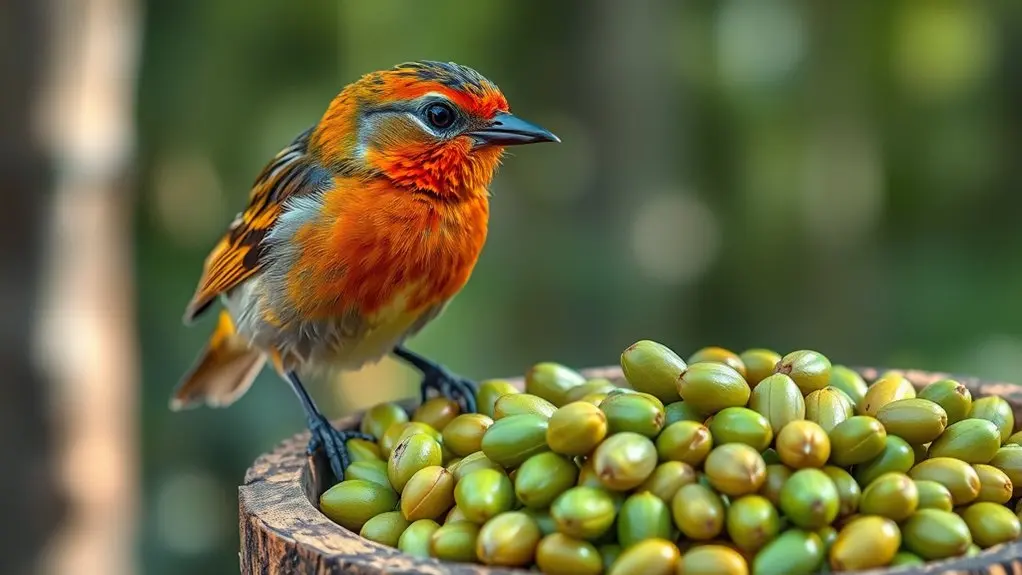
When you include pepita seeds in a bird’s diet, you provide a concentrated source of healthy fats, protein, and essential minerals such as magnesium and zinc, all of which support key physiological functions. These nutrients contribute to energy metabolism, muscle function, and immune response.
Additionally, pepita seeds contain antioxidants that help neutralize harmful free radicals, enhancing the bird’s immune system. The fiber content aids in maintaining healthy digestion by promoting regular gut motility.
Pepita seeds provide antioxidants and fiber, boosting immune defense and supporting healthy digestion in birds.
Pepitas also supply iron, which is essential for hemoglobin production and oxygen transport in the blood, thereby supporting sustained energy levels.
Offered in moderation, pepita seeds serve as a nutrient-dense, natural supplement that complements a balanced avian diet, promoting overall health without overloading fat intake or causing digestive issues.
Which Bird Species Like Pepita Seeds Most?
Because of their size and nutrient density, pepita seeds attract a variety of bird species, particularly larger ones like woodpeckers, jays, and chickadees. You’ll also find songbirds such as nuthatches and titmice enjoying these seeds, thanks to their high fat and protein content.
Ground feeders and bark-clinging birds favor pepitas due to their hardness and crunchy texture. Additionally, seed blends containing pepitas appeal to grosbeaks and finches.
| Bird Species | Feeding Behavior |
|---|---|
| Woodpeckers | Bark foragers |
| Jays | Larger seed eaters |
| Chickadees | Tree clingers |
| Nuthatches | Songbirds, high protein |
| Grosbeaks | Seed blend consumers |
You can see how pepita seeds support diverse foraging habits across species. It’s pretty cool how one type of seed can attract so many different birds.
How Often Can You Feed Pepita Seeds to Birds?
You should feed pepita seeds to birds about 2 to 3 times a week. This helps prevent them from taking in too much fat and too many calories.
It’s important to mix things up, so be sure to offer other foods like fruits, insects, and a variety of seeds too. That way, their diet stays balanced and interesting.
Just keep an eye on the portions to avoid any unwanted weight gain and to make sure they get a well-rounded diet overall.
Recommended Feeding Frequency
How often should you feed pepita seeds to birds to guarantee their health and well-being? You should offer pepitas seeds a few times per week rather than daily. Pepitas are high in fat and calories, so overfeeding them can lead to weight gain and nutritional imbalances in birds.
Feeding pepitas as an occasional treat helps prevent these risks and supports natural dietary balance. Species like woodpeckers and jays enjoy pepitas, but limiting frequency also avoids disrupting their foraging behaviors.
Always provide only unsalted, unseasoned, raw, or plain roasted pepitas to maintain safety. This controlled feeding frequency ensures birds receive the benefits of pepitas without compromising their health or natural feeding habits.
Balancing Pepitas With Other Foods
Maintaining a balanced diet for birds means integrating pepita seeds thoughtfully alongside other food sources. You should feed pepitas once or twice a week, but make sure they don’t make up more than 10% of your bird’s total diet. This helps prevent too much fat intake and keeps their nutrition balanced.
Always offer raw or roasted unsalted pepitas to avoid any harmful additives. It’s a good idea to combine pepitas with a variety of seeds, grains, and fresh foods. This way, you guarantee dietary diversity and keep your bird in prime health.
| Food Type | Frequency | Notes |
|---|---|---|
| Pepita Seeds | 1-2 times/week | Limit to 10% of total diet |
| Mixed Seeds | Daily | Primary energy source |
| Fresh Fruits | Several times/week | Provides vitamins and hydration |
| Grains | Regular | Adds carbohydrates |
| Vegetables | Several times/week | Supplies fiber and nutrients |
What Signs Indicate Problems After Feeding Pepita Seeds?
Although pepita seeds can offer nutritional benefits, it’s vital to monitor birds closely after feeding them to detect any signs of adverse reactions. Look for digestive issues such as diarrhea or vomiting, which may indicate intolerance. Lethargy or reduced activity can suggest digestive distress or nutritional imbalance.
Observe droppings carefully; increased urination or abnormal coloration might signal a negative response. Also, watch for choking or difficulty swallowing, especially if seeds aren’t properly prepared or are given in large pieces.
Behavioral changes like excessive scratching or feather plucking could also indicate dietary sensitivities related to pepita seeds. Catching these signs early lets you adjust the bird’s diet or seek veterinary advice to keep them healthy and happy.
Frequently Asked Questions
Can Pepita Seeds Help Improve Birds’ Feather Condition?
Yes, pepita seeds can help improve your bird’s feather condition by providing essential amino acids, zinc, and magnesium. These nutrients support healthy feather growth and enhance feather shine.
Just make sure to feed them in moderation as part of a balanced diet. That way, your bird gets all the benefits without any drawbacks.
Are Sprouted Pepita Seeds Better for Birds Than Raw Ones?
You’ll find sprouted pepita seeds gently release nutrients and reduce tough compounds, making them more digestible and beneficial for birds.
Compared to raw seeds, sprouted ones support better absorption, energy, and feather health when properly prepared. They’re kind of like giving birds a little nutritional boost that’s easier on their systems. So, if you’re looking to help your feathered friends thrive, sprouted pepitas are definitely worth considering.
Can Baby Birds Safely Eat Pepita Seeds?
You shouldn’t feed baby birds pepita seeds because their hard shells can cause choking or digestive issues.
It’s best to wait until they develop stronger beaks. Always check with an avian vet before introducing seeds like these into their diet.
Better safe than sorry when it comes to baby birds!
How Should Pepita Seeds Be Stored for Bird Feeding?
Imagine you’re feeding wild finches. Store pepita seeds in an airtight container, kept cool and dry, away from sunlight.
You can refrigerate or freeze them for longer freshness. Just make sure to always check for spoilage before offering the seeds to birds.
Do Pepita Seeds Attract Wild Birds to Feeders?
Yes, pepita seeds attract wild birds to feeders because they’re packed with fat and protein.
You’ll see more visits from woodpeckers, jays, and nuthatches when you offer the seeds whole.
Crushing them up a bit can make it easier for birds to eat, which helps too.
Conclusion
You can safely offer pepita seeds to birds, but always prepare them properly by removing shells and avoiding additives. These seeds provide valuable nutrients like healthy fats and proteins. They especially benefit many species like finches and parrots.
Feed pepitas in moderation. Remember, don’t put all your eggs in one basket to prevent dietary imbalances. It’s all about variety to keep their diet balanced and healthy.
Also, watch for any adverse reactions such as digestive issues. If you notice anything unusual, adjust feeding accordingly. This way, you can help your feathered friends stay healthy and thriving.