
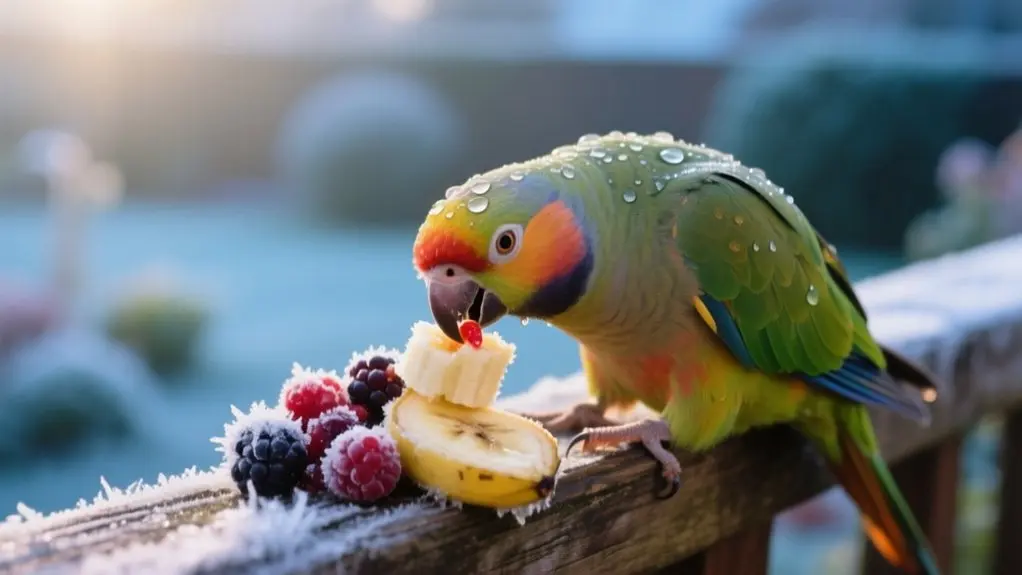
You can safely offer birds frozen fruit as a nutritious treat, as it retains most vitamins and antioxidants. Just choose varieties without added sugars, preservatives, or artificial ingredients, and rinse them before serving.
Always thaw fruit properly in the refrigerator or cold water, and serve it soon to keep it fresh. Offer frozen fruit in moderation, especially in warmer months, and watch for balanced nutrition.
Keep exploring if you want to know how to serve and maintain it best.
Is Frozen Fruit Safe for Birds?
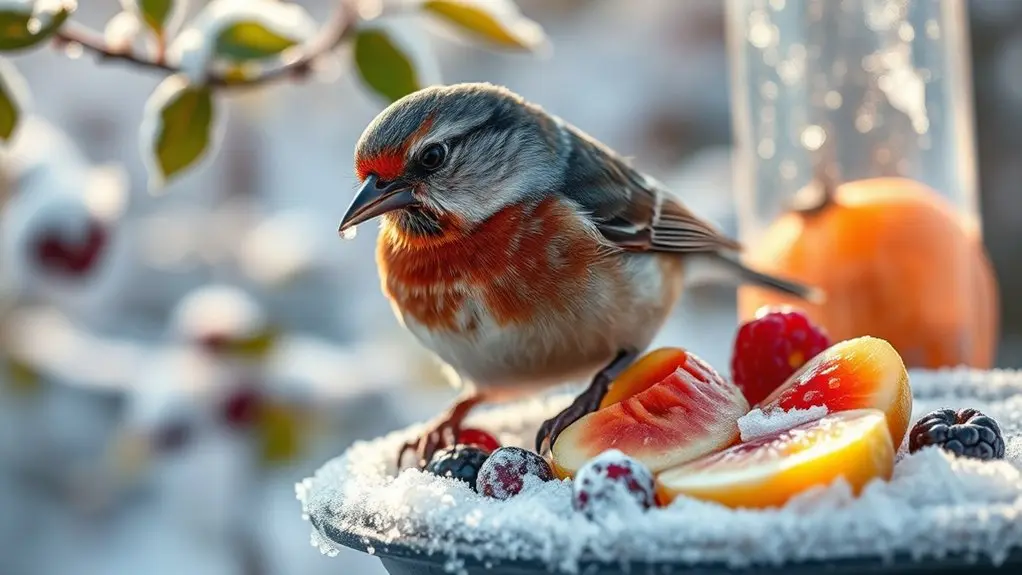
Wondering if frozen fruit is safe for your birds? Feeding birds frozen fruit is generally safe because it keeps most nutrients intact and offers a revitalizing treat, especially during hot weather.
However, make sure the frozen fruit contains no added sugars, preservatives, or artificial ingredients, as these can harm your feathered friends. Before serving, always thaw the fruit to make it easier for birds to eat and more appealing.
While fresh fruit is ideal, frozen fruit can be a convenient alternative. Bird Watchers often recommend monitoring the amount you offer. Frozen fruit should complement a balanced diet, not replace it.
Also, check thoroughly for any signs of spoilage or mold, which can develop during freezing and pose risks to your birds’ health.
Best Types of Frozen Fruit to Offer Birds
Several types of frozen fruit make excellent treats for birds, offering both nutrition and variety. You can safely offer frozen fruits like blueberries, strawberries, and raspberries, as they retain their nutrients even when frozen.
Just be sure to choose options without added sugars or preservatives, which can harm birds. Before serving, thaw the fruit to soften it, making it easier and more appealing for birds to eat.
Cutting larger fruits into smaller pieces encourages feeding, especially for smaller species.
Remember to offer frozen fruits in moderation, complementing their regular diet of seeds, vegetables, and proteins. This balance helps prevent excessive sugar intake and keeps your feathered friends healthy and happy.
Bird Species That Enjoy Frozen Fruit
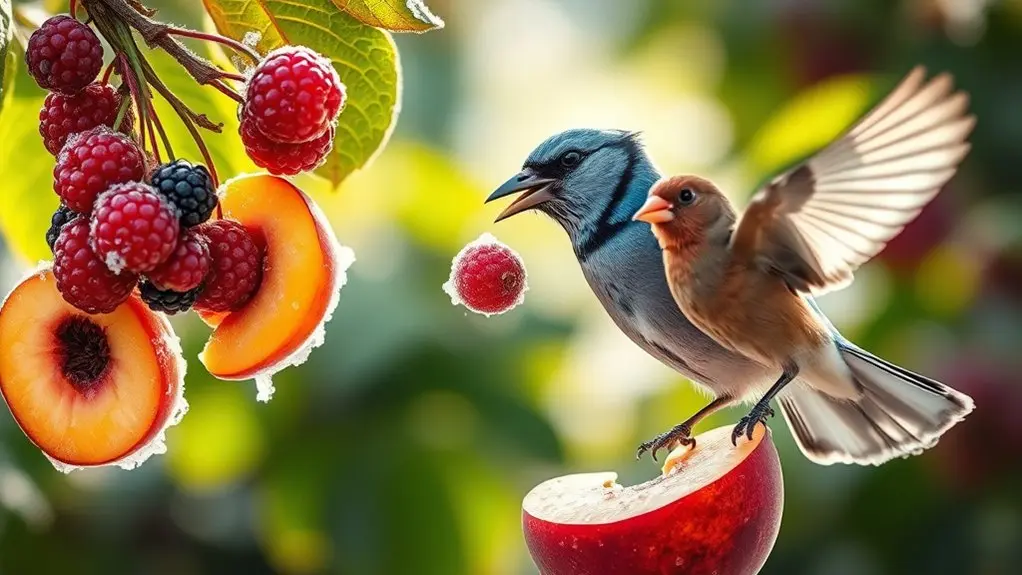
While many birds enjoy a variety of foods, certain species particularly appreciate frozen fruit as an invigorating and nutritious treat.
Backyard birds like blue jays, robins, and finches love frozen berries such as blueberries and raspberries.
These fruits are perfect because their bite-sized nature and preserved nutrients make them an ideal snack. Birds benefit from the vitamins and minerals retained in frozen fruit, which supports their health year-round.
When offering frozen fruit, make sure it contains no added sugar content or preservatives, as these can harm birds.
Thawing Frozen Fruit Safely
You’ll want to thaw frozen fruit in the refrigerator to keep bacteria at bay and preserve its freshness.
It’s best to avoid leaving fruit out at room temperature because that can encourage spoilage.
Proper Thawing Methods
Anyone thawing frozen fruit for birds should do so gradually in the refrigerator to keep the fruit’s texture intact and prevent harmful bacteria from growing.
Avoid thawing fruit at room temperature, as this can spoil the fruit and encourage bacterial growth.
If you need to thaw fruit quickly, place it in a sealed plastic bag and submerge it in cold water for about 30 minutes.
You can also use a microwave on low power, but be careful not to cook the fruit, which can change its nutritional value.
Once the fruit is fully thawed, serve it within a few hours to prevent spoilage and keep it fresh for your birds.
These proper thawing methods help guarantee safe, nutritious treats every time.
Avoiding Bacterial Growth
Because thawing frozen fruit improperly can encourage harmful bacteria, it’s important to handle the process carefully to keep your birds safe. Always thaw fruit in the refrigerator rather than at room temperature to slow bacterial growth.
If you need to thaw fruit quickly, use a microwave on a low setting, but don’t overheat it, as mushy fruit won’t appeal to your birds. After thawing, inspect the fruit for any off smells or discoloration before offering it.
To minimize bacterial growth risks, consume or discard thawed fruit within 24 hours. When serving, let the thawed fruit reach room temperature to improve taste while keeping it safe for your feathered friends.
Proper thawing helps protect your birds from harmful bacteria.
Maintaining Fruit Freshness
Proper thawing methods not only reduce bacterial risks but also help maintain the freshness of frozen fruit for your birds. Thaw frozen fruit gradually at room temperature to preserve its texture and flavor. Avoid microwaving since it creates hot spots that can harm your birds.
Always wash thawed fruit thoroughly to remove any contaminants from freezing. Before you offer it, check that the thawed fruit is fresh and free from mold or spoilage, as quality directly affects your birds’ health.
Serve small portions to encourage quick consumption and prevent waste, since uneaten fruit spoils fast. If you use thawed fruit in foraging toys, mix it with other foods to provide variety and a balanced diet.
Following these steps guarantees your birds enjoy safe, fresh fruit every time.
Serving Frozen Fruit in Cold Weather
When you’re serving frozen fruit in cold weather, you’re giving birds a tasty, nutritious treat that’s especially helpful when fresh options are hard to come by.
You might want to try scattering slightly thawed berries, like blueberries or raspberries, on feeders to grab their attention.
Just keep an eye on what they prefer, and be sure to remove any uneaten fruit so it doesn’t spoil.
Benefits Of Frozen Fruit
Although fresh fruit can be hard to find during cold weather, frozen fruit offers a nutritious and convenient alternative for feeding birds. Frozen fruit retains most of its nutritional value, making it a beneficial food source that provides essential vitamins and energy to help birds endure harsh conditions.
Many fruit-eating birds are attracted to frozen fruit, and they often enjoy its unique texture, which can be easier to consume, especially for those with smaller beaks.
Using frozen fruit also helps reduce waste and saves money since it lasts longer than fresh fruit.
Just remember to thaw it and serve small portions to avoid spoilage and encourage birds to eat it promptly. This way, you support their health during colder months effectively.
Serving Techniques In Winter
Frozen fruit can be a fantastic food source for birds during winter, but how you serve it makes a big difference in whether they’ll enjoy it.
To start, make sure you thaw the fruit slightly to avoid icy textures that birds might reject.
Cut larger pieces into smaller, manageable sizes to help them eat comfortably.
Place the fruit in a platform feeder or on flat surfaces, which makes it accessible to a variety of birds visiting your yard.
Never offer fruit that’s completely frozen solid, as it can be hard for birds to consume and may discourage them from feeding.
Bird Preferences In Cold
Since fresh fruit can be scarce in winter, you’ll find that many birds readily accept thawed frozen fruit as a nutritious alternative.
When serving frozen fruit in cold weather, cut it into small pieces to make it easier for birds to eat.
Thawed fruit retains moisture and flavor, attracting species that rely on high-energy foods to stay warm.
You can boost their energy by mixing thawed fruit with a bit of peanut butter, which adds healthy fats and calories.
Just be sure the fruit has no added sugars or preservatives, as these can harm birds.
Offering this combination helps birds meet their calorie needs during chilly days and encourages fruit-eaters to visit your feeder throughout winter.
Avoiding Harmful Additives in Frozen Fruit
When you offer frozen fruit to birds, you need to check the ingredient list carefully to avoid added sugars, artificial sweeteners, or preservatives like sulfites that can harm them.
Following avian dietary guidelines means selecting frozen fruit that’s free from harmful additives and syrup, which can upset their health.
Always prioritize ingredient label importance by choosing organic frozen fruit when possible to reduce pesticide exposure.
Rinse the fruit before serving to remove any residues from processing or packaging.
These frozen fruit recommendations help guarantee your birds enjoy safe, nutritious treats without risking their wellbeing.
Energy Benefits of Frozen Fruit for Birds
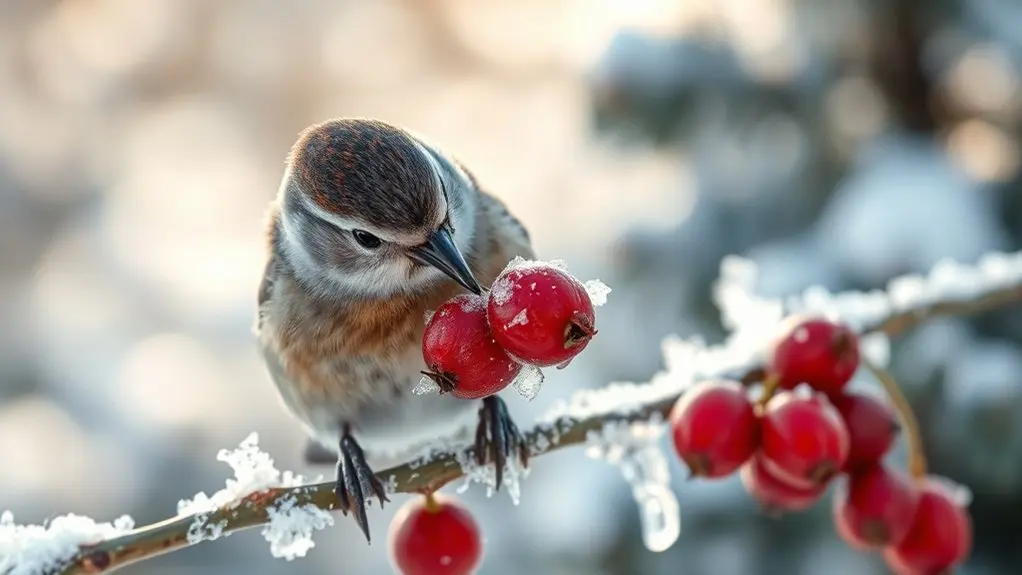
You’ll find that frozen fruit packs essential vitamins and antioxidants that help birds stay healthy, especially when fresh options are limited.
Plus, the natural sugars provide a quick energy boost, which is perfect for active or migrating birds.
Boosting Bird Energy
Although natural food sources can dwindle during colder months, frozen fruit retains essential vitamins and minerals that boost a bird’s energy levels. When you offer frozen fruit, you provide reliable energy sources that help birds adapt to seasonal changes.
The natural sugars in frozen fruit act as quick fuel, perfect for birds needing extra energy during migration or nesting. Plus, frozen fruit encourages dietary variety, keeping birds healthy and active.
Here’s why frozen fruit is great for boosting bird energy:
- Retains crucial nutrients despite freezing.
- Supplies fast-acting natural sugars.
- Encourages increased food intake due to ease of consumption.
- Adds diversity to their diet during scarce seasons.
You’ll find frozen fruit a convenient, effective way to support bird energy year-round.
Frozen Fruit Nutrients
Since frozen fruit keeps most of its vitamins and minerals intact, it serves as a nutritious and energy-rich option for birds. The frozen fruit benefits include preserving antioxidants and phytochemicals, which support birds’ immune systems and overall health.
Compared to fresh fruit, nutritional comparisons show that freezing locks in crucial nutrients without significant loss, making it a reliable food source year-round.
You’ll also find that frozen fruit is softer and easier for birds to eat once thawed, encouraging them to consume these healthy options.
Plus, frozen fruit’s seasonal availability means you can provide diverse nutrients even when fresh fruit is out of season.
Offering frozen fruit not only boosts energy but also enriches your bird’s diet with essential nutrients they might otherwise miss.
Cleaning Frozen Fruit Feeders
To keep your frozen fruit feeders safe and inviting for birds, clean them regularly to prevent sticky residues and mold buildup. Proper feeder maintenance guarantees a healthy feeding environment.
Follow this cleaning schedule for mold prevention and freshness:
- Wash feeders with hot, soapy water weekly or more often in warm weather.
- Rinse thoroughly to remove all soap residue that could harm birds.
- Use a separate dish for frozen fruit to avoid cross-contamination.
- Check fruit condition frequently, discarding spoiled or uneaten pieces after a few hours.
Sticking to this routine prevents mold growth and keeps your feeders hygienic. This encourages birds to visit safely and enjoy their frozen treats without risk.
When to Limit Frozen Fruit Feeding
Keeping your frozen fruit feeders clean sets the stage for offering treats safely, but knowing when to limit frozen fruit is just as important. During warmer months, focus on seasonal fruit considerations and offer fresh options instead of frozen fruit alternatives, as birds often prefer fresher foods.
Follow bird feeding guidelines by offering frozen fruit in moderation due to its higher sugar content, which can disrupt a balanced diet. Avoid frozen fruit with added sugars, preservatives, or artificial sweeteners to keep birds healthy.
Pay close attention to young or nesting birds, ensuring they get enough protein and nutrients beyond sugary fruit.
Also, stop feeding frozen fruit if it shows freezer burn or spoilage to prevent health risks.
Balancing these factors helps you support your feathered friends’ well-being year-round.
Signs Birds Benefit From Frozen Fruit
Although fresh fruit remains ideal, you’ll notice birds benefit from frozen fruit, especially during colder months when natural food becomes scarce.
Fresh fruit is best, but frozen fruit offers vital nourishment when natural food is limited in winter.
Pay attention to bird behavior and seasonal preferences to see the positive effects. You might observe:
- Increased interest in your feeding area as birds respond to the thawed frozen fruit’s aroma and texture.
- Active foraging instincts kicking in, with birds pecking and exploring the fruit enthusiastically.
- Species like bluebirds and waxwings returning regularly, showing preference for frozen berries.
- Improved appetite and energy levels during harsh winter days.
These signs indicate frozen fruit supports their diet by providing essential nutrients and stimulating natural behaviors.
Combining Frozen Fruit With Fresh and Dry Foods
When you combine frozen fruit with fresh and dry foods, you create a varied diet that keeps birds interested and nourished. This fruit texture variety encourages birds to explore different flavors and mouthfeels, which supports dietary balance importance by providing a mix of nutrients.
Thaw frozen fruit before serving to avoid icy textures that might deter smaller species. Including dry foods alongside fruits helps maintain nutritional staples, but watch portion sizes since fruit’s natural sugars can reduce dry food intake.
This blend also promotes foraging behavior stimulation, engaging birds’ natural instincts to search and select food.
Tips for Attracting Birds With Frozen Fruit
Since fresh fruit isn’t always available year-round, offering thawed frozen fruit can attract a variety of birds to your yard.
To maximize fruit variety benefits and encourage natural foraging behavior, follow these tips for seasonal feeding:
- Thaw frozen fruit like berries, cherries, and bananas before serving to make it easier for birds to eat.
- Scatter the fruit on platform feeders or foraging trays to mimic natural feeding habits.
- Rotate fruit types regularly to provide diverse nutrients and maintain bird interest.
- Monitor consumption closely to prevent spoilage and keep feeders clean and safe.
Frequently Asked Questions
Can Baby Birds Eat Frozen Fruit Safely?
Yes, you can safely feed baby birds frozen fruit, but you need to thaw it properly first.
Use gentle fruit thawing methods like room temperature or warm water baths to keep nutrients intact.
Cut the fruit into small pieces to prevent choking and guarantee easy digestion.
Follow safe feeding practices by avoiding added sugars or preservatives and offering frozen fruit only occasionally.
This supports good baby bird nutrition without disrupting their balanced diet.
How Long Can Frozen Fruit Be Stored Before Feeding Birds?
Think of frozen fruit storage as a cozy winter blanket preserving nature’s sweetness. You can keep it for about 6 to 12 months without losing much nutritional value, following bird feeding guidelines.
Beyond a year, the fruit’s charm fades, and it mightn’t be the best treat for your feathered friends.
Always thaw it first and check for freshness so your birds enjoy every bite safely and happily.
Does Frozen Fruit Affect Bird Migration Patterns?
Yes, frozen fruit can affect bird migration patterns by influencing migration triggers linked to food availability.
When you provide frozen fruit, you help create a reliable food source, which may cause birds to delay their migration or alter their routes.
This shift happens because birds respond to climate impact and resource abundance.
They adjust their timing and path to maximize survival chances during colder months when natural food is scarce.
Can Frozen Fruit Cause Digestive Issues in Birds?
Frozen fruit might seem harmless, but it can actually disrupt your bird’s digestive enzymes if given straight from the freezer.
While fiber content in fruit aids digestion, the cold temperature before fruit thawing can shock their system, causing issues.
When you thaw fruit properly, you help maintain those enzymes and fiber benefits, reducing digestive problems.
Is It Okay to Feed Frozen Fruit to Pet Birds Indoors?
Yes, it’s okay to feed frozen fruit to pet birds indoors.
Frozen fruit benefits include retaining nutritional value and providing a revitalizing treat. Just thaw it before serving to avoid cold shock and make it easier for your bird to eat.
For serving suggestions, offer small pieces occasionally alongside veggies and grains to keep their diet balanced.
Watching how your bird reacts helps guarantee they enjoy the new texture and flavor safely.
Conclusion
You can safely offer birds frozen fruit, but always thaw it properly and choose bird-friendly varieties. Remember, “Don’t put all your eggs in one basket.” Combine frozen fruit with fresh and dry foods for a balanced diet.
Watching for signs that birds benefit will help you adjust feeding habits. With these simple tips, you’ll attract happy, healthy birds year-round, even in colder weather. Keep their needs in mind, and they’ll reward you with delightful visits.