
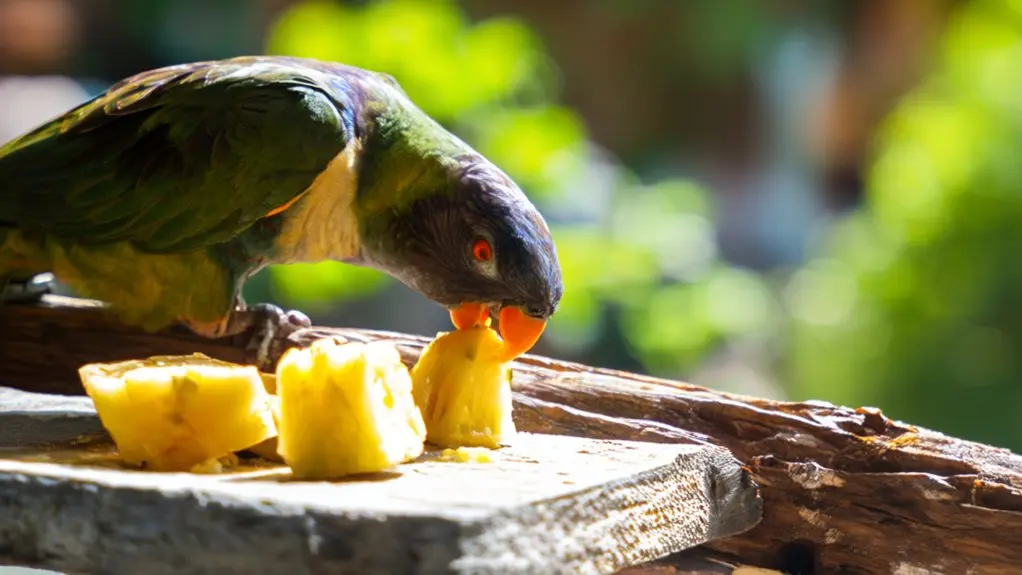
You can feed your bird fresh, ripe pineapple safely in small amounts by removing the tough skin and fibrous core to prevent choking and digestive irritation. Pineapple’s vitamin C, manganese, and bromelain enzyme support digestion and immunity. But its acidity and natural sugars may cause upset if overfed.
Avoid canned or dried pineapple because they usually have added sugars and preservatives. It’s best to stick with fresh fruit to keep your bird healthy.
Watching for digestive changes helps guarantee your bird’s well-being. Learn how to prepare, serve, and monitor pineapple treats properly so your feathered friend stays happy and safe.
Is Pineapple Safe for Birds?
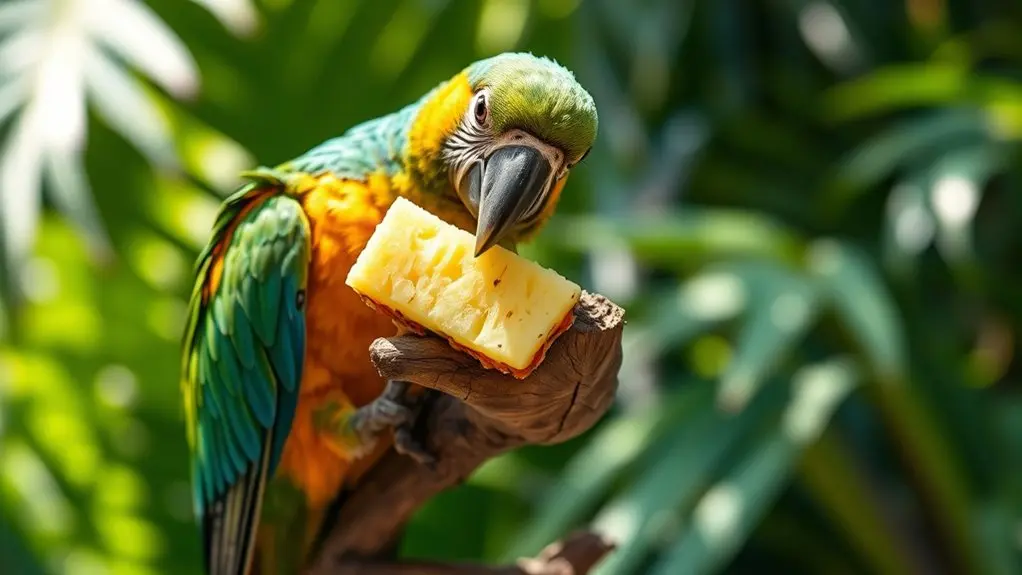
Although pineapple offers beneficial nutrients like vitamin C, manganese, and the bromelain enzyme, you should only feed it to birds in small, fresh, and ripe portions. These nutrients support immune function and digestion.
But pineapple’s natural acidity and sugar content can cause digestive upset if given excessively.
You must avoid canned, dried, or processed pineapple, as added sugars and preservatives can harm your bird’s health.
Always remove the tough skin and core before serving since these parts can irritate the digestive tract or pose choking hazards. Offering diced pineapple pieces allows safe consumption while minimizing risks.
How to Prepare Pineapple Safely for Birds
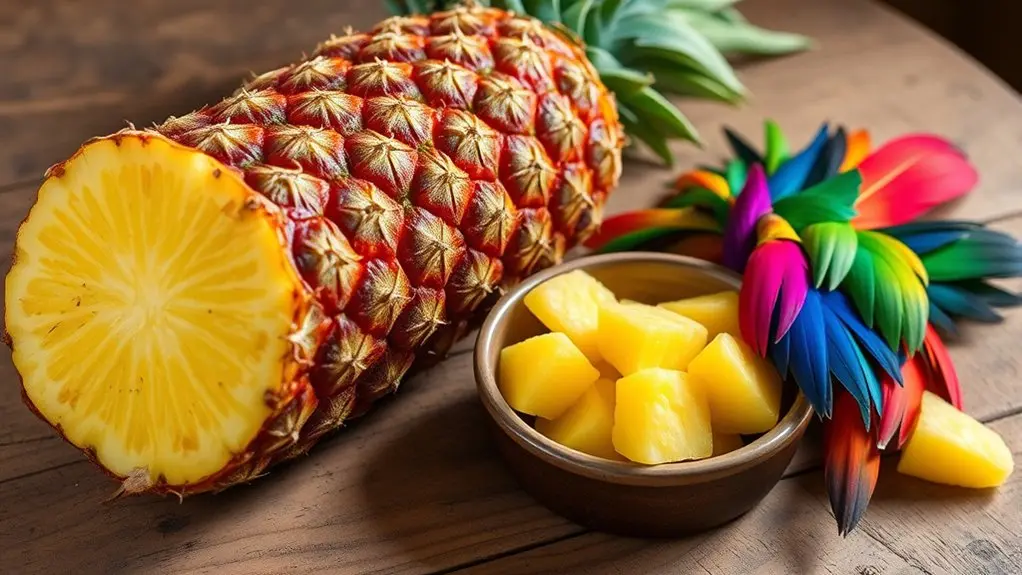
When preparing pineapple for your bird, start by selecting fresh, ripe fruit to guarantee maximum nutritional value and safety. Avoid canned or dried pineapple, as these forms can contain preservatives and added sugars harmful to birds.
Thoroughly remove the tough skin and fibrous core before dicing the fruit into small, manageable pieces.
Carefully peel away the tough skin and core, then chop the pineapple into small, bird-friendly pieces.
Serve the pineapple in a shallow dish and discard any leftovers within a few hours to prevent fermentation and insect attraction.
Offer pineapple sparingly as an occasional treat, mindful of its acidity and sugar content, which can cause digestive irritation if overfed.
Also, provide grit alongside pineapple to support digestion and keep a close eye on your bird’s droppings for any signs of discomfort or fermentation.
This way, you can be sure your bird enjoys the pineapple safely and benefits from it.
Risks of Feeding Pineapple to Birds
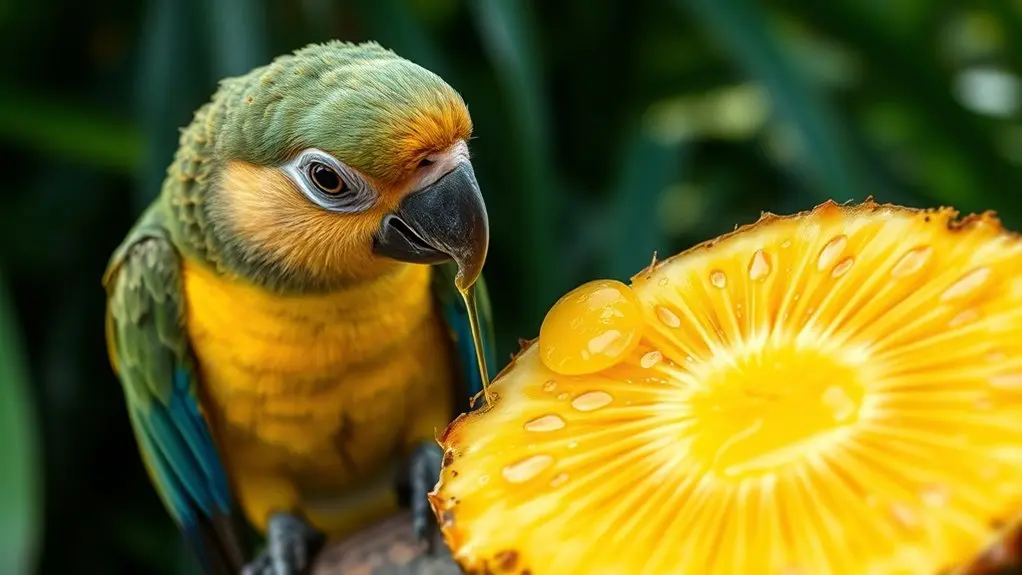
Because pineapple contains high levels of acidity and natural sugars, feeding it to birds can irritate their sensitive digestive systems and cause loosened droppings or digestive upset. You should avoid giving canned or dried pineapple, as added sugars, preservatives, and syrups in these forms pose additional health risks.
The tough core and skin are choking hazards and difficult for birds to digest, so never offer these parts. Overfeeding pineapple, even in moderation, may crowd out essential nutrients and create nutritional imbalances.
Excessive intake can also lead to fermentation in the gut, increasing the risk of digestive complications. To protect your bird’s health, limit pineapple to small amounts, prepared appropriately, and always monitor their response to this fruit.
How to Spot Digestive Upset From Pineapple
Monitoring your bird’s droppings after offering pineapple helps detect early signs of digestive upset. Look for loose or watery droppings, which often indicate overconsumption or sensitivity to pineapple’s acidity and sugar.
Notice any foul smell or abnormal coloration, as these signs suggest fermentation caused by leftover fruit or excessive feeding.
If droppings become very soft, discolored, or frequent soon after feeding pineapple, reduce or temporarily stop giving this treat. Sudden changes in consistency or appearance warrant close observation and adjustments in diet.
Persistent abnormal droppings signal a need to review pineapple intake carefully and consult a veterinarian if necessary.
Other Safe Fruits and Treats to Offer Alongside Pineapple
Which fruits complement pineapple safely in your quail’s diet? Blueberries, blackberries, and cantaloupe are excellent choices because they’ve low acidity and sugar content. These fruits provide essential vitamins and antioxidants without causing digestive irritation from high-acid treats.
Always offer fresh, ripe fruit instead of dried or canned types. This helps prevent fermentation and keeps insects away from the habitat.
Serving small portions of a variety of these safe fruits enriches your quail’s nutrition without going over the recommended 10% treat intake.
Remember to remove any uneaten fruit within a few hours to keep things clean and avoid spoilage.
Where to Find Advice and Share Experiences About Bird Treats
When you want reliable guidance on bird treats like pineapple, the Quail Keeper Community offers a specialized forum where members share practical advice and firsthand experiences. Here, you can learn about appropriate portion sizes, preparation methods, and necessary precautions for feeding pineapple to various bird species.
The community highlights potential issues such as fermentation risks and digestive irritation, helping you prevent adverse effects. You’ll also find success stories and challenges that provide real-world context for incorporating pineapple and other fruits into avian diets.
This forum serves as a valuable resource whether you’re new to bird care or an experienced owner. By engaging in these discussions, you can enhance your knowledge of safe treat practices and optimize dietary enrichment for your birds.
Frequently Asked Questions
Can Baby Birds Eat Pineapple?
You can feed baby birds small, ripe pineapple pieces occasionally, but make sure to remove the skin and core first. It’s important to introduce pineapple gradually to avoid any digestive upset.
Keep a close eye on their droppings to make sure they’re handling it well. Also, try not to make pineapple a regular part of their diet.
It’s better as a treat now and then rather than something they eat all the time. That way, you keep their nutrition balanced and safe!
Does Pineapple Help Improve a Bird’s Feather Condition?
Yes, pineapple can help improve your bird’s feather condition by providing bromelain, vitamin C, and antioxidants. These nutrients support feather growth, boost collagen production, and protect against oxidative stress.
Just make sure to offer it in small, controlled amounts to avoid any irritation. It’s always good to introduce new foods slowly and watch how your bird reacts. That way, you keep your feathered friend happy and healthy!
How Often Can I Give My Bird Pineapple Treats?
You should give your bird pineapple treats no more than once or twice weekly. Its high sugar and acidity can cause digestive upset if given too often.
Try offering small, diced portions to help prevent irritation. This way, you can make sure your bird stays healthy and happy.
Are Canned or Dried Pineapples Safe for Birds?
You shouldn’t feed your bird canned or dried pineapple because they contain added sugars, preservatives, and syrups. These can harm their digestive system and overall health.
Can Pineapple Cause Allergic Reactions in Birds?
Pineapple can spark allergic reactions in birds, like a sudden storm on a sunny day. You should watch for swelling or breathing issues. Bromelain and citric acid might trigger sensitivities.
Conclusion
You can safely offer your bird bright, juicy pineapple chunks, but always peel and remove the core first to prevent digestive upset. Picture your feathered friend nibbling on the sweet, tangy fruit, energized and healthy.
Remember to introduce pineapple gradually and watch for any signs of discomfort. Alongside pineapple, provide a variety of safe fruits to guarantee a balanced diet.
Stay informed through trusted avian resources and connect with others to keep your bird thriving.