
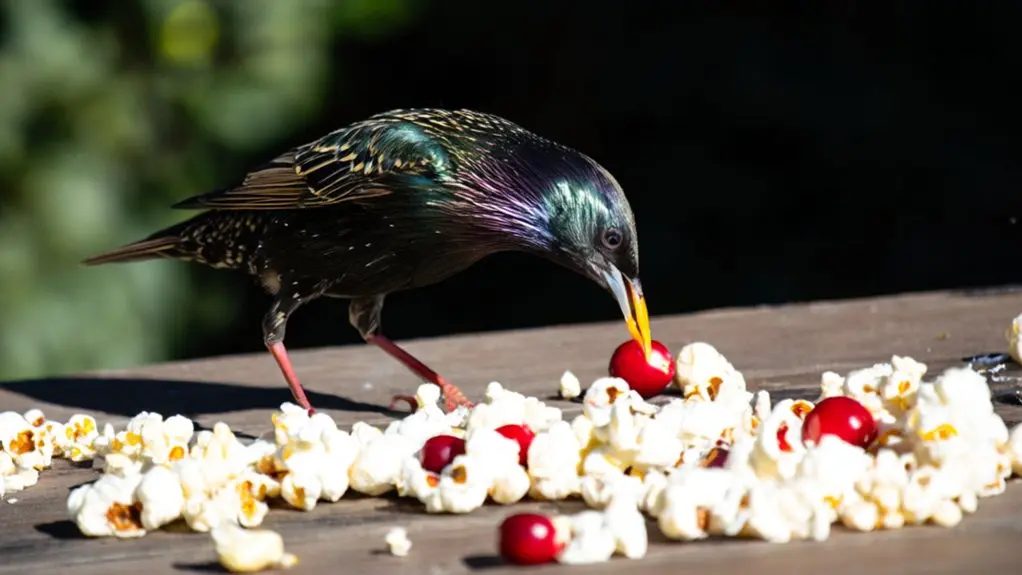
You can safely offer birds plain, fully popped popcorn and fresh or unsweetened dried cranberries in moderation, making sure there’s no added salt, sugars, or preservatives. It’s important to remove any shells or pits and break treats into small pieces to reduce choking risks.
These snacks provide beneficial nutrients and energy, especially during colder months. But be careful not to overfeed, as it may cause digestive issues or make birds dependent on these treats.
By preparing treats carefully and balancing how often you feed them, you’ll help promote bird health and encourage their natural behaviors. If you want, explore more to understand the best methods and which species prefer these snacks.
Is It Safe to Feed Birds Popcorn and Cranberries?
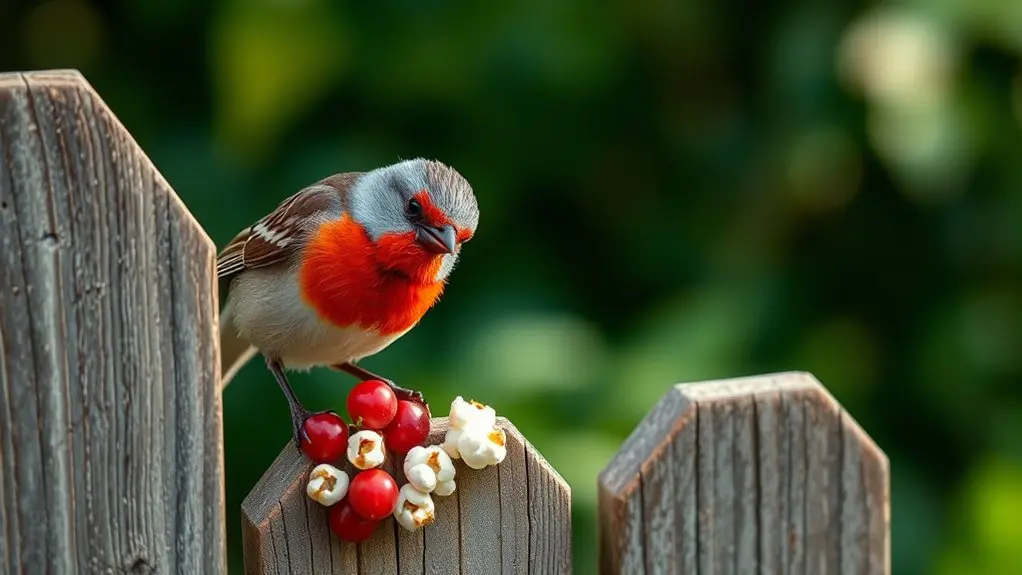
Although feeding birds popcorn and cranberries can be safe, you need to guarantee these foods are plain and free from additives. Plain, unsalted popcorn offers birds a moderate source of energy and nutrients without adverse effects.
Likewise, fresh or dried cranberries without added sugar or preservatives provide a beneficial treat.
You should avoid popcorn containing butter, salt, or flavorings, as these substances can disrupt or harm avian digestive systems.
When offering cranberries, keep quantities small to prevent digestive upset or other health complications.
Ensuring both popcorn and cranberries are free of seasonings, sugars, and preservatives minimizes risks and supports birds’ nutritional needs.
Risks and Precautions of Feeding Popcorn and Cranberries
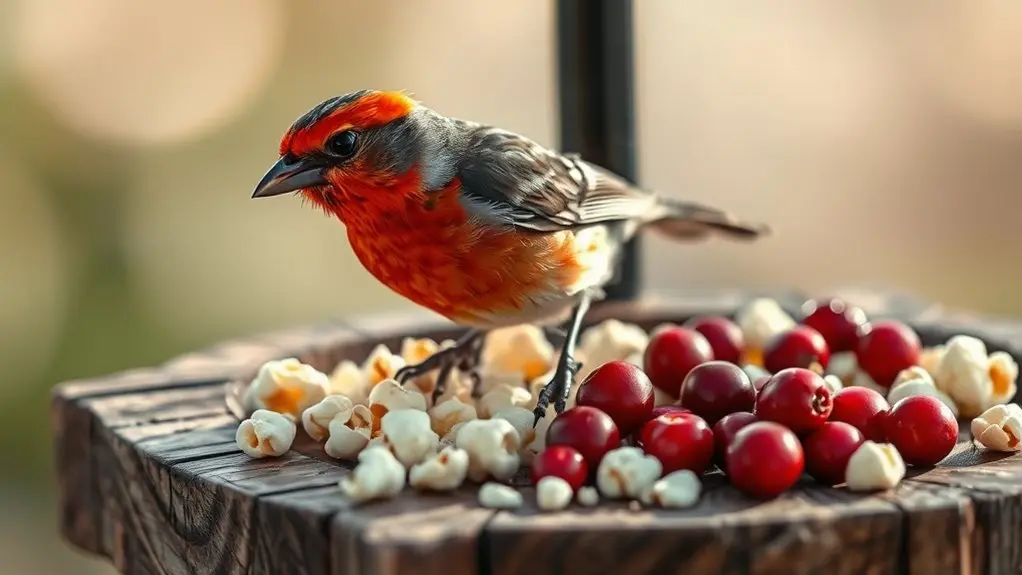
You’ll want to steer clear of flavored or salted popcorn, as well as cranberries that have added sugars or preservatives, since these can pose toxicity risks.
It’s important to remember that both popcorn and cranberries don’t offer much in terms of nutrition—they should just be a little extra treat alongside a balanced diet.
When you do serve them, make sure to break them into small, easy-to-handle pieces.
Keep a close eye on your birds while they’re eating to help prevent any choking hazards and ensure they’re enjoying their snack safely.
Potential Toxicity Concerns
When feeding birds popcorn and cranberries, it’s important to consider potential toxicity and health risks to avoid any problems. Plain, air-popped popcorn without butter, salt, or artificial additives is safe for birds. But flavored varieties might contain harmful substances, so it’s best to avoid those.
Cranberries are generally safe when given in moderation. However, processed or sweetened cranberries have sugars and preservatives that could be bad for your birds.
Unpopped or partially popped kernels can cause choking or digestive blockages in some birds, so always make sure the popcorn is fully popped.
Also, remove any shells, pits, or additives before feeding to prevent injury or toxicity.
Be careful not to overfeed these treats, as they don’t provide essential nutrients and could cause nutritional imbalances.
Taking care with preparation and quantity helps keep your birds healthy and safe from toxic exposure.
Nutritional Value Considerations
Several nutritional factors require careful consideration before feeding birds popcorn and cranberries. Popcorn, when plain and unsalted, can be a safe occasional treat. But too much of it might mess with their digestion.
Cranberries offer antioxidants and vitamins that are good for birds. Still, both popcorn and cranberries have natural sugars. Eating too many can increase the risk of obesity and diabetes.
It’s really important that neither popcorn nor cranberries have added salt, sugar, or preservatives. These additives can be toxic to birds.
Also, giving too many treats can push out more balanced, nutritious foods. This could lead to deficiencies.
Keep in mind, these snacks provide some nutrients, but they don’t replace a complete diet. So, moderation is key. And always make sure there are no harmful additives to keep your birds healthy.
Safe Serving Practices
Although popcorn and cranberries can be healthy treats for birds, serving them safely requires careful attention to preparation and portion size. You should always offer plain, unsalted, and unbuttered popcorn to avoid harmful fats and salt.
Fresh or frozen cranberries are safe, but avoid dried varieties since added sugars and preservatives pose risks.
Make sure to remove any shells, pits, or additives before serving to minimize choking hazards and toxicity. Both foods should be given in moderation because popcorn’s texture can cause choking, and cranberries’ acidity may upset digestion.
Never feed seasoned, sweetened, or processed versions, as these contain ingredients toxic to birds.
By following these precautions, you guarantee that popcorn and cranberries remain safe. This way, you support bird health without introducing harmful substances or digestive complications.
It’s really about keeping things simple and safe for our feathered friends.
How Do You Prepare Popcorn and Cranberries for Bird Feeding?
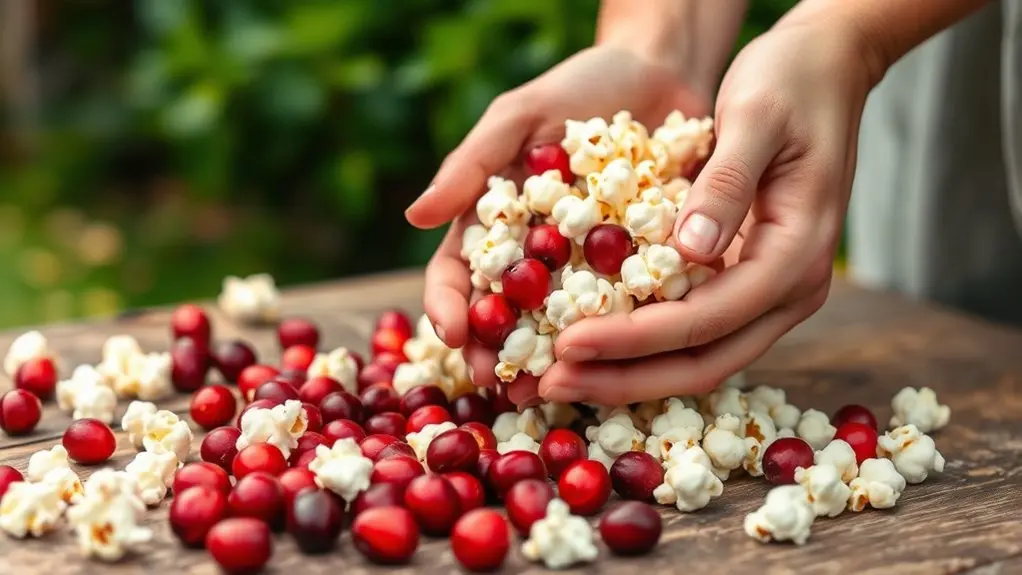
Since birds are sensitive to certain additives, you should prepare popcorn and cranberries carefully before feeding them. Use air-popped popcorn without salt, butter, or any seasoning to avoid harmful fats and sodium.
For cranberries, fresh is preferable. Dried cranberries often contain added sugars or preservatives that could harm birds. Cut fresh cranberries into smaller pieces to reduce choking risks and make it easier for smaller species to eat.
To present these treats, thread popcorn and cranberry pieces onto string or place them in craft feeders. This helps make the food accessible and limits waste.
Always check that the treats are clean and free from chemicals or pesticides.
Offer these foods in moderation to keep a balanced diet and avoid digestive issues. This way, you’re supporting overall bird health effectively.
What Birds Like Popcorn and Cranberries?
After preparing popcorn and cranberries properly, it helps to understand which bird species are most likely to consume these treats. Birds attracted to popcorn often seek the energy-dense kernels, especially when coated with peanut butter or seeds. Cranberries appeal due to their bright color and tart flavor, enticing species that include fruit in their diets.
Properly prepared popcorn and cranberries attract birds seeking energy-rich snacks and flavorful fruit treats.
However, preferences vary by species and natural feeding habits. So, it’s good to keep in mind that not every bird will go for both popcorn and cranberries.
Common birds that enjoy popcorn and cranberries include:
- American Robins, which favor berries like cranberries
- Blue Jays, attracted to both popcorn and fruit
- Chickadees, which nibble on seeds and occasionally popcorn
- Cardinals, drawn to bright fruits like cranberries
- Sparrows, opportunistic feeders that accept various treats
Knowing these preferences can really help you tailor your feeding strategies effectively.
How Often Should You Offer Popcorn and Cranberries to Birds?
You should offer popcorn and cranberries to birds just once or twice a week. This helps avoid any nutritional imbalances and keeps their digestion happy.
Of course, how often you do this might change depending on the type of bird and what they naturally eat.
Also, keep in mind the time of year. Birds might need different nutrients during migration or breeding seasons, so adjusting how often you offer these treats can be a good idea.
Frequency Of Feeding
How often should you offer popcorn and cranberries to birds to guarantee their health and natural behavior remain intact? You should provide these treats in moderation, typically a few times per week, to avoid disrupting their natural diet and instincts. Overfeeding can cause birds to rely too much on supplemental food, reducing their natural foraging behavior.
Cranberries, due to their acidity, must be given sparingly to prevent digestive issues. Plain, unsalted popcorn is safe but should never replace seeds and insects, which form the core of their nutrition.
Offer popcorn and cranberries a few times weekly. Avoid daily feeding to prevent dependence. Monitor birds’ reactions and adjust portions as needed.
Limit cranberry quantity to reduce acidity risks. And remember, maintaining a primary diet of seeds and insects is key for balance.
Seasonal Considerations
Although birds can safely consume popcorn and cranberries year-round, seasonal fluctuations in natural food availability influence how often you should offer these treats. During winter, when natural food sources are scarce, increasing the frequency to once or twice a week can support birds’ nutritional needs without risking overfeeding.
In other seasons, maintaining moderation is essential. Offering these snacks less frequently helps preserve a balanced diet.
Always provide freshly prepared, unsalted popcorn and cranberries without added sugars or preservatives to guarantee safety.
Additionally, rotating these treats with other food types encourages natural foraging behaviors and prevents dependency.
Fun Ways to Feed Birds Popcorn and Cranberries
When feeding birds popcorn and cranberries, breaking the popcorn into small, plain pieces guarantees safe consumption and reduces choking hazards. You can create engaging feeding experiences by incorporating these nutritious snacks in creative ways.
Both popcorn and cranberries offer essential energy and antioxidants, making them ideal for birds, especially during scarce winter months.
Consider these fun feeding techniques:
String cranberries and popcorn into edible garlands to hang in trees. Scatter small popcorn pieces and dried cranberries on flat surfaces. Combine popcorn and cranberries in a shallow dish for easy access.
You can also use a mesh feeder to hold cranberry clusters alongside popcorn. Place treats near natural foraging spots to encourage bird activity.
Just remember to avoid adding salt, sugar, or artificial flavors to keep the birds healthy and safe.
Frequently Asked Questions
Can Baby Birds Safely Eat Popcorn and Cranberries?
Baby birds shouldn’t eat popcorn because it can be a choking hazard and doesn’t provide any nutrients they need.
You can offer small, unsweetened cranberries, but only in small amounts. Just make sure the cranberries are soft and cut into tiny pieces so they’re easy to digest.
This helps avoid any potential risks and keeps the little birds safe and healthy.
Do Popcorn and Cranberries Attract Unwanted Pests or Predators?
Popcorn and cranberries act like a neon sign, attracting unwanted pests and predators. You’ll likely draw rodents and raccoons, which can outcompete birds and disrupt your feeding area’s ecological balance. So, it’s important to manage your offerings carefully.
Think of it this way: while these treats might seem harmless, they can invite more trouble than you expect. Keeping an eye on what you put out helps maintain a healthy environment for the birds you want to attract.
Can Popcorn or Cranberries Cause Allergies in Birds?
Yes, popcorn and cranberries can cause allergies in birds, especially if they eat too much.
It’s important to keep an eye on your birds for any signs like swelling, itching, or trouble breathing. If you notice anything unusual, it’s a good idea to check in with a vet right away.
Are There Specific Bird Species That Should Avoid These Treats?
Certain canaries, cockatiels, and conures should cautiously consume cranberries and popcorn, as their sensitive systems struggle with starches and acidity. You’ll want to monitor these species to prevent digestive distress or allergic reactions.
It’s better to keep an eye on how they react after eating these treats. If you notice any unusual behavior or symptoms, it’s a good idea to hold off on giving these foods for a while. Better safe than sorry when it comes to your feathered friends!
How Do Popcorn and Cranberries Affect Bird Digestion Long-Term?
You might notice that feeding birds excessive popcorn or cranberries can disrupt their digestion long-term by causing nutrient imbalances and potential gastrointestinal distress. So, it’s best to offer these treats sparingly and alongside their natural diet.
Keeping their diet balanced helps birds stay healthy and happy. Too much of these snacks can do more harm than good, even if they seem like a tasty treat. Just a little bit now and then is the way to go!
Conclusion
Feeding birds popcorn and cranberries is like offering a seasonal treat. If you do it occasionally and prepare the food properly, it can support their diet without causing harm. Studies show that plain, unsalted popcorn provides harmless calories. Fresh cranberries offer antioxidants too.
Remember, moderation is key because overfeeding can disrupt their natural foraging habits. Think of it like a gardener watering plants sparingly to avoid drowning the roots. You should offer these snacks occasionally to keep birds healthy and thriving in your backyard ecosystem.