
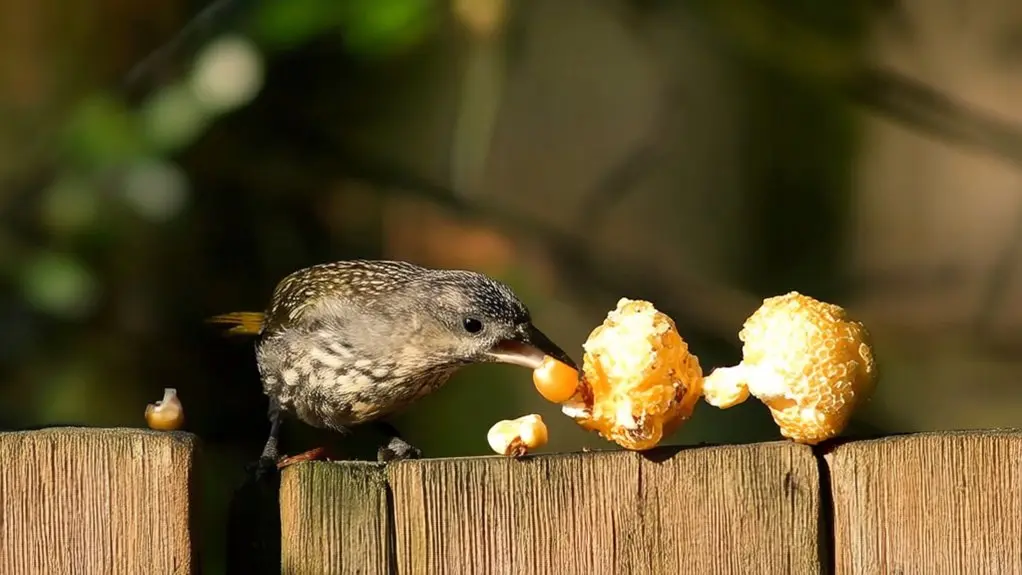
You can offer plain, air-popped popcorn kernels to larger birds like jays or pigeons, but you need to be very careful. Avoid any butter, salt, or flavorings, and always remove unpopped kernels to prevent choking.
Smaller birds shouldn’t have popcorn kernels because of digestive risks and physical harm. Popcorn provides little nutrition and can cause digestive issues if given improperly.
Keep an eye on safe preparation and feeding practices to protect your birds’ health as you explore better options.
Is Popcorn Kernels Safe for Birds?
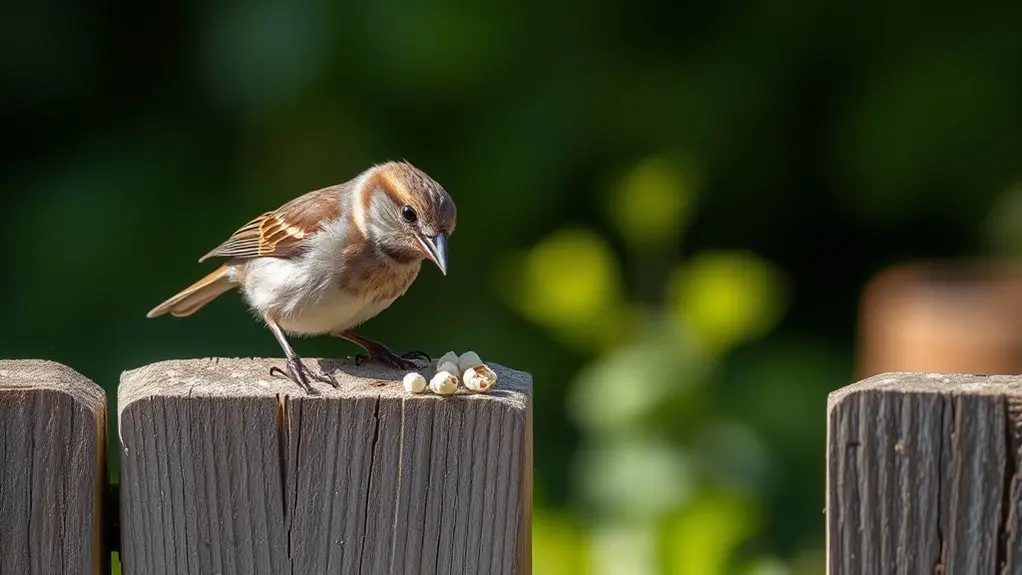
Although popcorn kernels might seem like a harmless snack, you should be cautious when offering them to birds. Unpopped kernels are generally suitable only for larger birds with strong beaks, like jays and woodpeckers.
However, smaller or more delicate species face choking hazards or potential damage to their beaks and throats if they try to eat these hard kernels.
If you choose to feed popcorn, plain, air-popped varieties without salt, butter, or flavorings are safer.
Keep in mind, though, popcorn lacks essential nutrients and should be given only occasionally, not as a regular diet component.
Feeding popcorn improperly can lead to health issues, so it’s vital to consider the bird species and avoid overfeeding this snack to maintain their well-being.
What Risks Does Popcorn Pose to Birds?
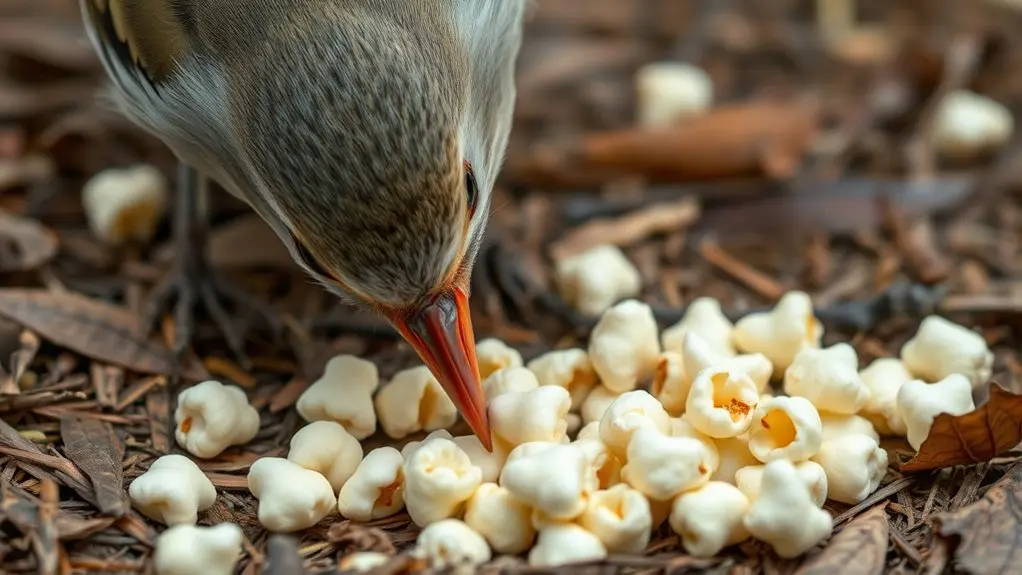
When offering popcorn to birds, you need to be aware of the various risks this snack carries. Hard kernels can get stuck in their throat or digestive tract, causing choking, blockages, or even perforation.
Unpopped kernels can also damage their beaks, especially in smaller or delicate species.
Unpopped kernels pose a risk of beak damage, particularly for smaller or more delicate bird species.
Commercial popcorn often contains butter, salt, and artificial flavorings, which are toxic and may cause pancreatitis or dehydration. Salted or seasoned popcorn can lead to sodium poisoning, resulting in lethargy, seizures, or kidney failure.
Birds also lack the enzymes needed to digest processed starches in popcorn, increasing the risk of bloating or bacterial overgrowth.
Considering these dangers, it’s best to avoid feeding birds popcorn to keep them safe and healthy. It’s always better to stick with snacks that are known to be bird-friendly.
That way, you can enjoy watching them without worrying about their well-being.
How Popcorn Affects Bird Digestion and Nutrition
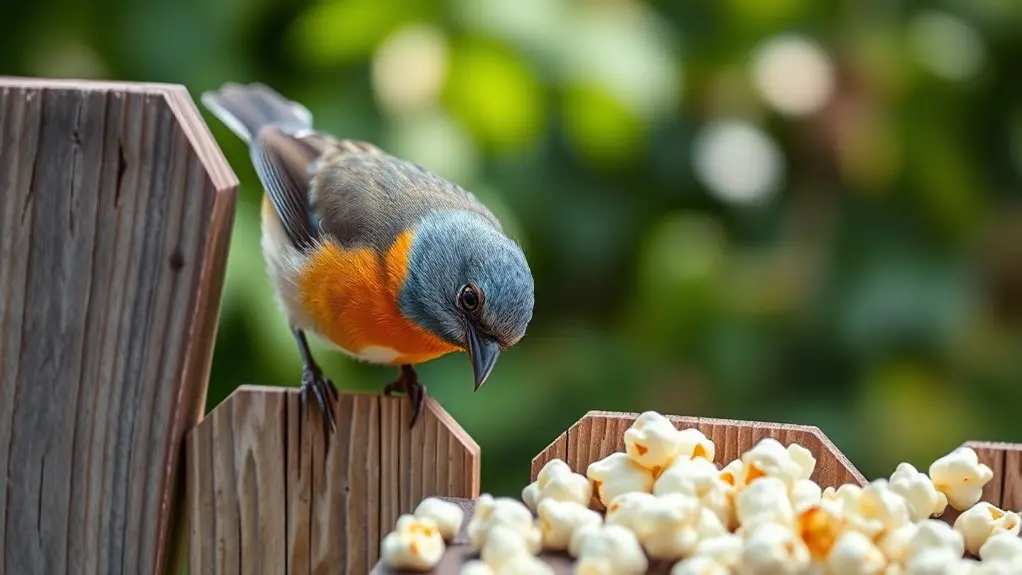
Since birds lack enough amylase enzymes to break down processed starches like those found in popcorn, their digestive systems struggle to handle this snack properly.
The popping process changes popcorn’s starch into a resistant form that doesn’t digest well and may ferment in their gut, causing bloating or harmful bacterial growth.
Also, unpopped kernels have hard hulls that can injure the digestive tract or cause choking.
Popcorn offers little nutritional benefit, mainly empty calories and resistant starch that can interfere with nutrient absorption.
Regular feeding of popcorn can disrupt your bird’s natural digestion and nutrient uptake. This increases the risk of malnutrition and digestive problems.
Which Birds Can Safely Eat Popcorn Kernels?
You should know that only birds with strong beaks, like jays and woodpeckers, can safely handle unpopped popcorn kernels.
Smaller birds, on the other hand, face risks such as choking because they can’t break the kernels properly.
To reduce hazards, some larger birds might actually benefit from kernels soaked in water to soften them up before eating.
Birds With Strong Beaks
Although many birds enjoy popcorn, only those with strong beaks like jays, woodpeckers, and pigeons can safely handle unpopped kernels. These birds have powerful beaks designed to crack tough shells. This makes it possible for them to eat kernels without risking injury.
If you want to help these birds, consider soaking kernels in water to soften them. This reduces the effort they need to consume the kernels.
Always make sure the popcorn you offer is plain, free from salt, butter, or additives since these can harm birds’ health.
While strong-beaked birds can manage unpopped kernels, you should remain cautious and watch their eating habits to ensure safety.
Providing suitable food helps maintain their wellbeing and prevents potential harm from inappropriate snacks.
Small Birds’ Risks
When small birds like finches and canaries try to eat unpopped or partially popped popcorn kernels, they face a significant choking risk because of their small beaks and delicate throats. These birds don’t have the strong beaks needed to crack hard kernels, so unpopped popcorn isn’t safe for them.
Even softened or soaked kernels can still be a choking hazard if they’re not prepared properly.
On top of that, small birds have limited digestive enzymes and might struggle to process the starch in popcorn. This could cause digestive issues, which is something you definitely want to avoid.
Given these risks, it’s best not to offer popcorn kernels to small birds at all.
Prioritizing their safety means understanding that the dangers of choking and health complications outweigh any possible benefits popcorn might’ve for these delicate species.
Popcorn Kernel Preparation
Since different bird species have varying abilities to handle popcorn kernels, preparation plays a vital role in ensuring their safety. Larger birds like jays and woodpeckers can crack and eat unpopped kernels safely, but smaller birds risk choking or dental damage.
To protect smaller birds, soak kernels in water to soften them before feeding. Popped popcorn is generally safer but must be plain and additive-free.
| Bird Type | Kernel Preparation |
|---|---|
| Large birds | Can eat unpopped kernels |
| Small birds | Should get soaked kernels |
| All birds | Prefer plain popped popcorn |
How to Prepare Popcorn Kernels Safely for Birds
To prepare popcorn kernels safely for birds, you’ll want to use plain, air-popped kernels without any added oils or seasonings. It’s best to avoid buttery or salted popcorn since those can be harmful to birds.
Also, make sure to remove any unpopped kernels. Those can be a choking hazard, so it’s better to be safe than sorry.
Once the popcorn is popped, let it cool completely before offering it to your feathered friends to avoid burns.
If you’re feeding smaller birds, soaking the unpopped kernels can help soften them up. This way, it reduces the risk of choking and makes it easier for them to eat.
Just remember, always keep an eye on your birds when trying new treats!
Safe Preparation Methods
Although popcorn can be a delightful treat for birds, you should always use plain, unsalted, and unbuttered kernels to keep them safe. The best method is air-popping the kernels without adding oil or seasonings, which avoids harmful additives.
For smaller birds, soak unpopped kernels in water to soften them, making consumption easier.
Always let cooked or soaked popcorn cool completely before offering it to prevent burns or choking hazards. Be sure to remove any unpopped kernels, as they pose a choking risk.
By carefully preparing popcorn this way, you provide a safer snack for your feathered friends while minimizing potential dangers associated with additives and hard kernels.
This cautious approach guarantees you’re protecting their health effectively.
Avoiding Common Hazards
Preparing popcorn kernels with care goes beyond selecting plain, unsalted varieties and proper cooking methods. You should always choose unflavored, unsalted kernels to avoid exposing birds to harmful additives.
To make kernels safer, especially for smaller birds, soak unpopped kernels in water to soften them.
Use an air-popper without oil or butter to fully pop the kernels, eliminating added fats and seasonings that can be toxic.
Before offering popcorn, remove all unpopped kernels to prevent choking and damage to beaks or digestive tracts.
Make sure the popcorn is completely cooled and free from packaging remnants or foreign objects to avoid burns and ingestion hazards.
Why Avoid Buttered or Salted Popcorn for Birds
When you offer buttered or salted popcorn to birds, you expose them to harmful fats, oils, and excessive sodium that can severely impact their health. Buttered popcorn’s fats and oils may cause pancreatitis and obesity, while salted popcorn’s high sodium content risks dehydration and kidney failure.
Both disrupt a bird’s electrolyte balance and metabolic functions, which can really undermine their overall well-being.
Plus, artificial flavorings and seasonings in commercial popcorn can be toxic and damage their health even more.
Feeding birds these types of popcorn also raises the risk of choking and digestive issues, which could lead to long-term complications.
Better Alternatives to Popcorn Kernels for Feeding Birds
If you want to provide birds with nutritious and safe food, choosing better alternatives to popcorn kernels is essential. Seeds like sunflower, millet, and safflower offer natural, nutrient-rich options that closely match birds’ diets in the wild.
Providing birds with nutrient-rich seeds like sunflower and millet offers a safer, more natural alternative to popcorn.
Fresh fruits such as berries, oranges, and grapes provide crucial vitamins and hydration, enhancing overall health.
Unsalted nuts like peanuts and almonds supply healthy fats and proteins suitable for many species. Additionally, commercial bird pellets are formulated to meet specific nutritional needs, ensuring a balanced diet.
By offering a variety of these natural foods, you support bird health while avoiding the risks linked to processed snacks like popcorn.
This cautious approach helps you feed birds safely and responsibly. It’s really worth taking a little extra time to pick the right foods. Your feathered friends will thank you for it!
Frequently Asked Questions
Can Birds Eat Microwave Popcorn Bags or Residue?
You shouldn’t let birds eat microwave popcorn bags or residue, as these contain harmful chemicals, artificial additives, and salty, buttery coatings that can seriously harm them.
Always offer plain, untreated popcorn instead to keep birds safe and healthy. It’s a much better choice and way less risky for our feathered friends.
How Often Can I Feed Popcorn to Wild Birds?
You might worry about birds relying too much on popcorn, so limit feeding to once a week. This keeps their natural diet balanced and prevents health issues.
Doing this helps ensure they stay healthy and continue foraging naturally. It’s all about giving them a little treat without messing up their usual eating habits.
Does Popcorn Attract Certain Bird Species More Than Others?
Yes, popcorn attracts larger birds like jays and pigeons more than smaller species. You’ll find ground-foragers and urban birds drawn to it, especially if it’s flavored.
But seed-eaters usually prefer their natural grains instead. So, while popcorn can be a fun treat, it’s not the favorite for every bird. Just something to keep in mind when feeding different species.
Can Popcorn Cause Allergies in Birds?
In the age of dial-up, you’d know popcorn rarely causes bird allergies, but additives and unpopped kernels can trigger reactions. You should avoid giving birds processed popcorn to keep them safe and healthy.
It’s better to stick with plain, air-popped popcorn if you really want to share a treat. Birds have delicate digestive systems, so it’s always good to be cautious with what they eat. Just remember, when in doubt, skip the popcorn altogether.
Is Popcorn Safe for Baby or Juvenile Birds?
You shouldn’t feed baby or juvenile birds popcorn because it poses choking hazards and digestive risks. Stick to age-appropriate, nutritious foods instead. This way, you ensure their safety and healthy development.
Avoid exposing them to harmful ingredients or textures. It’s better to keep things simple and safe for your little feathered friends.
Conclusion
When it comes to feeding birds popcorn kernels, remember that not all that glitters is gold. While plain, unsalted, and unbuttered kernels might be safe in moderation, they can pose digestive risks if given improperly. So, it’s best to be careful with how much and what kind you offer.
Avoid buttered or salted popcorn to protect their health. Those additives aren’t good for birds and can cause problems. Instead, always prioritize bird-friendly alternatives for balanced nutrition.
By staying cautious and informed, you’ll help guarantee the birds enjoy treats without harm. Keeping their wellbeing front and center is what really matters.