
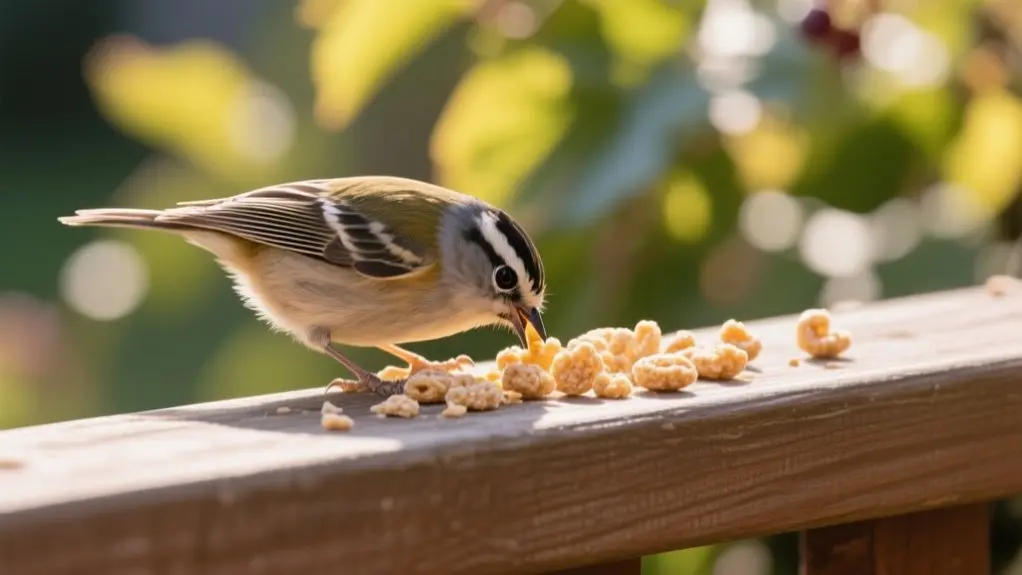
You shouldn’t feed birds Grape Nuts because their hard texture makes them tough to eat, and they lack the essential nutrients birds need. Grape Nuts also often contain added sugars and preservatives that can harm birds’ health, causing dehydration and digestive issues.
Birds like crows prefer softer, natural foods such as seeds and insects for a balanced diet. If you want to provide healthy treats, understanding what’s best for their nutrition and safety is key.
What Are Grape Nuts Made Of?
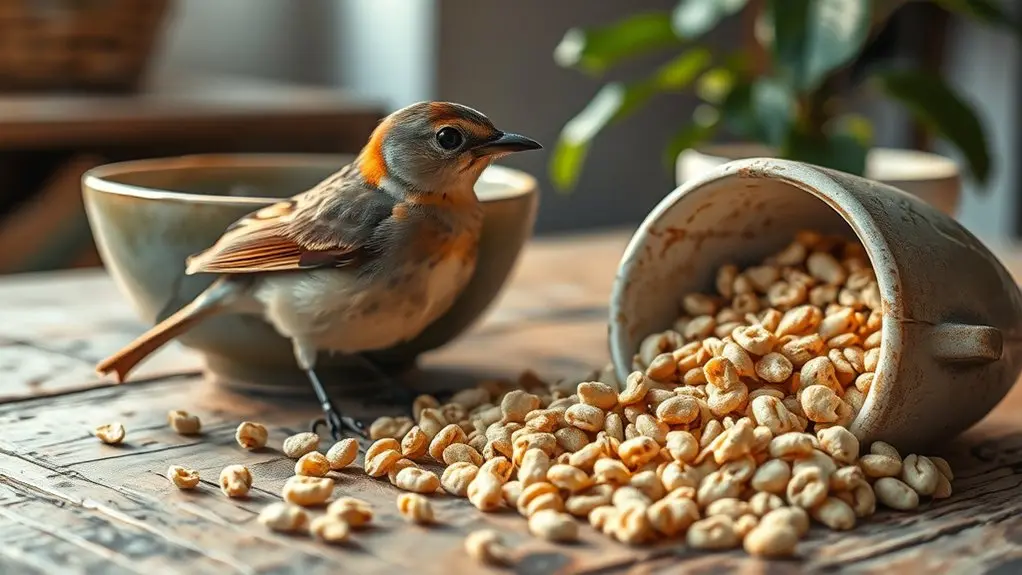
Grape Nuts are made mainly from whole grain wheat flour and barley malt extract, giving them a dense and crunchy texture. When baked, the mixture forms a hard cereal that’s then crushed into small nuggets.
These grape nuts are rich in fiber and low in sugar, making them a nutritious option for many diets. Each serving delivers a good balance of carbohydrates, protein, and some essential vitamins.
While grape nuts aren’t specifically designed for birds, they’re often considered a whole grain food suitable for certain species in moderation.
However, you should keep in mind that the hard texture of grape nuts might be challenging for some birds, especially larger ones like crows, to handle easily.
Can Birds Eat Grape Nuts Safely?
You might be wondering if Grape Nuts are a safe snack for birds.
Well, the thing is, their hard texture can make it tough for birds to eat them, especially for crows.
When it comes to nutrition, they don’t really offer much compared to what birds get from natural foods.
Plus, experts aren’t entirely sure how suitable Grape Nuts are for birds.
Nutritional Suitability Concerns
Although Grape Nuts contain some carbohydrates, they’re generally too hard and dry for birds like crows to eat comfortably.
When considering nutritional suitability concerns, you should note that Grape Nuts don’t align well with what many birds need. Here’s why:
- Their hard texture is similar to stale wheat bread, making them difficult to break down.
- Birds like crows prefer seeds and insects, which provide more balanced nutrients.
- Research remains inconclusive on whether Grape Nuts offer real benefits to birds, so experts advise caution.
If you want to support your feathered friends, it’s best to avoid Grape Nuts and focus on foods that better meet their dietary needs.
Nutritional suitability concerns make Grape Nuts a poor choice for most birds.
Texture and Consumption Issues
Since birds like crows struggle with hard foods, feeding them Grape Nuts can pose real challenges. The texture of Grape Nuts is particularly tough and crunchy, making it difficult for many birds to consume safely.
Unlike softer or more natural foods, this hard texture can cause feeding difficulties, especially for species that prefer gentler bites. You might notice that crows often reject Grape Nuts, showing their preference for easier-to-eat options.
Furthermore, the texture resembles stale wheat bread, which doesn’t offer much nutritional value or appeal.
If you’re considering Grape Nuts for birds, keep in mind that their tough texture can discourage feeding and might pose risks without clear benefits.
Understanding these texture and consumption issues is key to choosing suitable bird foods.
Research and Observations
While some bird enthusiasts have tried feeding Grape Nuts to crows, the results haven’t been promising. The hard, stale texture, much like old wheat bread, makes it tough for birds to eat effectively. Early attempts were often unsuccessful, sometimes worsened by rain. Research and observations suggest caution.
If you want to see healthy birds eat, consider these points:
- Grape Nuts’ tough texture can pose choking hazards or digestive issues.
- Weather impacts feeding success; wet conditions make Grape Nuts even harder to eat.
- Experts recommend safer alternatives like dried mealworms or seeds.
Until more conclusive research emerges, it’s best to avoid feeding Grape Nuts to birds. Focus on foods that meet their dietary needs and keep them safe.
Why Grape Nuts Are Hard for Birds to Eat
When you offer Grape Nuts to birds, you quickly notice their hard and stale texture makes them tough to eat, especially for species like crows. Their birds’ beak isn’t designed to handle such dense, dry food, which is similar to stale wheat bread.
This hardness creates a real challenge, as birds struggle to break down the chunks, often deterring them from eating at all. Initial attempts to feed Grape Nuts to crows showed they avoided them, likely due to this difficulty.
You’ll find that softer foods, like seeds or dried mealworms, suit birds’ beaks much better, allowing them to eat comfortably and safely.
Why Grape Nuts Aren’t Great Nutrition for Birds
Though the tough texture of Grape Nuts already makes them unappealing, their nutritional value falls short for birds like crows. You might think a cereal like Grape Nuts could offer good nutrition, but it lacks what birds really need.
Specifically, Grape Nuts don’t provide enough essential proteins for muscle and feather growth, adequate carbohydrates to fuel active birds, or crucial vitamins and minerals for overall health.
Because of this, feeding Grape Nuts to birds can lead to nutritional gaps and potential digestive issues. Their stale, wheat-like composition doesn’t support a balanced avian diet.
Why Added Sugars and Preservatives Can Harm Birds
You really shouldn’t feed birds foods that have added sugars. Their bodies just can’t handle them properly, which can lead to obesity and other health problems.
Also, preservatives found in cereals like Grape Nuts might mess with their metabolism and even weaken their immune systems.
Knowing these risks makes it easier to choose safer options for your feathered friends.
Sugar Effects On Birds
Because added sugars and preservatives can disrupt a bird’s natural metabolism, feeding them foods like Grape Nuts poses serious health risks.
Understanding sugar effects on birds helps you avoid harming your feathered friend.
Excessive sugar intake can trigger obesity and diabetes, impairing their metabolism and overall health. It can also weaken their immune system, making birds more vulnerable to infections.
Sugar can cause behavioral changes such as hyperactivity or lethargy, reducing their quality of life.
In addition, sugary foods often lead to dental problems, which can affect a bird’s ability to eat properly.
When you feed birds processed foods high in sugar, you risk compromising their health and longevity.
Preservative Risks Explained
Added sugars aren’t the only concern when feeding birds cereals like Grape Nuts; preservatives and other additives can pose serious health risks as well.
Preservatives in processed cereals can disrupt a bird’s delicate digestive system, leading to discomfort and long-term health problems.
Many cereals also contain artificial flavors and colors that may cause toxicity over time, further endangering your bird’s well-being.
Furthermore, high salt content in such foods can cause dehydration and kidney issues, as birds aren’t equipped to handle excessive sodium.
When you offer cereals with preservatives, you risk exposing birds to harmful substances that their bodies can’t process properly.
To keep your feathered friends safe, it’s best to avoid processed cereals and choose fresh, natural foods instead.
Feeding Grape Nuts to Crows: Our Observations
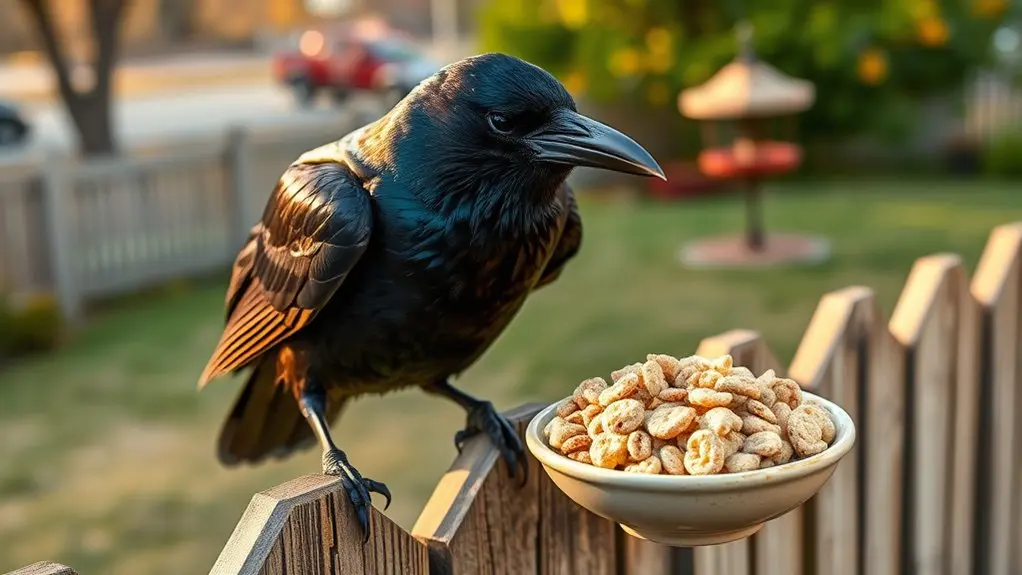
Although we initially tried feeding Grape Nuts to crows, they showed little interest, likely due to the cereal’s hard texture resembling stale wheat bread.
Crows showed little interest in Grape Nuts, likely because of its hard, stale wheat bread-like texture.
You’ll notice that crows prefer bird food that’s easier to eat and digest.
Here’s what we observed:
- The tough, crunchy texture made it difficult for crows to peck and swallow the cereal.
- Rainy weather seemed to reduce their willingness to experiment with Grape Nuts.
- Crows often ignored the Grape Nuts in favor of softer, more familiar food sources.
While we’re still researching Grape Nuts’ nutritional suitability for crows, it’s clear that this cereal isn’t their favorite bird food option.
You’ll find that crows gravitate toward foods better aligned with their dietary needs.
Better Food Alternatives to Grape Nuts for Birds
When you want to feed birds something more appealing and nutritious than Grape Nuts, consider offering dried mealworms, seeds, or fresh fruits like berries and apples. These alternatives provide essential nutrients and are easier for birds to digest.
Unlike hard cereals, nuts and seeds fit naturally into their diets, while fresh fruits give hydration and vitamins.
| Food Type | Benefits | Notes |
|---|---|---|
| Dried Mealworms | High protein | Favored by many birds |
| Seeds | Nutrient-rich | Natural part of diet |
| Fresh Fruits | Hydrating, vitamin-rich | Remove seeds from apples |
| Whole-Grain Cereal | Easier to digest | Shredded wheat preferred |
| Insects & Bugs | Promotes better health | Preferred over processed |
Offering these foods keeps your feathered friends healthy and happy.
Choosing Safe, Nutritious Foods for Birds
After exploring better food options than Grape Nuts, it’s important to focus on choosing safe and nutritious foods that truly benefit birds.
You want to offer safe foods that support their health without risking harm. Consider these three options:
- Low-sugar, whole-grain cereals provide essential proteins, carbohydrates, and vitamins without excess additives.
- Seeds and native berries supply natural nutrients and antioxidants that birds need daily.
- Dried mealworms are a great protein boost, especially for insect-eating species like crows.
Human Foods Birds Should Avoid (Besides Grape Nuts)
Because birds have sensitive digestive systems, you need to avoid feeding them certain human foods that can cause serious harm. Among the human foods birds should avoid are chocolate and avocados.
Chocolate contains toxins that can severely harm birds, while avocados have persin, which may cause dangerous heart problems.
Moldy bread is another risky food; it can lead to illness or even death.
Dairy products, like milk and soft cheeses, should also be off-limits since birds are lactose intolerant and can suffer digestive issues.
Moreover, foods high in salt, such as salted nuts, can be harmful because birds can’t process salt effectively.
To keep your feathered friends healthy, steer clear of these harmful human foods and stick to safe options instead.
How Nuts, Seeds, and Berries Compare to Grape Nuts
When you look at nuts, seeds, and berries compared to Grape Nuts, you’ll see some pretty big differences in both nutrition and texture.
Birds tend to prefer softer, natural foods because they’re easier to eat and usually better for them than hard, processed cereals like Grape Nuts.
Knowing these differences can really help you pick the best options when feeding wild birds.
Nutritional Differences Explained
Although Grape Nuts might seem like a convenient snack, they don’t offer the same nutritional benefits that nuts, seeds, and berries provide to birds. Birds that eat natural foods get essential nutrients that Grape Nuts lack.
Here’s how they compare:
Nuts and seeds supply essential fats and proteins, fueling birds’ energy and overall health. Berries provide important vitamins and moisture, which are significant for hydration and nutrient intake.
Grape Nuts, resembling stale wheat bread, are low in nutrition and hard to consume, potentially harming birds.
If you want to support birds that eat nutritious foods, it’s best to offer seeds, nuts, and berries instead of Grape Nuts. These natural foods align with their dietary needs much better than processed cereals.
Texture and Consumption Challenges
Many birds struggle with the hard, stale texture of Grape Nuts, making them tough to eat and digest. This texture resembles stale wheat bread, which can particularly challenge crows and other birds.
Unlike Grape Nuts, nuts and seeds offer a softer texture that’s easier for birds to consume and digest. They provide essential nutrients without risking injury.
Berries also have a naturally softer texture, whether whole or crushed, making them more suitable for birds’ diets.
The hard consistency of Grape Nuts could cause feeding difficulties or even harm, so you should consider these texture-related challenges before offering them to birds.
While Grape Nuts may seem convenient, their texture makes nuts, seeds, and berries better choices for your feathered friends.
Natural Versus Processed Foods
The texture challenges of Grape Nuts highlight a bigger difference between processed cereals and the natural foods birds prefer. Unlike hard, processed Grape Nuts, natural foods like seeds, nuts, and berries offer birds crucial nutrients and easier digestion.
When feeding birds, keep these natural foods in mind:
- Soft seeds and nuts provide energy and are easier to eat.
- Fresh berries deliver important vitamins and moisture.
- Insects and dried mealworms offer protein birds crave.
While Grape Nuts can supply some nutrition, their hardness and lack of freshness make them less appealing.
You’ll support birds’ health best by offering a variety of natural foods instead of relying on processed cereals like Grape Nuts.
Natural foods align more closely with birds’ dietary needs and feeding habits, ensuring they thrive.
Tips for Offering Healthy Treats to Backyard Birds
When you offer healthy treats to backyard birds, you help support their nutrition and attract a variety of species. Choose a diverse food source like seeds, dried mealworms, and fresh fruits to provide essential nutrients and satisfy different birds’ preferences.
Avoid hard, stale foods such as Grape Nuts, since their texture can be tough to eat and lacks proper nutrition. Use open dish or tray feeders for easy access to nuts and berries, improving the birds’ feeding experience.
Make sure any treats are free from additives, salts, or coatings, as these can harm birds.
Finally, clean your feeders regularly to prevent mold and contamination, ensuring a safe and healthy environment for your feathered visitors.
Understanding the Role of Natural Foods in Bird Health
Because birds rely on natural foods like seeds, insects, and berries for essential nutrients, you’ll help support their health by offering these options.
Natural foods provide the energy and nutrients birds need to thrive, boosting their vigor and longevity.
To keep your feathered visitors healthy, focus on:
- Native plants that attract local bird species familiar with these natural foods.
- Dried mealworms and raw nuts, which supply high energy and essential fats.
- Avoiding processed foods, which can harm digestion and overall well-being.
Frequently Asked Questions
Can Baby Birds Eat Grape Nuts Safely?
You shouldn’t feed baby birds Grape Nuts safely because their hard texture makes it tough for them to eat and digest.
They need softer foods that provide proper nutritional balance, including vital proteins and fats for growth.
Instead, you should offer specialized baby bird formulas or soaked grains that support their development.
Prioritizing nutritional balance guarantees baby birds stay healthy and thrive during their critical early stages.
How Often Can I Feed Birds Grape Nuts?
Think of feeding Grape Nuts like giving birds a crunchy surprise, not a daily feast. You should offer them sparingly, no more than once or twice a week, following proper feeding guidelines.
Too often, their hard texture can upset digestion and isn’t ideal as a staple.
Mix Grape Nuts with softer seeds or dried mealworms to create a balanced meal that keeps your feathered friends happy and healthy.
Do Certain Bird Species Prefer Grape Nuts Over Others?
Yes, certain bird species do have different taste preferences when it comes to Grape Nuts.
You’ll find parrots and cockatiels often enjoy them more because they can handle the hard texture and appreciate the taste.
On the other hand, crows and smaller birds usually prefer seeds and insects, showing less interest in Grape Nuts.
Can Grape Nuts Cause Allergic Reactions in Birds?
Imagine a sudden storm cloud darkening a sunny sky. That’s how allergy symptoms can surprise your bird after eating Grape Nuts.
While these cereals don’t typically trigger allergies, your feathered friend might still react unpredictably.
Watch closely for signs like sneezing, itching, or unusual behavior. If you notice these allergy symptoms, stop feeding Grape Nuts immediately and consult an avian vet to keep your bird safe and healthy.
Is It Okay to Mix Grape Nuts With Birdseed?
It’s not ideal to mix Grape Nuts with birdseed because their hard texture can make eating tough for birds.
If you care about bird nutrition, you’ll want to focus on foods that provide essential nutrients, like seeds and insects, rather than relying on Grape Nuts.
Offering a variety of natural foods better supports birds’ dietary needs and keeps them healthy, so avoid mixing Grape Nuts directly with birdseed.
Conclusion
So, can birds eat Grape Nuts? While they’re not toxic, they’re definitely not the best choice for your feathered friends. Their hard texture and added sugars make them tough to digest and less nutritious.
When it comes to bird treats, it’s better to stick with natural nuts, seeds, and berries. After all, you don’t want to throw a wrench in their health. Keep things simple and let nature do the heavy lifting!