
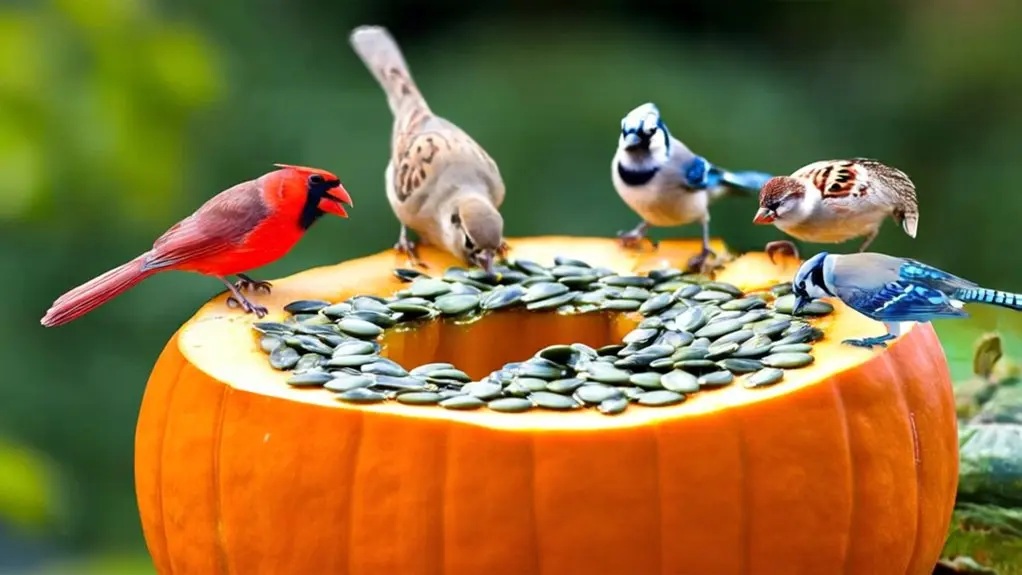
You can safely feed birds raw, unsalted pumpkin seeds. These seeds offer around 30% protein, zinc, omega fatty acids, and antioxidants that support immune health, feathers, and energy. Plus, they contain cucurbitacin, a natural compound that helps expel intestinal parasites.
Just avoid roasted or salted seeds because additives can harm birds and reduce the nutritional value. It’s best to offer seeds in small portions 2-3 times a week, especially during fall and winter. This way, you’re supplementing their natural diets without overdoing it.
If you want to help your feathered friends stay healthy, learning how to feed pumpkin seeds properly can make a real difference. It’s an easy and effective way to boost their health and energy.
Are Raw, Unsalted Pumpkin Seeds Safe for Birds?
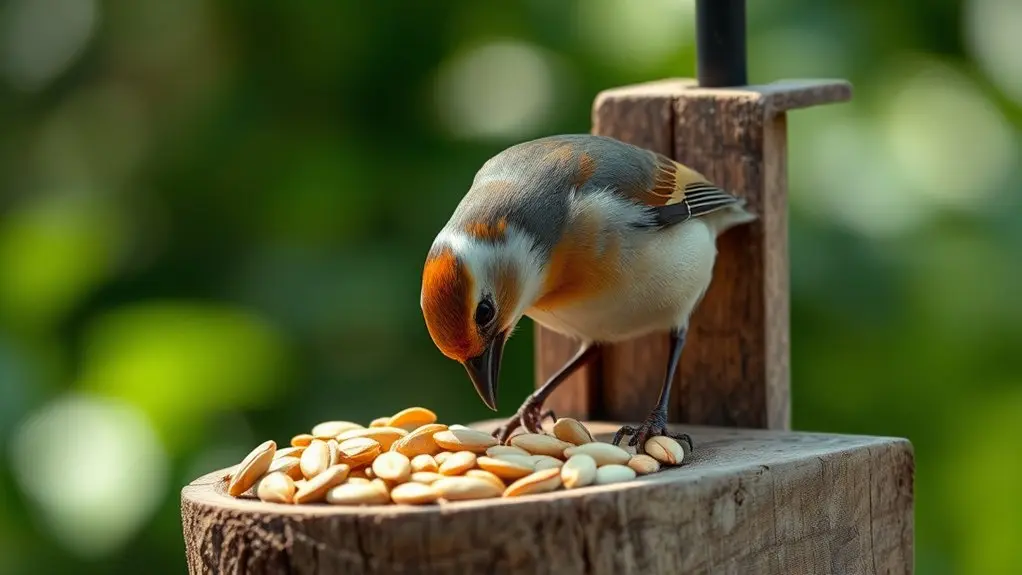
Although you might wonder whether pumpkin seeds are suitable for birds, raw, unsalted pumpkin seeds are safe and provide valuable nutrients such as essential fats, protein, and vitamins.
You should avoid salted or roasted seeds because added salt and oils can negatively impact avian health.
Pumpkin seeds naturally contain cucurbitacin, which, in small quantities, poses no harm and may even act as an antiparasitic agent.
When feeding birds, offer pumpkin seeds in moderation to prevent nutritional imbalance. Excessive treats can disrupt their diet.
Properly dried, raw pumpkin seeds serve as a natural snack that supports energy levels and immune function.
Nutritional Benefits of Pumpkin Seeds
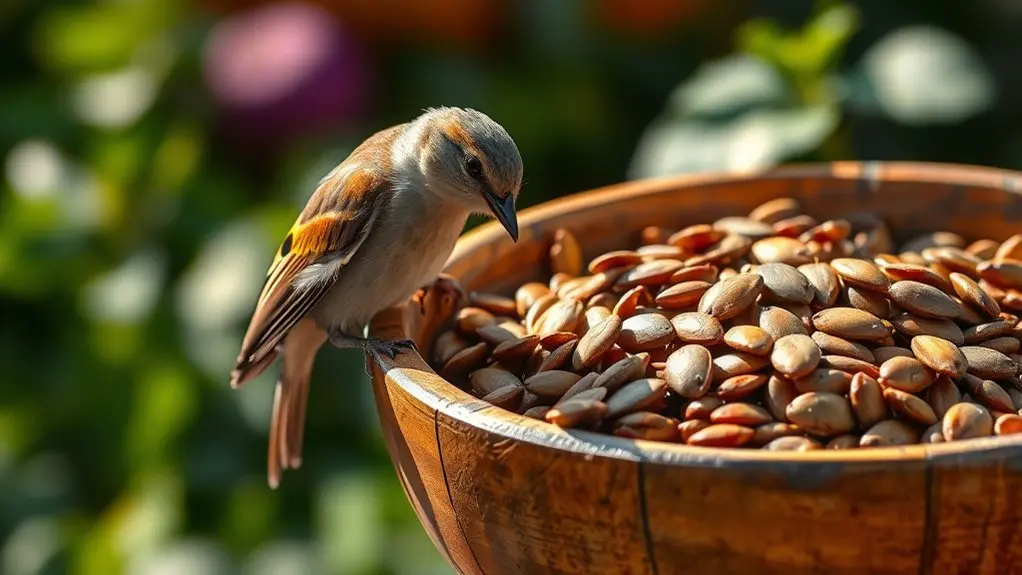
When you offer birds raw, unsalted pumpkin seeds, you also provide a highly nutritious food source that supports their overall health. Pumpkin seeds contain about 30% protein, supplying essential amino acids critical for tissue repair and growth.
Feeding birds raw, unsalted pumpkin seeds delivers vital protein and amino acids for tissue repair and growth.
They’re rich in zinc, which enhances immune function, helping birds resist infections.
The seeds also offer omega fatty acids, crucial for maintaining healthy feathers and skin integrity. Beta-carotene in pumpkin seeds acts as an antioxidant and boosts immune response, while also improving yolk pigmentation in poultry.
Additionally, magnesium and other antioxidants present contribute to increased energy metabolism and disease resistance.
How Pumpkin Seeds Can Help Birds Fight Parasites
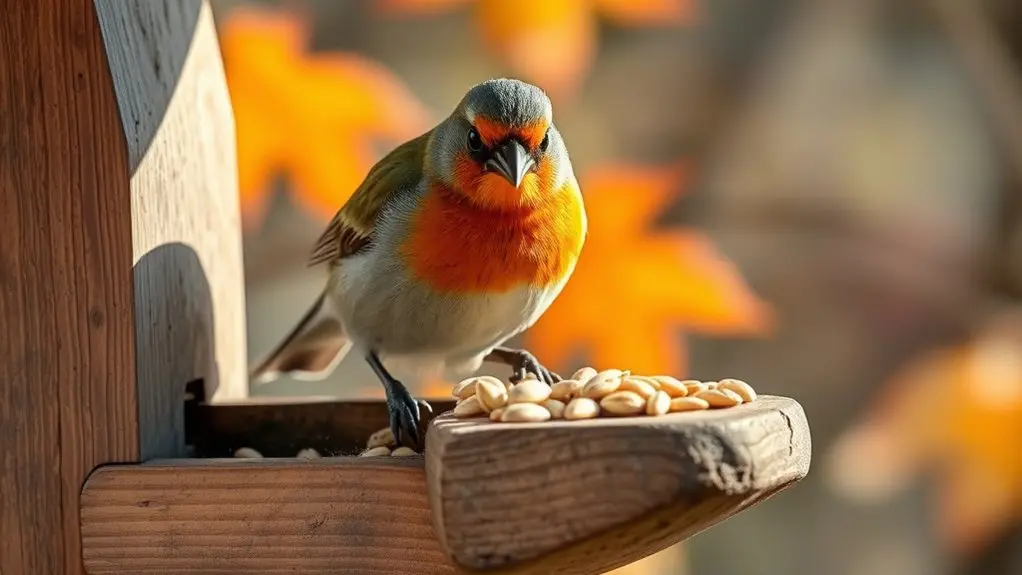
You’ll find that pumpkin seeds contain cucurbitacin, a compound that has antiparasitic effects. It can actually paralyze intestinal worms in birds.
So, by including these seeds in their diet, you’re helping support the natural way birds expel parasites during digestion.
Plus, using pumpkin seeds along with other treatments can boost your birds’ resistance to parasitic infections safely and effectively.
Pumpkin Seeds’ Antiparasitic Properties
Because pumpkin seeds contain cucurbitacin, a compound known to paralyze intestinal parasites such as roundworms and tapeworms, they play a supportive role in helping birds combat parasitic infections. Cucurbitacin’s paralytic effect impairs parasites’ ability to maintain their hold within the digestive tract, which makes it easier for the birds to naturally expel them.
Feeding pumpkin seeds regularly and in moderation can coat the bird’s digestive lining, helping with worm removal. But keep in mind, pumpkin seeds alone aren’t a standalone dewormer. Their antiparasitic properties work best when you include them as part of a thorough parasite management plan that also has other herbal treatments.
Using pumpkin seeds seasonally, especially in fall when pumpkins are abundant, really helps optimize their benefits within a multi-herb protocol. This approach supports birds’ overall health by reducing the parasitic load without relying solely on synthetic medications. It’s a natural way to keep your birds feeling their best.
Benefits of Cucurbitacin Compound
Although cucurbitacin is a bitter compound found in pumpkin seeds, it plays a crucial role in helping birds combat intestinal parasites such as roundworms and tapeworms. When birds ingest cucurbitacin, it paralyzes parasitic worms, facilitating their expulsion from the digestive tract.
You can support birds’ parasite management by understanding these benefits:
- Cucurbitacin acts as a natural anthelmintic, disrupting worm motility and reducing parasite load.
- Combining cucurbitacin with other herbal compounds enhances its antiparasitic effectiveness.
- Regular, moderate feeding of raw pumpkin seeds sustains cucurbitacin levels, promoting ongoing parasite resistance.
Supporting Bird Health Naturally
When birds eat raw, unsalted pumpkin seeds regularly, they get cucurbitacin. This compound helps paralyze and expel intestinal parasites like roundworms and tapeworms.
Adding these seeds to their diet supports their immune system and overall health by naturally reducing parasite loads.
This antiparasitic effect works best when combined with a good health management plan, which includes proper nutrition and habitat care.
Offering pumpkin seeds in the fall matches natural harvesting cycles. This timing provides parasite control when birds are most vulnerable.
By doing this, you help create stronger, healthier bird populations without needing chemical treatments.
Pumpkin seeds become a valuable, natural way to support bird health and boost their resilience against internal parasites.
The Right Way to Feed Pumpkin Seeds to Wild Birds
If you want to feed pumpkin seeds to wild birds safely and effectively, you need to prepare and present them correctly. Raw, unsalted pumpkin seeds are ideal because they provide essential protein and healthy fats.
Feeding raw, unsalted pumpkin seeds offers wild birds vital protein and healthy fats safely and effectively.
To guarantee safety and maximize benefits, follow these steps: Thoroughly dry the seeds to prevent mold growth, which can harm bird health. Break seeds into smaller pieces for small birds or offer whole seeds to larger species to avoid choking hazards.
Scatter seeds on the ground or place them in sheltered, predator-free feeders. Just avoid areas that expose birds to threats.
Also, steer clear of seasoned or chemically treated seeds since these can be toxic. By following these guidelines, you’re providing a nutritious and safe food source that supports wild bird health effectively.
Risks of Feeding Roasted or Seasoned Pumpkin Seeds
Because roasted or seasoned pumpkin seeds often contain added salt, spices, and chemicals, feeding them to wild birds poses significant health risks.
Salted seeds can lead to dehydration and kidney stress in birds, as their bodies can’t efficiently process excessive sodium.
Also, spices and artificial flavorings may irritate the avian digestive tract or introduce toxic compounds. This could cause digestive distress or even poisoning.
The roasting process itself reduces the seeds’ nutritional value by degrading some beneficial fats and proteins, which limits their health benefits.
Chemically treated seeds present toxicity risks too, which can compromise bird health and survival.
So, to protect wild birds, avoid offering roasted or seasoned pumpkin seeds.
Instead, provide raw, untreated seeds that support their dietary needs safely and effectively.
How Often to Feed Birds Pumpkin Seeds
You should feed birds pumpkin seeds about two to three times a week. This helps provide them with essential nutrients without the risk of overfeeding.
It’s a good idea to offer these seeds especially during the fall and winter months. That way, you’re supporting their natural energy needs when it gets colder outside.
Just remember to keep the portions small—only a handful of unsalted, unseasoned seeds. This helps make sure they get a balanced diet.
Feeding Frequency Guidelines
Although pumpkin seeds offer valuable nutrients, feeding them to birds requires careful frequency management to maintain a balanced diet. You should avoid daily feeding, as this can cause nutritional imbalances.
Instead, follow these guidelines to optimize benefits: Feed pumpkin seeds once or twice per week to provide essential nutrients without overfeeding.
Limit pumpkin seeds to no more than 10% of the bird’s daily diet to prevent dependency.
Always offer seeds unsalted and free from seasonings to avoid health complications.
This way, you keep your feathered friends healthy and happy!
Seasonal Feeding Considerations
When seasonal changes bring an abundance of pumpkins, feeding birds pumpkin seeds a few times per week can provide valuable nutrition without exceeding 10% of their diet. During fall, seeds offer essential fats and proteins. In winter, they supply extra energy to help birds cope with cold stress.
Always dry and unsalt the seeds to avoid any health risks. Limiting feedings prevents dependency and supports natural foraging behavior.
| Season | Feeding Frequency | Nutritional Benefit |
|---|---|---|
| Fall | 2-3 times per week | Protein, fats for molting |
| Winter | 3-4 times per week | Energy for thermoregulation |
| Other | Occasional treats | Dietary variety |
Try to adjust the feeding frequency based on bird activity and environmental conditions. This way, you help maintain a balanced diet for the birds.
Creative Ways to Share Pumpkin Seeds With Wild Birds
How can you creatively share pumpkin seeds with wild birds to maximize their benefit and safety? Start by scattering unsalted, dried pumpkin seeds directly on the ground or in feeders to attract species like jays and woodpeckers.
To enhance accessibility and safety, consider these three methods:
- Cut seeds into smaller pieces for smaller birds to consume more easily.
- Place seeds on upper branches or ledges in areas with predator activity, reducing risk to vulnerable birds.
- Use seeds seasonally, especially in colder months, providing a protein-rich, nutritious supplement.
These simple tips can make a big difference for the birds visiting your yard. It’s all about making the seeds easy to find and safe to eat!
Frequently Asked Questions
Can Baby Birds Eat Pumpkin Seeds Safely?
Yes, you can safely feed baby birds raw, unsalted, crushed pumpkin seeds in small amounts. They provide essential nutrients. Just be sure to introduce them gradually.
Also, make sure the seeds are mold-free to prevent choking or digestive issues. It’s better to be cautious when trying new foods with little birds. They’re delicate, but a little pumpkin seed treat can be a nice boost!
Do Pumpkin Seeds Cause Allergies in Birds?
You know what they say: “Better safe than sorry.” Pumpkin seeds rarely cause allergies in birds, but you should still monitor them closely.
Allergic reactions, though uncommon, can include swelling or breathing difficulties. So, proceed cautiously.
How Do Pumpkin Seeds Affect Bird Digestion?
Pumpkin seeds aid your bird’s digestion by providing fiber that promotes healthy bowel movements and fat that supplies energy.
However, feeding too many can disrupt digestion, causing diarrhea or weight gain. So, moderation is essential.
Can Pumpkin Seeds Replace Regular Bird Food?
You can’t build a house with just bricks; similarly, pumpkin seeds can’t replace regular bird food. They provide essential nutrients but lack a full spectrum, so you should offer them only as a nutritious supplement, not a staple.
Think of pumpkin seeds as a tasty bonus for birds rather than their main meal. It’s best to mix them with other bird foods to keep your feathered friends healthy and happy. That way, they get all the nutrients they need without missing out on anything important.
Are Pumpkin Seeds Safe for All Bird Species?
You shouldn’t feed pumpkin seeds to all bird species since some, like hummingbirds and finches, have specialized diets. Plain, unsalted seeds are safe for many, but avoid roasted or seasoned seeds to prevent health risks.
It’s better to stick with what you know works for each type of bird. That way, you keep them healthy and happy without any unnecessary risks.
Conclusion
You might be surprised to learn that pumpkin seeds contain up to 30% protein, making them a highly nutritious snack for birds. When you offer raw, unsalted seeds in moderation, you support their health and help control parasites naturally.
Just avoid roasted or seasoned seeds, as these can harm birds. By feeding pumpkin seeds thoughtfully, you contribute to their well-being and enjoy watching them thrive in your backyard ecosystem.