
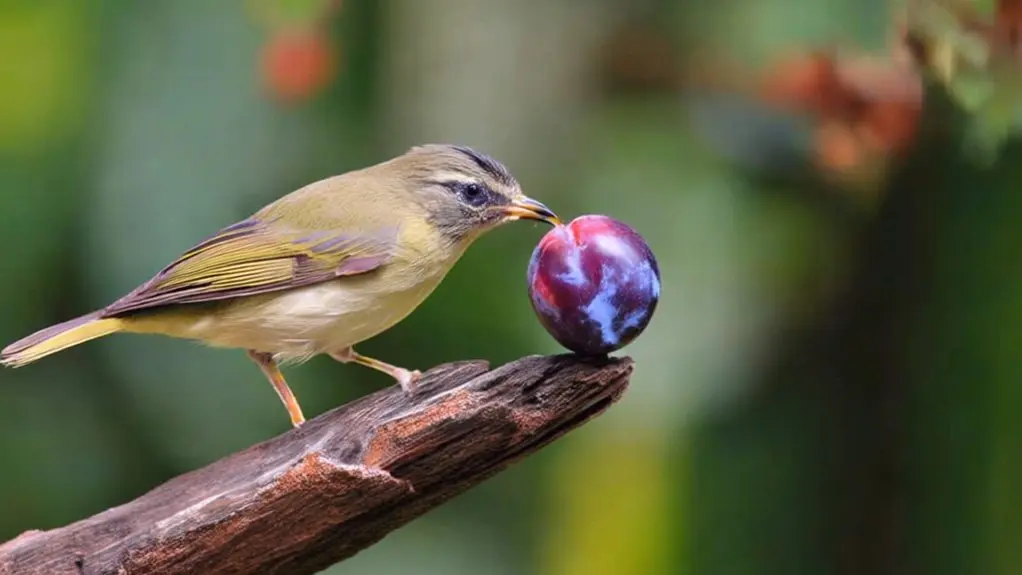
You can safely offer prunes to certain fruit-eating birds like thrushes and robins, but only in small, controlled amounts. Always remove pits and soak dried prunes to prevent choking and ease digestion.
Prunes provide fiber, antioxidants, and natural sugars, which help with digestion and give your bird some energy. Just keep in mind that the high sugar content means overfeeding can cause diarrhea or obesity.
So, limit treats to less than a teaspoon weekly and keep an eye on how your bird responds. If you want, you can explore more on safe feeding and preparation to keep your feathered friends happy and healthy.
Are Prunes Safe for Birds to Eat?
Although prunes are dried plums rich in antioxidants and fiber, you should offer them to birds only in small amounts because of their high sugar content. Feeding prunes sparingly helps prevent digestive upset and excessive weight gain. Both of these can negatively impact bird health.
You must avoid canned or processed prunes that contain added sugars or preservatives. These additives might be harmful to birds.
Always make sure you remove the pits before offering prunes since pits can pose choking hazards and may contain trace toxic compounds.
When given in moderation and prepared properly, prunes can serve as a safe treat or dietary supplement. However, careful portion control and preparation are essential to keeping your bird healthy when including prunes in their diet.
Prunes’ Nutritional Benefits and Risks for Birds
Because prunes contain a high concentration of dietary fiber, vitamins, and antioxidants, they can support your bird’s digestive health and overall well-being when provided in controlled amounts. The dietary fiber aids digestion, while antioxidants contribute to cellular health.
Prunes also contain sorbitol, a natural laxative that can help regulate bowel movements if given sparingly.
However, their high sugar content poses risks. Excessive consumption may cause digestive upset, diarrhea, or obesity. Introducing prunes gradually and in small quantities reduces these risks.
Avoid processed or sweetened prune products, as added sugars and preservatives can harm your bird.
How to Prepare Prunes for Birds
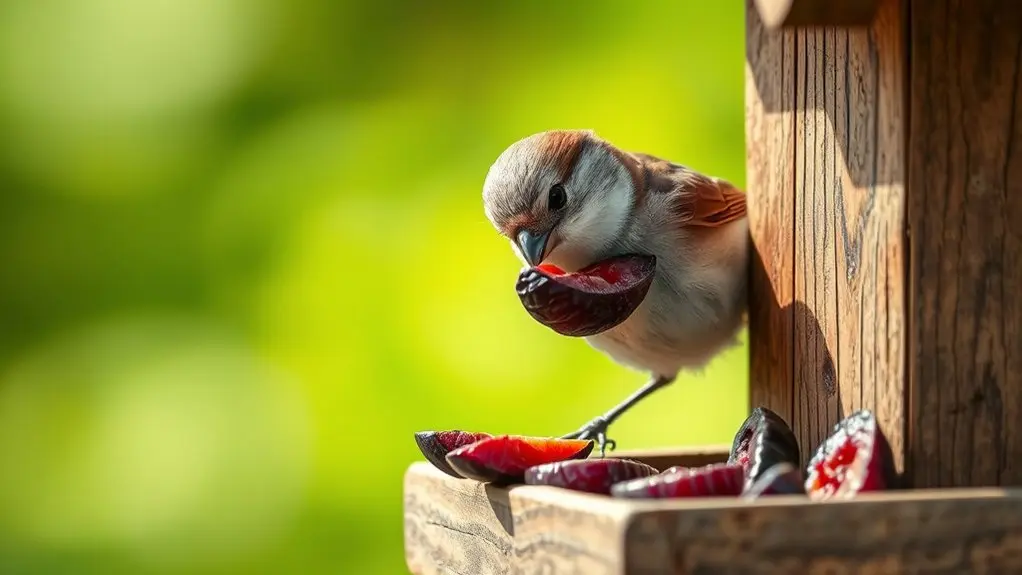
When preparing prunes for your bird, you should soak them in clean water for several hours to rehydrate and soften the fruit. This makes it easier for your bird to chew and digest.
After soaking, give the prunes a good wash to remove any leftover sugars or preservatives, especially if you’re using store-bought ones.
Next, cut the prunes into small, manageable pieces. This helps reduce the risk of choking.
Don’t forget to remove any pits or seeds, as they can be harmful or pose a physical hazard.
Also, steer clear of prunes with added spices or sweeteners. These additives might be toxic or upset your bird’s digestion.
Keep in mind, dried prunes should be served in moderation because of their high sugar content.
Bird Species That Can Eat Prunes
You’ll find that fruit-eating birds like thrushes, waxwings, robins, and orioles can safely enjoy prunes, especially when fresh fruit is hard to come by.
Prunes are pretty attractive to these birds because they’re packed with natural sugars, fiber, and antioxidants that fit well with their diet.
Just remember, it’s best to offer prunes in moderation and without any additives to keep them healthy and happy.
Fruit-Eating Bird Species
Although prunes aren’t a staple in most birds’ diets, several fruit-eating species, including thrushes, waxwings, and orioles, may consume them occasionally in the wild. These birds benefit from prunes’ high natural sugar content, which provides a quick energy source, as well as fiber, aiding digestion.
However, you should only offer prunes in moderation to avoid excessive sugar intake. When feeding prunes, make sure they’re plain without added sugars, preservatives, or spices that could harm birds.
If you use dried prunes, soak them in water beforehand to reduce choking risks and facilitate digestion.
Seasonal Prune Consumers
Many seasonal bird species, including thrushes, waxwings, and robins, incorporate prunes into their diets during periods when other food sources are limited. You should know these birds benefit from prunes’ natural sugars, fiber, and antioxidants, which aid digestion and overall health.
When feeding prunes, always remove pits and avoid added sugars or preservatives. Soaking dried prunes before offering them softens the fruit, reducing choking risks.
| Bird Species | Prune Preparation | Nutritional Benefits |
|---|---|---|
| Thrushes | Soaked, pitted | Antioxidants, fiber |
| Waxwings | Soaked, pitted | Natural sugars, digestive aid |
| Robins | Soaked, pitted | Fiber, energy source |
| Cedar Waxwings | Soaked, pitted | Digestive health, energy |
| Gray Catbirds | Soaked, pitted | Nutrients, hydration support |
Prunes Attract Which Birds
Which bird species are drawn to prunes, and why do these fruits appeal to them? Several birds, including thrushes, waxwings, and robins, consume prunes because they’re sweet and full of energy. Native and garden birds like blackbirds, orioles, and some woodpeckers also find prunes attractive. That’s mostly due to their high sugar content, which gives essential calories, especially during winter.
Prunes serve as a nutritious supplement when offered in moderation. Birds prefer soft, moist prunes over hard, dried ones since they’re easier to peck and digest. It’s important to provide prunes without added sugar, preservatives, or spices because those can be harmful.
By knowing which species benefit from prunes, you can responsibly support local bird populations. It’s a natural, energy-dense food source that helps them thrive.
How Often to Feed Prunes to Birds
Because prunes contain high levels of natural sugars and act as a mild laxative, you should feed them to birds only occasionally. Limiting prune treats to less than a teaspoon once a week or less helps prevent digestive disturbances such as diarrhea.
Frequent feeding risks dehydration and nutrient imbalances, as prunes should never replace a bird’s balanced diet.
When introducing prunes, start with a small amount and monitor your bird for any adverse reactions before increasing frequency. This cautious approach ensures prunes remain a safe, supplemental treat.
By maintaining moderation, you protect your bird’s digestive health while providing variety.
Signs of Digestive Issues From Prunes
While prunes can be a beneficial occasional treat, feeding them in excess may cause digestive disturbances in birds. Prunes contain high fiber and natural laxatives, which can lead to diarrhea, dehydration, and impaired nutrient absorption if overconsumed.
You should monitor your bird closely for signs such as loose or watery droppings, abdominal discomfort indicated by increased posturing, and decreased appetite.
Behavioral changes like lethargy and weight loss also suggest digestive distress. If you notice these symptoms after prune consumption, it’s crucial to consult a veterinarian promptly.
Careful observation of droppings and physical behavior helps detect early digestive issues.
This way, you can ensure timely intervention to prevent complications associated with prune overfeeding in birds. Just keep an eye on your feathered friend and don’t hesitate to get professional advice if something seems off.
Sweet Treat Alternatives to Prunes for Birds
You can offer birds some really nutritious fruit options like fresh berries, sliced apples, and seasonal melons. These make great sweet snack alternatives that your feathered friends will enjoy.
Plus, these fruits provide natural sugars and essential hydration, which is a bonus compared to the preservatives that can sometimes be found in dried prunes.
Just remember to serve these treats in small amounts, and always keep an eye out for any pieces that might spoil. It’s important to remove those promptly to keep your bird healthy and happy.
Nutritious Fruit Options
Although prunes offer natural sugars and fiber that are beneficial to birds, you should give them sparingly because of their sugar content and possible preservatives.
To make sure your bird gets nutritious and safer sweet treats, consider these fruit options:
- Fresh berries like blueberries and raspberries are packed with vitamins and antioxidants.
- Melons such as watermelon and cantaloupe provide hydration and fiber.
- Apples without seeds contain essential nutrients and are low in sugar.
- Sliced oranges are rich in vitamin C and moisture.
Always remove seeds and pits from these fruits to avoid toxicity and choking hazards.
Fresh or additive-free dried fruits are better than prune equivalents that might contain preservatives or sulfites.
Safe Sweet Snack Alternatives
What alternatives can you offer your bird to satisfy its sweet tooth without the risks associated with prunes? Fresh, ripe fruits like berries, apples, and melons serve as safer options. They provide hydration, vitamins, and natural sugars in moderation.
Avoid dried fruits with preservatives or added sugars, as these may cause digestive issues. Always remove pits and seeds to prevent exposure to harmful compounds and choking hazards.
| Fruit Type | Benefits | Cautions |
|---|---|---|
| Berries | High in vitamins, water | Offer in small pieces |
| Apples | Rich in fiber, antioxidants | Remove seeds |
| Melons | Hydrating, low sugar | Avoid rind |
These choices deliver nutrients without the complications linked to prunes. They support your bird’s health effectively.
Seasonal Berry Choices
Since birds benefit from a variety of nutrients throughout the year, seasonal berries like blueberries, raspberries, and blackberries offer excellent sweet treat alternatives to prunes. These berries provide essential vitamins and antioxidants, supporting avian health effectively.
When feeding birds, consider these key points: Offer berries in moderation to prevent dietary imbalance. Rinse all berries thoroughly to eliminate pesticides and contaminants. Prefer wild or fresh berries over dried or processed varieties to avoid harmful additives.
Also, take advantage of the natural staggered ripening times of different berries to supply year-round nutritional variety. Incorporating a diverse range of seasonal berries enriches birds’ diets both nutritionally and visually.
This promotes sustained health and well-being while minimizing risks associated with processed fruits.
How to Safely Introduce Prunes and New Foods
When you introduce prunes to your bird’s diet, begin with small, fresh pieces and carefully observe their response to guarantee they tolerate the fruit well. Remove all pits to avoid toxicity. Due to prunes’ laxative effects and high sugar, offer them in moderation.
Gradually mix prunes with familiar foods to help your bird adjust to new textures and flavors. Keep an eye out for any digestive upset or other adverse reactions. It’s all about making sure your feathered friend stays happy and healthy.
| Step | Description |
|---|---|
| Start Small | Offer tiny, fresh prune pieces |
| Remove Pits | Eliminate all pits to prevent toxicity |
| Mix with Familiar Foods | Combine prunes with known items for adaptation |
| Monitor Closely | Watch for digestive or behavioral changes |
Frequently Asked Questions
Can Prunes Help Improve a Bird’s Feather Quality?
Prunes might support your bird’s feather quality indirectly by providing vitamins, antioxidants, and fiber that aid digestion and nutrient absorption. However, they won’t directly improve feathers, so offer prunes sparingly within a balanced diet.
That said, including prunes occasionally can be a nice treat for your bird. Just remember, moderation is key to keeping your feathered friend healthy.
Do Prunes Affect a Bird’s Behavior or Energy Levels?
You know what they say: moderation is key. Prunes can briefly boost your bird’s energy due to natural sugars, but too much may cause digestive upset, lethargy, or behavior changes from sugar overload or gastrointestinal discomfort.
It’s all about finding the right balance. Give your bird prunes in small amounts and watch how they respond. That way, you keep them happy and healthy without any unwanted side effects.
Are Dried Prunes Better Than Fresh Prunes for Birds?
Dried prunes aren’t better than fresh prunes for birds because their concentrated sugar can cause obesity and digestive issues. You should offer fresh prunes sparingly due to lower sugar and higher water content, supporting healthier digestion.
It’s really about balance. Fresh prunes have more water, which helps keep birds hydrated. So, they’re generally a safer choice when you want to treat your feathered friends.
Can Prunes Be Used to Medicate Birds Naturally?
When it comes to natural remedies, you can use prunes to medicate birds, but proceed with caution. Their sorbitol content aids digestion, yet precise dosing is essential to avoid upsetting your bird’s delicate system.
Just remember, a little goes a long way. It’s always best to start small and see how your feathered friend reacts before giving more. That way, you keep things safe and effective.
How Should Prunes Be Stored for Bird Feeding?
You should store prunes in airtight containers, keeping them in a cool, dark place to maintain freshness. This helps prevent them from drying out or absorbing unwanted odors.
For longer storage, you can refrigerate or freeze them in portions. This way, you’ll always have some ready when the birds come around.
Just make sure to inspect the prunes for mold or moisture before feeding them to the birds. It’s better to be safe and keep the birds healthy!
Conclusion
You can safely offer prunes to certain bird species, recognizing their nutritional benefits and potential risks. You should prepare prunes properly, feed them in moderation, and watch closely for any digestive issues.
It’s a good idea to consider alternative sweet treats too, and introduce prunes gradually to avoid any adverse reactions. By balancing caution with curiosity, you’ll support your bird’s health while expanding their diet thoughtfully and scientifically.