
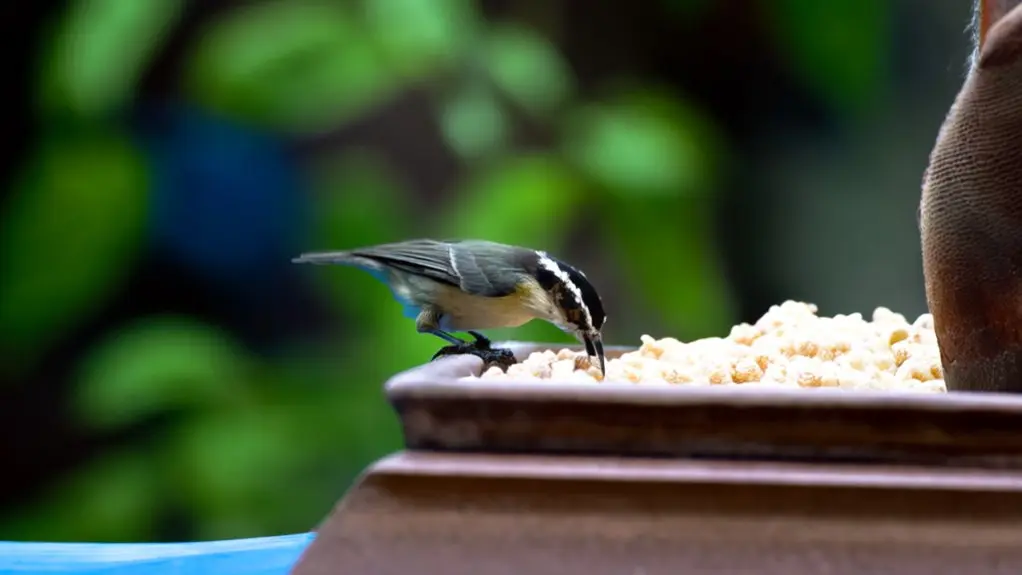
Yes, you can safely feed your bird puffed rice in moderation, as it’s pre-cooked and won’t expand in their digestive system. Make sure it’s plain, without salt, sugar, or additives. While puffing reduces some nutrients and fiber, it provides easily digestible carbohydrates and convenience.
However, puffed rice isn’t nutritionally complete and should only be an occasional treat, balanced with other foods. Understanding how it compares to raw and cooked rice will help you choose the best option.
What Is Puffed Rice and How Is It Made?
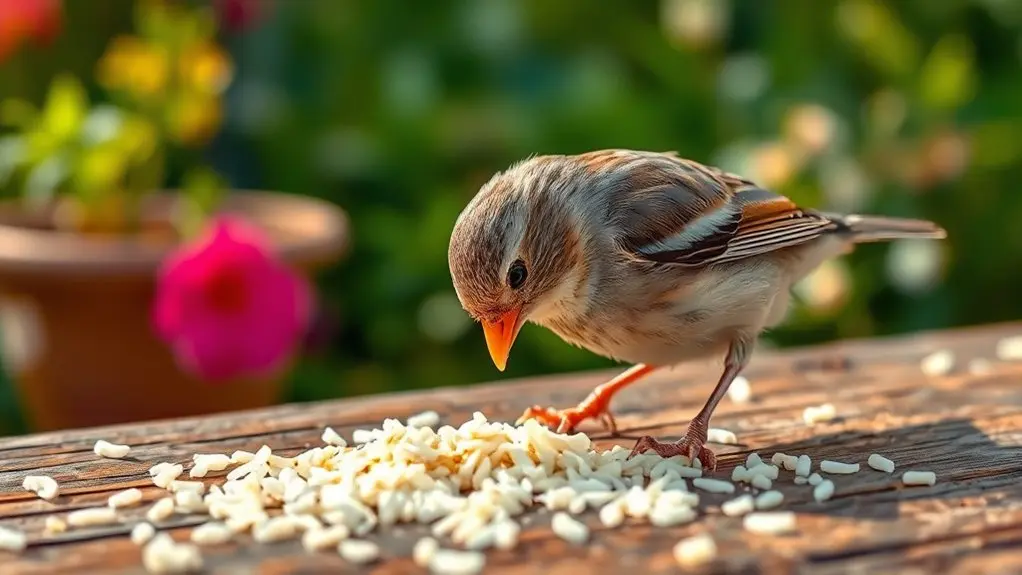
Although you might recognize puffed rice as a common snack or cereal ingredient, it’s created through a precise process that involves heating rice grains under high pressure until they burst and expand into airy pellets. The method relies on a combination of moisture, heat, and pressure, which causes the rice to explosively expand, forming its distinctive puffed shape.
Before puffing, the rice is thoroughly dried to optimize expansion during heating. This controlled process alters the rice’s structure, transforming dense grains into light, porous pieces.
Although puffed rice retains some nutritional value, the exposure to high temperatures can degrade certain nutrients.
Puffed rice keeps some nutrients, but high heat during processing can reduce their levels.
You’ll often find puffed rice used in breakfast cereals, snacks, or as an ingredient in diverse recipes because of its unique texture and mild flavor. It’s pretty versatile and adds a nice crunch wherever it’s included.
Is Puffed Rice Safe for Birds to Eat?
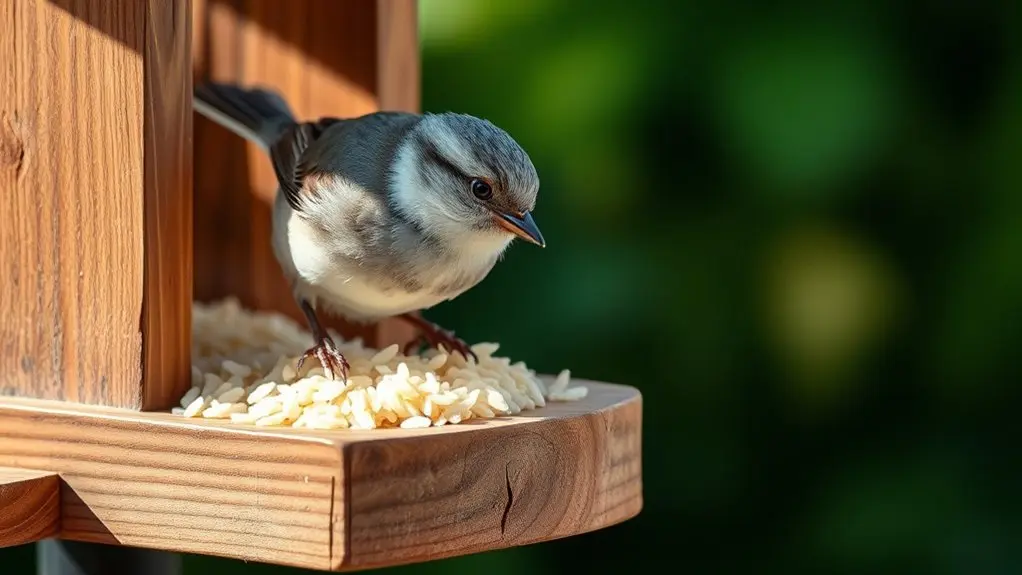
When you offer puffed rice to birds, you provide a food that has undergone cooking and processing. This considerably reduces the risk of digestive complications such as swelling or blockage. So, puffed rice is generally safe for birds to eat when given in moderation.
Just make sure the puffed rice is free from additives like salt, sugar, or artificial flavors. Those could actually harm the birds, so it’s important to check the label before offering it.
Here are some points to keep in mind to maintain safety and nutritional balance:
Puffed rice won’t expand inside a bird’s digestive tract like raw grains can. It still keeps some nutritional value even though it’s been processed, but don’t think of it as a complete dietary source.
Using small amounts is best. Think of puffed rice as a convenient supplement, not something birds should eat all the time.
How Puffing Changes Rice Nutrition for Birds
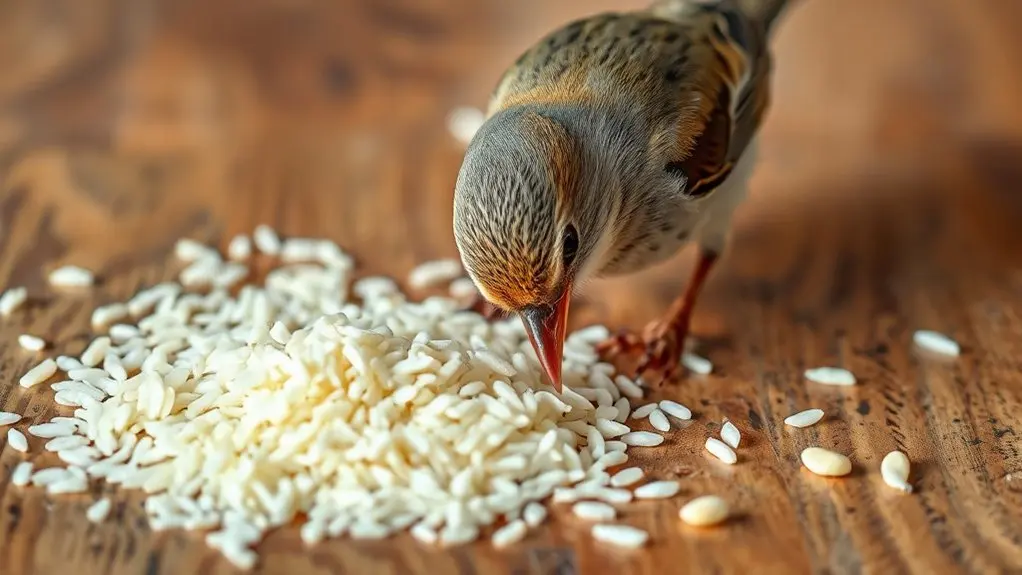
Because the puffing process subjects rice to heat and moisture, it changes its nutritional composition in ways that affect birds’ dietary intake. Heat-sensitive nutrients, like some vitamins, break down during puffing, which lowers their availability.
Puffing rice exposes it to heat and moisture, reducing heat-sensitive vitamins and altering nutrient availability for birds.
The grain’s structure also changes, making it easier for birds to access some nutrients.
But at the same time, puffing causes the loss of others, including certain amino acids and antioxidants. Plus, puffing reduces the rice’s natural fiber content, which might impact the digestive benefits birds usually get from it.
Overall, the cooking involved in puffing lowers the total nutritional content compared to raw rice. While puffed rice still has essential macronutrients, its altered profile means it offers a different balance of nutrients.
Parrots’ Reactions and Preferences for Puffed Rice
You’ll notice that parrots react differently to puffed rice. It often depends on their individual grain preferences and what they’ve eaten before.
For example, some parrots, like Winston the Eclectus, usually prefer raw grains and mightn’t be very interested in processed options. Knowing how they behave this way helps us understand how their food likes and dislikes affect whether they’ll accept puffed rice or not.
Parrot Grain Preferences
Although puffed rice offers a convenient form of grain, parrots like Winston the Eclectus often show a clear preference for raw grains due to their natural dietary habits. You’ll notice that these birds favor unprocessed grains, likely because of their texture and nutrient profile, which align more closely with their innate diet.
While some parrots might sample puffed rice out of curiosity, many display disinterest or avoid it entirely.
Consider these points regarding parrot grain preferences:
- Parrots generally prefer the firmness and taste of raw grains over puffed rice.
- Individual reactions to puffed rice vary, with some parrots accepting small amounts and others rejecting it.
- Puffed rice lacks the natural fiber content and crunch that parrots instinctively seek.
Understanding these preferences helps you select the best grains to support your parrot’s health. It’s all about finding what feels right and natural for your feathered friend.
Behavioral Responses To Puffed
When you observe parrots interacting with puffed rice, you’ll notice a range of behavioral responses that reflect their individual preferences and natural dietary tendencies. Some parrots show curiosity, nibbling on the crunchy texture. Others, like Winston the Eclectus, may reject it because they prefer raw grains.
Acceptance varies too. Many parrots cautiously try small amounts, although natural, unprocessed foods are usually favored.
Below is a summary of typical responses observed:
| Parrot Species | Behavioral Response | Preference Insight |
|---|---|---|
| Eclectus (Winston) | Rejects puffed rice | Prefers raw grains, avoids processed |
| Cockatiel | Nibbles cautiously | Accepts small amounts occasionally |
| African Grey | Shows curiosity | Explores texture before eating |
| Amazon Parrot | Indifferent | Less interested in puffed rice |
Individual Dietary Inclinations
Understanding the variety of behavioral responses to puffed rice means looking at the individual dietary inclinations that shape these reactions. You’ll notice that parrots like Winston the Eclectus often prefer raw grains to puffed rice. This highlights a clear preference for unprocessed food.
Some parrots show curiosity toward puffed rice, while others simply ignore it. This just reflects personal taste variations. These inclinations really impact whether puffed rice fits into their diet.
Consider these points:
- Parrots may reject processed grains because of taste or texture differences.
- Individual preferences heavily influence willingness to consume puffed rice.
- Variability in reactions means you need tailored dietary decisions for each bird.
Puffed Rice vs. Raw and Cooked Rice: Which Is Best?
You’ll notice that raw and cooked rice usually offer more nutritional value and are safer for birds than puffed rice. That’s because puffed rice loses some nutrients during processing.
Plus, cooking rice makes it easier to digest and reduces risks like grain swelling. So, many bird owners prefer cooked rice for these reasons.
Getting to know these differences, along with what your parrot likes, can help you pick the best feeding option.
Nutritional Differences Explained
Although puffed rice offers a convenient and soft option for feeding birds, its nutritional content differs markedly from raw and cooked rice because of the puffing process involving heat and moisture. This process reduces some nutrients that raw rice keeps, like fiber, vitamins, and minerals.
Cooked rice, on the other hand, loses some water-soluble vitamins through boiling but provides easily digestible carbohydrates and hydration. That generally makes it more beneficial for birds.
Here are some key nutritional differences to consider:
- Raw rice: High in natural nutrients but harder to digest.
- Cooked rice: Easier to digest and has moisture, though it loses some nutrients.
- Puffed rice: Soft texture and convenient, but lower in certain essential nutrients compared to raw or cooked rice.
Thinking about these factors can help you pick the best kind of rice for your birds’ diet.
Safety Considerations Overview
How safe is puffed rice compared to raw or cooked rice when feeding birds? Puffed rice is already cooked through heat and moisture, making it secure and convenient for birds to eat without the risk of swelling in their digestive tracts.
In contrast, raw rice can expand and pose digestive issues if not properly prepared, while cooked rice reduces this risk. Although puffing diminishes some nutrients, it still provides a digestible food source.
Raw and cooked rice generally offer better nutritional value, so they’re preferred when prioritizing health. However, puffed rice is a practical alternative, especially if you need quick, safe feeding options.
Using puffed rice in moderation ensures safety while balancing convenience and nutritional considerations for your bird’s diet. It’s all about finding the right mix that works for you and your feathered friends.
Parrots’ Preference Insights
When evaluating puffed rice against raw and cooked rice, parrots typically show a marked preference for raw or minimally processed grains due to their natural texture and flavor profiles.
You’ll notice that puffed rice, being pre-cooked and often lacking crispness, doesn’t provide the same sensory appeal or nutritional density that raw grains offer.
Parrots like Winston the Eclectus demonstrate clear aversions to puffed rice, favoring raw grains instead. This preference influences their dietary satisfaction and overall health.
Consider these factors when choosing rice types for parrots:
- Raw grains maintain higher nutrient content and natural crunch, enhancing feeding stimulation.
- Cooked rice offers softness but may lose some nutrients, affecting preference.
- Puffed rice’s convenience comes at the cost of reduced texture and nutritional value, leading to lower acceptance by many parrots.
How Much Puffed Rice Can You Safely Feed Your Bird?
Since puffed rice is a processed food that can expand in the digestive tract, you should feed your bird only small amounts to avoid potential digestive issues. A safe guideline is to offer no more than one teaspoon of puffed rice per bird daily. This quantity minimizes the risk of swelling and digestive discomfort.
Always provide puffed rice as an occasional treat, not a staple, and make sure it complements a varied diet to keep your bird’s nutrition balanced. Keep an eye on how your bird reacts after feeding so you can adjust the portions if needed.
Overfeeding can mess with your bird’s digestive health, so it’s best to be cautious. By controlling the amount carefully, you’re supporting your bird’s well-being while introducing puffed rice in a smart, informed way.
Tips for Feeding Puffed Rice Responsibly to Birds
Although puffed rice is easy to digest and safe in moderation, you should introduce it gradually into your bird’s diet to monitor tolerance and avoid digestive upset. Start by offering small amounts alongside their regular feed, observing any adverse reactions.
Make sure the puffed rice is plain, without added salt, sugar, or flavorings, to prevent health complications.
To feed puffed rice responsibly, consider these tips:
- Combine puffed rice with natural foods such as seeds, fruits, or vegetables to maintain nutritional balance.
- Avoid overfeeding to prevent nutrient imbalances that could affect your bird’s health.
- Always provide fresh water when offering puffed rice to support digestion and hydration.
The Benefits and Drawbacks of Puffed Rice for Birds
While puffed rice provides a convenient and safe source of easily digestible carbohydrates for birds, you should be aware that the puffing process reduces some of its original nutritional content. This processing diminishes natural fiber and essential nutrients present in raw rice, which are important for avian health.
Puffed rice is fully cooked during puffing, eliminating risks associated with raw grains, making it a safe option when fed in moderation. However, relying heavily on puffed rice can cause nutritional imbalances, as it lacks sufficient proteins, fats, vitamins, and minerals required for a balanced diet.
To support your bird’s overall health, you should supplement puffed rice with nutrient-rich foods. This way, you ensure a varied diet that meets all their physiological needs and prevents potential health issues.
Frequently Asked Questions
Can Puffed Rice Cause Allergies in Birds?
Puffed rice rarely causes allergies in birds because its processing reduces allergenic proteins.
That said, it’s always a good idea to watch your bird closely for any signs of itching or breathing problems. If you notice any allergic symptoms, stop feeding puffed rice right away. Better safe than sorry!
Is Puffed Rice Suitable for Baby Birds?
Puffed rice is suitable for baby birds only in small, occasional amounts due to its low nutrient content.
You should always complement it with species-appropriate foods and consult an avian expert to guarantee balanced nutrition and safety.
How Should Puffed Rice Be Stored for Bird Feeding?
You should store puffed rice in a clean, airtight container. Keep it in a cool, dark place away from moisture and strong odors. This helps maintain its freshness for the birds.
Be sure to check it regularly for any signs of mold or pests. If you spot any spoiled portions, toss them out right away. That way, you’re keeping the birds safe and healthy.
Can Puffed Rice Replace Birdseed Completely?
You shouldn’t replace birdseed completely with puffed rice because it lacks essential nutrients and fats.
Instead, use puffed rice occasionally as a supplement to maintain a balanced, nutritionally complete diet for the birds. This way, you’re giving them variety without risking their health. Puffed rice can be a nice treat, but it’s not enough on its own.
Do Wild Birds Eat Puffed Rice Naturally?
Do wild birds eat puffed rice naturally? No, they don’t. You’ll find they primarily consume seeds, insects, and fruits in their habitats.
Puffed rice is a processed food and falls outside their usual, natural diet. So, it’s not something they would come across or eat on their own in the wild. Instead, they stick to what’s naturally available and nutritious for them.
Conclusion
You can safely offer puffed rice to your bird in moderation. It provides a light, digestible treat without harmful additives. While puffing changes rice’s nutritional profile, it’s still a good option compared to raw or cooked rice.
Remember, variety is key in your bird’s diet. Puffed rice should complement, not replace, balanced nutrition. Like a single note in a symphony, puffed rice adds value but can’t carry the whole performance alone.