
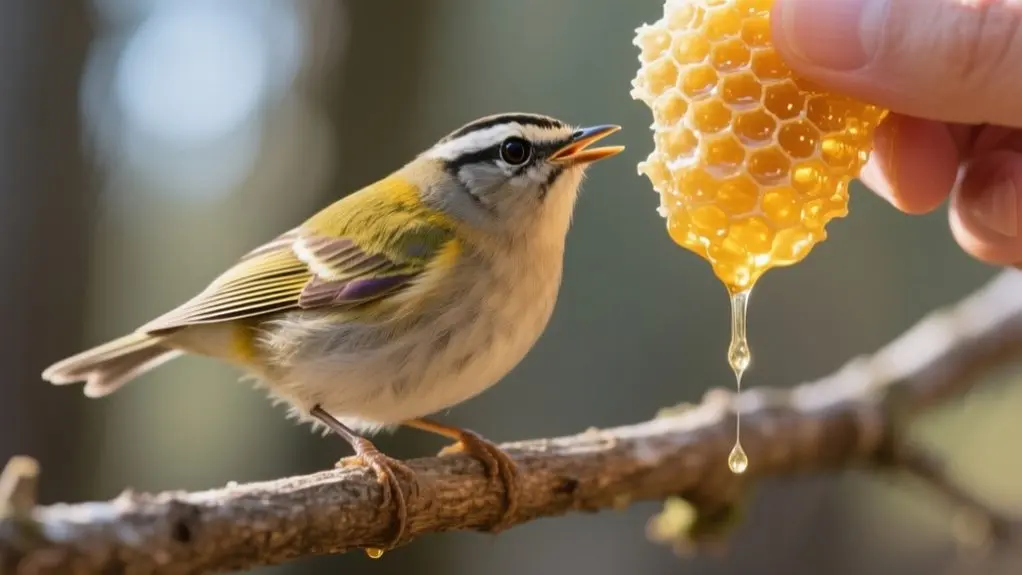
You shouldn’t feed honey to birds because it can cause serious health issues. Honey may contain dangerous bacteria like Clostridium botulinum, which leads to botulism. Its sticky texture can also impair feeding and grooming.
It’s highly acidic and high in sugar, which can upset digestion and cause nutrient imbalances. Even boiled or pasteurized honey isn’t safe. If you want your birds to thrive, it’s important to know safer options and how to protect them from honey’s risks.
Why Is Honey Unsafe for Birds?
Although honey might seem like a natural treat, it’s unsafe for birds because it can carry Clostridium botulinum bacteria, which causes deadly botulism. When birds consume honey contaminated with this harmful bacteria, they risk severe poisoning that can be fatal.
Honey may look natural, but it harbors deadly Clostridium botulinum bacteria harmful to birds.
You might think honey is harmless, but the presence of Clostridium botulinum makes it a serious threat to their health.
Besides the bacteria, honey’s sticky texture can gum up their feathers and beak, making it hard for birds to eat and fly properly.
Furthermore, honey can develop mold in humid conditions, increasing its toxicity.
How Can Honey Harm Your Bird’s Digestion?
You mightn’t realize it, but honey can actually irritate your bird’s digestive system and cause some discomfort.
On top of that, honey can sometimes carry bacteria, which adds another layer of risk and could harm your bird’s gut health.
And there’s more—honey can also affect how your bird absorbs nutrients, making it harder for them to get the essential vitamins and minerals they need.
Digestive Irritation Risks
Because honey is highly acidic, it can irritate your bird’s stomach lining and cause digestive discomfort or gastritis. This irritation may lead to symptoms like vomiting, diarrhea, or a lack of appetite.
Honey’s sticky texture can also gum up your bird’s beak and feathers, interfering with feeding and grooming, both essential for maintaining good digestive health.
Furthermore, honey lacks crucial nutrients, which might unbalance your bird’s diet and worsen digestive issues over time.
Another risk is crop impaction, where honey causes food to get stuck in the crop, triggering severe distress.
While these digestive irritation risks are serious, being cautious with honey use helps protect your bird’s well-being and keeps digestive discomfort at bay.
Bacterial Contamination Danger
Honey’s sticky nature and acidity don’t just cause physical irritation. They can also introduce dangerous bacteria into your bird’s digestive system. The bacterial contamination danger in honey is real and can severely harm your feathered friend.
Clostridium botulinum, for example, may be present and cause botulism, leading to neurological problems. Moreover, mold growth on honey exposed to humidity increases toxicity risks.
Keep in mind:
- Botulism can paralyze your bird and be fatal.
- Sticky honey can gum up feathers and beak, impairing feeding.
- Mold toxins worsen digestive health.
- Acidity irritates the stomach lining, making digestion painful.
You need to be cautious with honey around birds to avoid these bacterial contamination dangers that threaten their well-being.
Nutrient Absorption Issues
Although honey might seem like a natural treat, it can interfere with your bird’s nutrient absorption and digestion. Honey is high in sugar but lacks essential proteins, fats, and vitamins, which can cause nutritional deficiencies.
Its acidity may irritate your bird’s stomach lining, leading to discomfort and inflammation. Furthermore, honey’s stickiness can gum up feathers and beaks, making feeding and flying difficult.
Mold growth on honey in humid conditions introduces toxins that further harm digestion. Small birds, like hummingbirds, are especially vulnerable due to their delicate digestive systems.
| Issue | Effect on Birds |
|---|---|
| High sugar content | Low nutritional value for birds |
| Acidity | Stomach irritation and inflammation |
| Stickiness | Feeding and flying difficulties |
| Mold presence | Toxicity and digestive harm |
Signs of Honey Poisoning in Birds
When birds show signs like lethargy, trouble breathing, or paralysis, you should suspect honey poisoning, possibly from botulism. Honey poisoning can cause serious issues, especially in small birds like hummingbirds.
Watch for symptoms such as:
- Lethargy and difficulty breathing
- Paralysis or inability to stand and fly
- Digestive distress like vomiting or diarrhea
- Unusual behaviors, including loss of appetite or altered vocalizations
These signs suggest botulism or other toxic effects from honey ingestion. Because honey lacks essential nutrients and its stickiness can trap feathers and beaks, small birds are particularly vulnerable.
If you notice any of these symptoms, seek immediate veterinary care.
Prompt veterinary attention is essential if your bird shows symptoms of honey poisoning.
Untreated honey poisoning can lead to fatal outcomes, so quick action is crucial to protect your feathered friends.
Is Boiled Honey Safe for Birds?
You might think that boiling honey makes it safer for birds by killing harmful spores, especially if you heat it to around 80°C for 10-20 minutes.
But even boiled honey can still pose risks because of its high sugar content. It might cause digestive issues and even lead to feather problems.
So, it’s a good idea to be cautious before offering boiled honey to your feathered friends.
Let’s take a closer look at why that is.
Boiling Process Benefits
Since boiling honey at 80°C (176°F) for 10-20 minutes kills botulism spores, it can reduce the risk of toxicity when feeding birds. The boiling process benefits mainly focus on safety, but it doesn’t improve honey’s nutritional value or eliminate all risks.
You should consider these points before offering boiled honey:
- Botulism spores are destroyed, lowering toxicity risks
- High sugar content remains, potentially causing obesity or diabetes
- Essential nutrients like proteins and vitamins are still absent
- Acidity may irritate birds’ digestive systems despite boiling
While boiling honey can make it safer by addressing botulism, it’s not a perfect solution.
You’ll want to explore healthier alternatives to keep birds safe and well-nourished.
Temperature And Duration
Although boiling honey at 80°C (176°F) for 10-20 minutes effectively kills botulism spores, it doesn’t guarantee complete safety for birds. The temperature and duration reduce harmful spores, but honey’s high sugar and sticky texture still pose risks like obesity and digestive issues. You should avoid making boiled honey a regular part of their diet.
| Temperature (°C) | Duration (minutes) | Effectiveness |
|---|---|---|
| 70 | 10 | Partial spore reduction |
| 80 | 10 | Significant spore elimination |
| 80 | 20 | Ideal spore elimination |
| 90 | 5 | Rapid spore reduction |
| 100 | 1 | Minimal effectiveness due to caramelization |
Use boiled honey sparingly and monitor your birds closely.
Safety Considerations
When you consider feeding boiled honey to birds, it’s important to recognize that even after heating, honey can still pose significant health risks.
Boiling at 80°C reduces some botulism spores, but honey’s high sugar content and residual bacteria remain harmful. Keep these safety considerations in mind:
Boiled honey can still harbor bacteria causing botulism, a dangerous illness for birds. The sticky texture can gum up feathers and beaks, impairing feeding and flying.
Honey lacks essential nutrients found in natural nectar, so feeding it regularly can lead to nutrient deficiencies.
Also, regular feeding of honey, even boiled, increases health risks and isn’t recommended.
Instead, opt for fresh fruits or bird-safe sweeteners to support your feathered friends’ well-being without risking their health.
Myths About Feeding Honey to Birds
You might think honey is a sweet treat that’s safe to share with birds, but feeding it to them can actually cause serious harm. Honey often contains Clostridium botulinum, which causes botulism, a deadly disease for birds.
Plus, honey’s high sugar content can lead to obesity and diabetes, and it lacks the essential nutrients birds need. Even pasteurized or organic honey isn’t safe.
Hummingbirds especially suffer because honey can gum up their feathers and beaks, making feeding and flying difficult.
| Myth | Reality | Impact on Birds |
|---|---|---|
| Honey is safe for birds | Contains bacteria causing botulism | Can be fatal |
| Honey provides nutrients | Lacks essential vitamins and proteins | Leads to malnutrition |
| Pasteurized honey is safe | Harmful bacteria can still remain | Risk of digestive issues |
| Birds love honey | It clogs hummingbirds’ feathers | Impairs feeding and flying |
Birds Most at Risk From Honey Poisoning
Since small bird species have delicate digestive systems, they face the greatest risks from honey poisoning. You should be especially cautious with birds most at risk, like hummingbirds and pet parrots.
Honey’s stickiness can gum up feathers and beaks, causing serious problems. Plus, it may contain Clostridium botulinum, which leads to botulism, a deadly threat for these tiny creatures.
Watch out for these dangers linked to honey poisoning:
- Digestive issues and obesity from high sugar content
- Botulism risk due to bacterial contamination
- Mold growth on honey exposed to humidity
- Nutritional deficiencies in pet birds lacking essential nutrients
Understanding these risks helps you protect vulnerable birds from honey poisoning effectively.
What Safe Alternatives Can You Offer Instead of Honey?
The risks honey poses to birds mean finding safer sweet options is important. You can offer fresh fruits like apples, bananas, and berries as safe alternatives; they provide essential vitamins and hydration.
For nectar-loving birds, homemade nectar made by mixing four parts water with one part plain white sugar mimics their natural diet safely. Grape jelly works well for attracting Orioles, giving them a sweet treat without honey’s dangers.
Homemade nectar and grape jelly offer safe, sweet alternatives for nectar-loving birds without the risks of honey.
Furthermore, commercial bird-safe sweeteners are formulated to support bird health without harmful bacteria.
Beyond sweet options, suet balls and mealworms supply high energy year-round, supporting birds’ nutritional needs without relying on honey.
Choosing Safe Foods for Wild and Pet Birds
When selecting foods for wild and pet birds, understanding their unique dietary needs is essential to keeping them healthy and active.
Choosing safe foods means avoiding items like honey that can cause health risks such as botulism. Instead, focus on providing nutritious options suited to each species.
Here are some safe foods you can offer:
- Fresh seeds and nuts for many songbirds
- Homemade nectar solutions for hummingbirds
- Grape jelly specially for Orioles
- Seasonal fruits and vegetables tailored to bird species
How to Prevent Birds From Eating Honey by Mistake
You’ll want to take a close look at feeder labels to steer clear of anything with honey or honey flavoring.
It’s really important to know why honey can be harmful to birds—especially because of the risk of botulism.
When you share this info with others, you’re helping keep birds safe from accidentally eating honey.
Feeder Labeling Clarity
How can you make sure birds don’t accidentally eat honey from your feeders? Feeder labeling clarity is essential to prevent this risky mistake.
Start by clearly marking feeders with labels that state honey isn’t safe for birds. Use color-coded tags or symbols to separate honey containers from those holding bird-friendly jelly or nectar.
Place simple instructions nearby, showing the correct way to fill and use feeders to avoid accidental spills. Also, include warnings about the dangers of honey, like botulism, so everyone understands the risks.
To enhance feeder labeling clarity, you can:
- Attach bright, easy-to-read labels on all feeders
- Use distinct colors or icons for different food types
- Post quick guides explaining safe feeder use
- Highlight health risks linked to honey consumption for birds
This clarity helps keep your feathered friends safe.
Educating Bird Feeders
Although many bird feeders mean well, they might unintentionally put birds at risk by offering honey. Honey can harbor Clostridium botulinum and cause deadly botulism. To protect birds, you should educate yourself and others about honey being toxic to birds and promote safe feeding practices.
Use clear labeling on feeders and choose safe offerings like grape jelly or homemade nectar instead. Engage with local birdwatching groups to spread awareness and adjust feeding based on seasonal bird diets.
| Feeding Practice | Safe Offering | Reason |
|---|---|---|
| Avoid honey | Grape jelly | No Clostridium botulinum risk |
| Label feeders clearly | Homemade nectar | Prevents accidental feeding |
| Seasonal adjustments | Fruit-based treats | Matches birds’ dietary needs |
| Community education | Sharing knowledge | Promotes safe feeding habits |
Oops! Your Bird Ate Honey : What Now?
If your bird has eaten honey, keep a close eye on its behavior and physical condition, as even small amounts can cause serious health problems like botulism or digestive distress.
So, oops, your bird ate honey, what now? Act fast by:
- Watching for lethargy, digestive upset, or trouble flying
- Preventing any more honey from being consumed
- Seeking immediate veterinary care if symptoms appear
- Learning safe alternatives like fresh fruit or bird-safe sweeteners
Honey may harbor Clostridium botulinum spores, which can cause severe neurological issues in birds.
Don’t wait to get help if your bird seems off. Early intervention can save your feathered friend from worsening illness.
Stay informed and prepared to protect your bird’s health after a honey mishap.
When Should You Avoid Feeding Sugary Treats to Birds?
Because sugary treats like honey can cause serious health issues such as obesity, diabetes, and botulism, you should avoid feeding them to birds whenever possible. Sugary treats disrupt the balanced diet birds need, lacking essential nutrients for their health.
Avoid feeding birds sugary treats like honey to prevent serious health issues and maintain a balanced diet.
Honey’s sticky texture can also interfere with feeding, especially for nectar-dependent species like hummingbirds. You should steer clear of offering sugary treats during warmer months too, as natural food sources are plentiful, making extra sugar unnecessary and potentially harmful.
Furthermore, honey may contain Clostridium botulinum, posing a severe botulism risk to birds. To keep birds healthy, only provide sugary treats sparingly and avoid them when natural food is accessible or when you’re unsure about the possible health consequences.
Prioritize a balanced diet over sugary treats to support bird well-being.
Seasonal Feeding Tips Without Honey
When feeding birds throughout the year, you’ll want to adjust what you offer to match their seasonal needs without using honey. Birds love variety, so providing safe, nutritious alternatives keeps them healthy and coming back.
In spring and summer, offer grape jelly to attract Orioles, which they prefer over honey.
During colder months, supply high-energy suet balls and mealworms to support their energy needs.
Fresh fruits like apples and berries are perfect year-round, giving birds essential vitamins.
Replace honey nectar with sugar-water solutions and clean feeders weekly to avoid mold and bacteria.
Frequently Asked Questions
Can Hummingbirds Safely Consume Natural Nectar Instead of Honey?
Yes, you can safely offer hummingbirds natural nectar instead of honey.
Nectar alternatives like a mixture of four parts water to one part plain white sugar mimic the sugars in flowers and provide essential energy.
Unlike honey, this solution avoids risks such as botulism and stickiness that can harm hummingbirds.
Does Honey Affect Different Bird Species Differently?
It just so happens that honey affects bird species differently because of species sensitivity. You’ll notice hummingbirds struggle the most, as honey’s stickiness hinders their feathers and beaks.
Smaller birds, like finches, face digestive risks and botulism, while parrots might suffer nutritional deficiencies.
How Does Honey Compare Nutritionally to Other Bird Treats?
Honey offers limited nutritional benefits compared to other bird treats. While it’s mostly sugar, it lacks the essential proteins, fats, vitamins, and fiber birds need for a balanced diet.
Fresh fruits like apples and bananas provide better nutritional benefits with vitamins and antioxidants.
Homemade nectar and commercial bird-safe sweeteners also deliver essential nutrients, making them healthier choices.
Can Honey Be Used as a Topical Treatment for Bird Wounds?
You might think honey is just a sweet treat, but it can actually aid wound healing in birds due to its antibacterial properties.
However, don’t rush to apply it. Using honey on wounds needs caution.
While it creates a protective barrier, you must watch for pests or fungal growth. Always use pure honey and consult a vet first.
Are There Any Historical Uses of Honey in Bird Feeding Practices?
Yes, you’ll find that honey had historical uses in bird feeding, often mixed with grains and seeds to boost nutrition.
Ancient cultures believed honey enhanced birds’ energy and singing abilities.
However, you should know honey fermentation can occur, creating harmful substances for birds.
That’s why modern practices avoid feeding honey to birds, choosing safer alternatives instead to protect their health and well-being.
Conclusion
Think of honey as a tempting but tricky path in your bird’s garden, beautiful to look at but filled with hidden thorns. While it might seem sweet and harmless, honey can disrupt your bird’s delicate balance, causing more harm than good.
So, steer clear of this sticky temptation and offer safer treats instead. By doing so, you’ll help your feathered friend thrive, keeping their world bright and healthy, just like a well-tended garden in full bloom.