
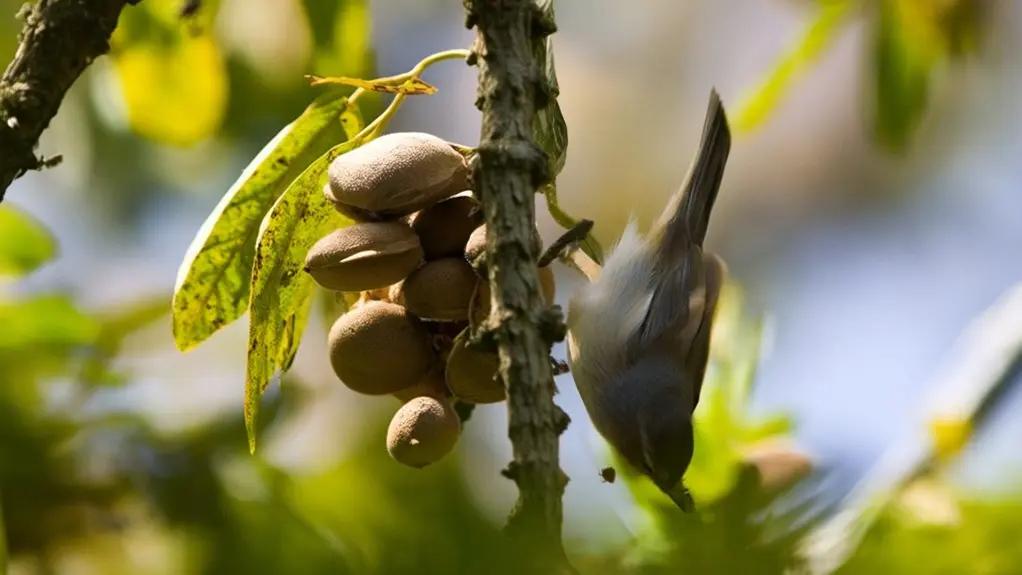
You shouldn’t feed your bird raw almonds without caution. Raw almonds, especially bitter ones, contain cyanide compounds that can cause severe health issues or even death. Moldy almonds may carry dangerous toxins, too.
Their high fat content can lead to obesity or liver problems if your bird eats too many. Only sweet, properly processed almonds are safer options for your feathered friend.
Always inspect and store almonds carefully to keep your bird safe. Knowing these details helps you make the best choices for your bird’s diet.
What Makes Raw Almonds Risky for Your Bird?
Although raw almonds might seem like a healthy treat, they can pose several risks to your bird. Raw almonds imported from Italy may include bitter varieties that contain cyanide compounds, which are toxic to birds.
On top of that, if almonds are old or improperly stored, mold can develop. This mold produces aflatoxins that are harmful to your bird’s health.
The high fat content in almonds can also lead to obesity and liver problems if you feed them too much.
Since raw almonds are unprocessed, they might harbor bacteria or contaminants that could cause illness.
To keep your bird safe, you need to be aware of these risks and handle raw almonds with caution. Make sure you only offer safe, properly sourced treats in the right amounts.
Bitter vs. Sweet Almonds: What’s Safe for Birds?
You’ve got to be careful when giving almonds to birds. Only sweet almonds are safe for them.
Bitter almonds, on the other hand, contain cyanide, which is really toxic and can lead to serious health problems or even death.
Bitter Almonds Toxicity
Because bitter almonds contain amygdalin, which releases cyanide when chewed or ingested, they pose a serious toxicity risk to birds. Even small amounts can cause poisoning, leading to severe symptoms or death. It’s vital to understand the dangers before feeding almonds to your feathered friends.
Here’s what you need to know:
- Bitter almonds contain cyanide compounds toxic to birds and humans, while sweet almonds do not.
- Consuming bitter almonds can cause respiratory distress, convulsions, and potentially fatal outcomes in birds.
- Commercial almonds in the U.S. are pasteurized and typically free from harmful bitter almond toxins.
Sweet Almonds Safety
How can you safely offer almonds to birds without risking their health? You should only provide raw, unsalted, unflavored sweet almonds in moderation. Sweet almonds supply beneficial nutrients like protein, healthy fats, vitamins, and minerals.
Avoid bitter almonds, which contain toxic cyanide compounds that can be deadly to birds. Always confirm almonds are labeled sweet and avoid roasted or seasoned varieties.
| Almond Type | Safety for Birds |
|---|---|
| Sweet Almonds | Safe in moderation |
| Bitter Almonds | Toxic, avoid completely |
| Roasted/Seasoned | Unsafe, avoid |
Symptoms and Dangers of Birds Eating Raw Almonds
Although almonds are a popular snack for humans, raw almonds, especially bitter varieties imported from Italy, pose serious risks to birds because of toxic cyanide compounds. If your bird eats these, you might notice some worrying signs.
For example, respiratory distress and seizures can happen due to cyanide poisoning. You might also see sudden weakness or even unexpected death, sometimes from just a small amount.
Plus, if the almonds are moldy or old, aflatoxins can cause liver damage.
These symptoms show how dangerous raw, bitter, or moldy almonds are to birds. You need to make sure any almonds you offer are safe and properly processed to keep your bird healthy.
Honestly, it’s best to avoid feeding raw almonds at all because cyanide and aflatoxins can act fast and be deadly. Staying vigilant is the best way to prevent these serious health problems.
Are Roasted or Heat-Treated Almonds Safe for Birds?
Given the dangers posed by raw and bitter almonds to birds, many bird owners wonder if roasting or heat-treating almonds can make them safe to feed.
Heat treatment, such as roasting, effectively destroys natural toxins like cyanide found in bitter almonds, making them safer for your birds.
Additionally, properly roasted almonds are less likely to contain harmful mold or bacteria.
However, you must guarantee the almonds are unsalted, unflavored, and free from additives before offering them.
Keep in mind that even heat-treated almonds are high in fat, so feed them in moderation to avoid health issues.
Preparing Raw Almonds Safely for Parrots and Budgies
When preparing raw almonds for your parrots and budgies, you should always choose unsalted, unflavored nuts to guarantee their safety. To serve almonds safely, follow these essential steps:
First, chop or crush the almonds into small pieces to prevent choking, especially for smaller birds like budgies. Store almonds in an airtight container in the freezer to maintain freshness and avoid mold growth.
Next, introduce almonds gradually into your bird’s diet. Watch carefully for any adverse reactions or sensitivities.
Avoid roasted, flavored, or salted almonds, as these contain additives harmful to birds. By following these guidelines, you make sure your feathered friends enjoy almonds safely, supporting their health without risk.
How Much Almonds Can Birds Eat Safely?
Since almonds are high in fat, you should only offer your birds small amounts to avoid health problems like obesity and liver issues. Generally, feed no more than one to two almonds per day, adjusting for your bird’s size and species.
Feed birds only small amounts of almonds daily to prevent obesity and liver problems.
For smaller birds like budgies, chop or crush the almonds into manageable pieces to prevent choking.
Limit almond servings to a few pieces twice a week to keep fat intake in check. Always observe your bird closely for any signs of digestive upset or allergic reactions after feeding almonds.
Moderation is key to safely incorporating almonds into your bird’s diet, ensuring they enjoy the nutritional benefits without risking their health.
Introducing Almonds Gradually to Prevent Allergies and Digestive Issues
Although almonds offer valuable nutrients, you should introduce them to your bird’s diet gradually to prevent allergies and digestive problems. Start with small almond pieces to monitor digestion and avoid choking hazards. Increasing portions slowly over time helps your bird’s system adapt and lowers allergy risks.
To guarantee a smooth adjustment, follow these steps:
- Offer small, manageable almond pieces initially and watch for any signs of digestive upset, such as diarrhea or regurgitation.
- Gradually increase the amount you feed, allowing your bird’s digestive tract to adjust without being overwhelmed.
- Consistently observe your bird for any adverse reactions throughout the introduction period to ensure its health and safety.
Taking these precautions helps your bird enjoy almonds safely while minimizing potential health issues. It’s all about going slow and paying attention to how your feathered friend reacts.
That way, you can keep them healthy and happy while adding a tasty new treat to their diet.
How to Store and Source Almonds Safely for Birds
To keep almonds safe for your birds, store them in airtight containers in a cool, dry place. You can also freeze them to prevent mold and keep them fresh for longer.
Before giving almonds to your birds, always check for any signs of mold, discoloration, or an off smell. It’s better to be safe than sorry!
When sourcing almonds, try to choose raw, unsalted ones from reputable or organic sources. This way, you can avoid harmful chemicals and make sure the quality is top-notch.
Proper Almond Storage
When you store almonds properly, you guarantee they remain fresh and safe for your birds to eat. To maintain their quality and prevent spoilage, follow these essential steps:
Store almonds in an airtight container placed in a cool, dry area to avoid moisture and mold growth.
For longer shelf life, keep almonds refrigerated or frozen. This also reduces the risk of spoilage.
Always inspect almonds for any signs of mold, discoloration, or off smells before offering them to your birds.
That way, you’ll know they’re safe and tasty every time.
Sourcing Fresh Almonds
Where can you find the freshest almonds that are safe for your birds? Always buy from reputable suppliers who clearly label almonds as raw, fresh, and free from mold or contaminants. It’s best to prefer organic options to reduce chemical exposure.
When storing almonds, keep them in airtight containers. Place the containers in a cool, dry spot or even the freezer to maintain freshness and prevent spoilage.
Before feeding almonds to your birds, inspect them regularly. Make sure they’re firm, the shells are intact, and there’s no discoloration or shriveling.
| Action | Recommendation |
|---|---|
| Purchase | Buy raw, fresh almonds from reputable sources |
| Preference | Choose organic almonds when possible |
| Storage | Use airtight containers; store cool or frozen |
| Inspection | Check for firmness, no discoloration or mold |
Avoiding Mold Risks
Although almonds are a nutritious treat for birds, improper storage and sourcing can introduce dangerous mold risks. Mold toxins like aflatoxins pose serious health threats to birds, so it’s really important to handle almonds carefully.
To keep your birds safe, follow these guidelines: Store almonds in airtight containers in a cool, dry place or freeze them to prevent mold growth. Also, inspect almonds thoroughly for mold, discoloration, or musty odors before feeding your birds.
Make sure to buy almonds from reputable, certified suppliers who guarantee freshness and proper processing. Avoid using almonds that have been stored too long or exposed to moisture because these conditions increase mold risk.
Frequently Asked Questions
Can Other Bird Species Besides Parrots Eat Almonds Safely?
Yes, you can safely feed other bird species like jays and woodpeckers raw, unsalted, de-shelled almonds in moderation. Just make certain the almonds are prepared properly to avoid choking hazards and toxicity risks for smaller birds.
It’s all about keeping things safe and simple. So, if you’re offering almonds, keep an eye on the size and how the birds handle them. That way, everyone gets a tasty treat without any trouble.
Do Birds Prefer Almonds Over Other Nuts or Seeds?
You’ll find birds prefer almonds over other nuts or seeds because almonds offer richer fats, higher protein, and better taste.
You can provide de-shelled almonds to keep them energetic, satisfied, and nutritionally enriched. It’s a simple way to give them a tasty and healthy snack they’ll love.
How Do Birds Naturally Process Nuts in the Wild?
You’ll see birds crack nuts with their strong beaks or swallow them whole, relying on digestion to break shells. Some store nuts, then crack them later, combining physical strength and digestive processes to access nutrients effectively.
It’s pretty clever how they use both their beaks and their bodies to get at the good stuff inside. Sometimes, they might even hide nuts to eat when food is scarce. Nature really gave them some smart ways to handle tough shells!
Are There Any Vitamins or Minerals in Almonds Beneficial for Birds?
You’ll find almonds rich in vitamin E, magnesium, calcium, phosphorus, and protein. All of these are essential for your bird’s immune system, nerve function, bone strength, and muscle development.
They help support balanced nutrition and overall health effectively. So, including almonds in your bird’s diet can be really beneficial.
Can Almond Trees or Shells Be Toxic to Birds if Ingested?
Yes, you should avoid bitter almond shells as they contain toxins harmful to birds. Even sweet almond shells can cause choking or digestive issues if swallowed in large amounts.
Always guarantee shells are clean and mold-free before offering. It’s better to be safe than sorry when it comes to your feathered friends!
Conclusion
So, you thought raw almonds were a harmless treat for your bird? Think again. While those bitter almonds might sound like a gourmet snack, they’re actually a hidden danger.
Roasted or heat-treated almonds? They’re much safer, but still best given in moderation. Even the healthiest nuts can turn risky if you’re not careful.
So, before you toss that almond, ask yourself if your feathered friend really wants a nutty surprise or a trip to the vet.