
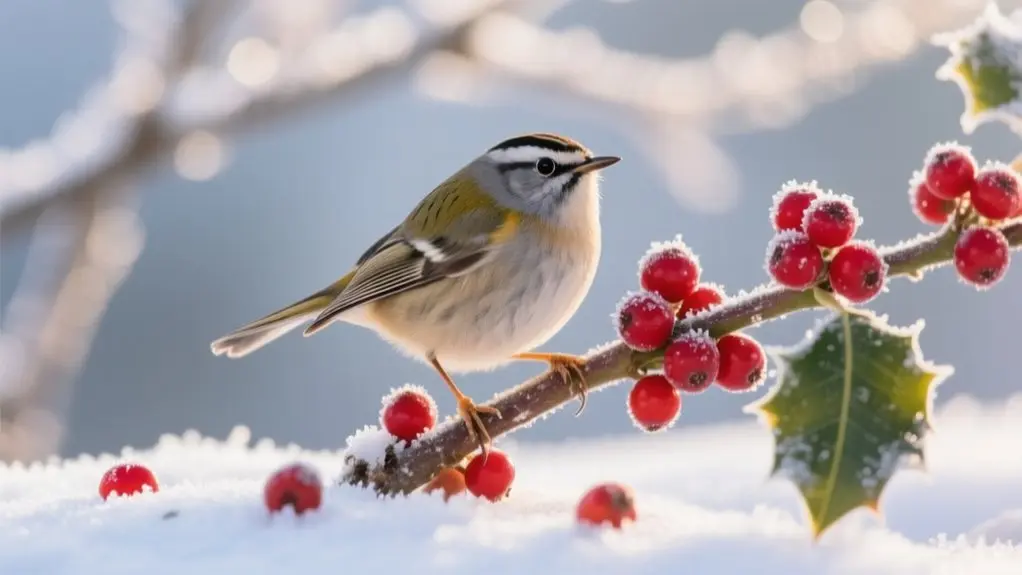
You can safely let many wild birds eat holly berries since they tolerate the mild toxins that make these berries harmful to humans. Species like cedar waxwings, American robins, and blackbirds rely on them, especially in winter when food is scarce.
Birds naturally limit how many they eat to avoid harm, benefiting from the berries’ energy-giving nutrients. Holly bushes also support bird habitats by providing shelter and food.
Keep exploring if you want to learn how holly berries fit into birds’ diets and care.
Can Birds Safely Eat Holly Berries?
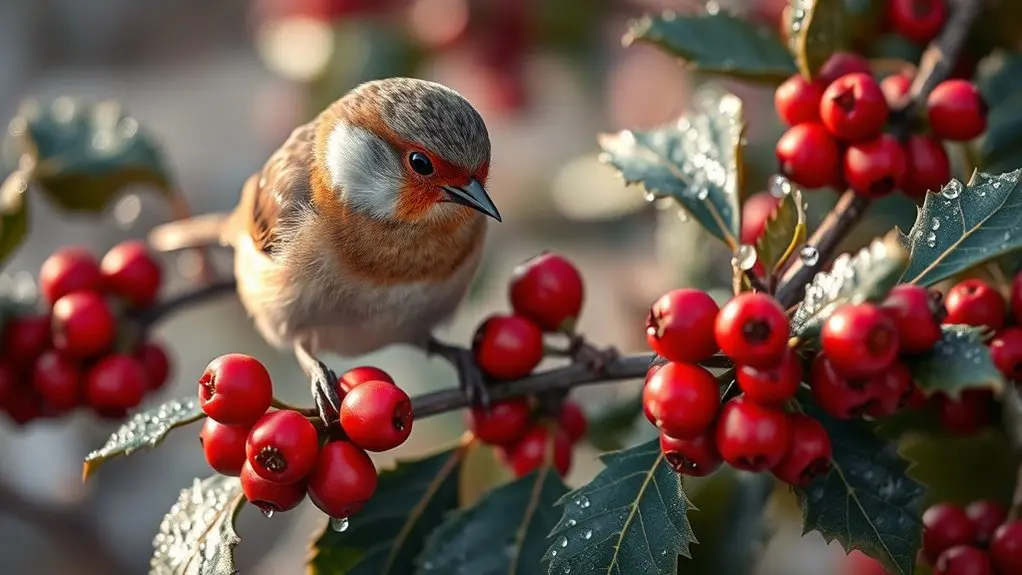
Although holly berries contain toxic compounds, many wild birds like blackbirds and thrushes can safely eat them because they’ve a high tolerance for these toxins.
You’ll find that about twenty-nine bird species, including cedar waxwings and American robins, rely on holly berries especially when other food is scarce.
While birds can handle these berries, they usually eat them in moderation due to their toxicity. Holly berries provide some nutritional value during winter but shouldn’t be your birds’ main food source.
Keep in mind, domestic birds mightn’t tolerate holly berries as well as wild ones, so it’s best to limit their access.
Why Are Holly Berries Toxic to Humans But Not Birds?
Holly berries contain toxic compounds like saponic glycosides and theobromine, which can upset your stomach if you eat enough of them.
You might wonder why these berries are harmful to you but birds can safely eat them. Here’s why:
Holly berries’ poisonous effects occur because humans metabolize toxins differently than birds. Birds have evolved a higher tolerance to these compounds, avoiding digestive issues.
Birds tolerate holly berry toxins better than humans, preventing harmful digestive effects.
The bitter taste of holly berries naturally limits how much birds consume, preventing overdose.
Birds like blackbirds and thrushes benefit nutritionally from holly berries without harm.
Which Bird Species Commonly Eat Holly Berries?
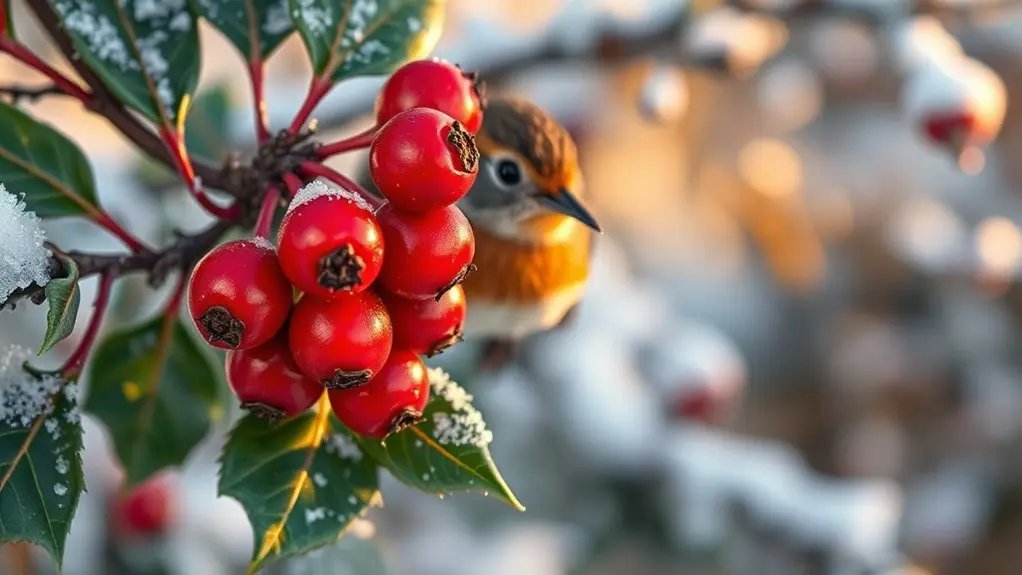
You’ll often spot American robins, cedar waxwings, and blackbirds feeding on holly berries during the winter months.
These birds tend to turn to the berries more when snow and ice limit other food sources.
It’s interesting to see how their seasonal habits make holly bushes so important for many species.
Common Berry-Eating Birds
When winter limits their usual food, birds like blackbirds, redwings, thrushes, American robins, and cedar waxwings turn to holly berries as an essential source of nourishment.
These common birds rely on holly berries as a crucial food source during harsh conditions.
In fact, twenty-nine bird species consume these berries, showing how important they’re to winter survival.
Here are some of the main berry-eaters you’ll find:
- Blackbirds often eat holly berries when other food is scarce.
- Redwings are known for their ability to digest holly berries safely.
- Thrushes turn to berries as a last food option in winter.
- Cedar waxwings are frequent berry consumers with high toxin tolerance.
These birds’ reliance on holly berries highlights the berries’ role as a key winter food source.
Seasonal Consumption Patterns
Although many birds prefer other foods, species like blackbirds, redwings, and thrushes commonly turn to holly berries during harsh winters when their usual meals are scarce.
You’ll notice that birds typically eat holly berries as a last resort because of their mild toxicity, so they limit intake to small amounts.
Environmental factors like snow and ice push birds to seek out reliable food sources, increasing holly berry consumption during these tough times.
American robins and cedar waxwings are among the 29 species known to eat holly berries, benefiting from their nutritional value despite the risks.
Seasonal changes strongly influence bird behavior, so holly berries become an essential food option mainly when other berries and insects aren’t available.
How Do Birds Limit Their Holly Berry Consumption?
You’ll notice that birds are pretty careful about how many holly berries they eat. That’s because the berries have toxins, and birds can only handle a little bit at a time.
When winter gets tough and other food is hard to find, birds end up relying more on these berries. On top of that, their territorial behavior means not every bird gets to eat as much as it wants.
Toxicity Limits Intake
Because holly berries contain toxic compounds like saponic glycosides, birds instinctively limit how many they eat to avoid harm. You’ll notice that birds rarely overconsume these berries, thanks to natural cues and instincts that help manage toxicity.
Here’s how they do it:
- The bitter taste discourages birds from eating too many berries at once.
- They tend to consume holly berries only when other food sources are scarce.
- Wild birds have a higher tolerance for these toxins than domestic birds, who should eat less.
- Even in harsh conditions like snow, birds remain selective and don’t binge on holly berries.
Seasonal Feeding Patterns
Birds manage their intake of holly berries by adjusting their feeding habits throughout the seasons. You’ll notice that during winter, when snow and ice cover many natural food sources, birds like blackbirds and thrushes turn to holly berries more often.
These berries become an essential food for birds when alternatives are scarce.
However, thanks to the toxic compounds in holly berries, birds limit how many they eat at once, avoiding overconsumption. This selective eating is part of their seasonal feeding patterns, where they balance nutrition and safety.
So, holly berries serve mainly as a last-resort food during tough months, helping birds survive without risking poisoning themselves.
Understanding these patterns helps you appreciate how birds adapt to changing environments.
Territorial Berry Access
When competing for holly berries, many bird species defend their feeding territories aggressively, limiting access for others. This territorial behavior plays a key role in how birds control their berry consumption.
Here’s how they manage access to holly berries:
- Dominant species like blackbirds and thrushes maintain feeding zones, restricting others from nearby holly bushes.
- Seasonal factors such as snow and ice heighten territorial disputes, prompting quicker berry consumption.
- Birds generally eat holly berries only when other food is scarce, naturally limiting their intake despite berry abundance.
- Presence of species like cedar waxwings can monopolize holly bushes, influencing which birds get access.
Understanding these behaviors helps you see how birds balance their diet and control holly berry consumption effectively.
What Nutritional Benefits Do Holly Berries Provide Birds?
Although holly berries contain toxins that deter overconsumption, they still provide essential nutrients like carbohydrates and fats. These help birds stay energized during winter. These nutrients are crucial when food is scarce, enabling birds to maintain energy and warmth.
Species like American robins and cedar waxwings depend on holly berries to survive harsh conditions. Birds consume these berries in moderation due to their toxicity, but their high-fat content supports endurance in cold weather.
| Nutrient | Benefit to Birds | Importance in Winter |
|---|---|---|
| Carbohydrates | Quick energy source | Helps sustain daily activity |
| Fats | Long-term energy storage | Supports body heat generation |
| Natural Toxins | Limits overconsumption | Prevents poisoning |
Holly berries balance nutrition and safety for birds during winter.
When Do Birds Rely on Holly Berries Most During Winter?
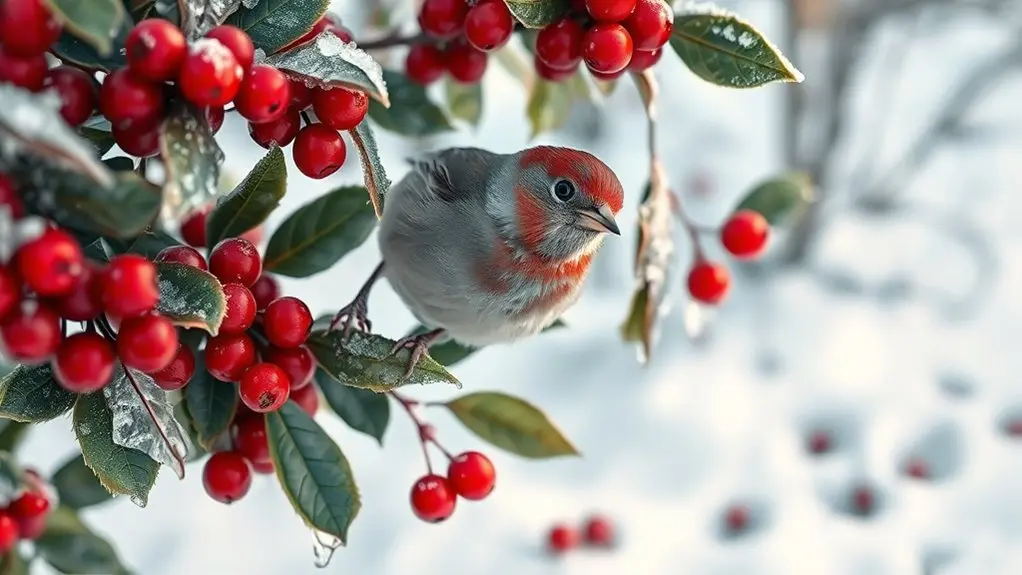
Since food options grow scarce during harsh winter weather, many birds turn to holly berries as a significant energy source. You’ll notice birds rely on these berries most when other foods vanish due to snow and ice.
Here’s when holly berries become critical for birds during winter:
- When snow covers usual food sources, forcing birds to seek alternatives.
- During prolonged cold spells, increasing birds’ energy needs.
- When other berries and insects are scarce or unavailable.
- As a last resort, since birds consume holly berries in moderation due to their mild toxicity.
Understanding these points helps you appreciate how holly berries support birds’ survival in tough winter conditions, providing an important energy boost when it’s needed most.
Can Pet Birds Safely Eat Holly Berries?
Can pet birds safely eat holly berries? While wild birds often tolerate holly berries well, pet birds can be more sensitive to the compounds found in them.
These berries contain substances that are poisonous to humans and may cause digestive upset in your pet birds, leading to vomiting and lethargy.
Because pet birds have varying tolerances to these toxins, it’s best to limit their access to holly berries.
If your pet bird does eat some, watch for any unusual symptoms and consult a veterinarian promptly to guarantee their safety.
Protecting your pet birds from potential harm means being cautious about what they consume, especially with plants and berries that might seem harmless but carry hidden risks.
How Does Holly Berry Toxicity Affect Other Wildlife and Birds?
You’ll notice that different wildlife handle holly berry toxins in various ways. Some birds tolerate them better than others.
But it’s important to remember that even birds with higher tolerance need to limit how many berries they eat. Eating too many can still cause digestive issues.
Knowing these differences can help you protect both wild and domestic birds around you.
Wildlife Toxicity Variations
Although holly berries contain toxic compounds harmful to humans, many wild birds tolerate these toxins and safely consume the berries. You’ll find that toxicity varies widely across wildlife, especially between wild and domestic species.
Here’s what you should know about how holly berries affect different animals:
- Birds like blackbirds and thrushes eat holly berries but in moderation to avoid toxicity.
- Species such as cedar waxwings and American robins handle these berries well, thanks to their natural tolerance.
- Domestic birds are more vulnerable and may suffer adverse effects from holly berry consumption.
- The bitter taste of holly berries helps prevent overconsumption, acting as a natural safety mechanism.
Understanding these variations helps you appreciate how holly berries impact wildlife differently.
Bird Consumption Limits
When food is scarce during winter, birds turn to holly berries but keep their consumption in check to avoid toxicity. Holly berries contain compounds that can cause digestive upset if eaten in excess, so birds naturally regulate their intake.
Wild birds like blackbirds and thrushes tolerate these toxins better than domestic birds, which are more vulnerable. The bitter taste of holly berries helps deter birds from overeating, acting as a natural safeguard.
You’ll notice many birds only eat holly berries as a last resort when snow and ice limit other food sources.
Studies show that small amounts of holly berries are safe for birds, but their feeding behavior depends heavily on environmental conditions, ensuring they avoid harmful overconsumption.
What Role Do Holly Bushes Play in Supporting Bird Habitats?
Anyone interested in supporting local bird populations should consider the essential role holly bushes play in their habitats.
These evergreen plants offer more than just vibrant red berries; they provide crucial resources for birds year-round.
Here’s how holly bushes support bird habitats:
- Holly bushes supply red berries, a key food source for 29 bird species, especially in winter when other foods are scarce.
- Their dense foliage creates safe nesting sites and shelter from predators.
- They attract beneficial insects, giving birds extra food options.
- Being evergreen, holly bushes guarantee continuous cover and habitat stability during harsh weather.
How Does Weather Influence Bird Feeding on Holly Berries?
Because harsh weather limits other food sources, birds rely heavily on holly berries during winter months. Snow and ice cover make it tough for birds to find seeds or insects, so they turn to the bright, persistent holly berries for nutrition.
You’ll notice birds like blackbirds and thrushes feeding on these berries more frequently when the weather turns severe. However, territorial behavior can restrict some birds’ access to holly bushes, meaning not all get an equal share.
As winter progresses, the weather influences how quickly holly berries are consumed, with some birds treating them as a last resort.
The presence of berries through cold months provides an essential lifeline, especially when harsh weather shuts down other food sources.
What Are Safer Alternatives to Holly Berries for Feeding Birds?
While holly berries provide essential nutrition during winter, they aren’t always the safest option for feeding birds because of potential toxicity and territorial competition.
Luckily, you can offer safer alternatives that keep birds healthy without risk.
Here are four safer alternatives to holly berries for feeding birds:
- Suet. High in fat, it supplies vital energy during cold months.
- Sunflower seeds. Popular and nutritious, they attract many bird species safely.
- Dried mealworms. An excellent protein source for insect-eaters, boosting growth and energy.
- Nyjer (thistle) seeds. Perfect for finches and small birds, easy to manage and nutritious.
You can also offer a variety of berries like blueberries and blackberries to attract diverse birds safely.
How to Protect Birds When Planting Hollies
If you want to attract birds with hollies, plant both male and female varieties to assure berries develop naturally. This guarantees a steady food source for birds while maintaining a balanced ecosystem.
To protect birds and others, create buffer zones with non-toxic plants around holly bushes, keeping children and pets away from potentially harmful berries. Choose spineless holly varieties to provide safer habitat and food without sharp thorns.
Regularly shear your holly shrubs after flowering to manage berry production, reducing risks linked to excessive berry consumption.
By monitoring the area and taking these steps, you help birds enjoy holly berries safely while preventing accidental ingestion by humans or pets.
This way, you support wildlife without compromising safety in your garden.
Frequently Asked Questions
How Do Holly Berries Affect Bird Migration Patterns?
Holly berries influence your bird migration patterns by acting as vital migration triggers when other food is scarce.
Birds adjust their routes and timing based on their berry preferences, often choosing areas rich in holly bushes.
When harsh winters hit, you’ll see birds relying more on these berries, speeding up their migration or changing paths to guarantee they get enough nutrition.
Can Holly Berry Consumption Influence Bird Mating Behaviors?
You won’t find holly berry consumption directly triggering mating rituals or boosting reproductive success.
Instead, you’ll see that eating these berries provides birds with essential energy, improves their health, and supports their overall condition.
When birds feel strong, they’re more likely to engage in mating rituals and achieve reproductive success.
Do Holly Berries Impact the Digestive Health of Birds?
Holly toxicity can impact bird digestion, but you shouldn’t worry much if birds eat holly berries in moderation. Their digestive systems tolerate the toxic compounds better than humans, so small amounts usually don’t cause harm.
However, if they consume too many, it might disrupt their digestion and lead to discomfort.
You should avoid letting domestic birds eat holly berries since their digestion isn’t as robust as wild birds’.
Are There Seasonal Variations in Holly Berry Toxicity Levels?
You won’t find any surprises in holly berry toxicity throughout the year. It remains steady, no matter the season.
While the seasonal availability of holly berries might change, their safety level for birds doesn’t.
Even when winter’s chill limits other food sources, the berries’ natural defenses stay consistent.
How Do Birds Find Holly Berries in Dense Foliage?
You find holly berries in dense foliage by relying on keen eyesight that picks out their bright red color against green leaves.
When you engage in bird foraging, you often move agilely through thick shrubs, using your experience to spot hidden berries.
Plus, foraging in groups helps you communicate and locate food sources more efficiently.
Seasonal changes like snow push you to search even more thoroughly in dense areas to find those berries.
Conclusion
Now that you know holly berries are safe and even beneficial for many birds, you can appreciate their role in nature’s grand tapestry. Just like a knight in shining armor protected a kingdom long ago, holly bushes shield birds during harsh winters.
Remember, while holly berries aren’t for you, they’re an essential food source for feathered friends. So, plant wisely and watch your backyard become a lively medieval feast for birds all season long!