
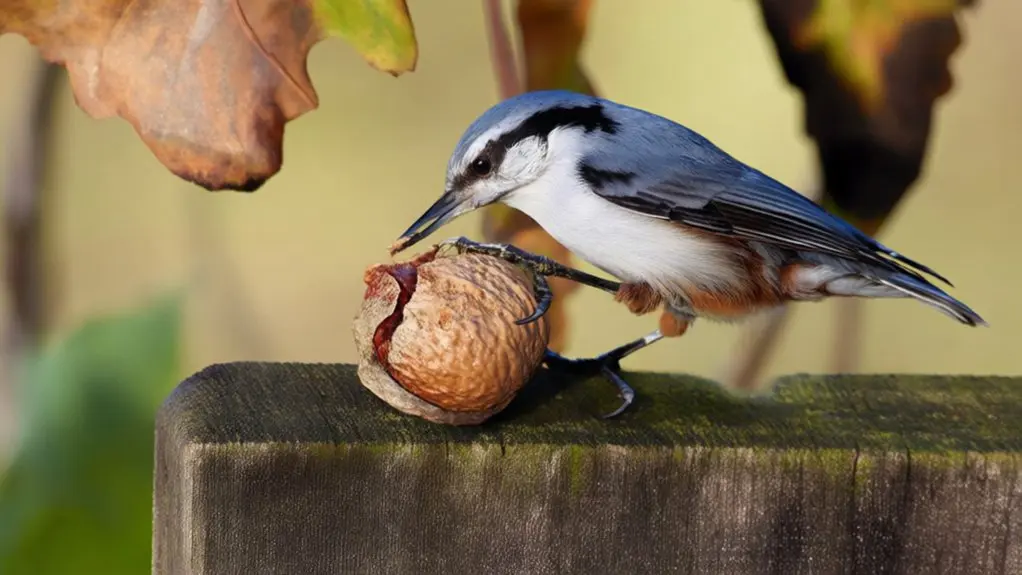
You shouldn’t feed birds rancid nuts because the oxidized fats and molds produce toxins that can cause digestive upset, immune weakness, and serious health issues. Rancid nuts lose nutritional value and may harbor harmful mycotoxins, putting birds at risk of vomiting, diarrhea, or lethargy.
Properly storing fresh nuts and recognizing spoilage signs like off odors or mold helps protect their health. To guarantee safe feeding, understanding how to identify and prevent rancidity is essential. Just keep an eye out for those signs and always offer fresh, good-quality nuts to your feathered friends.
Why Rancid Nuts Can Harm Your Birds
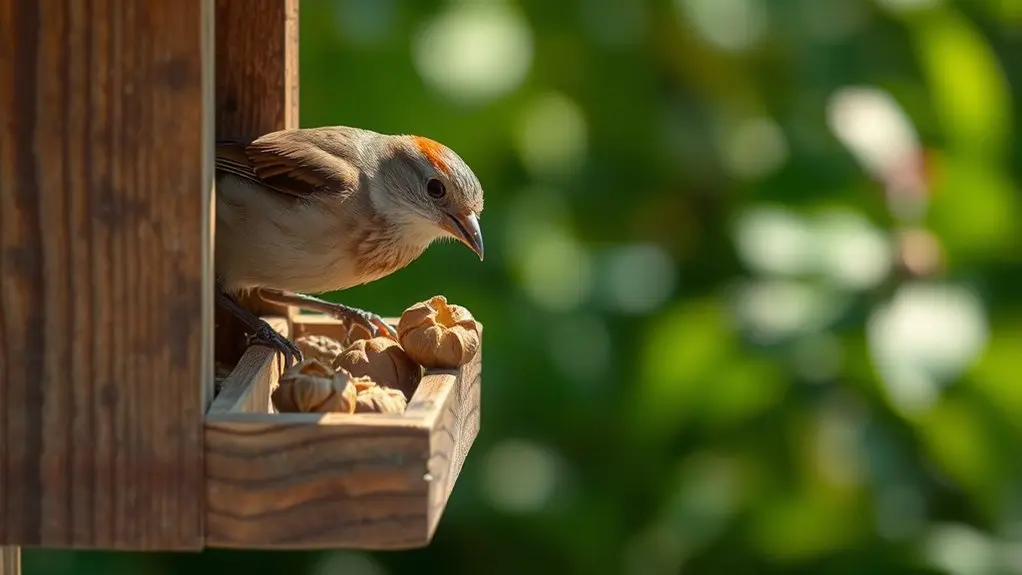
Although nuts are a nutritious treat for birds, rancid nuts pose significant health risks due to the oxidation products they contain. These oxidation products can be toxic and cause digestive upset or illness in birds.
When fats in rancid nuts degrade, they may also encourage mold growth. This mold produces mycotoxins that are harmful to avian health.
Additionally, rancidity reduces the nutritional value of nuts by breaking down beneficial fats and proteins. Birds rely on these nutrients for energy and overall health.
If you feed rancid nuts, you risk weakening your bird’s immune system. This makes them more susceptible to infections and diseases.
Since rancidity develops when nuts are exposed to heat, light, or air over time, you have to manage storage conditions carefully. Doing so helps keep nuts safe for your birds.
How to Identify Rancid Nuts and Mold Contamination
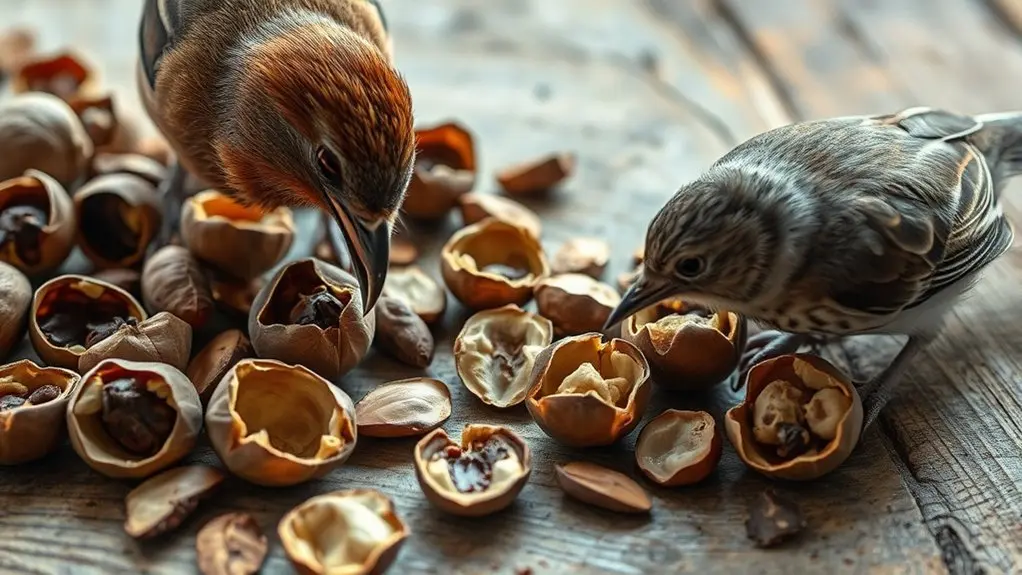
When you examine nuts before feeding them to your birds, pay close attention to their smell and appearance. These are key indicators of rancidity or mold contamination. Rancid nuts emit a sour or bitter odor, which is quite different from the fresh, nutty aroma you’d expect from quality nuts.
Visually, check for any fuzzy white, green, or black growths—these usually mean mold is present. Moldy nuts often have discoloration, like dark spots or powdery, slimy textures. These signs show spoilage and possible mycotoxin contamination.
If you notice any off-odor, discoloration, or visible mold, it’s best to discard those nuts. Feeding spoiled nuts can cause digestive problems or even toxicity in birds.
Taking the time to carefully assess the nuts helps you keep your birds safe and healthy.
Effects of Rancid Nuts on Birds
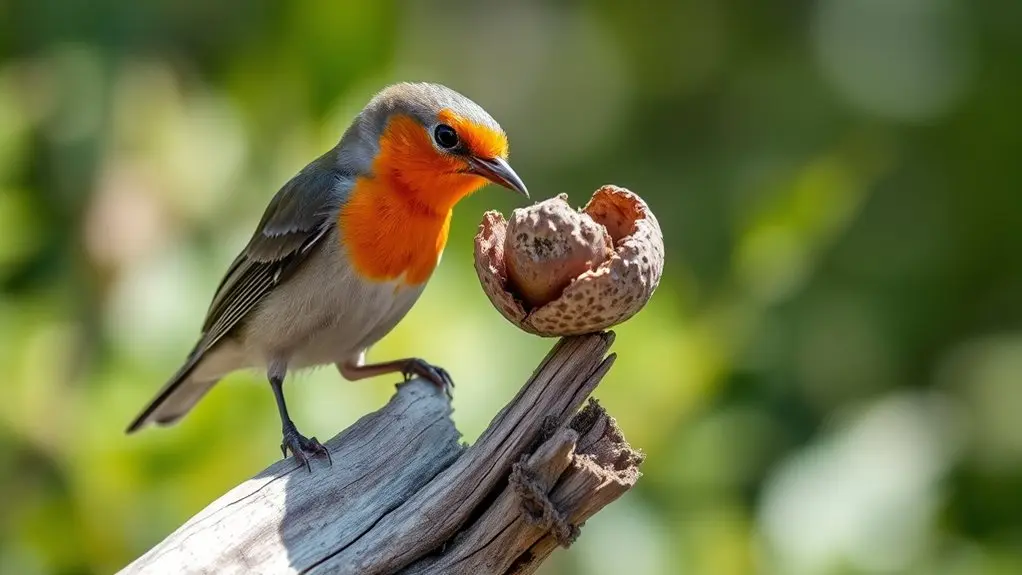
After identifying rancid or moldy nuts, understanding their impact on birds becomes important. Rancid nuts contain oxidized fats that can disrupt a bird’s digestive system, potentially causing illness. When birds consume these nuts, they may develop symptoms such as vomiting, diarrhea, or lethargy.
Rancid nuts with oxidized fats can upset birds’ digestion, causing vomiting, diarrhea, or lethargy.
Additionally, rancid nuts can harbor molds or bacteria, which produce toxins or infections harmful to avian health. This spoilage results from exposure to heat, light, or air, accelerating fat breakdown.
If you feed birds rancid nuts, you risk compromising their well-being. To prevent these effects, always provide fresh nuts, avoiding any with off smells or visible mold.
Recognizing these dangers helps you protect birds from avoidable health issues caused by rancid nuts. It’s really best to check before you feed them—birds will thank you for it!
How to Store Nuts to Prevent Rancidity
Proper storage techniques considerably slow down the oxidation process that causes nuts to become rancid. You should store nuts in airtight containers, kept in cool, dark places to minimize exposure to heat and light. Refrigerating or freezing nuts markedly extends their shelf life by maintaining freshness for several months.
Avoid direct sunlight and warm temperatures, as they accelerate rancidity. Use moisture-proof packaging to prevent humidity-induced mold and spoilage. It really makes a difference in keeping your nuts fresh.
| Storage Factor | Recommendation |
|---|---|
| Container Type | Airtight and moisture-proof |
| Temperature | Cool, ideally refrigerated/freezing |
| Light Exposure | Keep away from direct sunlight |
| Humidity | Avoid moisture contact |
| Monitoring | Regularly check for odor, color, taste |
Following these guidelines helps preserve nut quality and prevents rancidity effectively. Give it a try, and you’ll notice the difference in freshness!
When to Discard Rancid Nuts and Replace Them
You should toss out nuts right away if they’ve an off smell, sour taste, or bitter flavor—these are signs they’ve gone rancid. Feeding rancid nuts isn’t a good idea because they produce harmful free radicals that can lead to health issues in birds.
To keep things safe, it’s best to swap out spoiled nuts for fresh ones. Also, make sure to store all your nuts in airtight containers, and keep them somewhere cool and dark to help them stay fresh longer.
Signs of Nut Rancidity
Although rancid nuts may appear harmless at first glance, they emit a distinctive sour or bitter smell that signals spoilage and potential toxicity to birds. You should also watch for changes in texture. Nuts may become oily, sticky, or excessively soft.
Discoloration and visible mold are additional clear indicators that nuts are no longer safe. To protect visiting birds, discard any nuts showing these signs promptly. It’s a good idea to regularly inspect stored nuts and replace them every few weeks to maintain freshness.
Risks of Feeding Rancid Nuts
When nuts undergo rancidity, they develop harmful oxidation products and free radicals that pose significant health risks to birds. Feeding rancid nuts can cause digestive disturbances and reduce nutrient availability, which compromises bird health.
Although birds typically avoid rancid nuts because of their unpleasant odor and taste, they might still eat them sometimes. That puts them at risk of toxicity. So, it’s best to discard rancid nuts promptly to prevent these problems.
Look out for sour or bitter odors, which indicate oxidation. Also, watch for visible mold growth, as that signals contamination. Discoloration is another warning sign, reflecting chemical changes. And keep an eye on texture changes—from firmness to softness.
Regularly inspecting and replacing rancid nuts ensures your birds get safe, nutritious food. That way, you minimize the health risks associated with rancidity.
Safe Nut Storage Practices
Since rancidity poses health risks to birds, proper storage and timely replacement of nuts are essential to guarantee their safety and nutritional value. Store nuts in airtight containers placed in cool, dry environments to slow oxidation and microbial growth. Avoid exposing nuts to warm or humid conditions, as these accelerate rancidity.
Regularly inspect your nuts for signs of spoilage, such as discoloration, mold, a bitter taste, or sour odor, and discard any nuts showing these indicators. Even if no visible signs appear, replace stored nuts every few weeks, especially during hot weather, to maintain freshness and prevent potential toxicity.
Which Nuts Are Safe and How to Prepare Them
When picking nuts for your birds, go for unsalted pecans, walnuts, and almonds that are fresh and don’t show any signs of mold or rancidity. This way, you can be sure they’re safe.
It’s also a good idea to crush the nuts into small pieces—this helps reduce the chances of choking and makes them easier to handle.
Another tip is to bake the nuts at 250°F for about 10-15 minutes. Doing this can help get rid of any molds and keep the nuts fresh for longer.
Safe Nut Varieties
Although many nuts may seem suitable for birds, only specific varieties are safe and beneficial when prepared correctly. You should focus on offering unsalted pecans, walnuts, and almonds, as these provide essential nutrients without harmful additives. Make sure nuts are fresh and free from mold or rancidity to avoid exposing birds to toxic free radicals.
Always remove hard shells from nuts to make handling easier, especially for smaller species. Here are some key points to consider:
- Choose unsalted, unflavored nuts to prevent sodium toxicity.
- Offer nuts crushed or chopped into small, manageable pieces.
- Verify nuts are fresh to avoid the risks associated with oxidation of fats.
- Remove shells if they make it difficult for the bird to eat.
Proper Nut Preparation
When preparing nuts for birds, selecting fresh, unsalted varieties is essential to prevent exposure to harmful mold and toxins found in rancid nuts. You should crush or chop nuts into small pieces to reduce choking risk and improve handling for small birds.
Store nuts in a cool, dry environment and replace them frequently to avoid spoilage. Soaking dried nuts can remove surface contaminants and aid digestibility.
Avoid nuts with sour smells or oily textures, which indicate rancidity.
| Nut Type | Preparation Method | Storage Tips |
|---|---|---|
| Almonds | Chop finely | Cool, dry, airtight |
| Walnuts | Crush into pieces | Regularly refresh stock |
| Peanuts | Soak, then chop | Avoid humid environments |
| Hazelnuts | Chop or crush | Use before expiration |
Nut Alternatives for Healthy Bird Feeding
Since rancid nuts pose health risks to birds due to mold and mycotoxin contamination, exploring nut alternatives is essential for maintaining a safe feeding regimen. You can provide birds with nutritious options that minimize the risk of toxin exposure and digestive issues.
Consider these alternatives for healthy bird feeding:
- Sunflower seeds: High in fat and protein, supporting energy needs.
- Shelled peas: Offer a good source of carbohydrates and fiber.
- Dried fruits: Provide natural sugars and vitamins, but use sparingly.
- Mealworms: Rich in protein and mimic natural insect diets.
Each alternative requires proper storage to prevent spoilage.
By diversifying bird diets with these substitutes, you reduce reliance on potentially rancid nuts and promote overall avian health and safety.
It’s a simple way to keep your feathered friends happy and healthy!
How to Keep Squirrels Away From Bird Nuts
Protecting your bird nuts from squirrels plays a big role in keeping a safe feeding spot for birds. You can use squirrel-proof feeders that have weight-activated perches. These clever mechanisms close off access when heavier squirrels land on them.
Placing nuts on metal or glass surfaces also helps because squirrels can’t grip or chew through those easily. Try feeding early in the morning or late at night when squirrels are less active. This way, you reduce their chances of interfering.
Another trick is to use spicy or capsaicin-treated seeds. These deter squirrels but don’t harm birds since birds aren’t affected by capsaicin.
You can also set up a separate feeding station just for squirrels, away from the bird feeders. This helps keep their attention elsewhere and protects your bird nuts.
When you put all these ideas together, you get an effective, science-backed way to keep your bird food safe from squirrels messing things up or contaminating it.
Signs of Mold and Toxins in Bird Nuts
Although bird nuts provide essential nutrients, you must carefully inspect them for signs of mold and toxins before feeding. Moldy nuts often develop a fuzzy or powdery coating, which produces mycotoxins harmful to birds.
Rancid nuts emit a sour or bitter odor, signaling oxidation and spoilage.
Consuming contaminated nuts can cause vomiting, diarrhea, or neurological issues in birds. Mycotoxins can accumulate and potentially cause long-term damage or even death. So, it’s really important to check your bird nuts carefully.
To guarantee safety, look out for a few things:
- Fuzzy or powdery mold growth on the nut surface
- Discoloration or unusual dark spots
- Sour, bitter, or off-putting smells indicating rancidity
- Signs of physical deterioration such as shriveling or softness
A thorough visual and smell check goes a long way in minimizing health risks linked to mold and toxins in bird nuts. It’s worth taking the extra time to keep your birds safe.
Quick Tips to Keep Bird Nuts Fresh and Safe
To keep bird nuts fresh and safe, store them in airtight containers in a cool, dry place. You might also want to consider refrigerating them to slow down rancidity.
It’s a good idea to regularly check the nuts for any off smells, discoloration, or bitterness. These are signs that the nuts might be spoiled.
If you notice any of these signs, go ahead and discard those nuts to prevent potential digestive issues in your birds.
Proper Nut Storage
Since bird nuts are prone to rancidity when exposed to heat, humidity, and air, you should store them in airtight containers placed in a cool, dry environment. This minimizes oxidative reactions that degrade nut quality.
To further extend freshness, consider refrigerating or freezing nuts, which slows lipid oxidation effectively.
Avoid purchasing large quantities that you can’t use promptly, as prolonged storage increases spoilage risk. Use resealable bags or containers to maintain an oxygen-free atmosphere and prevent moisture ingress.
Key storage tips:
- Use airtight containers to block air exposure
- Store nuts in a cool, dry place away from humidity and heat
- Refrigerate or freeze nuts to slow oxidation processes
- Purchase smaller quantities to reduce storage time and spoilage risk
These measures guarantee bird nuts remain safe and nutritious for consumption. Just a few simple steps can really make a difference!
Signs Of Nut Spoilage
When you handle bird nuts, recognizing signs of spoilage is essential to guarantee safety and maintain nutritional value. Rancid nuts emit a sour odor, feel greasy or sticky, and often display discoloration or mold.
Taste tests revealing bitterness indicate spoilage and potential risk to birds, including gastrointestinal distress.
| Sign | Description | Implication for Birds |
|---|---|---|
| Odor | Sour or stale smell | Indicates rancidity |
| Texture | Soft, greasy, or sticky feel | Suggests spoilage |
| Appearance | Discoloration or mold | Unsafe to consume |
| Taste | Bitter or sour flavor | Likely rancid, causes illness |
Always inspect nuts carefully to maintain bird health and nutritional intake. It’s a simple step that can make a big difference.
Frequently Asked Questions
Can Birds Develop Allergies From Eating Nuts?
Yes, birds can develop allergies from eating nuts. You might notice symptoms like itching, swelling, or breathing difficulties.
Repeated exposure can sensitize their immune system, so watch for signs and consult an avian vet if needed. It’s always better to be safe and get a professional opinion if you’re unsure.
Are There Specific Bird Species That Avoid Nuts Altogether?
Yes, you’ll find species like finches, warblers, and insectivores such as nuthatches avoid nuts due to dietary preferences or beak limitations.
Ground-feeders like sparrows also prioritize seeds, generally steering clear of nuts altogether. It’s mostly about what works best for their feeding habits and what their beaks are built to handle.
How Do Birds Naturally Select Safe Foods in the Wild?
You observe that birds use visual cues, smell, and texture to select safe foods, avoiding spoiled items. They instinctively reject rancid or moldy substances. Often, they test unfamiliar foods cautiously before full consumption to guarantee safety.
It’s like they have their own built-in safety check. This way, they minimize the risk of eating something harmful. Pretty smart, right?
Can Feeding Nuts Impact Bird Migration Patterns?
Sure, feeding birds rancid nuts won’t send them on a misguided world tour yet. But you should know spoiled nuts harm their health and disrupt energy.
They could subtly alter migration by weakening stamina and survival chances, which is scientifically proven. So, it’s better to offer fresh, healthy nuts to keep birds strong and on the right path.
Do Birds Prefer Shelled or Unshelled Nuts?
You’ll find birds generally prefer shelled nuts for easy access, but some species enjoy unshelled nuts to exercise their beak strength and mental skills.
Providing both types supports varied foraging behaviors and nutritional needs. It’s a great way to keep birds engaged and healthy. Just mix it up and see what your feathered friends like best!
Conclusion
You shouldn’t feed rancid nuts to your birds, as they can be a ticking time bomb of toxins and mold that harm their health. Identifying and discarding spoiled nuts is essential to keeping your feathered friends safe.
Store nuts properly to prevent rancidity, and consider fresh alternatives for balanced nutrition. Remember, a little vigilance goes a long way. Keeping nuts fresh is like giving your birds a scientific shield against illness and discomfort.