
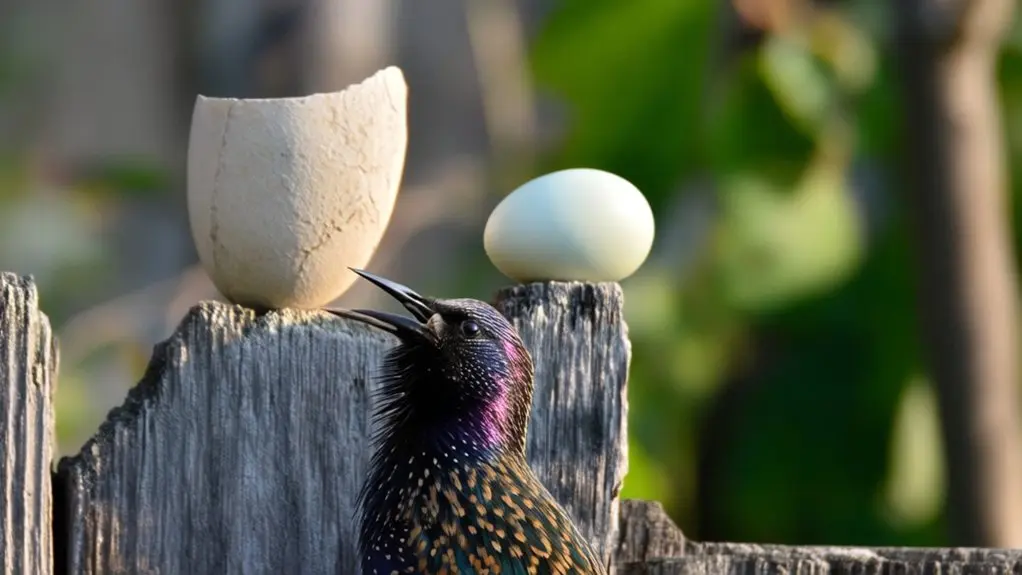
You can feed birds raw eggs, but you need to be cautious. Raw eggs can carry harmful bacteria like Salmonella and contain avidin, which blocks essential biotin absorption. This could risk your bird’s health.
Cooking eggs eliminates these dangers, making nutrients safer and easier to digest. While wild birds naturally eat raw eggs, captive birds do better with cooked ones. This helps avoid infections and choking hazards.
If you want to know when and how eggs best fit your bird’s diet, keep exploring. There’s plenty more to learn to keep your feathered friend happy and healthy.
Are Raw Eggs Safe for Birds to Eat?
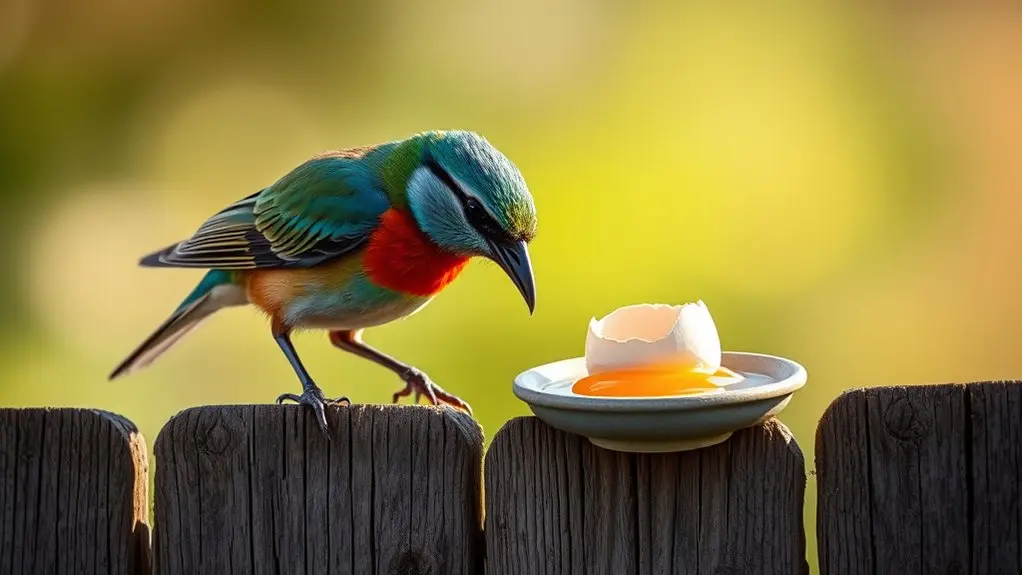
Although some wild birds eat raw eggs without any obvious harm, feeding uncooked eggs to captive birds comes with some real risks. Raw eggs can carry Salmonella and other germs that might make your bird sick.
Many bird vets recommend cooking eggs before giving them to your birds because cooking kills harmful bacteria and lowers the chance of illness.
Cooking eggs for your birds kills harmful bacteria and reduces the risk of illness.
Uncooked eggs can also upset your bird’s digestion or lead to infections in certain species.
Sure, some birds eat raw eggs in the wild, but that doesn’t always mean it’s safe for birds living in captivity. To keep your birds healthy and well-nourished, it’s better to offer cooked eggs.
Cooked eggs are safer and usually easier for birds to digest than raw ones.
Taking these precautions helps avoid health problems and keeps your feathered friends happy.
How Do Birds Naturally Consume Eggs in the Wild?
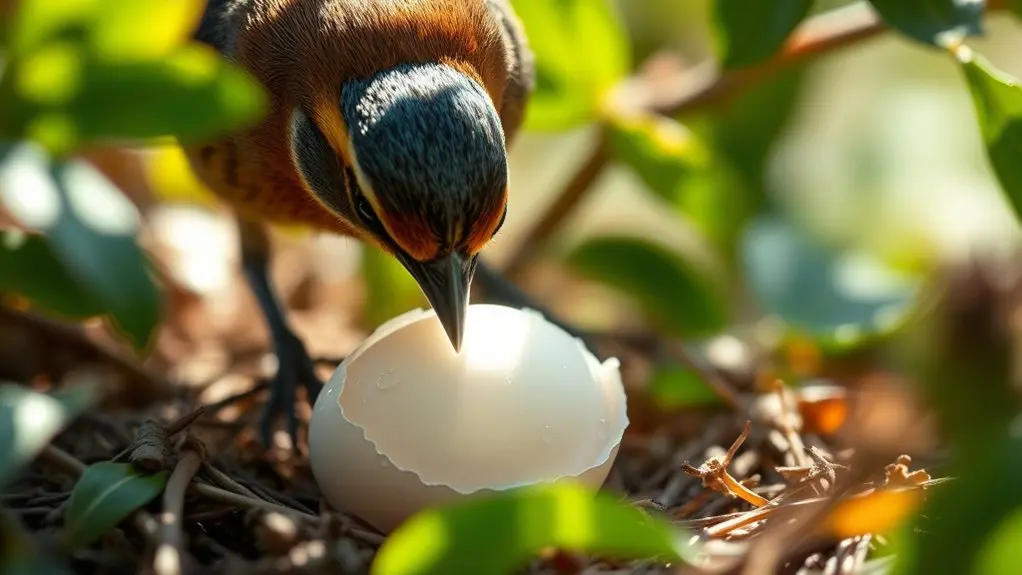
You’ll find that many wild birds naturally eat eggs by raiding nests or even consuming their own when food is scarce.
For example, wild parrots have been seen adding raw eggs to their diets because eggs are packed with nutrients. This kind of egg-eating behavior is really important for their survival and how they find food in the wild.
Egg-Eating Behavior Observed
When you observe birds in the wild, you’ll notice that many species actively consume eggs as part of their diet. Birds like parrots and raptors break eggs open with their beaks, pecking or smashing the shell to access the nutritious yolk and albumen inside.
Some species raid nests, especially when food is scarce, feeding on unhatched or freshly laid eggs.
Brood parasites such as cuckoos and cowbirds lay eggs in other birds’ nests, which often leads to those eggs being eaten or abandoned.
This egg-eating behavior is a natural survival strategy for many wild bird populations, helping them meet nutritional needs and thrive in diverse environments.
Understanding these behaviors highlights how integral eggs are to certain bird diets in the wild.
Wild Parrot Egg Consumption
Because wild parrots face fluctuating food availability, they often turn to raiding nests to consume eggs as a vital protein and calcium source. You’ll observe that these birds naturally eat eggs from their own species or others, which shows their dietary flexibility.
They target abandoned or unguarded nests, making egg consumption a practical survival strategy during scarce food periods. This behavior isn’t random; it’s a well-documented, innate tendency among wild parrots to supplement their nutrition.
Predation And Nest Raiding
Although egg predation may seem surprising, many wild birds actively raid nests to consume eggs as a natural food source.
Species like parrots, gulls, European starlings, and black-headed gulls seek out eggs during breeding seasons, breaking into nests to eat them raw or slightly cracked.
This behavior provides essential nutrients and is a common survival strategy.
Some birds, such as the common cuckoo, indirectly consume eggs by laying their own in other species’ nests, causing parasitic predation.
While many birds have evolved nest defense mechanisms, nest raiding remains widespread and natural.
Understanding this behavior helps explain why consuming raw eggs is instinctive for many birds and how it fits into their ecological role as both predators and protectors in the wild.
Nutritional Benefits of Eggs for Wild and Domestic Birds
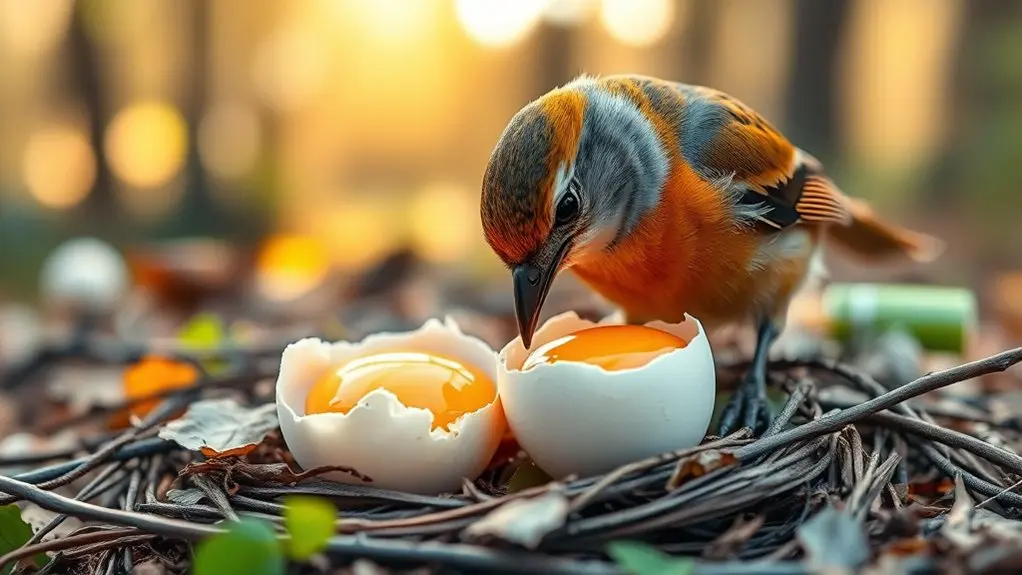
You’ll find that eggs offer birds a dense source of high-quality protein, which is crucial for muscle development and repair.
Plus, they provide essential vitamins and minerals that support overall health and reproductive success.
On top of that, eggs serve as a concentrated energy source, helping to fuel the demanding activities of both wild and domestic birds.
Protein Content Importance
When birds consume raw eggs, they get a concentrated source of high-quality protein. This protein delivers essential amino acids that are critical for growth and tissue repair. Each large egg contains about 6 grams of protein, which supports muscle development and immune function.
This protein is especially helpful during breeding, molting, or recovery periods. It helps birds maintain energy and health for demanding activities like flying or nesting.
| Bird Activity | Protein Need | Egg Protein Benefit |
|---|---|---|
| Breeding | High | Supports chick growth |
| Molting | Moderate | Aids feather regeneration |
| Recovery/Immune | High | Enhances tissue repair |
Supplying eggs properly can supplement a bird’s diet. But you should be cautious about overfeeding or the risks of raw eggs.
Essential Vitamins And Minerals
Because eggs contain a rich blend of essential vitamins and minerals, they provide significant nutritional benefits to both wild and domestic birds. You’ll find eggs packed with essential vitamins like B12, A, D, E, and folate, all *crucial* for maintaining overall health.
Important minerals such as calcium, phosphorus, and zinc support strong bones, eggshell formation, and immune function.
The yolk offers healthy fats that not only deliver energy but also help absorb fat-soluble vitamins, aiding reproductive and metabolic processes. Additionally, nutrients like choline in eggs promote brain development and liver function.
Including raw eggs in a bird’s diet can be especially beneficial during breeding or recovery.
Energy Source For Birds
Eggs not only supply essential nutrients but also serve as a concentrated energy source for birds. They’re packed with high-quality protein, healthy fats, vitamins A, D, E, and omega-3 fatty acids. All of these are vital for maintaining energy levels and overall health.
Wild birds occasionally consume eggs, including their own or others’, to rapidly restore energy during intense activity or breeding seasons.
For domesticated birds, offering cooked eggs provides a reliable energy boost. This is especially helpful during molting, breeding, or recovery from illness.
While raw eggs contain readily accessible nutrients, feeding them requires caution because of the risk of bacterial contamination like salmonella.
Why Birds Do Better With Cooked Egg Yolks
Although raw egg yolks might seem like a natural treat, cooked yolks offer significant health advantages for birds. Cooking eliminates harmful pathogens like Salmonella, making yolks safer to eat. It also improves digestibility and nutrient absorption, supporting your bird’s overall health.
Unlike raw egg whites, cooked yolks don’t contain avidin, which can block biotin absorption. Plus, cooked yolks reduce risks of choking or digestive upset.
| Benefit | Explanation |
|---|---|
| Pathogen elimination | Cooking destroys harmful bacteria and parasites |
| Nutrient absorption | Heat improves digestibility and nutrient uptake |
| Safety | Reduced choking and digestive issues |
Feeding cooked egg yolks is a safer, healthier choice that supports your bird’s wellbeing effectively. It’s a simple way to keep your feathered friend happy and healthy.
What Are the Risks of Feeding Raw Eggs to Birds?
When you feed raw eggs to birds, you expose them to several significant health risks, including bacterial infections like Salmonella. Raw eggs can harbor pathogens and parasites that compromise their immune systems, especially if eggs are contaminated or stored improperly.
Also, raw egg whites contain avidin, a protein that blocks biotin absorption, which can potentially cause nutritional deficiencies. Birds might face choking hazards or internal blockages if they swallow large, uncracked eggs.
Handling raw eggs carelessly increases the risk of cross-contamination, putting both the birds and their environment in danger. Given these dangers, feeding raw eggs to birds is risky and requires caution to prevent serious health issues.
How to Prepare Eggs Safely for Bird Feeding
Since feeding raw eggs poses significant health risks to birds, you need to make certain eggs are properly cooked before offering them. Start by piercing the eggshell at the narrow end to allow steam to escape and prevent explosions during boiling.
Boil chicken eggs for about 10 minutes, adjusting the time for larger or smaller eggs to ensure thorough cooking.
Avoid feeding raw eggs directly from the shell, as they can harbor harmful bacteria and parasites. Once cooked, cool the eggs completely before handling.
Cut them into small, manageable pieces to reduce choking risks and make them easier for birds to eat.
What People Get Wrong About Birds Eating Eggs
Properly preparing eggs for birds helps reduce health risks, but there are still many misconceptions about birds eating eggs in general. You might think all eggs are toxic or unsafe for birds, but nearly all bird eggs are edible regardless of incubation stage, unless a species-specific toxin is present.
Some believe birds eating their own or other species’ eggs is harmful, yet this behavior is natural and non-toxic in many cases. You may also assume raw eggs are always dangerous, but many birds consume them in the wild without issues.
When Should You Feed Eggs to Parrots and Pet Birds?
Although eggs can offer valuable nutrients, you should feed them to parrots and pet birds only under specific conditions to avoid health risks. It’s best to provide eggs during breeding seasons or when an avian veterinarian recommends them as a nutritional supplement.
Avoid giving raw eggs regularly, as they carry a higher risk of salmonella and bacterial contamination. Instead, offer properly cooked eggs that are fresh and free from toxins.
Feeding eggs occasionally and in controlled amounts minimizes potential health issues. Remember, eggs aren’t a daily food but a targeted supplement to support your bird’s health during critical periods.
Always prioritize egg safety and consult your vet before introducing eggs into your pet bird’s diet. It’s better to be safe and make sure you’re doing what’s best for your feathered friend.
Frequently Asked Questions
Can Baby Birds Digest Raw Eggs Safely?
Yes, baby birds can digest raw eggs safely because their digestive systems handle various proteins. However, you should guarantee the eggs are fresh and clean to reduce bacterial risks. Or, you can lightly cook them for added safety.
It’s always better to be cautious when feeding baby birds. Freshness and cleanliness really matter here. So, keep an eye on those eggs before offering them.
Do All Bird Species Eat Eggs in the Wild?
Don’t think of egg-eating as a universal bird buffet; not all species include eggs in their diet. You’ll find some birds raid nests like skilled thieves, while others avoid eggs entirely, relying on different food sources.
It really depends on the bird and what’s available in their environment. So, while some birds are egg-eaters, many others stick to insects, seeds, or even fruit instead.
How Often Can Birds Be Fed Eggs Weekly?
You should feed birds eggs no more than once a week, ideally during breeding periods. Overfeeding can cause health problems, so always monitor your bird’s condition and consult an avian vet to guarantee safe egg consumption.
It’s best to keep an eye on how your bird reacts to eggs and adjust accordingly. When in doubt, a quick chat with a vet can help you avoid any issues.
Can Eggshells Alone Provide Enough Calcium for Birds?
Eggshells alone can’t carry the whole weight of a bird’s calcium needs.
You’ll need to combine them with a balanced diet or supplements to guarantee your feathered friend stays strong and healthy.
It’s all about giving them the right mix to keep those bones and feathers in top shape!
Are There Alternatives to Eggs for Protein in Bird Diets?
Yes, you can provide alternatives like cooked beans, lentils, tofu, insect proteins, fish, legumes, seeds, and commercial pellet diets. These options deliver balanced protein without relying solely on eggs.
This way, you’re making sure your bird’s nutritional needs are met effectively. It’s all about variety and balance to keep them healthy and happy.
Conclusion
When you offer eggs to your feathered friends, imagine the rich yolk as a golden treasure chest of nutrients. But remember, raw eggs can harbor hidden risks like bacteria. Cooking eggs releases their full benefits safely and protects your birds from harm.
By preparing eggs thoughtfully, you make sure their feathers stay vibrant and their chirps lively. So, handle eggs with care and feed them cooked. This way, you keep your birds healthy and happy every day.