
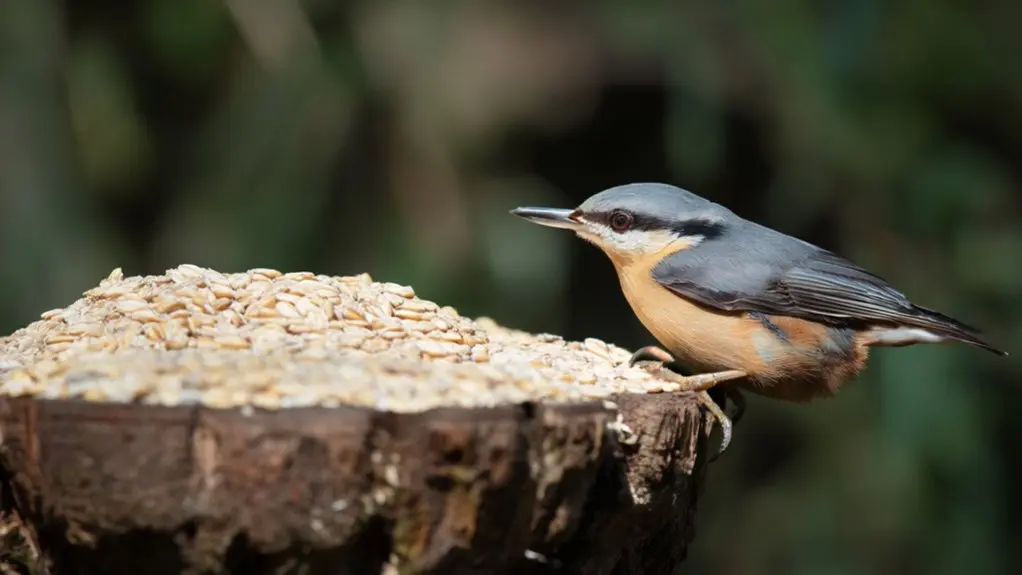
You can safely feed birds raw oats in moderation, as long as they’re plain and free from additives like salt or preservatives. Store oats airtight in a cool, dry place to prevent mold and pests. Always check for spoilage before offering.
Raw oats provide essential nutrients and fiber that support bird digestion and energy, especially in colder months. If you want to understand the best feeding methods and which birds benefit most, there’s more to explore.
Are Raw Oats Safe for Wild Birds?
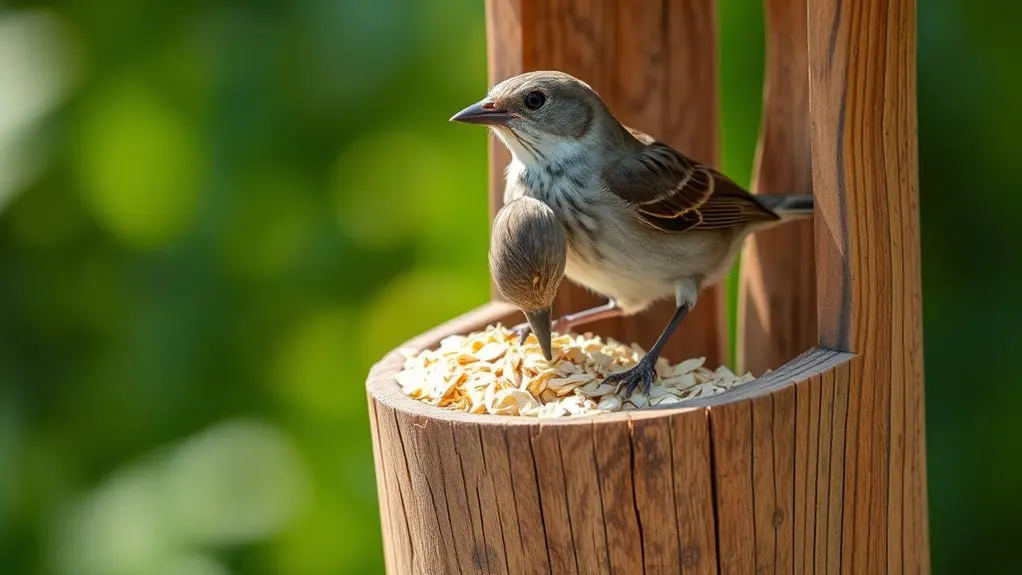
Although you might wonder if raw oats pose any risk to wild birds, they’re generally safe when fed in moderation and without additives.
Uncooked rolled oats and porridge oats provide birds with energy and fiber essential for their metabolism. However, it’s vital to verify the oats contain no salt, preservatives, or artificial sweeteners, as these can harm birds.
Uncooked oats offer essential energy and fiber, but must be free from harmful additives like salt or sweeteners.
Birds can digest plain raw oats effectively, aiding their dietary needs, particularly during colder seasons when energy demands increase.
Still, you should avoid overfeeding raw oats; excessive quantities might lead to digestive disturbances.
Why Raw Oats Are Great for Birds
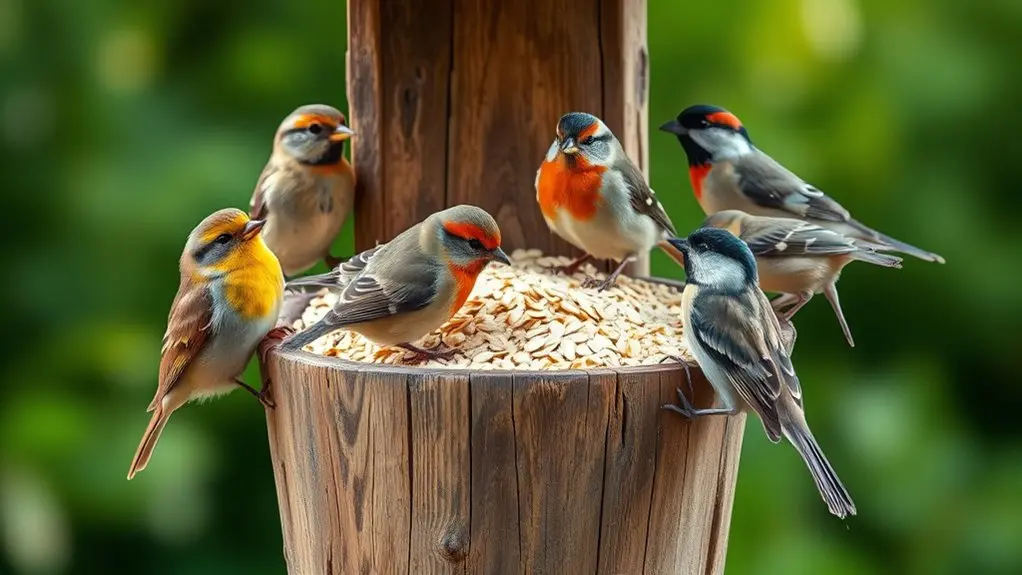
When you provide raw oats to birds, you offer them a nutrient-rich source of carbohydrates and fiber that supports both their energy levels and digestive health. Raw oats serve as a natural food option free from harmful additives or preservatives, making them safe for many wild bird species.
Here’s why raw oats are beneficial:
- Energy Supply: Their high carbohydrate content helps birds maintain energy, especially in colder months when metabolic demands rise.
- Digestive Health: The fiber in raw oats aids digestion and promotes gut health, which is essential for nutrient absorption.
- Dietary Variety: Birds like sparrows, doves, and chickadees enjoy raw oats. They help diversify their natural diet and provide essential nutrients.
Offering raw oats in moderation supports bird health and encourages natural foraging behaviors. So, it’s a simple way to give the birds a little extra boost!
Raw vs. Cooked Oats: Which Is Better for Birds?
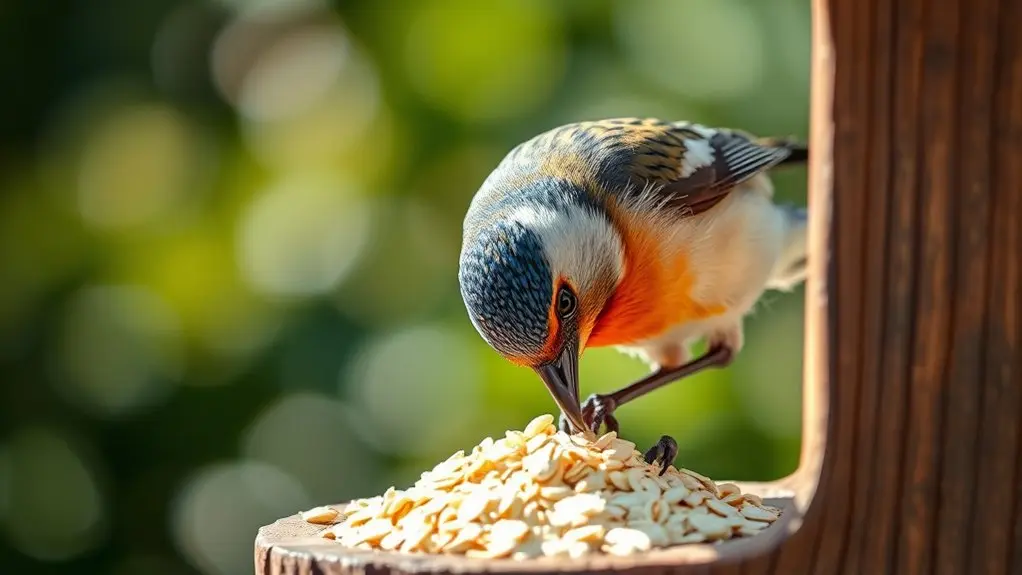
Feeding birds raw oats offers many nutritional benefits, but you might wonder how they compare to cooked oats regarding suitability and health effects. Raw oats retain more natural nutrients and fiber, making them a healthier option when offered in moderation. They don’t swell dangerously in a bird’s stomach if given in small amounts, ensuring safety.
Cooked oats, however, are softer and easier to digest, which benefits birds with weaker beaks or sensitive digestive systems. Cooking also enhances palatability but can reduce some nutrients if overdone.
Both forms provide valuable nutrition, yet raw oats better preserve fiber and vitamins, while cooked oats improve accessibility.
Choosing between them depends on your bird’s specific needs and digestive capacity, balancing nutrient retention with ease of consumption. So, it really comes down to what works best for your feathered friend!
Safe Ways to Offer Raw Oats to Birds
When you’re offering raw oats to birds, just make sure they’re plain and fresh—no additives or contaminants. It’s best to keep it simple so the birds stay healthy.
You can also mix the oats with bird-safe ingredients like peanut butter or dried fruits. This not only boosts nutrition but makes the oats tastier for the birds.
And remember, serving small portions is a good idea. It helps prevent choking and lets the birds eat at a comfortable pace without feeling rushed.
Preparing Oats Safely
How can you safely prepare raw oats to guarantee they provide nutritious benefits without harming birds? First, offer raw oats plain. Avoid salt, sugar, or flavorings to prevent toxicity.
Next, you can enhance nutrition by mixing oats with natural ingredients like peanut butter or dried fruits. This way, you create bird-friendly treats that they’ll enjoy.
Finally, shape the mixture into small, manageable portions such as balls or cut shapes. This makes it easier for birds to consume.
To keep things safe, always store oats in a cool, dry place to prevent mold and spoilage. Make sure the oats are fresh and free from contaminants before offering them to your feathered friends.
Serving Size Guidelines
Although raw oats offer valuable nutrition, you should provide them in small, manageable portions to prevent choking and overfeeding. Limit servings to a few times per week to maintain dietary balance and avoid dependency.
Serve oats plain, free from salt, sugar, or flavorings, and guarantee they’re fresh and dry to prevent mold growth.
Mixing oats with bird-friendly ingredients like seeds or a small amount of peanut butter can enhance their nutritional profile.
Use shallow dishes or specialized feeders designed to minimize spillage and contamination. This helps promote hygiene and safety.
Following these serving size guidelines helps you offer raw oats safely while supporting your bird’s overall health and well-being without risking digestive issues or nutritional imbalance. It’s a simple way to keep your feathered friend happy and healthy!
Which Bird Species Commonly Eat Raw Oats?
Since raw oats provide a valuable source of energy, several bird species commonly incorporate them into their diets. If you want to attract these birds, understanding which species favor oats can help you tailor your feeding strategy effectively.
Doves and sparrows are common garden birds that readily consume raw oats. They benefit from the carbohydrate content, which gives them sustained energy throughout the day.
Chickadees and titmice usually prefer oats mixed with seeds or nuts. This combination helps them get a more balanced nutrient intake.
Finches and woodpeckers also enjoy oats. For example, goldfinches sample oats as part of their high-energy diet, while woodpeckers tend to eat oats mainly when they’re included in seed mixes or suet.
Common Mistakes When Feeding Birds Raw Oats
Knowing which bird species enjoy raw oats helps you provide the right food. But offering oats improperly can actually harm the birds you want to attract.
Avoid feeding oats with added salt, sugar, or artificial flavorings. These additives can damage birds’ health. Also, large quantities or sticky oats might cause choking or digestive problems.
Instant or flavored oats that contain preservatives introduce toxins that are unsafe for wild birds. Moldy or contaminated oats can lead to illness, so always store oats properly to prevent mold and pests.
| Mistake | Risk |
|---|---|
| Added salt, sugar, flavorings | Health damage |
| Large or sticky oats | Choking, digestive issues |
| Instant/flavored oats | Toxicity from preservatives |
| Moldy or contaminated oats | Illness, poisoning |
| Improper storage | Mold, pests contamination |
Combining Oats With Other Foods for Bird Nutrition
When you combine raw oats with other natural foods, you can really boost the nutritional profile for wild birds. This approach gives them a diverse mix of nutrients that are essential for their health and energy.
Try mixing oats with dried fruits like raisins or chopped nuts. These add vitamins, healthy fats, and energy-dense nutrients that birds love.
You can also blend oats with seeds such as sunflower or millet. This creates a balanced, energy-rich diet that works well for many garden bird species.
Another idea is to add small amounts of unsalted peanut butter or mealworms. These provide protein and healthy fats, which are especially helpful in colder months.
These combos mimic what birds eat in the wild. They provide carbohydrates, proteins, fats, vitamins, and even hydration, all of which help support birds’ well-being in different environments.
Best Practices for Storing and Preparing Raw Oats for Birds
To keep raw oats safe and nutritious for birds, make sure to store them in a cool, dry place. Use an airtight container and keep it away from sunlight and heat. This helps the oats stay fresh longer.
When you handle the oats, always use clean, dry utensils. That way, you avoid any contamination. It’s a simple step but really important.
Also, check the oats regularly for any signs of spoilage. Label your containers with the date you stored the oats to keep track of their freshness. This helps ensure the birds get the best quality every time.
Proper Storage Techniques
Although raw oats are a nutritious food source for birds, improper storage can quickly degrade their quality. To keep them fresh and safe, you need to use proper storage techniques that prevent moisture, pests, and odor contamination.
Here’s what you should do:
Store raw oats in airtight, food-grade containers. Keep these containers in a cool, dry, and dark place, away from direct sunlight and heat sources.
Make sure to label the containers with purchase dates. Check them regularly for any signs of mold, pests, or spoilage. This helps ensure the oats stay safe for your birds.
Also, keep oats away from strong-smelling substances. Oats can absorb odors, which might affect the birds’ willingness to eat them and could impact their health.
Preparing Oats Safely
Since raw oats can easily absorb moisture and contaminants, you should store them in airtight containers placed in cool, dry environments to maintain their quality.
Before feeding, always check that the oats contain no additives such as salt, sugar, or flavorings, as these can be harmful to birds.
Use clean, dry utensils and feeders to minimize contamination during preparation and serving.
Regularly inspect your stored oats for signs of mold, insect presence, or any deterioration, and discard them immediately if you detect any spoilage.
Maintaining these practices helps preserve the nutritional integrity of oats and ensures they remain a safe, beneficial food source for your birds.
Consistent adherence to these guidelines supports excellent bird health and prevents potential feeding hazards.
Avoiding Contamination Risks
Maintaining the quality of raw oats requires careful attention to storage and handling practices that minimize contamination risks. To guarantee your birds safely enjoy raw oats, follow these best practices:
Store oats in an airtight container placed in a cool, dry environment. This helps prevent moisture buildup, which encourages mold and bacterial growth. It’s a simple step but super important for keeping the oats fresh and safe.
Always handle oats with clean hands and utensils to avoid introducing any pathogens. Keeping things clean really makes a big difference when it comes to food safety.
Regularly inspect oats for signs of spoilage such as discoloration, mold, or unpleasant odors. Also, make sure the storage area is free of pests like rodents and insects since they can contaminate the food.
A quick check now and then can save a lot of trouble later!
How Raw Oats Support Bird Digestion and Health
When you offer birds raw oats, you provide them with a valuable source of dietary fiber that supports healthy digestion. The soluble fiber in oats regulates the digestive system, helping to prevent constipation and maintain gut health.
Plus, raw oats contain essential nutrients like magnesium, iron, and B-vitamins, which contribute to overall bird vigor. Consumed in moderation, raw oats serve as a slow-release energy source, supporting sustained digestive function.
Raw oats provide essential nutrients and slow-release energy, boosting bird vigor and digestive health.
Properly prepared raw oats are easily digestible for many common garden bird species, enhancing nutrient absorption. By including raw oats in their diet, you promote digestive efficiency and general health.
This way, your birds get balanced nutrition that supports their well-being throughout various seasons.
Frequently Asked Questions
Can Raw Oats Cause Allergies in Pet Birds?
Raw oats rarely cause allergies in pet birds, but you should introduce them gradually. Watch for symptoms like swelling or respiratory issues. If your bird reacts, stop feeding oats and consult an avian veterinarian promptly.
It’s always better to be cautious when trying new foods with your feathered friend. A slow introduction helps you spot any problems early on. So, keep an eye out and don’t hesitate to get professional advice if needed.
How Often Should I Feed Raw Oats to My Bird?
You should feed raw oats to your bird 2-3 times per week to avoid carbohydrate overload and digestive issues.
Moderation guarantees balanced nutrition and lets you monitor their response. This way, you can keep an eye on their health and well-being.
It’s all about finding the right balance to make sure your bird stays happy and healthy!
Are Instant Oats Safe for Birds to Eat?
Yes, you can feed birds instant oats safely if they’re plain and free from additives. Avoid flavored or sugary varieties.
Offer oats in moderation alongside a balanced diet to prevent nutritional imbalances and potential harm.
It’s a simple treat that birds can enjoy now and then without any worries. Just keep it natural and don’t overdo it!
Can Birds Eat Raw Oats During Breeding Season?
You might think raw oats are bird fuel for superheroes! Yes, you can feed birds raw oats during breeding season. They provide essential energy and fiber, supporting stamina and chick-rearing.
Just make sure to offer plain oats in moderation. Too much can cause digestive upset. So, keep it balanced and your birds will stay happy and healthy!
Do Raw Oats Affect Bird Feather Quality?
Raw oats improve your bird’s feather quality by providing essential proteins and fats necessary for growth.
But, you shouldn’t overfeed them. An unbalanced diet can reduce feather health, even with oats’ nutritional benefits. So, it’s all about giving the right amount.
Conclusion
You now know raw oats are safe and nutritious for many wild birds, especially species like sparrows and finches. Interestingly, research shows that up to 60% of backyard bird species incorporate grains like oats into their diet, highlighting their importance.
By offering raw oats properly, you support bird digestion and overall health. Just remember to store and prepare them correctly to avoid mold and contamination. This way, you ensure a safe, beneficial treat for your feathered visitors.