
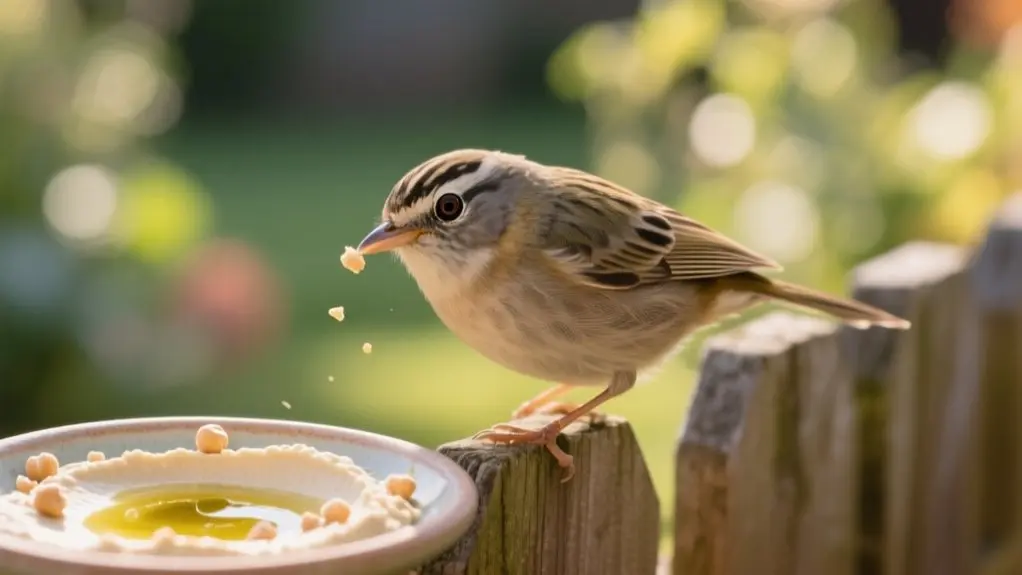
You can offer your bird hummus only if it’s homemade without garlic, salt, or preservatives. Even then, keep it as an occasional treat. Store-bought hummus often contains harmful ingredients like garlic and excess salt, which can cause serious health issues like anemia, dehydration, or kidney problems.
Chickpeas, the main ingredient, are safe when cooked and unseasoned. If you want to keep your bird healthy and happy, understanding these details will help you make the best choices.
Is Hummus Safe for African Grey Parrots?
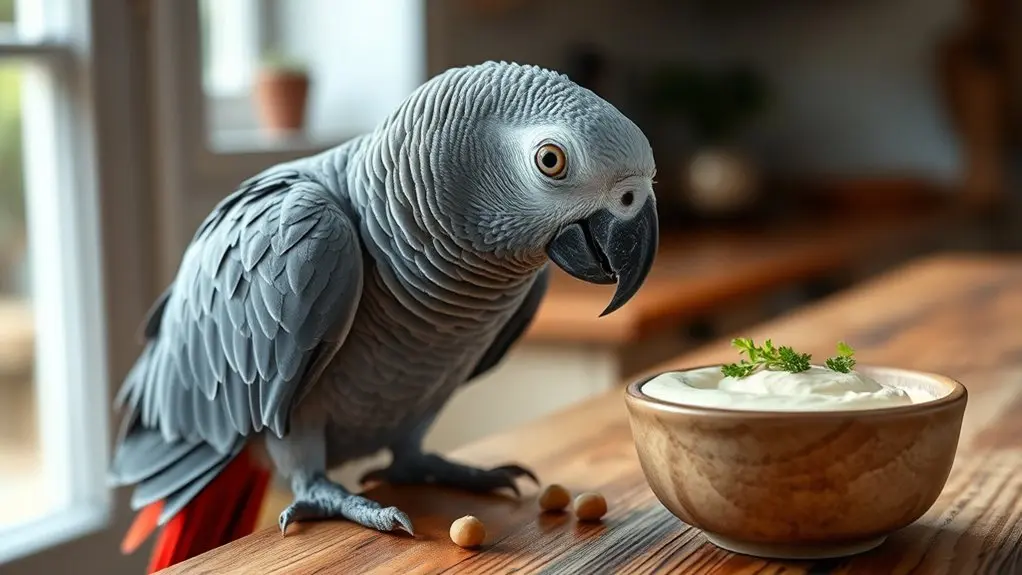
While hummus can be a tasty treat, you need to be cautious when offering it to your African Grey Parrot. Not all hummus is safe, since some ingredients are toxic to birds.
If you make hummus at home with bird-safe ingredients like chickpeas and olive oil, it can be an occasional snack. However, avoid store-bought varieties without checking the label carefully. Many contain additives that could harm your bird.
Homemade hummus with safe ingredients can be a rare treat; always check store-bought labels for harmful additives.
Also, keep hummus low in salt, as African Grey Parrots are sensitive to sodium.
Remember, hummus should never replace a balanced diet focused on pellets, fresh fruits, and vegetables.
What Ingredients in Hummus Are Harmful to Birds?
Because hummus often contains ingredients that can harm birds, you need to be careful about what you include when sharing it with your feathered friend.
Some common components in hummus are actually toxic foods for birds and may cause serious health issues.
Watch out for these harmful ingredients in hummus:
- Garlic, which can cause anemia and weakness in birds
- Excessive salt, leading to dehydration and kidney problems
- Tahini, high in fats and potential allergens that may upset your bird’s system
- Preservatives and additives found in store-bought hummus, which can be unsafe
Are Chickpeas and Other Base Ingredients Safe for Parrots?
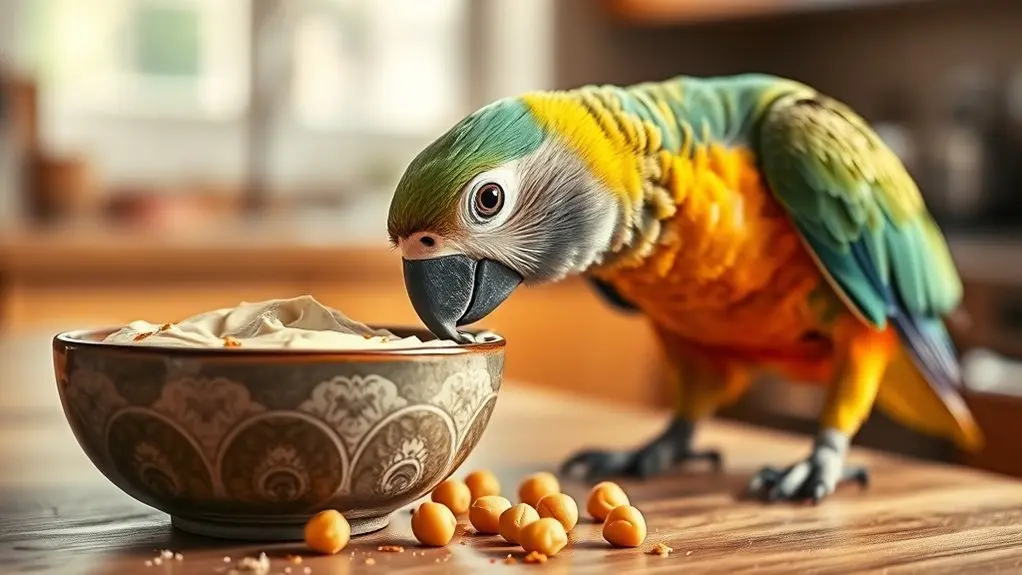
You can safely offer your parrot chickpeas in moderation because they provide valuable protein and fiber.
Just make sure the base ingredients don’t contain harmful additives like garlic or too much salt.
Keeping these things in mind will help you support your parrot’s health with a nutritious treat.
Chickpeas Nutritional Benefits
Although chickpeas form the main ingredient in hummus, their nutritional benefits extend well beyond taste. They offer parrots valuable protein, fiber, and essential vitamins like B6 and iron. When you include chickpeas in your bird foods, you provide a wholesome supplement that supports their overall health.
Here’s why chickpeas can be a great addition to your parrot’s diet:
- Rich in protein, aiding muscle maintenance and growth
- High in fiber, promoting healthy digestion
- Contains vitamin B6, which supports brain function and metabolism
- Provides iron, essential for oxygen transport and energy
Remember to serve chickpeas cooked and unseasoned to avoid harmful additives.
Introducing them slowly helps you monitor your bird’s reaction and guarantees a safe, nutritious diet.
Base Ingredient Safety
When preparing hummus for your parrot, it’s important to focus on the safety of its base ingredients. Chickpeas, the primary component, are safe and nutritious when cooked plainly. They offer protein and fiber without being toxic.
However, you must avoid adding garlic and tahini, as these ingredients can be harmful to your bird. Instead, serve plain chickpeas as a healthy snack or use them in homemade hummus without toxic additives.
Always introduce chickpeas or hummus in small amounts to watch for any adverse reactions.
How Do Garlic and Tahini Affect Parrot Health?
You really shouldn’t let your parrot eat garlic because it contains allicin, and that can cause serious toxicity and weakness.
On the other hand, tahini isn’t toxic, but it’s pretty high in fat. So, if you feed it too often, your bird could end up with health problems.
To keep your feathered friend safe, it’s best to avoid these ingredients when you’re preparing hummus.
Garlic Toxicity In Parrots
Since garlic contains allicin, a compound that damages red blood cells, it poses a serious health risk to parrots by causing anemia and weakness. Garlic toxicity in pet birds is a critical concern, even in small amounts.
You should avoid feeding your parrot any food containing garlic to prevent harmful effects.
Watch for these symptoms that require immediate veterinary care:
- Lethargy and weakness
- Vomiting or digestive upset
- Difficulty breathing or respiratory distress
- Pale mucous membranes indicating anemia
Garlic’s toxic effects can rapidly worsen, so prompt action is essential.
When preparing food for your parrot, steer clear of garlic to keep your bird safe and healthy.
This vigilance helps you prevent the dangerous consequences of garlic toxicity in your pet birds.
Tahini Safety Concerns
Although tahini comes from sesame seeds, which are generally safe for parrots in small amounts, its high-fat content means you should limit how much your bird consumes.
Tahini safety concerns mainly revolve around this fat, which can lead to weight gain and health issues if overfed.
More importantly, be aware that garlic, often found in hummus recipes alongside tahini, is toxic to birds. Garlic toxic to birds can cause anemia and weakness, so never offer your parrot hummus containing garlic.
To keep your bird safe, avoid store-bought hummus with unknown ingredients and consider making homemade hummus without garlic or tahini.
This way, you control what goes in and protect your parrot’s health while still sharing a tasty treat.
Why Are Salt and Lemon Juice Risky in Hummus for Birds?
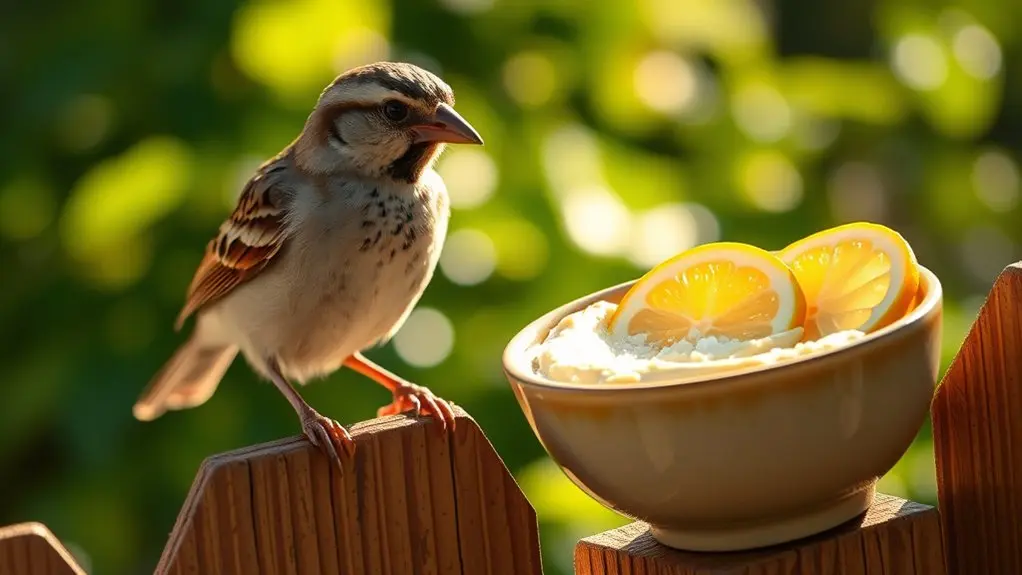
Because birds can’t sweat and have a limited ability to process salt, even small amounts in hummus can disrupt their fluid balance. This can cause dehydration and kidney failure.
When you add salt or lemon juice to hummus for your bird, you risk harming their health. Here’s why these ingredients are risky:
Salt causes sodium buildup, which leads to hypertension and organ damage in birds. Birds struggle to expel excess salt due to their physiology.
Lemon juice’s acidity can upset their digestive system if given in excess. Even small amounts of salt or too much lemon juice can cause serious health issues like dehydration.
To keep your feathered friend safe, avoid salt and limit lemon juice when preparing hummus for them.
What Happens If a Bird Eats Hummus With Toxic Ingredients?
If your bird happens to eat hummus that contains toxic ingredients like garlic or improperly prepared tahini, it might start showing signs of poisoning.
You could notice symptoms like weakness, lethargy, or even a loss of appetite.
It’s really important to catch these signs early on to avoid more serious health problems.
Toxic Ingredients To Avoid
When birds consume hummus containing toxic ingredients like garlic or excessive salt, they can quickly suffer from serious health problems such as anemia, dehydration, or gastrointestinal distress.
As a pet bird owner, it’s essential to recognize which ingredients pose risks.
Toxic ingredients in hummus can severely harm your pet birds if not avoided.
Watch out for:
- Garlic, which causes anemia and weakness
- High salt content leading to dehydration and kidney issues
- Tahini, potentially containing harmful compounds
- Other additives or preservatives unsafe for birds
Always opt for homemade hummus free from these toxic ingredients to keep your bird healthy.
Avoid feeding commercial hummus, which often contains unsafe components that can jeopardize your pet bird’s well-being.
Symptoms Of Poisoning
Though you mightn’t realize it right away, feeding your bird hummus with toxic ingredients like garlic or high salt can quickly trigger serious symptoms.
The symptoms of poisoning can include lethargy, loss of appetite, vomiting, and difficulty breathing.
Garlic contains allicin, a potentially toxic compound that may cause anemia, weakness, and gastrointestinal upset.
High salt levels can lead to dehydration, kidney failure, or seizures, especially in salt-sensitive birds.
You might notice your bird squawking loudly or hiding due to immediate distress.
Recognizing these symptoms of poisoning is essential because they signal your bird is suffering from exposure to potentially toxic substances in hummus.
Prompt attention to these signs can make a significant difference in your bird’s health and recovery.
Immediate Actions Required
Because toxic ingredients in hummus can quickly harm your bird, you need to act fast to protect its health. If your bird consumes foods that are toxic, like garlic in hummus, seek immediate veterinary attention without delay.
Watch for symptoms like lethargy or vomiting, and avoid trying to induce vomiting yourself, as this can worsen the problem. Instead, do the following:
- Note all ingredients your bird ingested to inform the vet accurately.
- Monitor your bird closely for signs of distress or unusual behavior.
- Keep your bird calm and comfortable while arranging veterinary care.
- Follow the vet’s instructions carefully for treatment and recovery.
Quick action can make all the difference in your bird’s health and recovery.
How Can You Make Bird-Safe Hummus at Home?
If you want to make bird-safe hummus at home, start by blending cooked chickpeas with a little olive oil and fresh lemon juice.
Skip ingredients like garlic and tahini since they can harm your bird. These simple ingredients form a smooth base that your parrot can safely enjoy.
You can also add bird-safe veggies like carrots or broccoli to boost flavor and nutrition.
Remember, while hummus is a popular food that humans eat, it’s important to portion it into small servings for your bird. This keeps it a treat, not a staple.
Always check any added spices or flavors to make sure they’re safe before serving.
This way, you’ll provide a tasty, bird-safe snack that your feathered friend will love.
What Are Safe Treat Alternatives for African Grey Parrots?
When choosing treats for your African Grey Parrot, it’s important to pick options that support their health without harmful additives. Your pet bird deserves snacks that are safe for birds and promote well-being.
Consider these safe treat alternatives:
- Unsweetened, additive-free peanut butter for a protein boost
- Fresh carrot sticks or broccoli to provide vitamins and fiber
- Occasional pumpkin pie in small amounts, mindful of sugar content
- Low-sugar Cheerios with minimal milk as an infrequent treat
Always check ingredients to avoid high fat, salt, or sugar levels.
How Often Should You Give Treats Like Hummus or Peanut Butter?
How often should you offer treats like hummus or peanut butter to your African Grey Parrot? Treats should be given sparingly, around once a week, to avoid upsetting your bird’s balanced diet.
Moderation is key, with treats making up only about 10-20% of their overall food intake.
Always double-check that treats are free from harmful ingredients like garlic in hummus, which can be toxic. When introducing these treats, do so slowly to watch for any allergic reactions or sensitivities.
Remember, while treats add variety and enjoyment, your parrot’s main diet should consist of high-quality pellets, fresh fruits, and vegetables.
Sticking to moderation guarantees your bird stays healthy and happy without nutritional imbalances caused by overindulging in treats.
What Signs Show Your Bird Is Reacting Negatively to Hummus?
Wondering how to tell if your bird is having a negative reaction to hummus? It’s vital to recognize signs that could threaten your bird’s life. Early detection helps you respond quickly and protect your feathered friend.
Watch out for these warning signs:
- Vomiting or diarrhea, indicating harmful ingredients like garlic or salt.
- Lethargy or refusal to eat, showing your bird’s distress.
- Difficulty breathing or excessive squawking, which may signal an allergic reaction.
- Feather plucking or scratching, suggesting irritation from the hummus.
If you notice any of these symptoms, act fast and consult a vet immediately. Ignoring a negative reaction can worsen your bird’s condition and jeopardize its health.
Why Is a Balanced Diet More Important Than Treats?
Although treats like hummus can add variety to your bird’s diet, they should never replace a balanced nutritional plan. A balanced diet, made up of about 80% high-quality pellets, supplies essential vitamins, minerals, and amino acids that treats can’t provide.
Relying too much on treats risks nutritional imbalances and obesity. If your bird favors treats over its staple food, it may develop unhealthy eating habits and miss crucial nutrients.
Too many treats can cause nutritional imbalances, obesity, and unhealthy eating habits in your bird.
Some treats or human foods can even be dangerous food for birds, leading to serious health problems like organ failure.
Prioritizing a balanced diet guarantees your bird stays healthy and lives longer, while treats remain occasional extras without jeopardizing its well-being.
Always keep treats limited to protect your bird’s health.
How to Share Human Food Safely Without Harming Your Bird
When you share human food with your bird, you need to prepare it carefully to avoid harmful ingredients like garlic and tahini, which can be toxic.
If you want to offer hummus safely, consider these points tailored to your bird species:
Prepare hummus without garlic and tahini, using bird-safe alternatives. Offer hummus as an occasional treat, complementing a diet of pellets and fresh produce.
Serve hummus with bird-safe veggies like carrots or broccoli to boost nutrition.
Engage your bird during meal prep, sharing only clean, non-toxic foods.
Always watch your bird’s reaction to new foods and consult your vet if you suspect any adverse effects.
This way, you can share hummus safely without risking your feathered friend’s health.
Frequently Asked Questions
Can Feeding Hummus Affect a Bird’s Feather Quality?
Yes, feeding hummus can affect your bird’s feather maintenance because it often lacks the nutritional balance needed for healthy feathers.
If hummus contains garlic or too much salt, it may lead to anemia or weakness, harming feather quality.
You should guarantee your bird’s diet includes essential proteins and fatty acids, offering hummus only occasionally as a treat.
Regularly monitoring their nutrition helps keep feathers vibrant and strong.
Are There Long-Term Effects of Occasional Hummus Ingestion in Birds?
You mightn’t see long-term effects from occasional hummus ingestion, but you should stay cautious.
Nutritional concerns arise because hummus can disrupt your bird’s balanced diet, potentially leading to deficiencies.
Also, even occasional exposure to additives or salt in hummus can cause digestive issues over time.
It’s best to limit hummus and monitor your bird closely, ensuring they get the right nutrients from their regular food.
How Do Different Bird Species React to Hummus Ingredients?
Different bird species react differently to hummus ingredients based on their bird preferences.
You’ll find African Grey Parrots might enjoy hummus’s creamy texture, but ingredients like garlic and tahini can be harmful to them.
On the other hand, budgerigars often prefer simpler foods and may reject hummus altogether.
You should always watch how your bird responds to new hummus ingredients and avoid those toxic to their health to keep them safe and happy.
Can Birds Develop Allergies From Eating Hummus?
Yes, birds can develop allergies from eating hummus due to ingredient sensitivity.
If your bird shows allergy symptoms like itching, feather plucking, or gastrointestinal upset after eating hummus, stop giving it immediately.
Because some ingredients, like chickpeas or spices, might trigger reactions, introduce hummus slowly and watch for any signs.
Always consult your vet before adding new foods to your bird’s diet to keep them safe and healthy.
What Should I Do if My Bird Accidentally Eats Hummus?
If your bird accidentally eats hummus, act like you’re defusing a ticking bomb! Certain hummus ingredients, like garlic and tahini, can wreak havoc on bird digestion.
Don’t try to fix it yourself. Contact your vet immediately.
Watch for signs like lethargy or vomiting, and share exactly what and how much hummus your bird ate.
This info helps the vet handle the situation quickly and safely, protecting your feathered friend from serious harm.
Conclusion
Think of your bird’s diet like a delicate garden, with each ingredient carefully chosen to help it bloom. While hummus might seem like a tempting treat, its garlic, salt, and lemon can be like weeds quietly harming your feathered friend. Stick to safe seeds and fruits instead, and offer hummus sparingly, if at all. By nurturing their health with balanced meals, you’ll watch your parrot thrive, bright and vibrant, in the garden of life.