
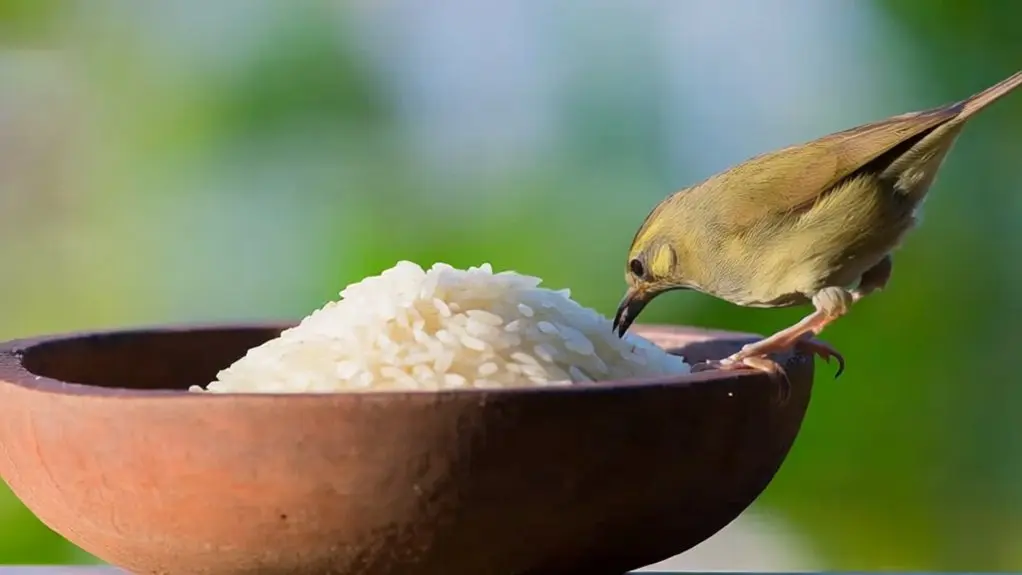
You can safely feed birds raw rice. Scientific studies show it won’t cause stomach swelling or harm their digestion. Raw rice provides carbohydrates for energy but lacks essential fats, proteins, and micronutrients birds need.
To feed safely, rinse the rice thoroughly, offer small amounts, and remove leftovers to prevent spoilage. Using bird feeders can help control portions and keep things clean.
If you want to help birds stay healthy, learn how to optimize feeding practices. Also, explore better nutritional options for birds beyond rice.
Is Raw Rice Safe for Birds to Eat?
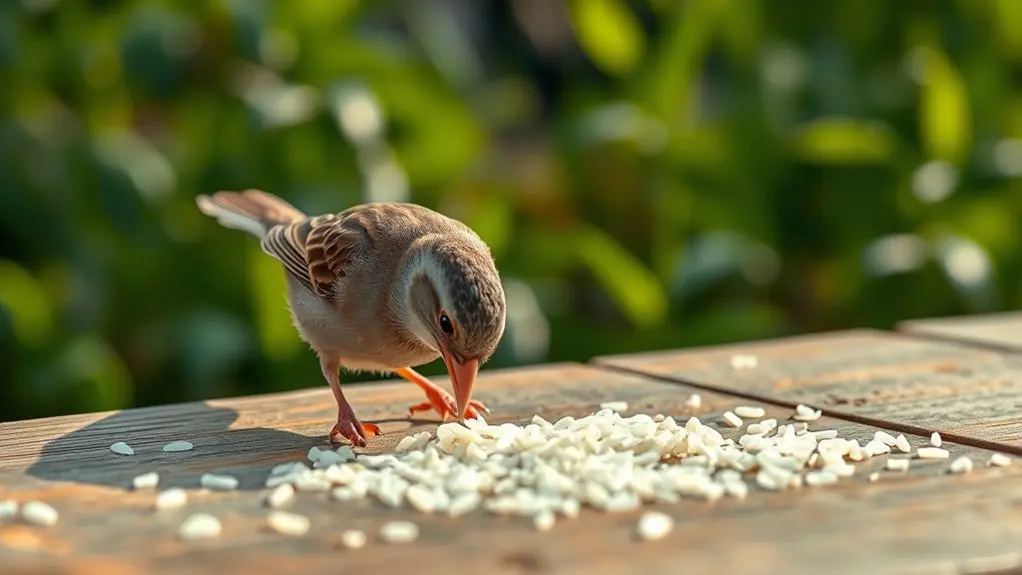
Although many people believe that raw rice is harmful to birds, scientific evidence shows that both cooked and uncooked rice are safe for birds to eat. The common myth that rice causes birds’ stomachs to expand and burst lacks any scientific support.
Birds’ digestive systems can handle raw rice without adverse effects, as it doesn’t swell considerably inside their stomachs.
Including raw rice in a bird’s diet provides a source of carbohydrates, supplying energy. However, it’s important to feed rice in moderation, making sure it complements a balanced diet rather than becoming a primary food source.
What Nutritional Benefits Does Rice Provide for Birds?
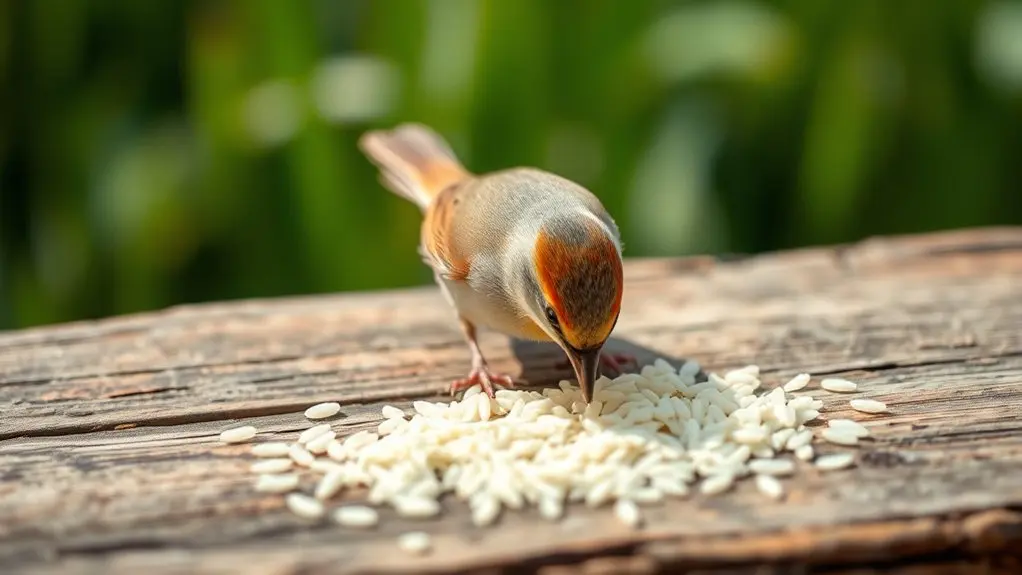
Understanding that raw rice is safe for birds sets the stage to examine the nutritional benefits it offers. Rice primarily provides carbohydrates, which serve as a quick and sustained energy source essential for daily activities like flying, foraging, and thermoregulation.
However, rice contains minimal protein, vitamins, and minerals, making it an incomplete nutritional source when fed alone. Both raw and cooked rice deliver similar carbohydrate benefits but lack essential fats and micronutrients critical for overall avian health.
How to Feed Raw Rice to Birds Safely
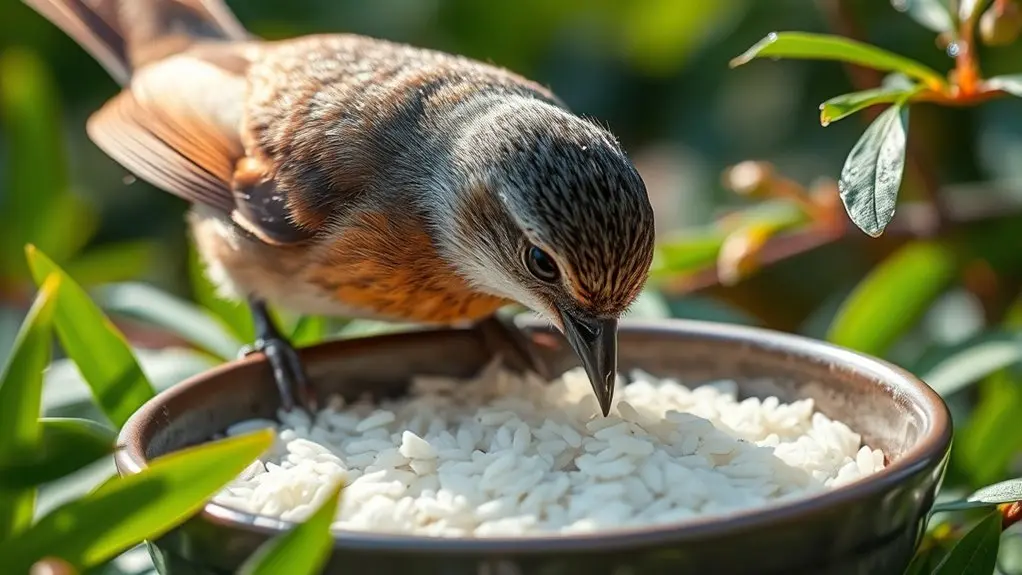
When feeding raw rice to birds, you should always rinse it thoroughly to remove excess starch that can cause clumping and reduce palatability. This simple step guarantees the rice remains appealing and safe.
To feed raw rice effectively and hygienically, follow these guidelines: Scatter small amounts on the ground or in feeders for easy bird access. Offer raw rice in moderation to avoid waste and spoilage.
Scatter small amounts of raw rice in feeders or on the ground, offering it in moderation to prevent waste.
Make sure to remove any uneaten rice after a few hours to maintain freshness and prevent bacterial growth. Use controlled, small portions to ensure birds consume the rice safely without overeating.
That way, everyone stays happy and healthy!
Better Alternatives to Rice for Feeding Birds
While raw rice can be fed to birds with caution, you’ll find that seeds like sunflower, millet, and safflower offer more balanced nutrition tailored to their dietary requirements. These seeds provide essential fats, proteins, and micronutrients that raw rice lacks.
Additionally, suet cakes supplement energy needs during cold periods. Offering a mix attracts diverse species and supports their health. Consider rotating foods to maintain nutritional variety.
| Food Type | Nutritional Benefit |
|---|---|
| Sunflower | High fat and protein content |
| Millet | Rich in carbohydrates and fiber |
| Suet Cakes | Concentrated energy, especially fat |
Using these alternatives guarantees you meet avian dietary needs more effectively than relying solely on rice.
Using Bird Feeders When Offering Rice
Since rice can attract a variety of bird species, using bird feeders offers a controlled and hygienic way to provide this food. You can make rice easily accessible by scattering small amounts in seed or platform feeders.
To maximize safety and appeal, follow these guidelines:
Rinse rice thoroughly to remove excess starch before placing it in feeders. Use small portions to avoid overfilling, which reduces waste and spoilage.
Clean feeders regularly to prevent mold growth and disease transmission.
Also, position feeders in open areas to allow birds to feed comfortably and safely. This way, the birds have plenty of space and can watch out for any potential threats while they eat.
It just makes feeding time better for everyone involved.
Tips for Providing a Balanced Diet Beyond Rice
Although rice can serve as a convenient energy source, you should provide birds with a balanced diet that includes a variety of seeds, nuts, and berries to supply essential nutrients beyond carbohydrates.
Rice offers quick energy, but birds need a balanced diet rich in seeds, nuts, and berries for full nutrition.
Incorporate protein-rich foods like mealworms or cooked eggs to support muscle maintenance and overall health.
Fresh fruits and vegetables offer vital vitamins and minerals absent in rice, enhancing immune function.
Avoid feeding rice exclusively. Instead, rotate diverse food types to promote nutritional balance.
Utilizing specialized bird feed mixes tailored to specific species further ensures comprehensive nutrient intake.
By diversifying food sources, you help maintain optimal avian health and prevent dietary deficiencies.
This approach aligns with current ornithological nutrition guidelines advocating varied, nutrient-rich diets for wild and captive birds alike.
Frequently Asked Questions
Can Raw Rice Cause Birds to Become Addicted?
No, raw rice can’t cause birds to become addicted because it lacks addictive compounds. When you feed birds rice, you’re providing a simple food source without triggering dependency or cravings. So, addiction concerns are scientifically unfounded.
In other words, birds won’t get hooked on rice like people might with certain substances. It’s just food for them, plain and simple. You can feel good about tossing some rice to your feathered friends without worrying about addiction.
Do All Bird Species Eat Raw Rice Equally?
You wouldn’t expect a Victorian naturalist to claim all birds eat raw rice equally, and neither do you. Different species vary greatly. Granivorous birds digest it well, while insectivores often avoid or can’t process raw rice efficiently.
Is Rice Safe for Baby Birds or Nestlings?
Yes, you can safely feed baby birds small amounts of clean raw rice as a carbohydrate source. However, you shouldn’t replace their primary diet. Rice only supplements their essential insect or seed-based nutrition for healthy growth.
Can Feeding Rice Attract Unwanted Pests or Animals?
Feeding rice can attract both birds and pests. While birds benefit from it, you also risk drawing unwanted animals like rats and raccoons.
Spilled rice creates food trails that increase pest presence. So, always clean up thoroughly to prevent infestations. It’s a simple step that can save you a lot of trouble later on.
Does Rice Consumption Affect Bird Migration Patterns?
You won’t find evidence that rice consumption affects bird migration patterns. Birds rely on environmental cues like daylight and temperature. So, feeding them rice won’t alter their migration timing or routes in any scientifically proven way.
Basically, their instincts and the natural environment guide them, not what they eat. It’s kind of fascinating how precise their navigation is, right? But rice isn’t one of the factors that changes it.
Conclusion
You can safely serve raw rice to birds, but subtle safeguards should support their health. Raw rice supplies some sustenance, yet superior seeds and grains offer richer, more reliable nutrition. When feeding, focus on fresh feeders and foster a balanced blend beyond basic rice.
By blending diverse dietary delights, you boost birds’ well-being and biological balance. Remember, responsible rituals and regular research result in robust, resilient, and thriving avian populations.