
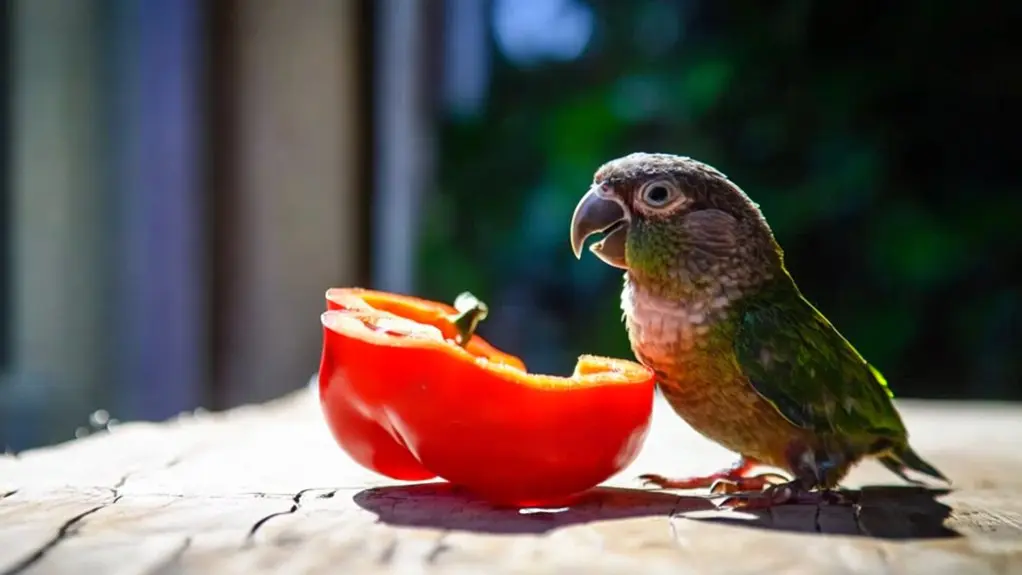
You can safely offer red peppers to birds because they don’t have capsaicin receptors. That means they won’t feel the burning sensation that deters squirrels. Capsaicin protects plants by repelling mammals without harming birds, who help disperse seeds.
Red peppers also provide vitamins and antioxidants that benefit birds. Using red pepper flakes in feeders deters squirrels humanely while keeping birds comfortable. It’s a smart way to keep your bird feeders squirrel-free.
Understanding how to apply these safely and combine strategies guarantees effective squirrel control and bird health. So, go ahead and add some red pepper to your bird feeding routine!
Why Red Peppers Don’t Irritate Birds But Deter Squirrels
Although red peppers contain capsaicin, the compound that causes their heat, birds don’t experience any irritation because they lack the specific receptors that detect this chemical. This absence of capsaicin receptors means birds’ nervous systems don’t register the burning sensation that mammals, like squirrels, feel.
Capsaicin activates pain receptors in mammals’ mouths and paws, making red peppers unpalatable and irritating for them. Plants have evolved this mechanism to protect seeds from being consumed by mammals, which chew and destroy seeds.
At the same time, plants encourage birds to eat the fruit and disperse intact seeds through their droppings.
What Is Capsaicin And How It Affects Squirrels And Birds
Capsaicin is the compound in red peppers that causes a burning sensation in mammals like squirrels. This spicy feeling actually influences their feeding behavior by discouraging them from eating the peppers.
But here’s the interesting part—birds don’t get affected at all. That’s because they lack the specific receptors that detect capsaicin’s heat.
Capsaicin’s Role Explained
When you encounter the spicy heat of chili peppers, it’s due to an active compound called capsaicin. Mammals like squirrels find it highly aversive.
Capsaicin serves a specific role in nature by triggering a burning sensation in mammals, causing discomfort and a reflexive avoidance behavior.
It also acts as a deterrent to prevent mammals from consuming pepper seeds, protecting the plant’s reproductive success.
Interestingly, birds can’t detect capsaicin because they lack the nerve receptors that respond to its heat. This means birds can safely eat red peppers and disperse seeds without experiencing pain or irritation.
Understanding capsaicin’s selective effect explains why birds can enjoy red peppers safely while mammals avoid them. This selective sensitivity supports the plant’s seed dispersal strategy in a clever way.
Impact On Squirrel Behavior
Because squirrels experience a burning sensation when they eat capsaicin, they tend to avoid red peppers and seeds covered with this compound. Capsaicin is the active chemical in red peppers, and it triggers pain receptors in mammals. This causes discomfort in their mouth and digestive system.
Because of this reaction, squirrels are discouraged from eating spicy peppers. This helps reduce the number of seeds eaten by these mammals.
The plant produces capsaicin as a natural defense mechanism, which specifically deters mammals like squirrels but doesn’t affect birds.
Since squirrels rely on taste and other sensory signals to figure out if food is safe, capsaicin works as a strong deterrent. It changes how they forage, making them avoid red peppers.
This helps explain why squirrels often skip red peppers, letting birds, which aren’t bothered by capsaicin, spread the seeds instead.
Why Birds Are Safe
Although mammals like squirrels experience a burning sensation from red peppers, birds remain unaffected due to key differences in their sensory receptors. Capsaicin, the compound causing heat, binds to the TRPV1 receptor in mammals, triggering irritation.
Birds, however, lack this receptor, making red peppers safe for them.
Here’s why birds can safely consume red peppers:
- Capsaicin irritates mammals but not birds due to receptor differences.
- Birds don’t feel the burning sensation when eating spicy peppers.
- Pepper plants evolved capsaicin to deter mammals but encourage birds to disperse seeds.
- Birds help spread pepper seeds without harm, promoting plant reproduction.
How Red Pepper Flakes Keep Squirrels Away But Are Safe For Birds
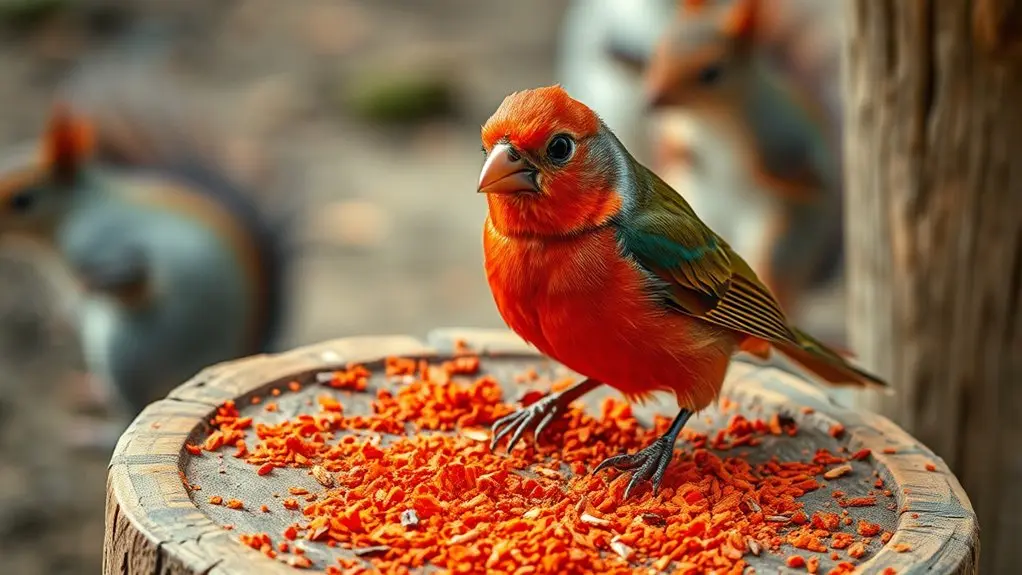
You can keep squirrels away by adding red pepper flakes. These flakes contain capsaicin, which irritates mammals like squirrels but doesn’t bother birds at all.
Since birds lack the receptors for capsaicin, they can safely eat seeds coated with red pepper flakes without any discomfort. This means red pepper flakes are a great, bird-safe way to keep your feeding stations squirrel-free.
Squirrel Deterrent Mechanism
When you add red pepper flakes to birdseed, the capsaicin they contain triggers a burning sensation in mammals like squirrels. This effectively deters them from feeding.
This selective deterrent works because capsaicin interacts with mammalian pain receptors, causing discomfort. Squirrels experience this burning sensation, which discourages them from eating the treated seed.
Birds don’t have these specific receptors, so they don’t feel any burning or irritation.
The chemical’s structure makes sure mammals are affected while birds stay safe and unaffected.
Bird Safety Explained
The use of red pepper flakes in birdseed takes advantage of the physiological differences between birds and mammals. Capsaicin, the active compound in red pepper flakes, triggers a burning sensation in mammals like squirrels, deterring them from consuming treated seeds.
However, birds lack the specific receptors for capsaicin, so they don’t experience this discomfort. This means that when you add red pepper flakes to birdseed, it remains safe and harmless for birds while effectively discouraging squirrels.
Using spicy seed mixtures is a scientifically proven, humane method to protect bird feeders from mammalian pests without risking bird health.
Nutritional Benefits Of Red Peppers For Birds
Although red peppers contain capsaicin, a compound known to deter mammals, birds tolerate it well because of their unique physiology.
Red peppers contain capsaicin, which deters mammals but is safely tolerated by birds due to their unique physiology.
Including red peppers in your bird’s diet offers several nutritional benefits you should consider.
First, red peppers are rich in vitamins A and C, which are essential for supporting immune health. Plus, their high antioxidant content helps reduce oxidative stress in birds.
Capsaicin acts as a natural mammal deterrent but is safe for birds in small amounts. Adding small pieces of red pepper not only enhances dietary variety but also improves nutrition.
Myths About Birds Eating Spicy Foods: Busted
Since birds lack the receptors that detect capsaicin’s heat, they don’t experience the spiciness that mammals do. This fact busts the common myth that spicy foods like red peppers harm birds.
Capsaicin specifically deters mammals, but birds can eat chili peppers without any discomfort or irritation.
Scientific studies confirm that capsaicin doesn’t damage birds’ digestive systems. So, red peppers are safe for most bird species.
You might’ve also heard that adding chili powder to birdseed is harmful. Actually, it can be helpful because it repels mammals like squirrels without affecting the birds.
Knowing these facts helps you avoid misconceptions. You can confidently include red peppers in bird diets if you want, without worrying about harming their health.
It’s pretty cool how birds can enjoy spicy foods that mammals avoid!
How To Use Red Peppers Safely In Bird Feeders
When you add red peppers to bird feeders, you create an effective barrier against squirrels without causing harm to the birds. To use red peppers safely, follow these steps:
Use small amounts of crushed cayenne or chili peppers mixed evenly with birdseed to deter squirrels without overwhelming the feed. Avoid applying large quantities, as excessive capsaicin may irritate other wildlife or humans handling the seed.
Regularly refresh the pepper-treated seed to maintain effectiveness and prevent spoilage. Keep an eye on the birds’ behavior to make sure there are no adverse effects.
This way, you can be confident that birds feed comfortably on the spicy mix.
Risks Of Spicy Bird Feeder Deterrents And How To Avoid Them
If you use spicy deterrents like capsaicin-based powders in bird feeders, you need to apply them carefully to prevent accidental irritation. While birds lack receptors for capsaicin and are unharmed by it, improper handling or overapplication of red pepper flakes can cause discomfort if the spice contacts their eyes or sensitive skin.
To avoid this, evenly mix small quantities of spicy additives into the seed, making sure it doesn’t clump or concentrate. Also, clean feeders regularly to remove any residue that might irritate birds.
Remember, capsaicin effectively deters mammals like squirrels without repelling birds. So, applying it precisely keeps birds safe and your feeder clean.
How To Combine Red Peppers With Other Squirrel Deterrents
Applying red peppers effectively involves more than just sprinkling them on birdseed. Combining capsaicin with other squirrel deterrents considerably improves your feeder’s protection. Since birds aren’t affected by capsaicin, you can pursue a multi-layered approach that targets squirrels specifically.
First, mix red pepper flakes into seed blends with substances like peanut butter or glue to discourage squirrels from feeding.
Then, install physical barriers such as slippery poles, baffles, or grease-coated surfaces to block squirrel access. These steps work best when used together.
Make sure to regularly reapply spicy seed mixtures and maintain physical deterrents to keep them effective over time.
Also, combine capsaicin-infused seeds with mechanical barriers to prevent squirrels from bypassing any single deterrent.
This integrated strategy guarantees humane squirrel control while keeping your bird feeders accessible and safe for birds. It’s all about layering your defenses for the best results.
Tips For Maintaining Effective And Humane Squirrel Control
Ensuring effective and humane squirrel control means staying consistent and using a smart mix of deterrent methods. You’ll want to regularly reapply physical deterrents like glue or slippery poles every three weeks or after it rains to keep them working well.
It’s also a good idea to combine these with spicy seed mixtures for better results. Keep an eye on how squirrels behave so you can spot any changes and tweak your methods as needed.
Think about humane options too, like live trapping and relocating squirrels, to keep things safe and ethical.
| Method | Maintenance Frequency | Notes |
|---|---|---|
| Physical Barriers | Every 3 weeks or post-rain | Prevents access effectively |
| Spicy Seed Mix | Weekly | Repels squirrels via taste |
| Behavioral Monitoring | Continuous | Detects adaptation early |
| Live Trapping | As needed | Ethical alternative |
Frequently Asked Questions
Can All Types of Birds Safely Eat Red Peppers?
Not all bird species safely eat red peppers. While many tolerate them because they lack capsaicin receptors, some avoid spicy or seasoned peppers.
You should consider species-specific dietary needs before offering red peppers to birds. It’s always best to know what your particular bird can handle. That way, you keep them happy and healthy!
How Often Can Birds Be Fed Red Peppers?
Don’t bite off more than you can chew; feed red peppers to birds in moderation, about once or twice a week.
This helps avoid digestive upset while safely enriching their diet with beneficial nutrients.
Do Red Peppers Affect Bird Droppings or Digestion?
Red peppers don’t affect your bird’s droppings or digestion since they lack capsaicin receptors. You won’t notice any irritation or changes because birds process red peppers without digestive disruption or altered waste composition.
Can Red Peppers Cause Allergic Reactions in Birds?
You might expect red peppers to send birds running, but they rarely trigger allergic reactions. Their unique physiology handles capsaicin well.
Still, you should watch your bird carefully when introducing new foods, just in case. It’s always better to be safe than sorry!
Are There Specific Red Pepper Varieties Better for Birds?
You won’t find specific red pepper varieties better for birds since their tolerance depends on capsaicin levels, not type.
Choose peppers based on availability and heat concentration. Birds safely handle capsaicin regardless of pepper variety. So, pick whatever works best for you and your feathered friends!
Conclusion
You might think red peppers would irritate birds, but they don’t. Coincidentally, what deters squirrels leaves birds unharmed. This unique interaction hinges on capsaicin’s selective effect, making red peppers a smart, natural choice for squirrel control.
By understanding these scientific facts, you can safely enhance your bird feeder’s appeal while managing pests humanely. So, using red peppers isn’t just effective. It’s a precise, informed way to protect your feathered friends and enjoy nature’s balance.