

You shouldn’t feed jam to birds because its high sugar content and sticky texture can harm their health and mess with their natural diet. Jam can coat their beaks, making cleaning tough, and may attract unwanted pests.
Some birds like orioles and robins are drawn to jam, especially during migration, but healthier options like whole fruits are better. If you want to know how to safely offer treats and keep birds healthy, there’s more to explore.
What Is Jam? How Does It Differ From Jelly?
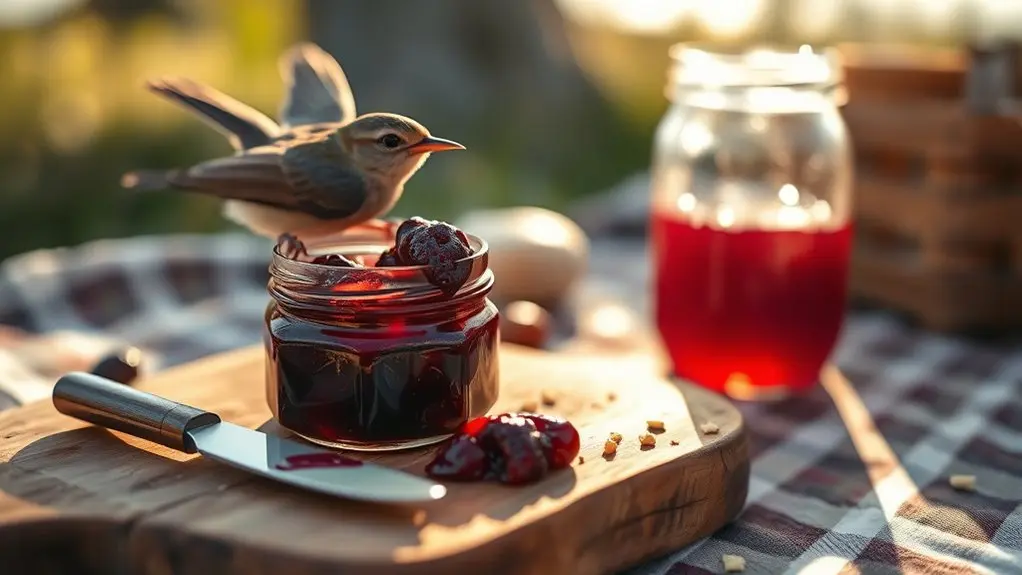
Jam is made from crushed or pureed fruit, which gives it a thicker texture compared to jelly, made from fruit juice.
Jam’s thicker texture comes from crushed or pureed fruit, unlike jelly, which is made from fruit juice.
When you look closely, jam includes the whole fruit, pulp and fiber, while jelly is clear and more processed.
This means jam usually has a higher fruit content, offering a richer flavor and chunkier texture.
Jelly, on the other hand, tends to be smoother and less dense since it’s made from just the juice.
Knowing the difference matters, especially if you’re considering feeding birds.
Jam’s thick consistency can coat their beaks more, unlike jelly’s smoother texture.
Can Birds Safely Eat Jam?
While both jam and jelly come from fruit, their effects on birds can be quite different due to their ingredients and texture.
You shouldn’t offer jam to birds because it often contains high sugar levels, artificial sweeteners, and additives that can harm their health.
Jam’s sticky texture can trap feathers and make it hard for birds to move or clean themselves.
Unlike jam, birds prefer jelly since it’s smoother and less likely to cause these problems.
High sugar content in jam may also lead birds to become addicted, pushing them away from their natural diet.
Instead, you can provide whole fruits or safe jelly options, which support birds’ nutritional needs without the risks jam poses.
Which Bird Species Are Attracted to Jam?
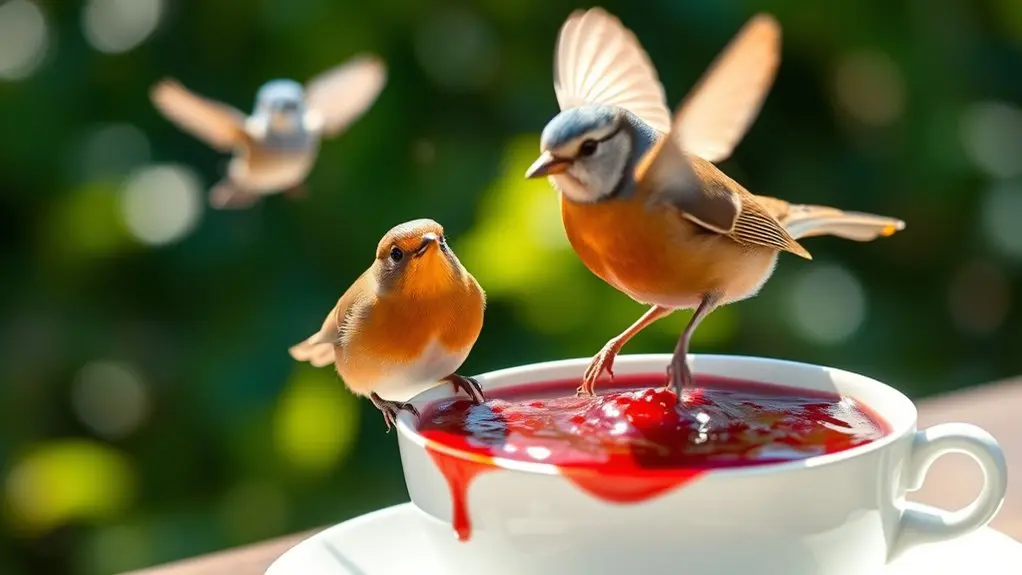
If you’re hoping to attract a variety of fruit-loving birds to your feeder, you’ll find that several species are drawn to the sweet taste of jam. Birds that eat jam include orioles, cedar waxwings, and American robins, all of which relish its sugary flavor.
Many fruit-loving birds, like orioles and robins, are attracted to the sweet taste of jam.
Orioles, especially Bullock’s and Baltimore orioles, favor grape-flavored jam, making an oriole feeder with this option particularly effective.
You may also notice gray catbirds, northern mockingbirds, rose-breasted grosbeaks, woodpeckers, and house finches sampling the jam.
These birds enjoy the energy boost jam provides, especially during certain times of year.
Just remember to keep the jam fresh and free from mold to guarantee it remains safe and healthy for your feathered visitors.
Why Do Birds Like Jam During Migration?
When birds migrate, they need quick energy. Jam’s high sugar content delivers just that.
You’ll notice they’re drawn to the sweet flavors because it helps them refuel fast during those long flights.
Plus, jam provides extra nutrients that can be hard to find on their journey.
Energy Needs During Migration
Because migratory birds face intense energy demands during their long journeys, they’re naturally drawn to high-sugar foods like jam for a quick energy boost. The carbohydrates in jelly provide essential fuel, helping birds meet their soaring energy needs and maintain stamina.
When natural food is scarce, jam becomes a valuable supplement, supporting their increased metabolism and endurance.
| Energy Needs Aspect | Role of Jam/Jelly |
|---|---|
| Quick Energy | Provides rapid carbohydrate fuel |
| Metabolic Support | Sustains heightened metabolic rates |
| Endurance Boost | Helps maintain stamina during flights |
| Scarce Food Supplement | Acts as an alternative energy source |
Offering jam during migration aids early migrators in refueling efficiently on their demanding routes.
Nutritional Value Of Jam
While migratory birds depend heavily on natural food sources, jam offers a concentrated burst of sugars and carbohydrates that quickly replenishes their energy.
Like jelly, jam’s high nutritional value lies in its sugar content, providing a rapid energy boost essential during long flights.
Beyond sugars, the fruit in jam supplies trace nutrients that can supplement birds’ diets when natural foods are scarce.
However, the nutritional value of jam varies, so you should avoid options with artificial sweeteners or additives harmful to birds.
Offering jam in moderation attracts species like orioles and robins, helping them refuel during critical migration periods.
Attraction To Sweet Flavors
Many migratory birds seek out sweet flavors like those found in jam to quickly boost their energy during long journeys.
Birds like orioles are especially attracted to the high sugar content in jam because it mimics the natural sugars found in ripe fruits, their primary food source.
When you’re feeding jelly to these birds, you’re providing a quick carb boost that helps replenish their energy reserves efficiently.
During migration, natural food sources can be scarce, so jam becomes an appealing option for many species.
Offering jam not only supports their intense refueling needs but also increases bird visitation to your feeders.
This gives you a great chance to observe diverse birds like orioles benefiting from the sweet treat.
When Is the Best Time to Offer Jam to Birds?
You’ll want to offer jam to birds mostly during migration seasons, like in spring and fall, when they really need that extra energy.
Plus, cold weather makes jam a great little snack to help keep them warm.
Just try to avoid feeding jam in the summer unless you can keep it fresh and watch out for spoilage.
Otherwise, it might do more harm than good!
Optimal Seasons For Feeding
Because birds need extra energy during migration and cold weather, offering jam in spring, fall, and chilly months works best. Feeding orioles and other birds during these times supports their high energy demands.
Here’s when you should focus on providing jam:
- Spring and Fall Migration: Birds like orioles require quick energy boosts on long journeys, making jam an excellent food source.
- Cold Weather: Jam offers concentrated calories to help birds stay warm and active when natural food is scarce.
- Avoid Summer: Heat increases fermentation risks. If you feed jam during summer, place it in a shaded, cool spot and remove leftovers quickly to prevent spoilage.
Weather Impact On Jelly
Although jelly is a nutrient-rich treat for birds, weather conditions strongly influence when and how you should offer it. Jelly feeders work best during cooler seasons like spring and fall, providing birds with quick energy when they need it most.
Cold weather makes jelly a valuable food source, but you need to make sure it doesn’t freeze, as frozen jelly becomes unappealing.
In hot weather, jelly can ferment quickly, so avoid placing jelly feeders in direct sunlight. Instead, keep them in a shaded, cool spot and check frequently to remove any leftover jelly within a few hours.
Weather conditions greatly affect jelly’s texture: heat liquefies it, and cold hardens it, so adjust your feeding routine accordingly to keep birds safe and nourished.
Timing During Migration
When birds begin their long migrations, they need quick, high-energy food sources like jam to fuel their journeys. The best time to offer jam is during migration, especially in early spring and fall. Here’s why timing matters:
- Jam provides essential calories when natural food is scarce, particularly in cold weather.
- Early migratory birds are attracted to jam as a fast energy boost.
- Avoid offering jam in summer to prevent fermentation and spoilage, which can harm birds.
If you do offer jam during warmer months, monitor it closely and remove any leftovers within a few hours.
Which Types of Jam Are Best for Feeding Birds?
What types of jam should you offer if you want to feed birds? Birds generally prefer jelly over jam because jelly has a smoother texture, and birds love that.
Jam contains larger fruit pieces that can be hard for them to eat. If you do offer jam, choose varieties without artificial sweeteners or high-fructose corn syrup, as these ingredients can harm birds.
Dark-colored jellies like grape or blackberry often attract birds more than lighter jams. Always check for mold or spoilage before offering any jam or jelly, since birds are sensitive to deteriorated food.
Remember to offer these treats in moderation because high sugar content can lead to health issues and dependency in birds.
How to Offer Jam to Birds Safely
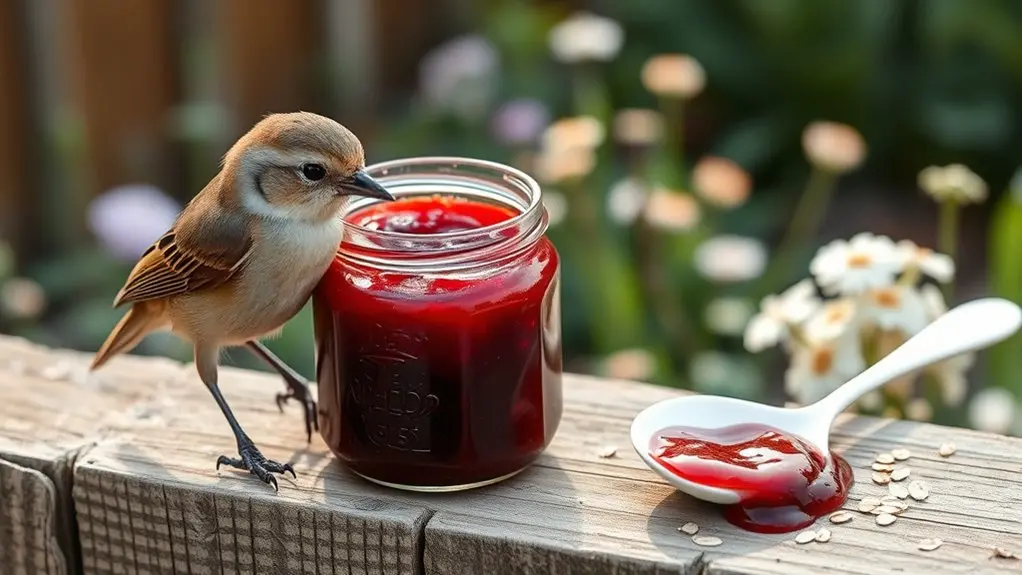
When you’re offering jam to birds, it’s best to pick natural fruit preserves that don’t have any artificial sweeteners.
You’ll want to serve it in small, shallow dishes so the birds can easily access it.
Also, keep an eye on how fresh the jam is. If there’s any leftover, make sure to remove it quickly to keep the birds healthy.
Choosing Safe Jelly Types
Choosing the right type of jelly is essential to keep birds healthy and happy. When you offer jelly to birds, it’s important to choose commercially formulated jelly designed specifically for them. This guarantees no harmful additives or preservatives are present.
Here are three key tips to keep in mind:
- Opt for dark-colored jellies like grape or blackberry since birds find these more appealing. Avoid artificial sweeteners because they can be toxic.
- Select commercially formulated jelly to reduce risks associated with human products.
- Always check jelly for mold or fermentation before offering it, especially in warm weather. Replace it immediately if it’s spoiled.
Proper Serving Methods
Although jam can be a tempting treat for birds, you should always offer it in small amounts to prevent spoilage and avoid attracting unwanted wildlife. Serve just a few tablespoons at a time to keep the jam fresh.
Choose dark-colored, fruit-based jams without artificial sweeteners or additives to protect your backyard birds. Place the jam in shallow dishes so birds can access it easily without risk of getting stuck.
Check the jam frequently and remove any leftovers within a few hours to avoid fermentation and rancidity.
Remember, jam should complement natural food sources and only be offered during migration or cold weather when birds need extra energy.
Monitoring Bird Health
Keeping an eye on your birds’ health is just as important as serving jam properly. When monitoring bird health, you need to be vigilant about the jam you offer and the feeding environment.
Here are three key steps to guarantee safety:
- Use jam free from artificial sweeteners, colors, and flavors to avoid harming birds.
- Check the jam daily for freshness; discard any with mold or spoilage to prevent illness.
- Clean feeding dishes regularly and use shallow containers to keep birds safe and clean.
What Risks Does Feeding Birds Too Much Jam Pose?
If you feed birds too much jam, you risk causing them serious health problems. Jam’s high sugar content can lead wild birds to develop sugar addiction, making them rely on jam instead of natural foods. This disrupts their diet and foraging instincts.
Jam can also coat their beaks, impairing feeding and causing malnutrition or starvation. Moreover, sugar overload can upset their digestive systems, potentially resulting in obesity or metabolic disorders.
Jam can coat birds’ beaks and disrupt digestion, leading to malnutrition, obesity, or serious health issues.
Moldy or fermented jam poses toxicity risks, leading to digestive distress. Overfeeding jam may attract unwanted wildlife like raccoons and rats, increasing competition and stress for wild birds.
To protect their health and natural behavior, it’s best to avoid offering jam in excess and focus on providing suitable, nutritious food for wild birds.
How to Prevent Birds From Getting Stuck in Jam
Because jam’s thick texture can trap birds, you should avoid offering it freely. To prevent birds from getting stuck in jam, take these practical steps:
- Use shallow dishes or specialized feeders designed for jelly to reduce the risk of birds becoming mired in sticky substances.
- Limit the amount of jam you provide, making sure birds don’t consume too much or get trapped in thick layers.
- Regularly monitor and clean feeders, removing any sticky residues that might impair a bird’s mobility or health.
Best Alternatives to Jam for Fruit-Loving Birds
To keep fruit-loving birds safe and healthy, you’ll want to offer alternatives that don’t pose the same risks as jam. Whole fruits like sliced apples, oranges, and berries provide essential nutrients without added sugars or preservatives.
Fruit halves, especially melons and citrus, attract birds while being less sticky. Fresh fruit also offers natural hydration, which is crucial, especially in warm weather.
You can also give dried fruits such as raisins or currants for a less messy energy boost. Homemade fruit mixtures like mashed bananas or pureed berries serve as nutritious treats without the risks of commercial jams.
Moreover, offering fruit juice diluted with water can provide a hydrating, tasty option that’s safer and beneficial for your feathered friends.
Tips to Keep Bees and Pests Away From Jam Feeders
While jam feeders can attract a variety of birds, they often draw unwanted bees and pests as well.
To keep your bird feeder inviting for birds but off-limits to bees, try these tips:
Keep your bird feeder welcoming for birds while keeping bees at bay with these simple tips.
Use feeders designed with bee guards or bee-proof ports. These let birds access the jam easily while blocking bees from reaching it.
Place your bird feeder in a shaded spot. Shade slows fermentation, which reduces the jam’s scent that attracts bees and other pests.
Clean the feeder regularly to remove sticky jam residue.
Also, avoid overfilling. Keeping jam levels low prevents spills that lure insects.
What to Do If a Bird Gets Stuck or Injured From Jam
If you find a bird stuck in jam, act quickly but gently to free it using warm, soapy water. Carefully remove the sticky substance from its feathers without handling it too much to reduce stress.
Once cleaned, watch the bird closely. If it seems lethargic, injured, or unable to fly, contact a wildlife rehabilitator immediately.
Jam can mat feathers, impairing the bird’s ability to regulate temperature and fly properly, so thorough cleaning is essential.
Avoid using jam in the future and choose bird-safe jelly alternatives that won’t cause stickiness.
Frequently Asked Questions
Can Baby Birds Safely Consume Jam?
No, baby birds can’t safely consume jam. When you’re focused on baby bird nutrition, you need to avoid sticky, sugary foods like jam. It can coat their beaks and cause feeding problems, plus it lacks essential nutrients.
Instead, you should offer safe food options like softened fruits or insect protein, which better support their growth and health.
Sticking to these choices helps guarantee the baby birds thrive and develop properly.
Does Homemade Jam Differ From Store-Bought Jam for Birds?
Yes, homemade jam differs from store-bought jam for birds mainly because you control the homemade ingredients and sugar content.
Homemade jam usually has fewer additives and no artificial sweeteners, making it safer for birds.
You can avoid harmful preservatives and reduce sugar content, which benefits their health.
Store-bought jams often contain high-fructose corn syrup and preservatives that can be harmful, so homemade jam is a better choice if you want to feed birds safely.
How Does Jam Affect Birds’ Digestive Systems Long-Term?
Think of jam ingredients as a tangled web your bird can’t easily escape. When you feed jam, the sugar effects disrupt their delicate digestive balance, leading to long-term issues like obesity and metabolic disorders.
Over time, their system struggles to process the unnatural sugars and additives, causing nutritional imbalances and digestive stress.
You’ll want to avoid jam to keep your bird’s health soaring, not tangled in complications from sticky sweetness.
Can Feeding Jam to Birds Impact Local Ecosystems?
Yes, feeding jam to birds can impact local ecosystems. You’ll disrupt ecological balance by introducing unnatural food sources high in sugar, which harms bird health and wildlife nutrition.
This sugar impact can alter birds’ natural foraging habits, causing habitat disruption. When certain species dominate feeding areas, you risk upsetting local biodiversity.
Are There Seasonal Jams Better Suited for Different Bird Species?
Yes, you’ll find seasonal jams made from seasonal fruits better suit different bird species. Birds have specific preferences tied to what’s naturally available, like grape or blackberry jams in spring and fall attracting orioles and tanagers.
In winter, high-sugar jams give energy, but summer’s better for fresh fruit to avoid spoilage.
Matching jams to bird preferences and seasonal fruits helps you support their nutrition and natural habits effectively.
Conclusion
So, while jam might seem like a sweet treat for your feathered friends, it’s best to offer it with care, like a delicate dance on a sticky stage. Remember, birds thrive on natural fruits and seeds more than sugary spreads.
Keep their visits safe and joyful by choosing healthier alternatives and watching out for sticky situations. With a little love and caution, you’ll create a bird-friendly haven where they can sing, soar, and savor nature’s true flavors.