
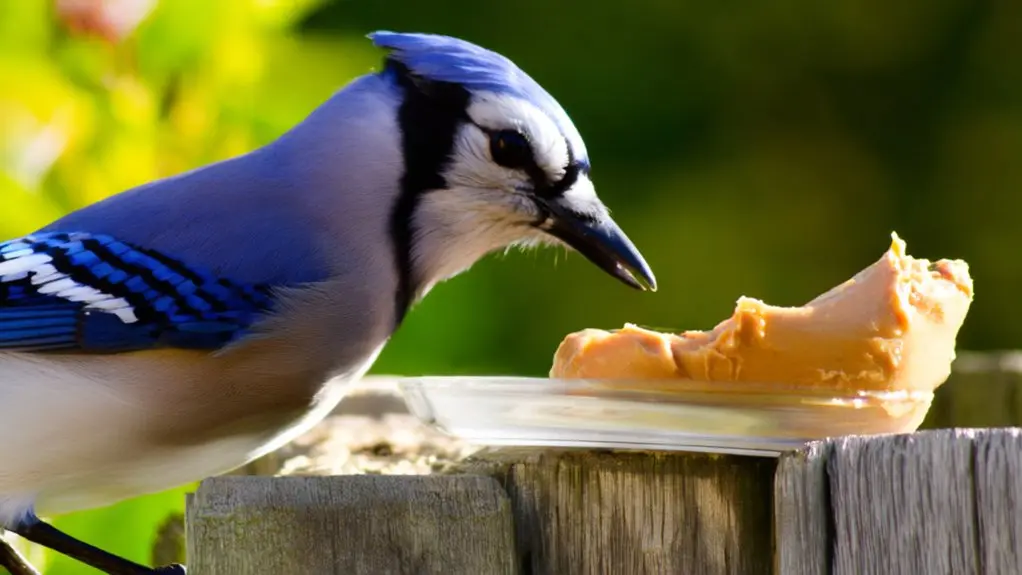
You can safely feed birds regular peanut butter if you choose natural, unsweetened varieties without added salt or sugar. Mixing it with dry ingredients like cornmeal or seeds reduces stickiness, making it easier for birds to handle and swallow. Birds adapt well to textured foods, so properly prepared peanut butter poses minimal risk.
Just watch for any signs of difficulty to guarantee their safety. It’s always good to keep an eye on how they’re doing with new foods. If you want to learn more, explore expert advice, preparation tips, and alternatives.
Is Peanut Butter Safe for Birds?
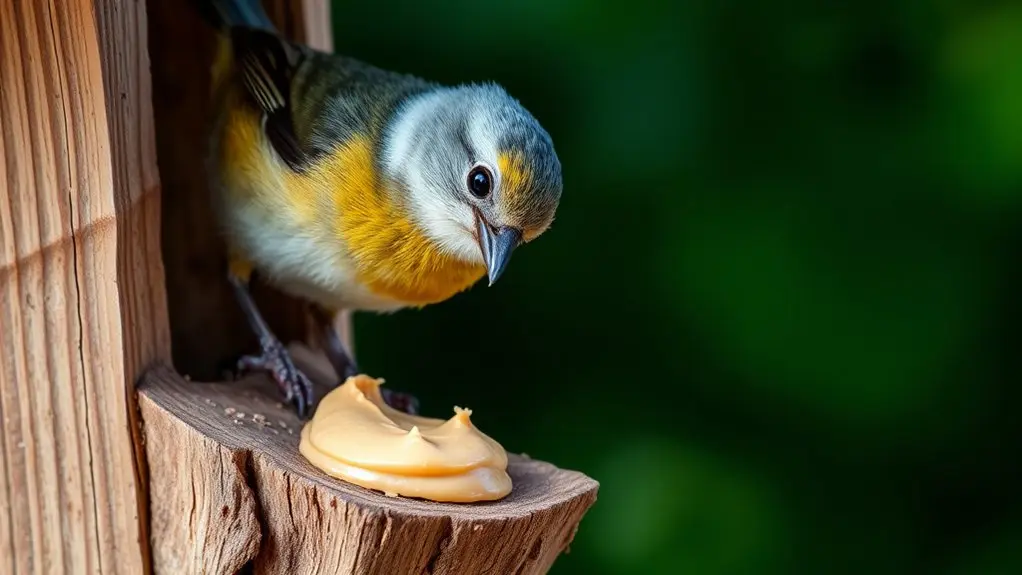
Although birds lack salivary glands, which might suggest difficulty processing thick foods, peanut butter is generally safe for birds when offered in moderation and properly prepared. Scientific observations and expert opinions confirm no documented evidence links peanut butter to choking or harm in birds.
Peanut butter is safe for birds when given in moderation and properly prepared, with no evidence of harm.
You can reduce potential risks by mixing peanut butter with cornmeal, seeds, or chopped nuts, making it easier for birds to consume.
Experienced ornithologists, including Roger Tory Peterson, report no adverse effects from offering peanut butter to birds.
While its thick consistency raises concerns due to the absence of salivary glands, research and field observations don’t support these worries.
Common Myths About Birds Choking on Peanut Butter
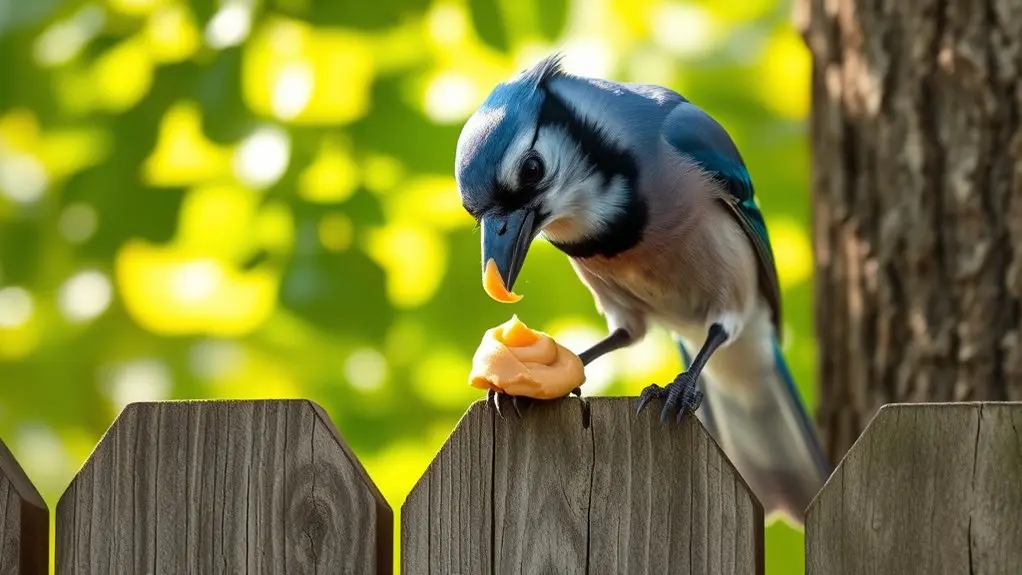
You might have heard that birds can choke on peanut butter because of its sticky texture and their lack of salivary glands. But actually, there are no documented cases supporting this claim.
Expert birders, like Roger Tory Peterson, haven’t found any evidence of choking incidents. Birds naturally manage sticky foods, especially when peanut butter is mixed with other ingredients to reduce the stickiness. So, it’s not as risky as some might think.
| Myth | Emotion Triggered | Reality Check |
|---|---|---|
| Birds choke on peanut butter | Fear | No documented cases exist |
| Sticky texture is dangerous | Concern | Birds adapt and safely consume |
| Lack of salivary glands causes choking | Worry | Birds manage food without saliva |
| Peanut butter should be avoided | Anxiety | Safe when offered properly |
What Science and Experts Say About Peanut Butter Safety
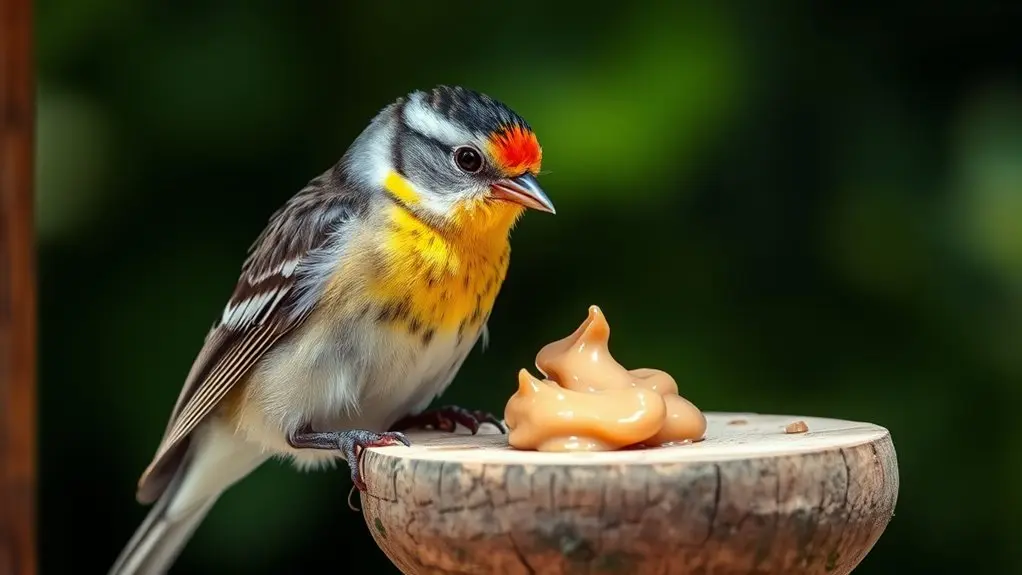
When evaluating the safety of feeding peanut butter to birds, scientific research and expert observations provide clear guidance. There are no documented cases or scientific evidence indicating peanut butter harms birds or causes choking.
Renowned birding authorities, like Roger Tory Peterson, report no proof of peanut butter’s danger to avian species.
Attempts to link peanut butter consumption to bird fatalities have consistently failed. Additionally, many bird enthusiasts share personal experiences confirming birds safely consume peanut butter, particularly when it’s mixed with additives to reduce stickiness.
The consensus among avian experts and community observations underscores that peanut butter is safe for birds when offered properly.
Do Birds Have Trouble Eating Sticky Peanut Butter?
You might wonder if birds have trouble eating sticky peanut butter since they don’t have salivary glands to moisten their food. Without saliva, swallowing thick substances could be more challenging for them.
But when you think about how their bodies work, it makes more sense how birds can handle sticky foods like peanut butter after all.
Birds’ Salivary Glands
Although birds lack salivary glands, which play an essential role in moistening and swallowing food in many animals, this anatomical difference doesn’t necessarily prevent them from eating sticky substances like peanut butter.
This is because birds rely heavily on their beak and tongue to manipulate and swallow food. This adaptation allows them to handle various textures despite the absence of salivary moisture.
You might worry about choking risks because peanut butter is sticky, but no scientific evidence confirms that birds struggle with it due to their salivary gland structure.
Experts and observations suggest birds can safely consume peanut butter when its texture is adjusted appropriately.
Here are some key points to keep in mind:
- Birds use their beak and tongue to process food without saliva.
- Lack of salivary glands may complicate moistening sticky foods.
- Proper preparation of peanut butter reduces potential risks.
Sticky Food Challenges
Birds manage food without salivary glands, relying on their beak and tongue to handle various textures. This absence can make sticky foods like peanut butter challenging to moisten and swallow. However, there are no documented cases of birds choking on peanut butter, which means the risk is pretty minimal when it’s fed properly.
To make things easier, you can mix peanut butter with cornmeal or seeds. This helps reduce its stickiness and improves the texture, making it simpler for birds to eat. Experts and observations confirm that birds generally handle peanut butter well if it’s prepared thoughtfully.
| Challenge | Solution |
|---|---|
| Lack of moisture | Mix with cornmeal/seeds |
| Thick texture | Add seeds for crunch |
| Potential stickiness | Dilute with water (sparingly) |
| Swallowing difficulty | Offer in small amounts |
| Choking concerns | No documented cases |
Picking the Best Peanut Butter for Your Birds
When you’re picking out peanut butter for your birds, it’s best to go with natural varieties that don’t have added sugars or salt. This helps keep things safe and healthy for them.
Also, watch out for brands that include nuts other than peanuts—those can cause allergy problems. So, take a moment to check the labels carefully.
That way, you’ll be sure you’re giving your feathered friends a tasty and safe treat.
Choosing Nut-Free Varieties
Since some birds have nut allergies or sensitivities, choosing nut-free peanut butter varieties can provide a safer feeding option. These alternatives often use soy, sunflower seeds, or other seeds instead of peanuts, which helps reduce the risk of allergic reactions.
When selecting nut-free peanut butter, you should prioritize products with minimal additives to keep things nutritionally safe.
Always read labels carefully to avoid cross-contaminants or trace nuts that could harm sensitive birds. It’s a good idea to opt for varieties with simple, natural ingredients to prevent potential health issues.
Key points to consider:
- Verify the absence of peanuts and any cross-contamination risks.
- Choose products with minimal added oils or stabilizers.
- Select natural, additive-free formulations for maximum safety.
This approach guarantees a nutritious, safe treat tailored to your bird’s dietary needs.
Avoiding Added Sugars
How can you guarantee the peanut butter you offer wild or pet birds supports their health? Start by choosing natural, unsweetened peanut butter without added sugars or artificial sweeteners. Many commercial brands contain added sugars, which can be toxic or promote obesity and metabolic issues in birds.
Carefully read ingredient labels to confirm the product only contains peanuts and possibly salt, without preservatives or unhealthy additives. Selecting plain, organic peanut butter minimizes sugar intake and reduces the risk of health problems linked to excess sugar consumption.
Incorporating sugar-free peanut butter into bird treats supports their nutritional well-being and longevity. Avoiding added sugars is essential for maintaining your birds’ ideal health and preventing diet-related complications.
How to Prepare Peanut Butter Treats Safely for Birds
To prepare peanut butter treats safely for birds, you should mix natural, unsalted, and unsweetened peanut butter with additives like cornmeal, chopped peanuts, seeds, or grit. This combination reduces stickiness, making the treat easier and safer for birds to consume.
Avoid offering straight, thick peanut butter, as it poses a choking risk.
Once mixed, spread the treat on pinecones, logs, or feeders to stimulate natural foraging behavior. Regularly check the treat’s consistency to make certain it remains manageable.
Key points to think about:
- Use only natural peanut butter without additives or preservatives.
- Incorporate dry ingredients to reduce stickiness.
- Monitor texture frequently to prevent choking hazards.
Following these steps guarantees a nutritious, safe peanut butter treat for wild birds. It’s a simple way to help your feathered friends enjoy a tasty snack without any risks.
Adding Texture to Peanut Butter for Easy Eating
When you mix peanut butter with dry ingredients like cornmeal, chopped peanuts, seeds, or grit, you create a textured paste that birds can consume more easily. This combination reduces the peanut butter’s natural stickiness and oiliness, which can pose choking risks.
The added dry, granular components absorb moisture, making the mixture less thick and improving its consistency.
This texture-enhanced paste also increases palatability, encouraging birds to feed more readily. Bird enthusiasts recommend this method to facilitate safer feeding, as the modified texture helps prevent potential choking hazards common with plain peanut butter.
Signs a Bird Is Struggling With Peanut Butter
Although peanut butter can be a nutritious treat for birds, you need to watch for signs that indicate they’re struggling to consume it safely. Birds may have difficulty swallowing thick, sticky peanut butter, which can lead to choking or distress.
Peanut butter can be nutritious for birds, but watch for signs of choking or difficulty swallowing.
Pay close attention to behavioral and physical cues that suggest discomfort or trouble. Look for these signs that a bird is struggling with peanut butter:
- Repeated attempts to swallow, unusual head bobbing, or gurgling sounds
- Drooling, pawing at the beak, or reluctance to feed
- Lethargy or sudden changes in activity level after eating
If you notice any of these symptoms, it’s really important to remove the peanut butter right away. Then, consult a veterinarian to help prevent any health complications.
Healthy Alternatives to Peanut Butter for Bird Treats
Since peanut butter can pose swallowing risks for some birds, you might want to explore healthier alternatives that provide similar nutritional benefits without the associated hazards. Mashed fruits like bananas or berries offer moisture and essential nutrients, making them excellent natural treats.
Nut butters formulated specifically for birds, often enriched with natural ingredients, reduce the risks linked to regular peanut butter.
You can also mix seeds, chopped nuts, or grains with natural sticky substances to create safe, nutritious snacks. Commercial bird spreads designed for avian consumption typically contain fewer oils and preservatives, enhancing safety and health benefits.
Plus, fresh foods such as sunflower seeds or mealworms provide valuable protein and fats.
These options support your bird’s well-being without the dangers posed by processed peanut butter. So, giving your feathered friend something tasty and safe is easier than you might think!
Frequently Asked Questions
Can Peanut Butter Cause Allergies in Birds?
Peanut butter rarely causes allergies in birds, but individual sensitivities can occur. You should feed natural, unsweetened peanut butter and monitor your birds for digestive upset or unusual behavior to guarantee their safety and well-being.
Just keep an eye on them when you introduce it. If you notice anything off, it’s best to stop and check with a vet. Better safe than sorry!
Is Peanut Butter Safe for Baby Birds?
Peanut butter isn’t safe for baby birds because their delicate digestive systems can’t handle its oily, sticky texture. You should avoid feeding it to them and consult a bird vet for suitable, age-appropriate nutrition.
It might seem like a good idea, but trust me, baby birds need something much gentler. If you’re ever unsure, a quick call to a bird expert can make all the difference.
How Often Can I Feed Peanut Butter to My Bird?
You should feed peanut butter to your bird only once or twice a week. Make sure it’s given in small amounts, mixed with seeds or nuts, and always monitor for any adverse reactions or choking hazards.
It’s important to keep an eye on your bird while eating peanut butter. That way, you can catch any problems early. Just take it slow and enjoy watching your feathered friend!
Can Birds Eat Peanut Butter Mixed With Other Foods?
You can safely feed birds peanut butter mixed with ingredients like seeds or cornmeal. This combo reduces the choking risk by improving the texture.
Studies show this method makes the mix more palatable and safer for birds. That’s why many bird enthusiasts prefer this approach. It’s a simple way to keep your feathered friends happy and healthy.
Does Peanut Butter Attract Wild Birds to Feeders?
Yes, peanut butter attracts wild birds to feeders because it’s packed with fat and protein. Its sticky texture and strong scent really catch their attention.
Birds especially love it during colder months when they need extra energy. So, you’ll likely see more visits to your feeder when you offer peanut butter.
Conclusion
You can safely offer birds regular peanut butter, but you need to choose the right type. Preferably, go for unsalted and unsweetened peanut butter and prepare it carefully.
Because its sticky texture can be challenging, think of peanut butter like thick honey. Adding seeds or grains helps birds eat it more easily.
Always watch for signs of difficulty. And consider healthier alternatives to keep your feathered friends thriving. Taking these steps guarantees a safe, nutritious treat they’ll enjoy.