
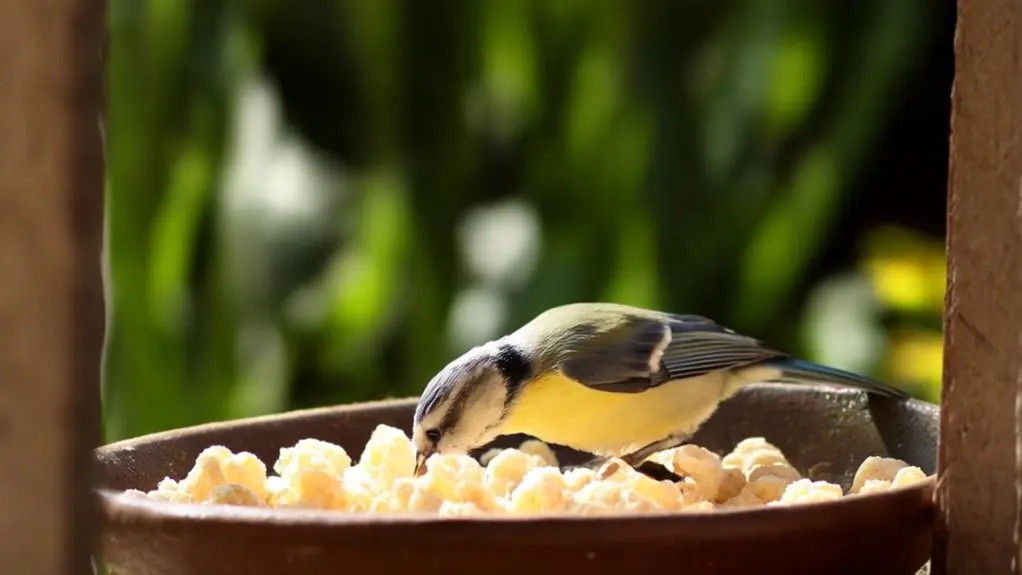
You can offer birds small, plain portions of Rice Krispies cereal, but it’s not ideal for their health. Rice Krispies mainly contain puffed rice and often added sugars, artificial flavors, and preservatives. These ingredients may cause obesity, digestive issues, and allergic reactions.
They also lack essential nutrients like proteins, fats, vitamins, and minerals. So, feeding should be occasional and limited. It’s better to explore safer, nutrient-rich alternatives.
That way, you can help make sure your bird’s diet supports its overall well-being and vigor.
Are Rice Krispies Safe for Birds?
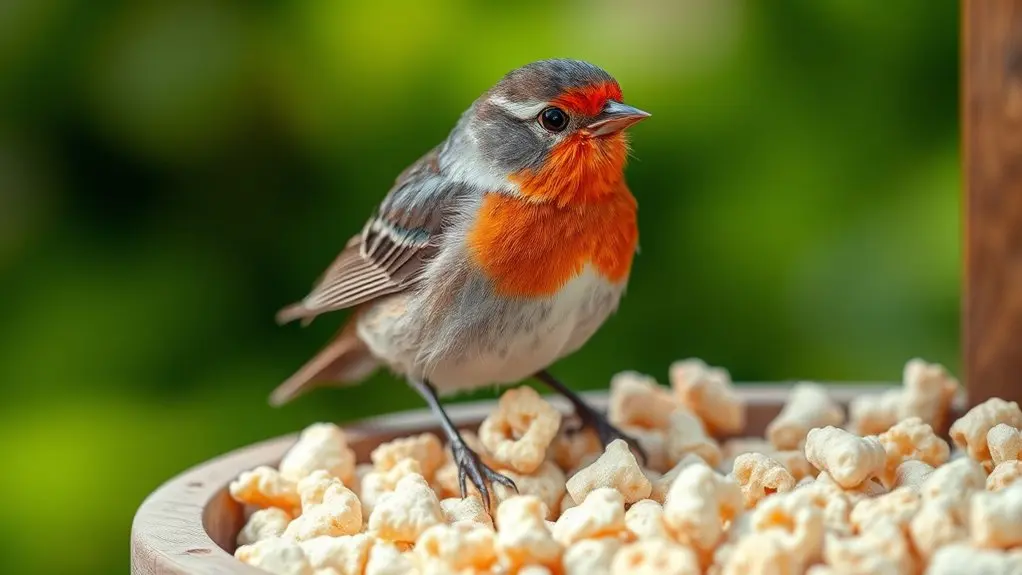
Although Rice Krispies cereal is made primarily from plain, puffed rice and can be safe for birds in moderation, you should be cautious about the specific product you offer. Many commercial Rice Krispies contain added sugars, artificial flavors, and preservatives, which may negatively affect bird health.
Feeding these cereals regularly could lead to obesity or digestive issues due to the high sugar content.
To minimize risks, it’s best to provide plain, unsweetened puffed rice or rice cakes without additives. Always check ingredient labels carefully to confirm the absence of harmful sweeteners and artificial substances.
Rice Krispies Cereal: Ingredients and Suitability for Birds
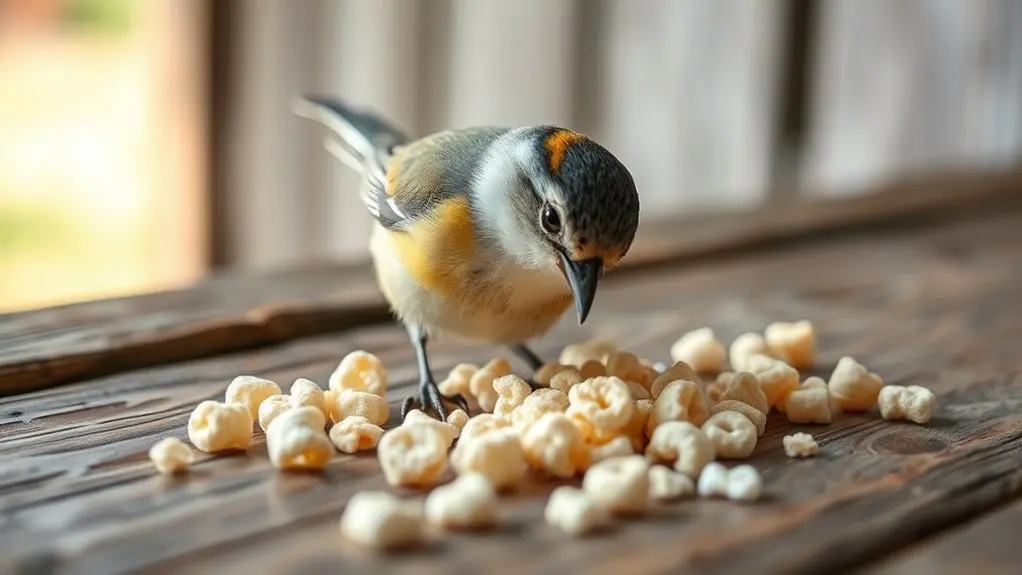
You’ll find that Rice Krispies are mainly made from toasted rice, giving them a pretty basic nutritional profile with only a few vitamins and minerals that birds might get something from.
But here’s the thing—many versions of Rice Krispies have added sugars and artificial additives. Those extras aren’t great for birds and could actually be harmful to their health.
Rice Krispies Nutritional Profile
When you consider offering Rice Krispies cereal to birds, it’s important to understand their nutritional profile and ingredient composition. Rice Krispies primarily consist of puffed rice, which is low in fat and calories. This makes it a light and easily digestible option for birds.
However, most commercial Rice Krispies contain added sugars, salt, and sometimes malt flavoring. These additives reduce the cereal’s suitability for regular bird consumption.
While the puffed rice itself can be safely offered occasionally, the presence of sugars and artificial flavorings may negatively impact birds’ health if given frequently.
Sugar Content Concerns
Because Rice Krispies cereal contains added sugars and artificial sweeteners, it poses significant health risks to birds if fed regularly. These sugars can lead to obesity, diabetes, and digestive disturbances. You should avoid feeding Rice Krispies to birds due to these harmful effects.
| Concern | Explanation |
|---|---|
| Added sugars | Increase calorie intake, risk of obesity |
| Artificial sweeteners | Potentially toxic, disrupt metabolism |
| Malt flavoring | Adds to total sugar content |
| Digestive impact | Can cause fatty liver disease in birds |
While plain rice puffed cereals have less sugar, Rice Krispies’ typical formulation contains enough added sugar to be unhealthy. So, it’s better to prioritize natural, low-sugar options for your birds’ diet. That way, you help keep them healthy and happy for longer.
Artificial Additives Impact
Beyond the concerns about sugar content, the artificial additives in Rice Krispies pose additional risks to birds. These additives include artificial flavors, preservatives, and colorings, which can cause adverse effects when ingested. You should know that these substances aren’t natural or nutritionally beneficial to birds.
Here are some key points to keep in mind:
Artificial colors and preservatives may trigger allergic reactions or digestive issues. Some artificial sweeteners and flavorings are toxic and should definitely be avoided.
Plus, Rice Krispies’ additives don’t provide any essential nutrients, which puts bird health at risk.
To protect birds, it’s safer to offer plain, unprocessed grains instead of cereals with artificial additives.
Try to avoid feeding Rice Krispies regularly because the potential health risks just aren’t worth it.
Nutritional Value of Rice Krispies for Birds
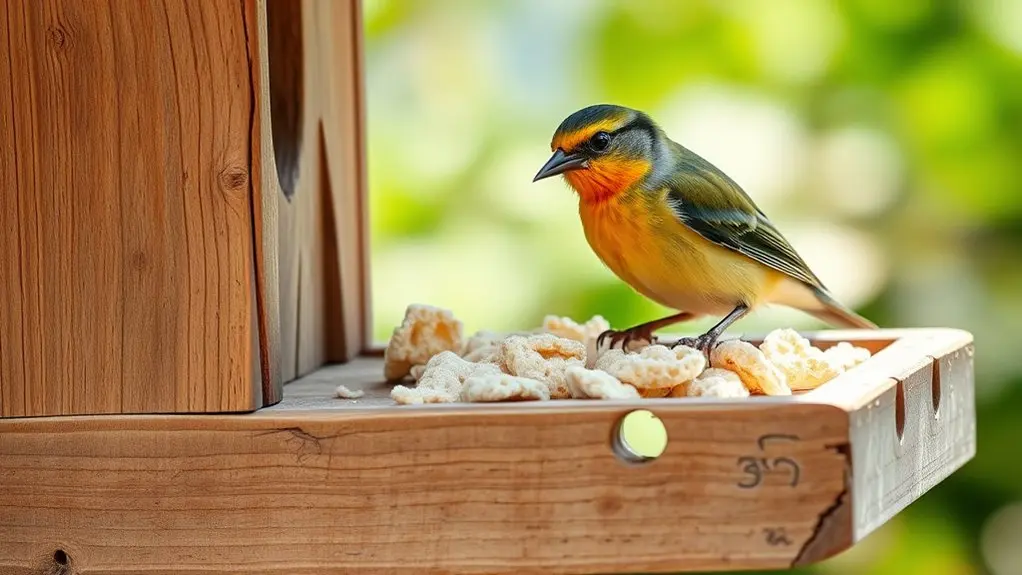
How nutritious are Rice Krispies for birds? Rice Krispies are mainly made from puffed rice, which is low in fat and calories, making them a light treat. But they also have added sugars and artificial flavors that aren’t great for a bird’s nutritional health.
They don’t have the essential proteins, vitamins, or minerals birds need for a balanced diet. Plus, because they’re processed, they’ve much less dietary fiber than natural grains. That means they don’t do much to help a bird’s digestion.
Feeding Rice Krispies occasionally probably won’t hurt, but you shouldn’t rely on them as regular bird food. Knowing these facts helps you make better choices about when and how to include Rice Krispies in a bird’s diet responsibly.
Risks of Feeding Rice Krispies to Birds
Although Rice Krispies may seem like a harmless snack, feeding them to birds carries several health risks you should consider. Rice Krispies often contain added sugars, artificial flavors, preservatives, and colors, which can negatively impact avian health.
High sugar content may lead to obesity, diabetes, and other metabolic disorders in birds.
Also, artificial additives can trigger allergic reactions or hyperactivity.
Regular or excessive feeding can cause nutritional imbalances and digestive issues since these cereals lack essential nutrients birds require.
Key risks include:
- Obesity and metabolic diseases from high sugar levels
- Allergic reactions and behavioral changes due to artificial additives
- Nutritional deficiencies and digestive problems from imbalanced diets
How to Offer Rice Krispies to Wild and Pet Birds
If you want to offer Rice Krispies to birds, it’s best to keep it simple. Just give them small portions without adding anything like milk or sugar.
You can break the cereal into smaller pieces so it’s easier for the birds to eat, and then put it on a clean, shallow dish where they can easily reach it.
Also, make sure to take away any leftover or damp cereal quickly. This helps keep things clean and stops unwanted pests from showing up.
Feeding Guidelines For Birds
When offering Rice Krispies to wild or pet birds, provide small, plain portions without added sugar, milk, or flavorings to guarantee their safety. This cereal can serve as an occasional treat but shouldn’t replace more nutritious foods like seeds and grains.
Always use a clean, shallow dish to present the cereal, and remove any leftovers promptly to prevent spoilage and discourage pests.
Avoid cereals containing artificial colors or added sugars, as these can negatively affect bird health. Follow these guidelines for responsible feeding:
- Offer Rice Krispies sparingly and unflavored to minimize health risks.
- Serve on a clean surface, avoiding milk or soaking liquids.
- Remove damp or uneaten portions quickly to maintain hygiene and safety.
These practices help assure that feeding Rice Krispies remains safe and beneficial for birds. It’s a simple way to enjoy watching them without causing harm.
Preparing Rice Krispies
Since offering Rice Krispies to birds requires careful preparation, you should guarantee the cereal is served in small, plain, and dry pieces to minimize health risks. Break or crush larger pieces to ensure birds can eat and swallow them easily, reducing choking hazards.
Avoid adding milk, sweeteners, or flavorings, as dairy and sugars can cause digestive upset.
Serve Rice Krispies sparingly due to their added sugars and artificial ingredients, which aren’t ideal for bird health.
After feeding, promptly remove any uneaten or spoiled cereal to prevent mold growth and deter pests or bacterial contamination.
Better Bird Food Alternatives to Rice Krispies
Although Rice Krispies might seem like a convenient treat, they lack the necessary nutrients birds need for ideal health. Instead, you should offer birds foods that provide balanced nutrition and support their physiological needs. Natural options supply proteins, healthy fats, vitamins, and antioxidants absent in processed cereals.
Consider these superior alternatives:
- Plain, unsweetened whole grains such as oats, millet, and sunflower seeds offer complex carbohydrates and fiber.
- Natural seeds and nuts like black-oil sunflower seeds and safflower provide essential fats and proteins.
- Fresh fruits and vegetables, including chopped apples or leafy greens, supply vital vitamins and antioxidants.
Additionally, commercial bird pellets formulated for specific species ensure a complete diet. They promote excellent bird health more effectively than Rice Krispies.
Frequently Asked Questions
Can Feeding Rice Krispies Affect a Bird’s Behavior?
Feeding Rice Krispies occasionally won’t markedly affect a bird’s behavior. But if you give them large amounts, the high sugar and additives can cause hyperactivity or lethargy. This can indirectly alter their natural activity and health.
How Do Birds Typically React to Rice Krispies Texture?
You’ll notice birds often pick at Rice Krispies’ crunchy texture with curiosity, sometimes preferring softened versions. This texture can stimulate beak exercise, but birds might find it less satisfying than softer, moisture-rich foods.
They seem to enjoy the challenge of the crunch, but it’s not always their favorite snack. So, if you want to attract more birds, try offering softened Rice Krispies alongside other treats. It keeps things interesting for them!
Are There Specific Bird Species That Prefer Rice Krispies?
About 30% of blue jays and orioles show a preference for Rice Krispies because of their grain-like texture. You’ll often see these birds enjoying them more than others.
Smaller songbirds might nibble on Rice Krispies occasionally, but it’s not a big deal for most species. They don’t really count on Rice Krispies as a main food source. So, while some birds like them, it’s not a favorite for everyone.
Can Rice Krispies Cause Allergies in Birds?
Yes, Rice Krispies can cause allergies in birds because of the artificial colors and additives they contain.
If your bird is sensitive, you might notice things like respiratory issues or skin irritations. So, it’s usually best to avoid feeding them this cereal.
Better safe than sorry, right? Birds can be pretty delicate when it comes to what they eat!
Is There a Best Time of Day to Offer Rice Krispies?
You might be surprised, but yes, the best times to offer Rice Krispies to birds are early morning and late afternoon when they’re most active.
Feeding then boosts their energy efficiently, avoiding midday heat when they’re less receptive.
Conclusion
While Rice Krispies might seem like a simple snack for birds, they don’t provide the necessary nutrients birds need to stay healthy. Feeding them Rice Krispies often can lead to nutritional problems and potential health risks.
It’s better to look for safer, species-specific snacks that actually support their well-being. Choosing balanced bird food helps boost their growing bodies and keeps their behavior bright.
Remember, responsible feeding means giving them what’s best—not just processed products. So, prioritize proper provisions to keep your birds strong and resilient.