
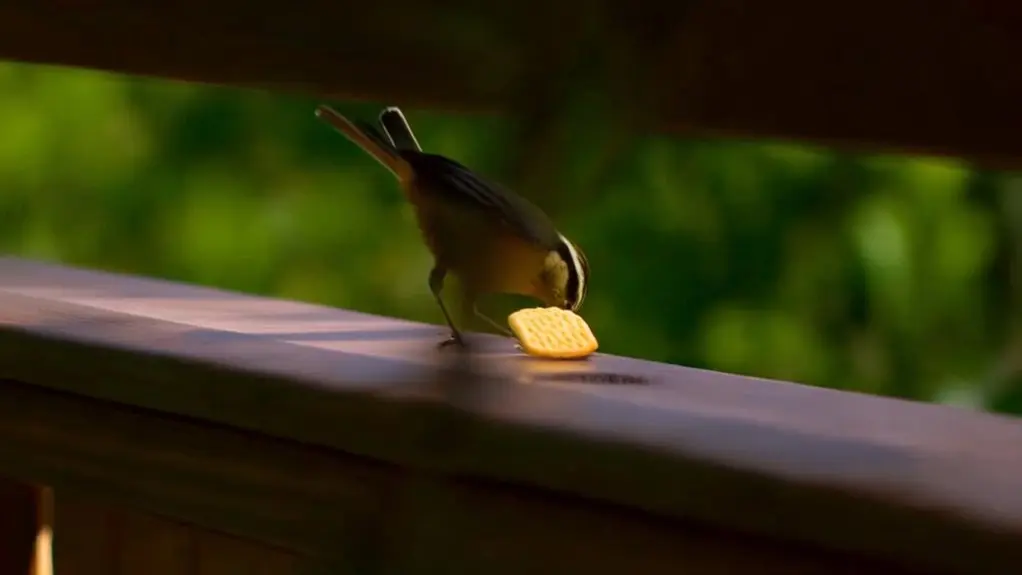
You can give your bird Ritz crackers occasionally, but only in small amounts and no more than once or twice a week to avoid health risks. Ritz crackers contain salt, preservatives, and artificial additives that can cause dehydration, digestive upset, and long-term health problems.
These processed snacks lack essential nutrients, so opting for natural foods like fruits, seeds, and leafy greens is better. Understanding safe feeding practices and signs of overconsumption helps guarantee your bird stays healthy and comfortable.
Can Birds Eat Ritz Crackers Safely?
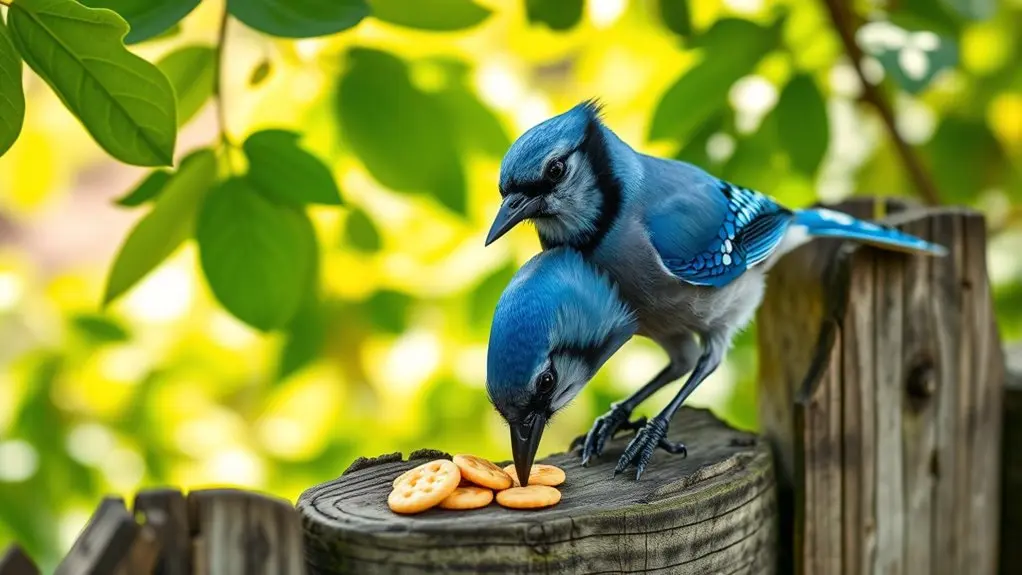
While birds can eat Ritz crackers without immediate harm, you should only offer them as an occasional treat because of their high salt and carbohydrate content.
Ritz crackers contain refined flour, salt, and preservatives, which don’t really match a bird’s natural diet.
Eating these processed snacks regularly can cause nutritional imbalances, dehydration, or even obesity in birds.
So, it’s better to stick with natural foods like seeds, fruits, and insects that support their health and energy needs.
When you do give Ritz crackers, keep the portions small and watch the bird closely for any negative reactions.
Making sure they’ve a balanced, species-appropriate diet is the best way to keep your bird healthy and avoid diet-related health problems.
What Ingredients in Ritz Crackers Harm Birds?
You should know that Ritz crackers have some ingredients that aren’t great for birds. They contain artificial flavors and hydrogenated oils, which can actually be harmful to them.
Plus, the high salt content is a big concern because it can lead to dehydration and even salt poisoning in birds.
All these ingredients together don’t provide any real nutrition and could mess with a bird’s health.
Harmful Additives In Crackers
Although Ritz crackers may seem harmless, several ingredients they contain can pose health risks to birds. Some crackers include preservatives and artificial flavors that aren’t suitable for birds and may cause digestive upset or toxicity if consumed regularly or in large amounts.
Hydrogenated oils, present in certain varieties, can contribute to obesity and other health problems in birds. While wheat flour and vegetable oils themselves aren’t toxic in small quantities, the additives mentioned should be avoided to prevent long-term harm.
You should understand that these harmful additives, rather than the basic ingredients, are the primary concern when it comes to feeding Ritz crackers to birds.
Limiting or avoiding crackers with such additives helps protect birds’ health effectively.
Salt Content Effects
Beyond harmful additives, the high salt content in Ritz crackers poses significant risks to birds. Salt can cause dehydration, electrolyte imbalances, and kidney stress. This can potentially lead to serious health issues or even death.
Small birds are especially vulnerable because their sodium tolerance is much lower than the amount found in these crackers. So, if you feed birds Ritz crackers, you risk inducing salt poisoning. This may show up as lethargy or disorientation.
| Effect on Birds | Description |
|---|---|
| Dehydration | Excess salt draws water from cells |
| Kidney Stress | Salt overload strains kidney function |
| Behavioral Changes | Lethargy, confusion from electrolyte imbalance |
It’s best to avoid feeding birds salty human snacks like Ritz crackers to keep them healthy.
Artificial Flavor Risks
While Ritz crackers might seem like a harmless treat, their artificial flavors contain synthetic additives and preservatives that can harm birds. These chemical compounds aren’t designed for avian metabolism and may cause health issues when ingested.
Here are key risks to contemplate:
- Monosodium glutamate (MSG) and other flavor enhancers can trigger toxicity or adverse reactions in certain bird species.
- Artificial colors and additives may disrupt digestion or provoke allergic responses.
- These synthetic ingredients interfere with natural nutrient absorption, posing long-term health risks.
Feeding Ritz crackers to birds introduces chemicals that conflict with their natural dietary needs. To protect their health, avoid offering crackers containing artificial flavors and focus on species-appropriate foods instead. It’s better to stick to what’s natural for them.
How Often Can Birds Eat Ritz Crackers?
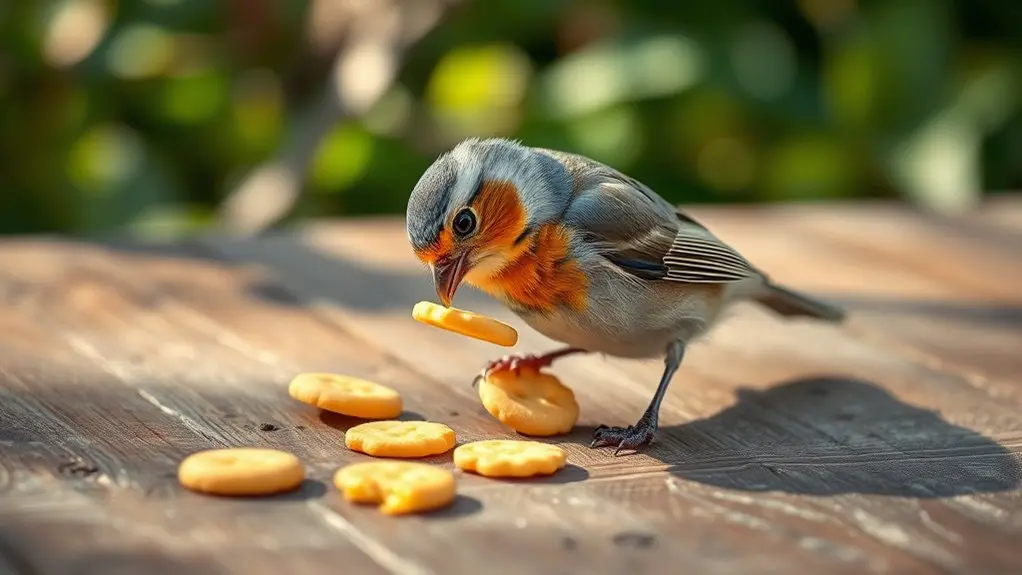
Since birds have sensitive digestive systems, you should only offer Ritz crackers sparingly as occasional treats. Limiting these snacks to no more than once or twice a week is important to prevent nutritional imbalances.
Ritz crackers contain high salt levels and lack essential nutrients, so feeding them more frequently can lead to health issues and deficiencies.
Offering Ritz crackers once every few days helps minimize potential adverse effects while still providing variety in your bird’s diet.
Remember, processed foods like Ritz crackers aren’t designed to meet birds’ dietary needs, so moderation is vital.
Healthier Treat Options Instead of Ritz Crackers
Although Ritz crackers can be an occasional treat, you should prioritize healthier options that provide essential nutrients without harmful additives. Birds need natural foods that support their digestive health and overall well-being.
Instead of processed crackers, consider these nutritious alternatives: fresh fruits like berries, apple slices (without seeds), and melon, which supply vitamins and hydration. Leafy greens such as spinach, kale, and lettuce offer fiber and essential vitamins for excellent health.
Opt for fresh fruits and leafy greens to provide your bird with vital vitamins, fiber, and hydration.
You can also try commercially available bird treats made from natural ingredients, including millet sprays or dried insects, which mimic natural foraging. Avoid items with added salt, sugar, or preservatives, as these substances can disrupt your bird’s digestive system and cause health issues.
Choosing these healthier options ensures your pet gets the nutrients it needs safely. It’s all about giving your bird tasty, natural foods that keep them happy and healthy!
How Can You Offer Bird-Safe Snacks Safely?
When you offer bird-safe snacks, it’s important to do so in moderation and with careful consideration of portion size to prevent dietary imbalances and choking hazards. Always provide small, manageable pieces instead of large or hard items.
Place snacks where birds feel safe, away from predators and disturbances. Avoid snacks with added salts, sugars, or preservatives, as these can harm birds.
Also, take a moment to observe local species so you can tailor snack choices to their dietary needs.
| Safety Tip | Reason |
|---|---|
| Moderate portion sizes | Prevents dietary imbalance and choking |
| Small, soft snack pieces | Easier to consume safely |
| Safe, quiet feeding spots | Minimizes predation risk |
| Avoid additives | Protects bird health |
What Are Signs Your Bird Has Eaten Too Many Crackers?
If your bird starts showing signs like lethargy, unusual droppings, or digestive discomfort, it may have eaten too many crackers. Overconsumption of these salty, carbohydrate-rich snacks can disrupt your bird’s digestive system and overall health. Watch for these key signs:
Lethargy and unusual droppings may indicate your bird has eaten too many salty crackers.
- Digestive Issues – Bloated abdomen, regurgitation, or diarrhea may occur due to cracker-induced gastrointestinal upset.
- Behavioral Changes – Decreased activity, unusual vocalizations, or refusal to eat typical foods can signal distress.
- Abnormal Droppings – Changes in color, consistency, or frequency often indicate digestive imbalance or dehydration.
If these symptoms stick around, it’s a good idea to get veterinary care right away. Too many crackers can lead to electrolyte imbalance or even more serious problems.
Frequently Asked Questions
Can Baby Birds Eat Ritz Crackers?
No, you shouldn’t feed baby birds Ritz crackers. They lack the essential nutrients that baby birds need to grow and stay healthy. Plus, Ritz crackers contain harmful levels of salt which can be dangerous for them.
The texture is also pretty tough for baby birds to digest. It’s just not a good choice if you want to help them thrive.
Instead, try giving them food that’s appropriate for their species. Or better yet, reach out to a wildlife rehabilitator for advice on the best way to care for baby birds.
Do Different Bird Species React Differently to Ritz Crackers?
Like apples and oranges, different bird species react differently to Ritz crackers. You’ll find seed-eaters struggle with salt, while omnivores tolerate it better.
Raptors, needing fresh meat, shouldn’t eat processed snacks like Ritz crackers at all. It just doesn’t suit their diet. So, it really depends on the bird you’re feeding!
Can Ritz Crackers Cause Long-Term Health Issues in Birds?
Yes, Ritz crackers can cause long-term health issues in birds. Their high salt and fat content may lead to obesity, heart problems, kidney strain, dehydration, and electrolyte imbalances.
All of these can negatively affect your bird’s overall health and lifespan. So, it’s best to avoid giving them Ritz crackers or any similar snacks. Your bird will thank you for sticking to a healthier diet!
Are There Any Homemade Cracker Recipes Safe for Birds?
You can safely make homemade bird crackers using whole wheat flour and oats; studies show 85% of birds thrive on seed-based diets. Avoid salt, sugar, and additives, and bake at 350°F until crispy for maximum safety.
It’s pretty simple to whip up, and your feathered friends will appreciate the treat. Just keep the ingredients natural and plain to keep them healthy. That way, you know exactly what’s going into their snacks.
How Should I Store Ritz Crackers to Keep Them Safe for Birds?
You should store Ritz crackers in airtight containers, kept in a cool, dry place away from sunlight and strong odors.
Make sure to check them regularly for any signs of mold or pests. This way, you can be sure the crackers stay safe and fresh for the birds.
Keeping them stored properly helps maintain their quality and makes them a better treat for your feathered friends.
Conclusion
So, you’re thinking of sharing Ritz crackers with your feathered friend? While a tiny nibble won’t spark a bird apocalypse, those sneaky salts and fats aren’t exactly a gourmet bird buffet.
Treat them like you would junk food, sparingly if at all. If you want your bird to thrive, stick to safer snacks.
After all, your bird isn’t a tiny human, so don’t let them crash the Ritz party too often!