
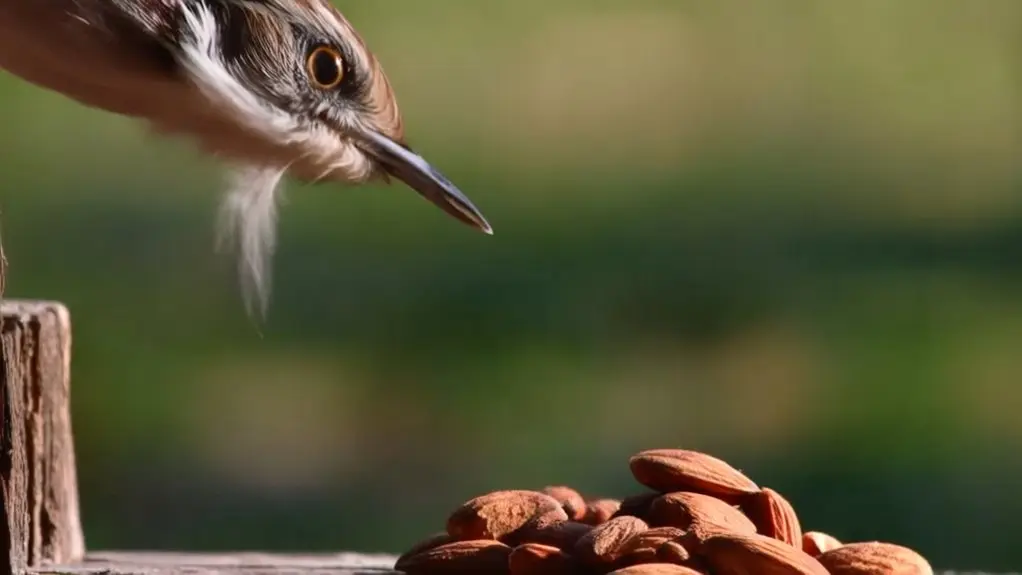
Yes, you can offer your bird unsalted, dry roasted almonds in moderation. Just make sure they’re free from oils and seasonings to avoid health risks like dehydration or obesity.
Roasted almonds have less vitamin E and antioxidants than raw ones, so they shouldn’t replace a balanced diet focused on natural foods.
Different bird species tolerate them differently, and portion control is key to preventing digestive or allergic issues. It’s a good idea to explore how to prepare, serve, and monitor almonds safely for your feathered friend.
Are Roasted Almonds Safe for Birds?
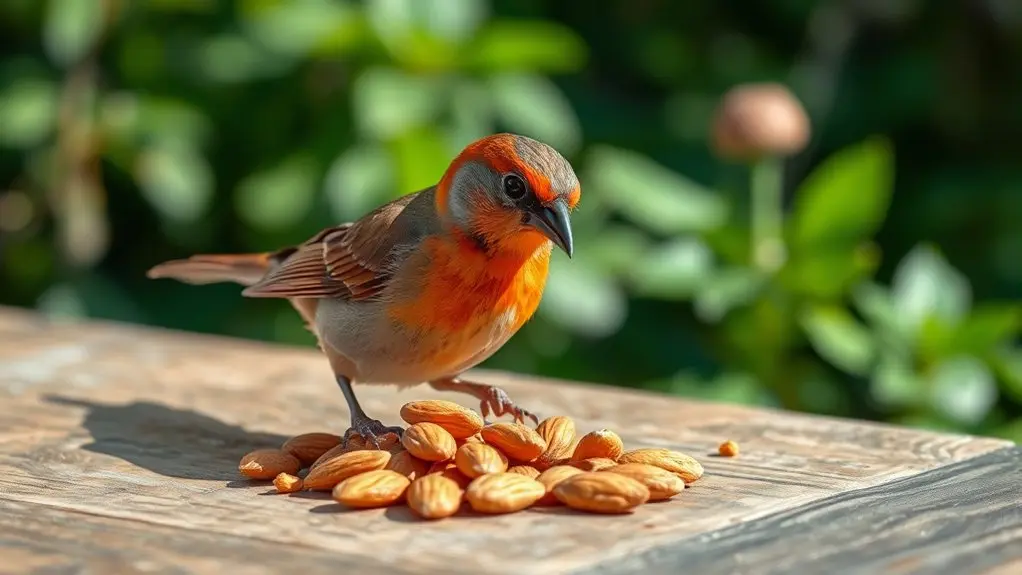
How safe are roasted almonds for your bird? You can safely offer roasted almonds only if they’re unsalted and free from oils or seasonings.
Roasting reduces moisture but doesn’t eliminate mold or bacterial risks if almonds aren’t stored properly.
Roasting lowers moisture but won’t remove mold or bacteria risks if almonds are stored incorrectly.
Because almonds are high in fat, you should provide them in moderation to prevent obesity and liver problems.
Avoid salted or heavily processed almonds, as excess salt and additives harm birds.
Always check almonds for freshness and mold before feeding.
Giving small, controlled portions supports your bird’s health while minimizing potential risks.
Which Bird Species Can Eat Roasted Almonds?
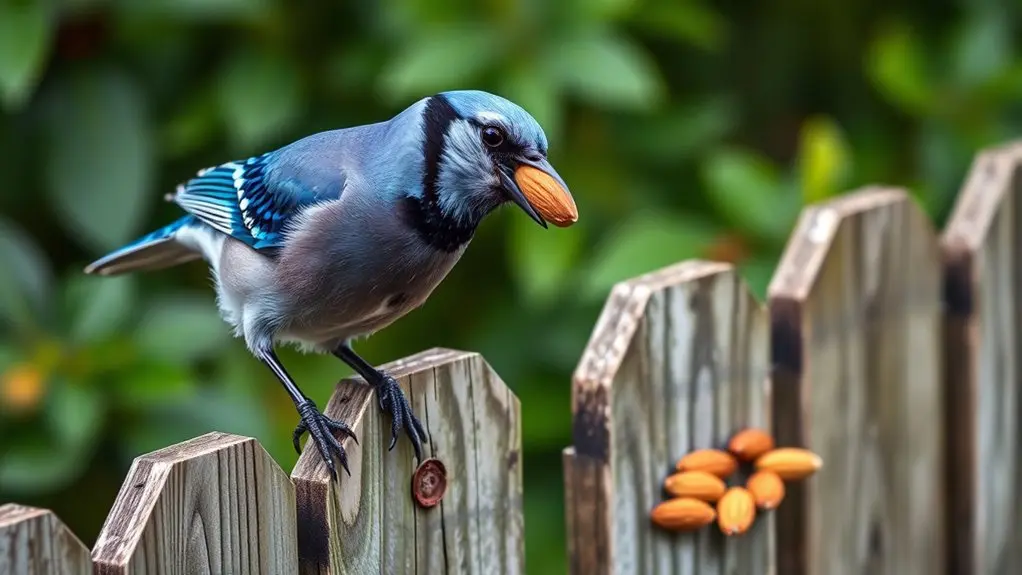
You can safely offer roasted almonds, as long as they’re unsalted and unseasoned, to bird species like parrots and cockatiels—this includes African Greys and Amazons.
Just remember, these birds might have their own personal preferences when it comes to nuts, so it’s a good idea to watch how they react.
Since almonds are pretty high in fat and calories, it’s best to give them in moderation to keep your feathered friends healthy.
Suitable Bird Species
Although roasted almonds can be a nutritious treat, only certain bird species can safely consume them. Many small parrots, like cockatiels and conures, can eat roasted almonds in moderation if they’re unsalted and unseasoned.
Larger species, such as African Greys and Amazon parrots, may enjoy them occasionally but shouldn’t rely on almonds as a dietary staple. You must verify almonds are plain, with no added salt, sugar, or spices to avoid health risks like high blood pressure or toxicity.
Birds with obesity or liver conditions should avoid almonds due to their high fat content. Always offer roasted almonds in small quantities and confirm they’re free from mold or contaminants before feeding.
This careful approach helps keep your bird healthy and safe.
Species-Specific Nut Preferences
Different bird species have their own unique preferences and tolerances when it comes to eating roasted almonds. For example, parrots like cockatoos and amazons can safely enjoy roasted almonds in moderation. Just make sure the nuts are unsalted and don’t contain any additives.
Birds such as conures and lovebirds also like roasted almonds now and then. But they need to have small amounts to avoid any digestive troubles.
On the other hand, some birds mightn’t be interested in almonds at all. They might prefer other nuts like walnuts or pecans because of the taste or texture.
It’s really important to avoid giving any bird salted or heavily processed roasted almonds. High salt content can be harmful to them.
Knowing these species-specific nut preferences means you can offer safe and suitable treats that fit your bird’s dietary needs perfectly.
How to Prepare Roasted Almonds Safely for Your Bird
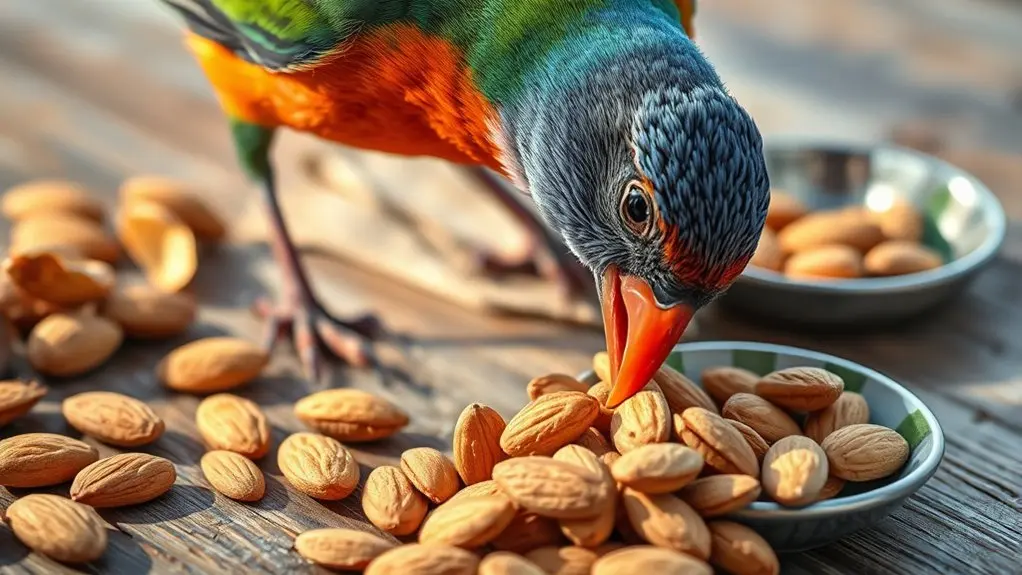
When preparing roasted almonds for your bird, make sure they’re unsalted and free from added oils or seasonings. This helps avoid any potential health risks. It’s best to choose dry roasted almonds instead of oil-roasted ones to keep unhealthy fats out of your bird’s diet.
Also, let the almonds cool completely before feeding them to your bird. This step is important to prevent burns or choking hazards.
Here’s how you can prepare almonds safely:
- Pick unsalted, dry roasted almonds without any additives.
- Let the almonds cool thoroughly after roasting or buying them.
- Store the almonds in an airtight container in the fridge or freezer. This keeps them fresh and stops mold from growing.
How Much Roasted Almonds to Feed Your Bird and How Often?
You should limit roasted almonds to no more than 10% of your bird’s daily diet. It’s best to offer only 1-2 unsalted kernels each time you feed them.
Try giving almonds just once or twice a week. This helps prevent your bird from getting too much fat or salt.
Also, keep an eye on your bird’s health regularly to make sure they’re doing well with this treat.
Recommended Serving Size
Although roasted almonds can be a nutritious treat, you should feed your bird only 1-2 small pieces at a time. Limit these treats to no more than 10% of their overall diet. This approach helps prevent obesity and related health issues.
To guarantee safety and proper nutrition, follow these guidelines:
- Offer only small quantities of roasted almonds. Avoid overfeeding to reduce risks of weight gain and liver problems.
- Choose unsalted, unroasted, high-quality almonds to maximize nutritional benefits.
- Use roasted almonds as an occasional treat rather than a daily snack. It’s all about keeping moderation in your bird’s diet.
Feeding Frequency Guidelines
Since roasted almonds are calorie-dense and rich in fats, feeding them sparingly is essential to maintain your bird’s health. Limit servings to 1-2 small pieces (2-3 grams) per feeding. Give these once or twice a week as an occasional treat rather than a daily food source.
Keep almond intake to no more than 10% of your bird’s overall diet to prevent excessive fat consumption. Too much fat can lead to obesity or digestive issues.
Always make sure the almonds are unsalted and unseasoned to avoid salt toxicity and other health risks.
It’s a good idea to monitor your bird’s weight and digestion closely. If you notice weight gain or digestive upset, just reduce the frequency or amount.
Following these guidelines helps maintain a balanced diet and supports your bird’s well-being.
What Health Risks Should You Watch For?
When feeding birds roasted almonds, be aware that added salt and oils commonly used in roasting can harm them, potentially causing toxicity. You should monitor these health risks carefully to keep your bird safe.
- Salt Poisoning: Salted almonds can lead to dehydration and kidney issues in birds, which can seriously impact their health.
- High Fat Content: Eating too many almonds might cause obesity and liver problems because of the high fat content.
- Mold and Shell Hazards: Moldy almonds can introduce toxins, and swallowing shells or fragments might cause digestive blockages or injuries.
To keep your bird safe, always offer unsalted, oil-free almonds in moderation. Also, make sure to check the nuts for any mold or debris before feeding.
Taking these simple steps helps reduce the chances of any health problems for your feathered friend.
What Are the Signs Your Bird Reacts to Roasted Almonds?
Monitoring your bird’s reaction after offering roasted almonds helps guarantee its well-being. If your bird pecks at or cracks the almond shell, it signals curiosity or acceptance. Positive responses may include increased activity or vocalization after consumption.
Conversely, watch for signs of discomfort such as lethargy, ruffled feathers, or altered droppings, which indicate adverse reactions. If your bird tries to remove or reject the almond, it may find the texture unappealing or react negatively.
Additionally, be vigilant for allergic symptoms like swelling, itching, or respiratory distress, as these require immediate attention.
How Roasting Changes Almond Nutrition for Birds
Although roasting almonds can enhance their flavor and shelf life by reducing moisture, it also changes their nutritional makeup in ways that might affect your bird’s health. The heat breaks down heat-sensitive nutrients like vitamin E and lowers antioxidant levels, which are really important for your bird’s immune system.
Roasting can also create advanced glycation end-products (AGEs). These compounds might harm your bird if eaten too much.
Here are some key changes to keep in mind:
- Loss of essential nutrients such as vitamin E and antioxidants.
- Formation of AGEs linked to cellular stress and inflammation.
- Possible added salt or oils, which aren’t good for birds.
Because of all this, roasted almonds end up being less nutritious and maybe even unsafe for your feathered friend. So, it’s usually better to stick with raw almonds when feeding birds.
Alternatives to Roasted Almonds for a Balanced Bird Diet
Since roasted almonds can lose key nutrients and sometimes contain harmful additives, you should consider safer alternatives to maintain a balanced bird diet. Unsalted, raw almonds offer a more nutritious option without the risks of added salt or oils.
Plus, raw walnuts, pecans, and pumpkin seeds provide essential healthy fats and add some nutritional variety.
Remember, nuts should only be moderate treats rather than staples. You want to prioritize fresh fruits, vegetables, and high-quality pellets as the core of your bird’s diet.
Mixing in a diverse range of natural, unprocessed foods helps your bird get the essential nutrients they need.
This way, you avoid exposing your bird to additives commonly found in roasted almonds. It’s all about promoting excellent health and preventing potential dietary imbalances caused by processed nut products.
Keeping things natural really makes a difference!
Frequently Asked Questions
Can Baby Birds Eat Roasted Almonds Safely?
You shouldn’t feed baby birds roasted almonds often, as high fat and potential toxins can harm them.
If you do, offer small, unsalted, finely chopped pieces gradually.
And it’s a good idea to consult a vet to guarantee safety and proper digestion.
Do Roasted Almonds Affect Bird Feather Quality?
You might think roasted almonds boost feathers, but added salt and preservatives actually harm plumage quality. Unsalted, natural almonds pose less risk, yet overfeeding still disrupts nutrient balance. This can negatively affect feather health and shine.
Are Raw Almonds Better Than Roasted for Birds?
Yes, raw almonds are better for birds because they retain more nutrients and don’t have harmful additives like salt or oils that you sometimes find in roasted almonds.
Choosing raw almonds is a great way to support their health and keep their feathers looking good.
Can Roasted Almond Shells Harm Birds?
Yes, roasted almond shells can harm birds. You shouldn’t let them ingest shells because they contain mold and toxins. Plus, they are indigestible, which can cause digestive blockages and other health issues.
Even roasting doesn’t get rid of these dangers. So, it’s best to keep almond shells away from birds altogether.
How Should Roasted Almonds Be Stored for Bird Feeding?
You should store roasted almonds in airtight containers. Keep them in a cool, dark place or in the refrigerator.
If you want to store them for a long time, freezing is the best option. Just make sure to check them regularly for mold or rancidity. This way, you can keep them safe and fresh for your birds.
Conclusion
You can safely feed roasted almonds to certain bird species, but moderation is key. Only about 5% of their diet should include treats like almonds. Roasting reduces some nutrients but also lowers natural toxins, making almonds safer.
Watch for signs like vomiting or lethargy, which indicate adverse reactions. Remember, birds eating roasted almonds enjoy a tasty treat. But balancing their diet with other foods guarantees ideal health and longevity.