
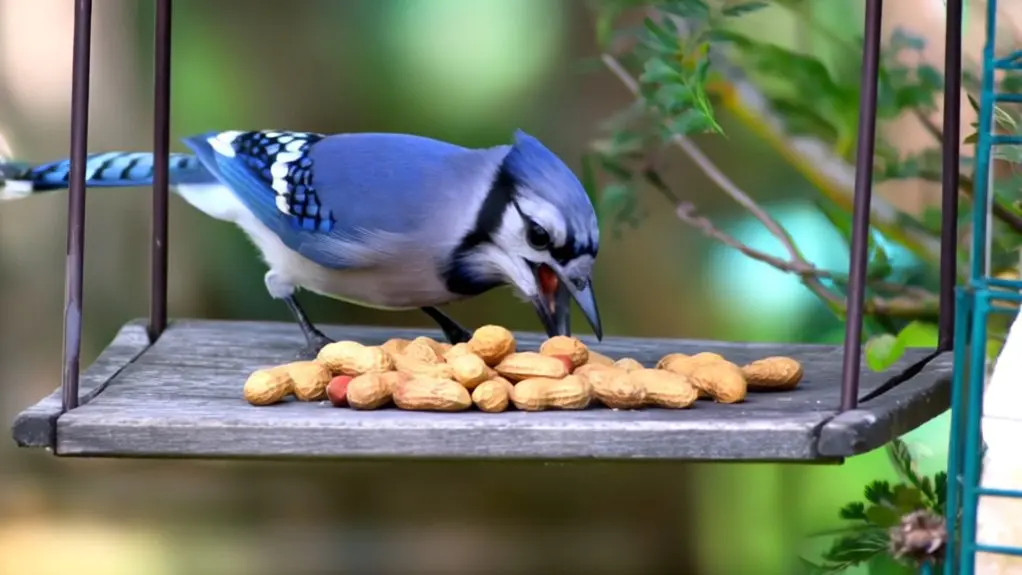
Yes, you can safely feed birds roasted peanuts if you choose unsalted, human-grade nuts free from mold and spoilage. Offering them in appropriate forms, like whole for larger birds and shelled or crushed for smaller species, helps reduce choking risks.
Keep portions moderate and check the peanuts regularly to make sure they stay fresh. Avoid salted or flavored varieties because those can be harmful to birds.
Knowing these details makes it easier to provide a nutritious, safe treat that supports your backyard birds’ health and preferences.
Are Roasted Peanuts Safe for Birds to Eat?
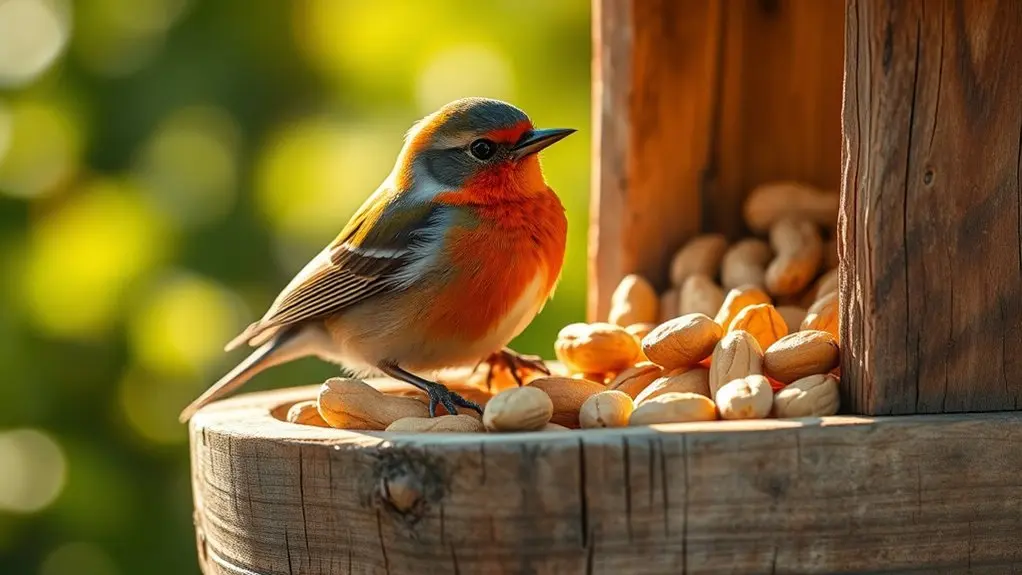
While roasted peanuts can be a nutritious treat for birds, you need to guarantee they’re human-grade, unsalted, and free from mold or spoilage.
Roasted peanuts provide birds with essential protein and healthy fats, which are especially valuable during colder months when energy demands increase.
However, feeding moldy or contaminated peanuts poses serious health risks. Fungi and bacteria produce toxins that can be fatal.
To minimize aflatoxin contamination, always source peanuts from reputable suppliers.
Also, consider the form in which you offer peanuts. Using mesh feeders or crushing peanuts helps prevent choking hazards, particularly for smaller bird species.
By following these precautions, you can safely incorporate roasted peanuts into your bird-feeding routine without compromising their health.
It’s a simple way to keep your feathered friends happy and healthy!
How to Choose the Right Roasted Peanuts for Birds
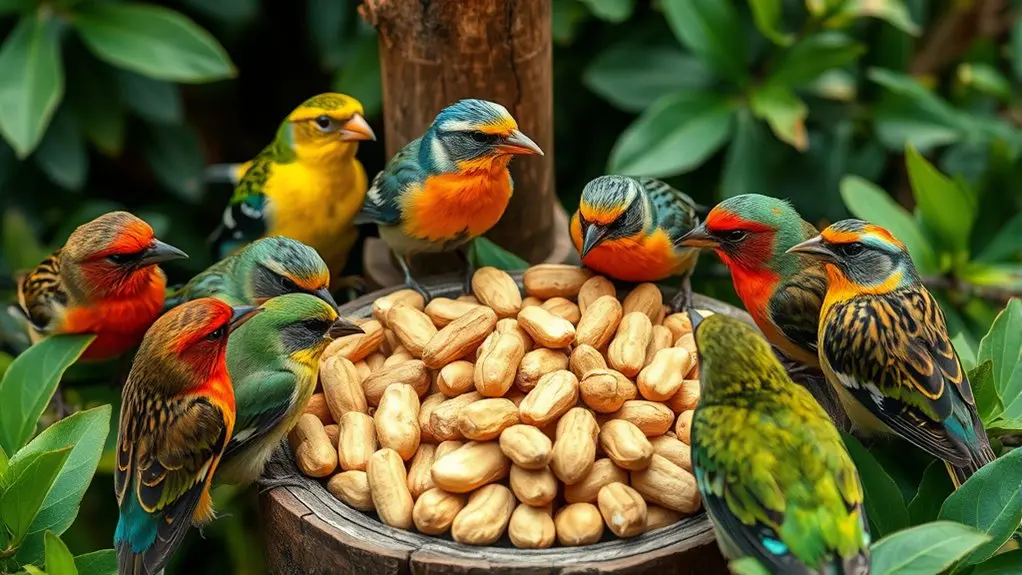
When picking out roasted peanuts for your birds, it’s best to go for those without any additives like salt or preservatives. This helps keep your feathered friends healthy.
Also, make sure you buy peanuts from reputable sources — that way, you reduce the risk of aflatoxin contamination.
Oh, and don’t forget to check how the peanuts have been stored. They should be kept in a cool, dry place to prevent any mold from growing.
Taking these steps will ensure your birds get a safe and tasty treat!
Peanuts Without Additives
Although roasted peanuts can be a nutritious treat for birds, picking the right kind is really important to avoid harmful additives. You want to go for human-grade, unsalted, dry-roasted peanuts because they’ve minimal chemicals and no added salt.
Steer clear of peanuts that have sugar, flavorings, or preservatives since those can be bad for birds. It’s best to choose peanuts stored in cool, dry, and well-sealed conditions to lower the chances of mold and aflatoxin contamination.
Try to get peanuts in their shells rather than shelled ones. This helps keep them fresh and reduces the risk of mold. Just make sure to clean the shells really well before giving them to your birds.
Always check roasted peanuts carefully for mold, rancidity, or any signs of insect infestation. Toss out any nuts that look off to keep your birds safe and healthy.
Reputable Source Selection
Since the quality of roasted peanuts directly impacts bird health, selecting them from reputable sources is essential. You should choose human-grade, unsalted roasted peanuts, as these minimize the risk of mold, bacteria, and fungi contamination. These contaminants can be fatal to birds, so it’s really important to avoid them.
Avoid pet-quality or bargain peanuts since they may harbor harmful contaminants. Always inspect peanuts for freshness by checking for mold, discoloration, or an off smell before feeding them to your bird.
Buying peanuts in small quantities helps maintain freshness and reduces spoilage risk during storage. By sourcing high-quality roasted peanuts and ensuring they’re fresh, you provide safe, nutritious food that supports your bird’s well-being.
This also helps prevent exposure to harmful pathogens.
Proper Storage Practices
When selecting roasted peanuts for your birds, prioritize those labeled human-grade, unsalted, and free from added oils or flavorings to guarantee their safety.
Inspect packaging carefully to avoid peanuts with shell damage, cracks, or signs of spoilage such as mold, foul odor, or discoloration. These issues can harbor harmful bacteria or toxins.
Avoid bulk purchases from unreliable sources, as peanuts contaminated with aflatoxins pose serious health risks to birds.
Once you have your peanuts, store them in airtight containers placed in cool, dry environments. This helps prevent moisture buildup and inhibits mold growth.
Proper storage maintains freshness and nutrient integrity, ensuring your birds get safe, high-quality peanuts.
What Nutritional Benefits Do Roasted Peanuts Provide?
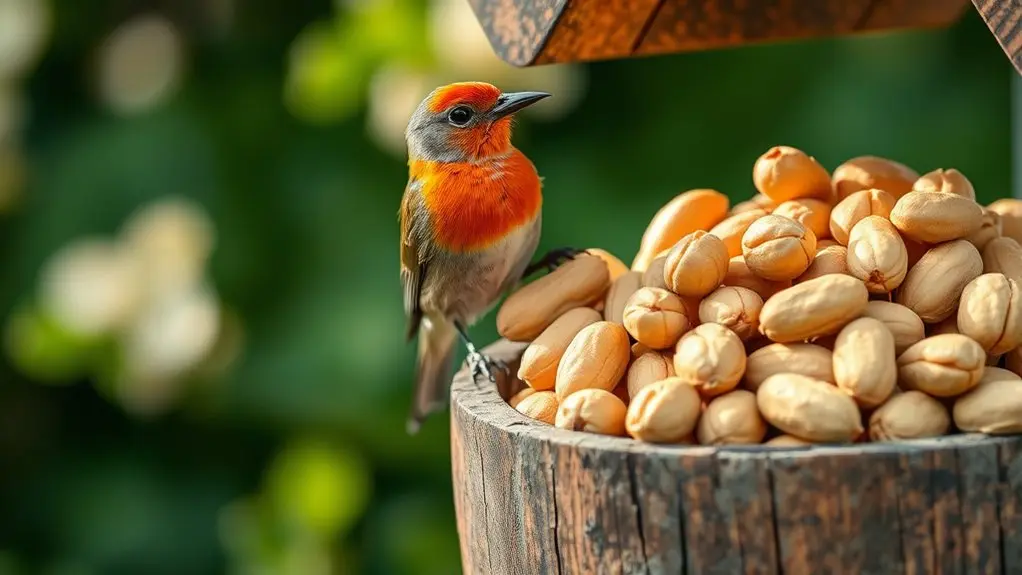
Because roasted peanuts pack a high concentration of protein and healthy fats, they offer significant nutritional benefits to birds. You’ll find that a single peanut provides over one-third of a Carolina wren’s daily metabolic requirement, demonstrating its energy density. These nutrients support vital functions like muscle maintenance and sustained energy release.
Additionally, roasted peanuts supply essential vitamins and minerals, including vitamin E, magnesium, and niacin, which contribute to immune health and metabolic processes. During colder months, feeding peanuts can help birds meet their increased caloric demands.
When you offer roasted peanuts in moderation, you provide a nutrient-rich supplement that enhances overall bird health.
However, it’s important to balance peanuts with a varied diet to guarantee holistic nutrition. So, while peanuts are a great treat, make sure birds get a mix of foods for the best health benefits.
Which Bird Species Prefer or Should Avoid Roasted Peanuts?
You’ll find that birds like Blue Jays, titmice, and woodpeckers really enjoy roasted peanuts because they’re packed with protein.
Smaller birds, on the other hand, often prefer crushed peanuts since it’s easier and safer for them to eat without choking.
Larger birds can easily handle whole peanuts without any trouble.
Now, while no bird species has to completely avoid roasted peanuts, it’s a good idea to be careful if the peanuts might’ve mold or aflatoxins, especially for birds that are more prone to fungal infections.
Bird Species That Enjoy
Although many bird species enjoy roasted peanuts, their preferences and safety considerations vary quite a bit. You’ll find that Blue jays, woodpeckers, chickadees, and titmice actively seek roasted peanuts as a nutritious energy source.
Smaller birds often prefer ground or crushed peanuts, while larger birds can eat whole roasted peanuts without any trouble. To feed birds safely, make sure you provide human-grade, unsalted peanuts that are free from mold or contaminants.
| Bird Species | Peanut Form | Feeding Notes |
|---|---|---|
| Blue Jays | Whole | Prefer whole peanuts |
| Woodpeckers | Whole | Can handle whole peanuts easily |
| Chickadees | Crushed | Prefer crushed peanuts |
| Titmice | Crushed or whole | Adaptable to both forms |
This table helps you figure out which species enjoy roasted peanuts and the best way to offer them.
Species That Avoid Peanuts
While many bird species actively seek out roasted peanuts, not all respond to them the same way. Some birds either prefer other food forms or should steer clear of peanuts due to health risks. For example, smaller birds may find whole peanuts difficult to consume safely.
Additionally, certain species are vulnerable to mold contamination, which can lead to aflatoxin poisoning. It’s important to know which birds fall into these categories so you can feed them appropriately.
Species that tend to avoid or should avoid roasted peanuts include small finches and sparrows, who usually favor crushed peanuts instead. Birds prone to fungal contamination risks also should avoid them.
Then, there are species with no natural affinity for nuts, like some insectivores. Plus, some individuals simply show no interest in peanuts despite their availability.
Finally, birds sensitive to potential choking hazards from whole peanuts should be given safer alternatives. Understanding these preferences helps you provide safe, suitable food for your local bird species.
Feeding Preferences By Size
Because bird species vary widely in size and feeding habits, their preferences for roasted peanuts differ accordingly. Larger birds like Blue Jays, Steller’s Jays, and Scrub Jays readily consume whole roasted peanuts. They benefit from their strong beaks to crack shells.
Smaller birds, including chickadees, titmice, and finches, prefer peanuts in ground or crushed forms. Whole nuts are difficult for them to handle.
While some species may ignore roasted peanuts without harm, they generally don’t avoid them if offered.
No bird species is harmed by roasted peanuts, but providing them in appropriate forms guarantees you attract a diverse range of birds. Offering whole peanuts suits medium to large birds.
Finely processed peanuts better accommodate smaller species’ feeding capabilities and preferences.
Should You Feed Birds Shelled or Unshelled Roasted Peanuts?
When deciding whether to feed birds shelled or unshelled roasted peanuts, it’s important to think about their safety and how easy it’s for them to eat.
Unshelled peanuts can be a choking hazard or even hurt small birds trying to crack the shell. Shelled peanuts take away these risks and make it easier for birds to get to the nut inside.
To give birds the best peanuts, keep a few things in mind:
- Choose shelled peanuts to prevent injury and choking
- Make sure peanuts are free from mold, bacteria, and fungi
- Pick human-grade, unsalted roasted peanuts
Also, avoid shells that might carry harmful fungi like aspergillosis. And it’s good to offer peanuts that match the bird species’ size and feeding skills.
That way, you’re helping them enjoy a safe and tasty snack!
Are Salted or Flavored Roasted Peanuts Safe for Birds?
Salted and flavored roasted peanuts pose significant risks to birds because of their high sodium content and added artificial ingredients. The excessive salt can cause dehydration and lead to serious health complications in birds.
Plus, seasonings, preservatives, and other additives found in flavored peanuts might be toxic or hard for birds to metabolize.
To keep your birds safe, you should only offer unsalted, plain roasted peanuts. Always check the ingredient labels carefully to make sure there are no harmful additives before feeding these nuts to birds.
By avoiding salted or flavored varieties, you reduce the risk of introducing substances that could negatively affect your feathered friends.
This way, you can be sure they’re enjoying a safe and nutritious snack.
How Much Roasted Peanuts Should You Feed Your Bird?
After making sure you select only unsalted, plain roasted peanuts free from additives, the next step is figuring out how much to feed your bird.
Feeding roasted peanuts in moderation is really important to keep your bird healthy and ensure a balanced diet.
Moderation is key when feeding roasted peanuts to maintain your bird’s health and dietary balance.
Generally, you should offer 1 to 3 peanuts per bird per day. Make sure they’re fresh, human-grade peanuts without shells. It’s also a good idea to regularly check and remove any moldy or spoiled nuts.
Think of peanuts as occasional treats, not something your bird should eat all the time. You can adjust the quantity based on how your bird is doing and how they respond to the peanuts.
Overfeeding can cause nutritional imbalances and raise the risk of mold ingestion, which is harmful. So, keep an eye on both the amount and quality to make sure your bird enjoys roasted peanuts safely as a supplementary food source.
Tips for Safely Offering Roasted Peanuts to Backyard Birds
Although roasted peanuts can provide valuable nutrition to backyard birds, you must take specific precautions to guarantee their safety. Always offer unsalted, human-grade roasted peanuts in moderation, especially during colder months when birds need extra energy.
Remove shells to eliminate choking hazards and inspect peanuts regularly for mold or spoilage. Avoid feeding any contaminated nuts due to the risk of aflatoxin poisoning.
Use mesh or platform feeders to make peanuts accessible while reducing choking and contamination risks. Limit quantities to make certain peanuts are consumed within 1-2 days, maintaining freshness and preventing overfeeding.
Frequently Asked Questions
Can Roasted Peanuts Cause Allergies in Birds?
Yes, roasted peanuts can cause allergies in birds, especially if they have prior sensitivities. You should watch for symptoms like swelling or respiratory issues.
If your bird shows any signs of an allergic reaction, it’s best to avoid giving them peanuts altogether. Being cautious can help keep your feathered friend safe and healthy.
How Should I Store Roasted Peanuts for Birds?
You should store roasted peanuts in an airtight container, placed in a cool, dry area away from sunlight and humidity.
If you want to keep them fresh for longer, refrigerate or freeze them.
Always check for mold or rancidity before feeding the birds. It’s better to be safe than sorry!
Can Baby Birds Eat Roasted Peanuts?
Like walking a tightrope, you must carefully introduce roasted peanuts to baby birds. Crush them finely, guarantee no mold or salt, and offer sparingly while monitoring closely. This helps prevent choking or digestive issues for safe feeding.
Always keep an eye on how they respond and stop if anything seems off. It’s better to be cautious than risk their health.
Do Roasted Peanuts Attract Unwanted Wildlife?
Yes, roasted peanuts attract unwanted wildlife like raccoons and squirrels because of their strong scent. These animals are drawn to the smell and can quickly find your feeding area.
To avoid this, try using enclosed feeders or feed indoors. This helps minimize attracting non-target animals and keeps local ecosystems safe from disruption or damage.
It’s a simple way to enjoy feeding without the extra visitors you don’t want around.
Are Roasted Peanuts Safe for Birds With Dietary Restrictions?
Like a Renaissance scholar, you must carefully assess roasted peanuts for birds with dietary restrictions. Only offer unsalted, mold-free, human-grade peanuts in moderation. Avoid shells to prevent toxin exposure and guarantee their safety and health.
Conclusion
You can confidently choose carefully prepared roasted peanuts to provide your backyard birds with beneficial bites. Always avoid salted or flavored varieties, as these additives can be harmful. Opt for unshelled peanuts to encourage natural foraging behaviors.
Moderation matters. Measure meals to maintain a balanced diet.
By mindfully managing your bird feeding, you’ll foster feathered friends’ fitness and fun. This supports their survival with safe, satisfying snacks.