
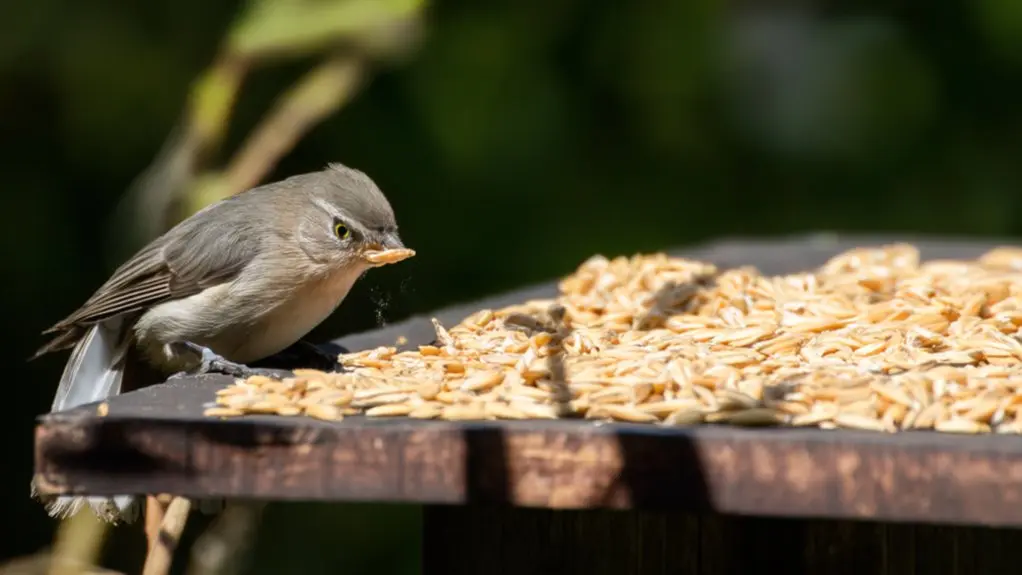
You can safely feed birds plain, cooked rolled oats in moderation to support their energy needs without causing harm. Make sure oats are free from additives like sugar or salt and are cooled thoroughly after cooking. Ground-feeding birds such as sparrows, thrushes, and pigeons digest them well.
Avoid raw oats to prevent choking, and introduce oats gradually to monitor tolerance. Understanding proper preparation and species suitability can help you provide the best nutritional benefits for your birds. It’s all about giving them a safe, tasty treat that keeps them healthy!
Are Rolled Oats Safe for Birds?
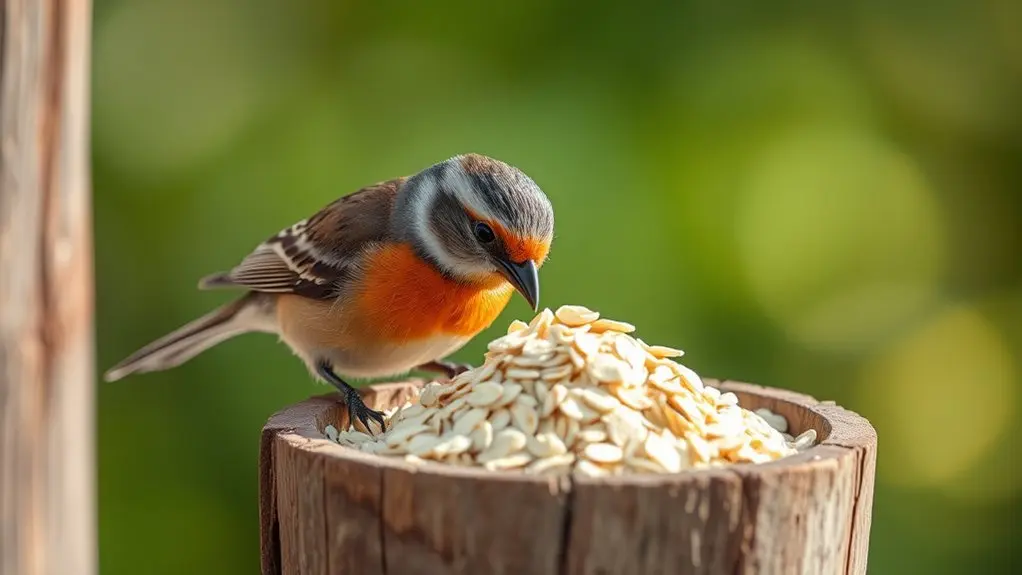
Rolled oats are safe for most garden birds when offered plain and without additives. You should avoid giving birds oats with sugar, salt, or flavorings, as these can cause harm.
Plain rolled oats are safe for garden birds; avoid additives like sugar, salt, or flavorings to prevent harm.
Ground-feeding species like thrushes and sparrows digest rolled oats easily, making them a suitable supplementary food.
While cooking oats can improve digestibility, feeding them raw is generally fine if the grains remain soft.
Moderation is key; providing oats in controlled amounts supports birds’ energy needs, especially during colder months, without upsetting their nutritional balance.
By offering unsweetened, additive-free oats, you make sure you’re helping rather than harming local bird populations.
This practice complements their natural diet and contributes to their overall well-being in your garden.
How to Prepare Rolled Oats for Your Birds
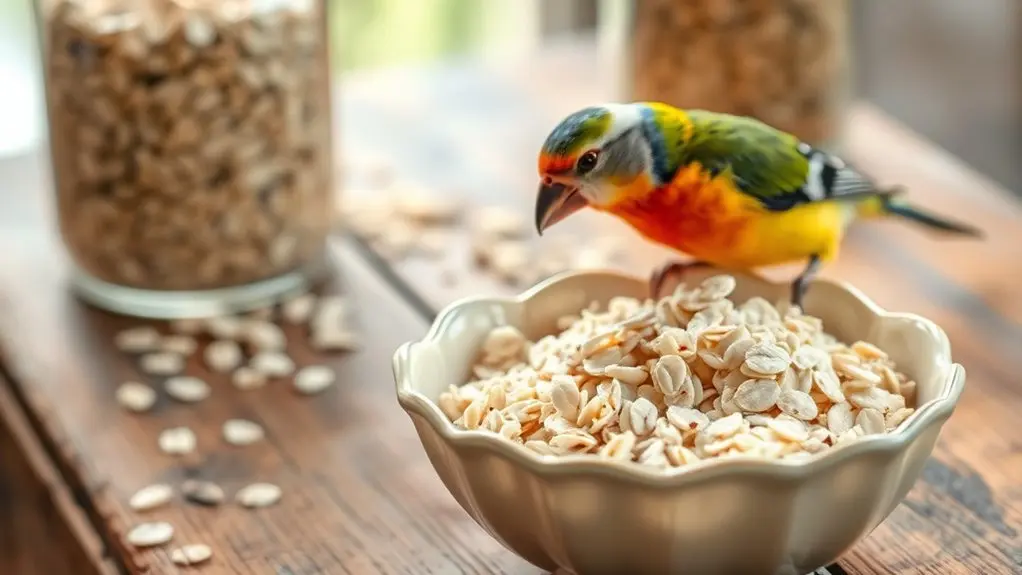
Ensuring the safety of oats for birds involves proper preparation before offering them as food. You should always cook rolled oats thoroughly using plain water and let them cool completely. Avoid adding sugar, salt, flavorings, or milk, as these additives can be harmful to birds.
Use only plain, unflavored oats free from artificial additives or sweeteners. Serve the oats in small portions, either mixed with other foods or as a separate treat, to prevent overfeeding.
It’s best to introduce rolled oats gradually into your birds’ diet to see how they accept them and avoid any digestive upset.
This careful preparation makes sure that oats provide safe, digestible nutrition without any adverse effects. Doing this supports your birds’ health effectively and keeps them happy.
Which Bird Species Can Eat Rolled Oats?
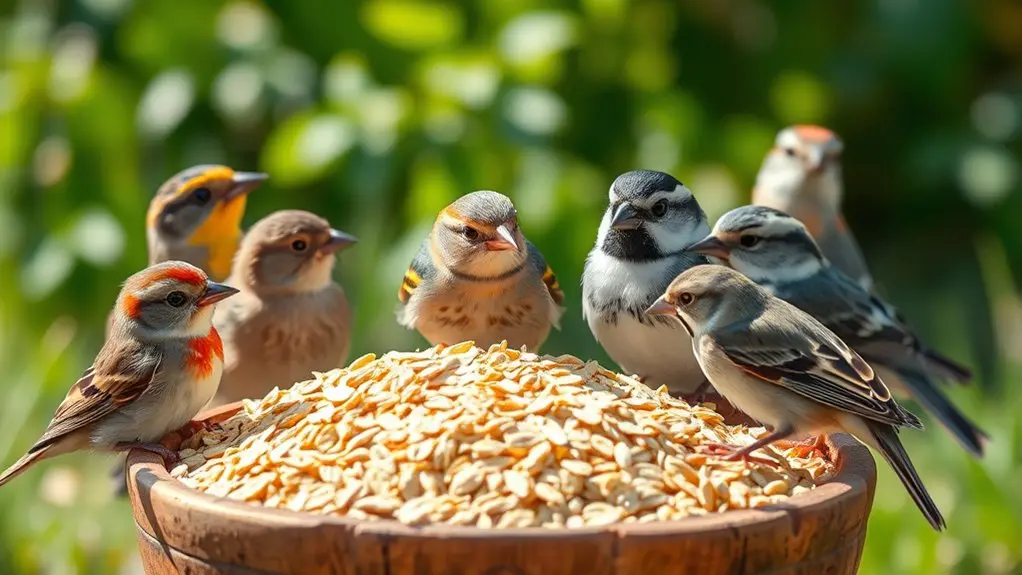
While many bird species can benefit from oats, you’ll find that ground-feeding birds like robins, blackbirds, sparrows, and pigeons readily consume plain rolled oats.
Ground-feeding birds such as robins, blackbirds, sparrows, and pigeons enjoy plain rolled oats.
Other common UK garden birds such as starlings, doves, thrushes, and blue tits also safely eat oats, particularly when offered on the ground or in feeders.
Larger birds like pigeons and doves can handle whole rolled oats easily due to their size and feeding habits.
However, oats primarily suit small to medium-sized ground foragers and birds that visit bird tables.
You should avoid feeding oats to nectar-feeding or insectivorous species, as their specialized diets don’t accommodate grains like oats.
Offering oats to appropriate species guarantees safe and natural feeding behavior.
Why Rolled Oats Are Good for Birds
Because birds require a balanced intake of nutrients to maintain energy and health, including rolled oats in their diet offers significant benefits. Rolled oats provide a rich source of carbohydrates, essential vitamins, minerals, and dietary fiber, all essential for sustaining energy levels and supporting metabolic functions.
Their softness makes them easy to digest when prepared correctly, which aids nutrient absorption.
The high fiber content in rolled oats promotes healthy digestion and helps prevent constipation, contributing to overall gastrointestinal health.
By incorporating plain rolled oats in moderation, you supply birds with a natural, energy-dense food that complements their nutritional needs.
This makes rolled oats a safe, wholesome addition to many bird diets, enhancing both their vitality and well-being without causing dietary imbalance.
Risks and Precautions When Feeding Rolled Oats
Though rolled oats provide valuable nutrients, feeding them to birds requires careful attention to avoid potential risks. Raw or uncooked oats can cause choking due to their size and texture, so you should avoid offering them in this form. Also, never feed oats containing added sugars, flavorings, or preservatives, as these substances may be toxic or harmful.
Excessive oat consumption can disrupt a bird’s nutritional balance, especially if it replaces more diverse foods. When serving cooked oats, make sure they’ve cooled completely to prevent burns or digestive upset. It’s best to introduce oats gradually and in moderation to help your birds adjust without digestive issues.
Best Ways to Serve Rolled Oats to Wild and Pet Birds
When you serve rolled oats to wild or pet birds, offering them plain, cooked, and fully cooled is essential to prevent choking hazards. Scatter small portions on bird tables, the ground, or mix them into homemade seed blends for easy access.
You can also incorporate oats into foraging toys or create oat kabobs to stimulate natural feeding behaviors and promote mental engagement. Always avoid adding sugar, salt, or flavorings, as these can be harmful.
Serving oats alongside other high-energy foods like nuts and dried fruits helps provide balanced nutrition.
How Rolled Oats Compare to Other Bird Foods
While many bird foods provide essential nutrients, rolled oats stand out because they’ve a balanced mix of complex carbohydrates and fiber. This means they offer sustained energy without the extra fat that some other foods have.
Compared to seeds, rolled oats contain much less fat, which helps reduce the risk of obesity in birds.
Unlike processed bird treats, plain rolled oats don’t have added sugars, artificial flavors, or preservatives. So, they’re a cleaner option overall.
They also have better nutritional value than instant oats, which often include added salt or flavorings that might be harmful.
When you use rolled oats in moderation, they work as a nutritious supplement that complements a bird’s varied diet.
Because of this, rolled oats are a safer, more wholesome choice compared to many traditional bird foods.
Signs Your Bird Is Eating Too Many Rolled Oats
If your bird consumes rolled oats excessively, you may notice signs such as weight gain and digestive issues like diarrhea or bloating. Overeating oats, rich in carbohydrates, can also diminish your bird’s appetite for essential foods, leading to nutritional imbalances.
Watch for lethargy, decreased activity, and fluffier plumage, which often indicate excess weight.
| Sign | Description |
|---|---|
| Weight Gain | Excess carbohydrates increase fat stores |
| Digestive Issues | Diarrhea, bloating, or discomfort |
| Reduced Food Variety | Less interest in pellets and vegetables |
| Lethargy & Fluffy Plumage | Lower energy and puffed feathers indicating poor health |
Monitoring these signs helps guarantee your bird maintains a balanced diet and excellent health. Keep an eye on your feathered friend so they stay happy and healthy!
Frequently Asked Questions
Can Rolled Oats Help Improve a Bird’s Feather Quality?
Yes, rolled oats can improve your bird’s feather quality by providing essential B vitamins, proteins, and minerals like zinc. These nutrients support feather growth, strength, and vibrancy.
Plus, the soluble fiber in rolled oats helps gut health, which means your bird can absorb nutrients better. It’s a simple way to give your feathered friend a boost.
Are Rolled Oats Suitable for Baby Birds or Hatchlings?
You wouldn’t offer a delicate newborn a tough meal; similarly, rolled oats aren’t suitable for baby birds or hatchlings. Their digestive systems need high-protein, soft foods like insects to grow properly and avoid health complications.
Baby birds rely on easily digestible nutrition, so feeding them something hard or low in protein can cause issues. It’s best to stick with foods that match their natural diet to keep them healthy and strong.
How Often Should Rolled Oats Be Included in a Bird’s Diet?
You should include rolled oats in your bird’s diet 2-3 times per week to provide energy without causing nutritional imbalance. Feeding oats more frequently risks nutrient deficiencies and weight gain, so moderation is essential for peak health.
Just keep in mind, too much of a good thing can be bad. Sticking to a balanced routine helps your bird stay happy and healthy.
Can Birds With Allergies Safely Eat Rolled Oats?
Don’t throw caution to the wind. Birds with allergies shouldn’t eat rolled oats without vet approval. You should introduce them cautiously and watch for reactions like itching or sneezing.
It’s always best to consult an avian expert to guarantee safety. Better safe than sorry, right? Taking these steps helps keep your feathered friend happy and healthy.
Do Rolled Oats Affect a Bird’s Water Intake or Hydration?
Rolled oats don’t substantially increase your bird’s water intake, but you should always provide fresh water.
Dry oats may require more hydration, while cooked oats add moisture, helping maintain your bird’s ideal hydration levels.
Conclusion
You can safely offer rolled oats to your birds, but moderation is key. Think of oats as a helpful puzzle piece in their diet, not the whole picture. Preparing them properly and knowing which species benefit most guarantees a balanced meal.
Keep an eye out for any digestive issues, as too many oats can cause problems. By serving rolled oats wisely, you add valuable nutrients without tipping the scales. This supports your bird’s overall health.