
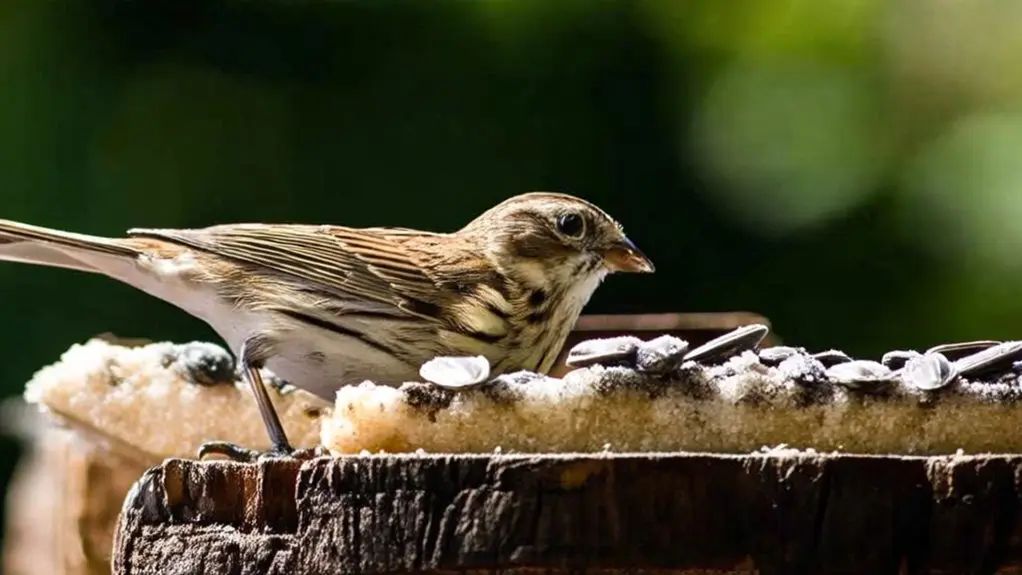
You shouldn’t feed birds roasted salted sunflower seeds because the high salt content can cause dehydration, kidney damage, and even death. Birds, especially small species, struggle to process excess sodium, which leads to salt poisoning symptoms like weakness and abnormal behavior.
Preservatives in these seeds also harm their organs and overall health. Instead, choose unsalted, raw seeds to guarantee safe nutrition.
Understanding these risks and safer alternatives helps you support wild birds effectively. It’s always better to keep their diet natural and healthy.
Can Birds Safely Eat Roasted Salted Sunflower Seeds?
Although it might seem harmless to share your roasted salted sunflower seeds with birds, you should avoid doing so because the high sodium content can cause dehydration and serious health issues. Even small amounts of salt in these seeds can disrupt a bird’s electrolyte balance, impairing kidney function and potentially leading to kidney failure.
Also, the preservatives and additives found in roasted salted seeds further compromise bird health. To support bird well-being, you should provide unsalted, raw, or unroasted sunflower seeds instead. These options are safe and nutritionally appropriate, avoiding the risks associated with sodium and chemical additives.
How Salt Harms Bird Health and Hydration
When birds eat sunflower seeds that have salt, it messes up their delicate electrolyte balance pretty quickly. Too much sodium makes their bodies hold onto water to try and dilute the salt, which actually leads to dehydration.
Small birds are even more at risk because they can’t get rid of extra sodium very well.
This throws a lot of stress on their kidneys and can sometimes cause kidney failure. Even just a little bit of salt can cause salt poisoning.
You might see symptoms like lethargy, weakness, diarrhea, and unusual behavior.
Birds don’t handle sodium the way mammals do—they have a much lower tolerance. So any salt exposure is risky for them.
When their hydration and electrolytes get out of whack, it can seriously mess up how their bodies work and might even lead to death.
Because of all this, it’s really important to understand how salt affects bird health and hydration if you want to feed them safely and keep them well.
Why You Should Avoid Feeding Birds Salted or Preserved Seeds
You should avoid feeding birds salted or preserved sunflower seeds because the high sodium content can really mess with their electrolyte balance and lead to dehydration.
Plus, those preservatives and added salt in roasted seeds made for humans bring extra health risks, like kidney failure in small birds.
Even a little bit of salt can be toxic and gradually weaken birds, so these seeds aren’t good for their overall well-being.
It’s best to stick with natural, unsalted seeds to keep our feathered friends healthy and happy.
Salt’s Harmful Effects
Since birds have a naturally low tolerance for sodium, feeding them salted or preserved sunflower seeds can disrupt their electrolyte balance and cause dehydration. Salt’s harmful effects on birds include:
- Toxicity: Even small salt amounts can be lethal due to birds’ small size and sensitive physiology.
- Kidney Damage: Excess sodium impairs kidney function, increasing kidney failure risk.
- Behavioral and Physical Symptoms: Salt overload may cause weakness, vomiting, and abnormal behavior.
Because birds’ natural diets contain minimal salt, their bodies can’t efficiently process high sodium levels found in salted seeds.
When you feed birds salted sunflower seeds, you risk severe health consequences and potentially fatal outcomes.
Preservative Risks For Birds
Beyond the risks posed by salt, preservatives in roasted or packaged sunflower seeds introduce additional hazards for birds. These chemicals are often added to prolong shelf life, but they can be toxic to birds and compromise their health.
Birds don’t have the physiological mechanisms to efficiently process such substances, so even small amounts can be harmful. Preservatives may disrupt metabolic functions or cause organ damage over time, making health problems worse, especially if the bird has already consumed high sodium amounts.
When you feed birds salted or preserved seeds, you risk dehydration, kidney failure, and other severe conditions that can affect their survival.
It’s best to avoid offering these seeds entirely if you want to protect birds from long-term harm. Instead, provide fresh, unsalted sunflower seeds to make sure their dietary needs are met safely and to support their overall well-being.
Raw vs. Roasted Sunflower Seeds: What’s Best for Birds?
When you’re picking between raw and roasted sunflower seeds, it’s good to think about how processing changes their nutrition.
Roasting can actually lower some important nutrients. Plus, roasted seeds often have added salts or preservatives, which aren’t great for birds.
Nutritional Differences Explained
Although roasted sunflower seeds may seem like a convenient option, they often contain added salt and oils that can harm birds by causing dehydration and electrolyte imbalances.
When comparing raw and roasted sunflower seeds, you should consider these nutritional differences:
Raw seeds retain more natural nutrients, including vitamins and antioxidants, and are free from harmful additives. Roasting reduces some vitamin content but generally preserves fats and oils essential for birds’ energy.
Salted roasted seeds introduce excess sodium, risking birds’ hydration and overall health.
For ideal bird nutrition, you should offer raw, unsalted sunflower seeds. This choice ensures birds receive the maximum natural nutrients without the risks associated with added salt or oils found in roasted varieties.
It’s a simple way to keep your feathered friends healthy and happy.
Impact Of Processing
Understanding the nutritional differences between raw and roasted sunflower seeds sets the stage for examining how processing affects their suitability for birds.
Roasted seeds often contain added salt and preservatives. These can harm birds by causing dehydration and kidney problems. Plus, roasting reduces the nutritional value, making them less beneficial.
Raw sunflower seeds, which are free from additives, provide ideal nutrition and safety.
| Aspect | Raw Sunflower Seeds | Roasted Sunflower Seeds |
|---|---|---|
| Nutrient Retention | High | Reduced |
| Additives | None | Salt, preservatives |
| Bird Health Impact | Supports hydration, kidneys | Risk of dehydration, kidney issues |
To promote bird health, you should choose raw, unsalted sunflower seeds over roasted, salted ones. It’s really the better option for keeping birds healthy and happy.
Which Birds Can Eat Unsalted Sunflower Seeds Safely?
Since unsalted sunflower seeds provide essential fats, proteins, and nutrients, most wild birds can safely consume them as part of their diet. You’ll find that these seeds are especially beneficial because they lack harmful added salt.
Species such as finches, chickadees, nuthatches, and sparrows commonly enjoy unsalted sunflower seeds without adverse effects.
To help you understand which birds benefit most, consider these points:
- Small birds and softbills thrive on de-husked sunflower hearts, which offer concentrated nutrition without the shell.
- Birds with strong beaks, like sparrows and nuthatches, can crack open whole unsalted seeds easily.
- Finches and chickadees prefer plain seeds, which support their energy needs during colder months.
Always opt for plain, unsalted seeds to promote safe feeding and ideal bird health. It’s a simple way to make sure your feathered friends stay happy and healthy.
How to Choose the Best Sunflower Seeds for Wild Birds
When selecting sunflower seeds for wild birds, you’ll want to choose varieties specifically designed for avian consumption, such as black oil or striped sunflower seeds. Avoid those roasted or salted for human use, as they’re not suitable for birds. Focus on seeds that are unsalted and free from preservatives or additives to ensure safety and ideal nutrition.
Consider hulled or de-husked seeds, like sunflower hearts, to reduce waste and make feeding easier, especially for smaller bird species. It’s always a good idea to buy from reputable suppliers to guarantee freshness. This also helps you avoid mold contamination, which can be harmful to birds.
Mixing in a variety of seed types, including sunflower seeds, will attract a diverse range of species to your feeding station. This promotes ecological balance and supports healthy bird populations. Giving birds a good mix makes your backyard a lively place for all kinds of feathered friends.
Best Ways to Feed Sunflower Seeds to Wild Birds
Although sunflower seeds are a favorite among many wild birds, using the right feeders makes a big difference. It not only makes the seeds more accessible but also helps reduce waste. To feed sunflower seeds effectively, follow these simple guidelines:
Use hopper, tube, or platform feeders filled with fresh, unsalted seeds. These types of feeders accommodate different bird species and help minimize seed loss.
Choose hopper, tube, or platform feeders with fresh, unsalted seeds to attract various birds and reduce waste.
Clean your feeders regularly and remove any spilled shells. This helps prevent bacterial growth and keeps your feeding stations hygienic.
Place feeders in sheltered, accessible spots like gardens or porches. This encourages birds to visit and keeps them safe while they eat.
Also, offering a mix of black oil sunflower seeds and sunflower hearts attracts a wider variety of birds.
Try to avoid scattering seeds on the ground unless you’re feeding specific ground-foraging birds like thrushes and sparrows. For those species, it can be effective without causing too much waste.
Signs of Salt Poisoning and Dehydration in Birds
If birds consume salted sunflower seeds, they risk salt poisoning, which disrupts their electrolyte balance and leads to dehydration and weakness. Excess salt causes symptoms such as lethargy, vomiting, and increased thirst.
You may notice dehydration signs like sunken eyes, dry skin, and reduced crop fill or body weight in affected birds. Salt toxicity can impair kidney function, resulting in fluid retention or kidney failure, sometimes causing sudden death.
If you observe these symptoms, promptly removing salted foods and providing fresh water can help mitigate the condition. Monitoring your birds closely allows you to intervene early, reducing the risk of severe complications from salt poisoning and dehydration.
Ensuring they avoid salted seeds is vital for their health and survival. So, it’s really important to keep an eye on what your birds are eating and make sure they stick to safe, unsalted options.
Tips for Keeping Your Bird Feeders Clean and Safe
Preventing salt poisoning starts with controlling what your birds eat, but keeping your feeders clean also plays a big role in their overall health. Dirty feeders can harbor mold, bacteria, and other pathogens that threaten bird populations.
Controlling bird diets and maintaining clean feeders are key to preventing salt poisoning and protecting their health.
To keep your feeders safe, clean them regularly with soap and water. This helps remove leftover seeds, hulls, and debris, which can lead to mold and bacterial growth.
Disinfect your feeders every few weeks using a diluted bleach solution (1 part bleach to 9 parts water). This step gets rid of harmful pathogens that can make birds sick.
Try placing your feeders in shaded areas to reduce moisture buildup. Also, replace old or damaged feeders promptly to keep the feeding area hygienic.
Frequently Asked Questions
Can Birds Eat Other Salted Nuts Besides Sunflower Seeds?
You shouldn’t feed birds salted nuts like peanuts or cashews, as the high sodium can harm their kidneys and cause dehydration. Always choose unsalted, natural nuts to keep birds healthy and avoid salt toxicity risks.
It’s really better to stick with plain nuts without any added salt. Birds don’t handle salt well, so even a little can be dangerous. Just offering them natural nuts is the safest way to go.
How Often Can I Give Birds Sunflower Seeds Safely?
How often do birds really need sunflower seeds? You should offer them a few times weekly to avoid nutritional imbalance and obesity.
Make sure to vary their diet with other seeds and natural foods for ideal health and breeding success. This way, they get all the nutrients they need without overdoing it on sunflower seeds. It’s all about balance!
Do Different Bird Species Prefer Black or Striped Sunflower Seeds?
You’ll find small songbirds prefer black oil sunflower seeds for their soft shells and high oil. These seeds are easier for them to crack open and provide great energy.
Larger birds, on the other hand, favor striped seeds because of their size and hardness. These seeds suit their bigger beaks and dietary needs better.
Can Roasted Sunflower Seeds Help Birds During Winter?
Yes, roasted sunflower seeds provide essential fats and oils that help birds maintain energy and body heat in winter. You should offer unsalted seeds to guarantee their health and maximize nutritional benefits during cold months.
It’s a simple way to support your feathered friends when food gets scarce. Plus, birds really seem to enjoy the taste! Just make sure the seeds are fresh and free from any added salt or seasoning.
What Are the Nutritional Benefits of Sunflower Seeds for Birds?
Sure, if birds wanted a gourmet vitamin cocktail, sunflower seeds deliver! They offer high-quality fats, protein, vitamin E, and essential minerals. These nutrients boost energy, immune function, and feather health.
All of this is critical for survival during migration and breeding seasons. Birds really benefit from these powerful seeds. It’s like nature’s little health package just for them!
Conclusion
Feeding birds roasted salted sunflower seeds is like offering them a salty ocean when they need fresh water. It really disrupts their delicate balance. Salt can harm their health and hydration, so always choose unsalted, raw sunflower seeds to support their well-being.
By selecting the right seeds and keeping feeders clean, you create a safe environment for birds to thrive. Remember, protecting their health means providing nourishment, not hidden dangers. It’s all about making good choices for our feathered friends.