
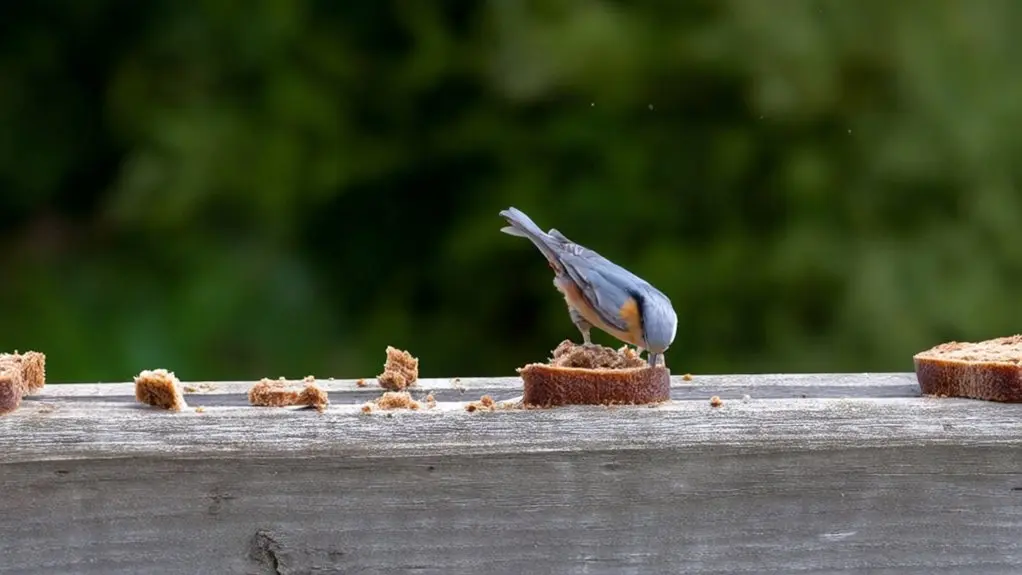
You can offer your bird small amounts of plain rye bread occasionally, but it shouldn’t replace a balanced diet. Rye bread lacks essential vitamins and minerals and contains gluten, fiber, and additives that may cause digestive issues or toxicity if overfed.
Always use fresh, unseasoned bread in tiny portions, and watch for any adverse signs. Moderation is key to keeping your bird healthy.
Exploring this topic further will help you understand safe feeding practices and healthier alternatives.
What Is Rye Bread And Why Does It Matter To Birds?
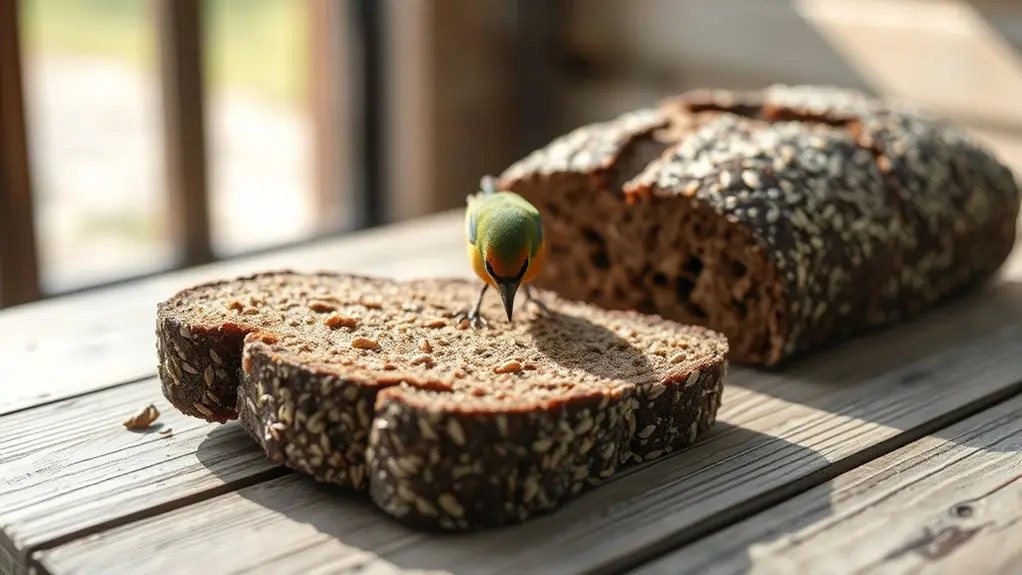
Although rye bread shares similarities with other breads, its unique composition affects its suitability for birds. Rye bread is produced from ground rye grains, containing carbohydrates such as dietary fiber, starch, and resistant starch. Its dense texture and darker color come from rye’s distinct grain profile, which also gives it a characteristic flavor.
Rye bread’s unique grain composition creates a dense texture and flavor, influencing its suitability for birds.
The high fiber content influences digestion and gut health, which are important factors when thinking about bird digestive systems.
Plus, rye contains antinutrients like phytic acid that can impair mineral absorption if birds eat too much of it. Since birds digest food differently than humans, it’s important to understand rye bread’s nutritional and chemical makeup.
Knowing this helps us evaluate the potential risks or benefits of feeding rye bread to birds. It really highlights why dietary needs can vary so much between different species.
Can Birds Safely Eat Rye Bread?
How safe is it to feed rye bread to birds? You can offer birds small amounts of rye bread occasionally, but it shouldn’t be a regular part of their diet. Rye bread contains gluten and carbohydrates that some bird species may struggle to digest in large quantities.
Also, bread provides limited nutritional value compared to their natural foods, which can lead to malnutrition if overfed. Always avoid giving birds moldy or spoiled rye bread, as mold toxins are harmful.
For safer, healthier feeding, focus on providing birds with seeds, fruits, and insects that better meet their dietary needs.
What Could Go Wrong If Your Bird Eats Rye Bread?
If your bird eats rye bread regularly or in large amounts, it might face some health risks because of the bread’s ingredients and makeup. The high carbohydrate and gluten content can upset your bird’s digestion or even lead to obesity, especially if your bird isn’t used to processed grains.
Rye bread is pretty dense, and the additives can raise the chance of choking or dental problems, particularly in smaller birds.
Also, if the bread is moldy or spoiled, it could have mycotoxins that might cause neurological or stomach issues for your feathered friend.
Feeding rye bread can also encourage bad eating habits since it doesn’t provide the essential nutrients your bird needs for good health.
Which Rye Bread Ingredients Are Harmful To Birds?
Understanding the specific ingredients in rye bread that pose risks to birds helps clarify why feeding it can be harmful. Rye bread often contains additives like raisins, nuts, seeds, and artificial sweeteners, all of which can be toxic to birds.
Salt and preservatives frequently present in rye bread may cause serious health complications if ingested in large amounts.
Excess salt and preservatives in rye bread can lead to serious health issues for birds.
The yeast used in bread fermentation produces alcohol, which can lead to alcohol poisoning in birds. Additionally, artificial flavorings and additives common in commercial rye bread may trigger toxicity or allergic reactions.
Moldy or spoiled rye bread also poses a threat, as it can harbor mycotoxins harmful to avian health.
You should avoid offering rye bread to birds to prevent these risks. It’s just safer to stick to bird-friendly foods instead.
That way, you’re helping keep them healthy and happy.
How Nutritious Is Rye Bread Compared To Bird Food?
Although rye bread contains higher levels of dietary fiber and certain nutrients compared to many typical bird foods, it doesn’t provide a balanced nutritional profile tailored to avian needs.
Rye bread’s carbohydrate content, including resistant starch, may support gut health, but its gluten and possible additives like salt and sugar can be harmful.
Unlike commercial bird foods formulated with essential vitamins and minerals, rye bread primarily offers energy-rich carbohydrates without meeting specific nutrient requirements.
This imbalance means rye bread lacks critical elements necessary for ideal bird health.
If you consider feeding rye bread, you must do so cautiously and sparingly.
It can’t replace a nutritionally complete bird diet and may cause digestive disturbances if offered excessively.
How Often Can Your Bird Have Rye Bread?
You should offer rye bread to your bird just once a week, and only in small, controlled portions. This helps keep any health risks at bay.
Overfeeding can lead to digestive problems, weight gain, and nutritional imbalances. So, it’s really important to keep it plain—no extra toppings or spreads.
And remember, rye bread should never take the place of a balanced, species-specific diet.
Recommended Serving Frequency
How often can your bird safely enjoy rye bread? You should limit rye bread to an occasional treat, ideally once or twice a week, to avoid nutritional imbalances and digestive issues.
Rye bread contains high carbohydrate and gluten levels, which aren’t suitable for regular consumption by birds.
Treat it as a supplementary food item, not a staple. Regular feeding can disrupt their balanced diet and cause health problems.
Always observe your bird after offering rye bread for any adverse reactions and discontinue use if any signs of distress appear.
If you’re uncertain about introducing rye bread or notice unusual symptoms, consult an avian veterinarian promptly.
Keeping rye bread consumption infrequent ensures your bird’s diet remains safe and nutritionally appropriate.
Portion Size Guidelines
When offering rye bread to your bird, keep portion sizes minimal to guarantee safety and prevent digestive upset. Rye bread should only be an occasional treat, not a staple in their diet.
Follow these guidelines to make certain your bird enjoys it safely:
Limit servings to once or twice a week, and avoid harmful additives like sugar or preservatives. Offer only tiny pieces or crumbs to reduce choking risks and avoid overwhelming their digestive system.
Always choose plain rye bread, free from artificial ingredients, to prevent nutritional imbalances.
Risks Of Overfeeding
Although rye bread can be a tasty treat for your bird, overfeeding it poses significant health risks. Rye bread’s high carbohydrate content may cause weight gain and nutritional imbalances if given too frequently.
Also, its gluten and antinutrients can trigger digestive issues or allergies in certain bird species. To minimize these risks, it’s essential to limit rye bread to an occasional treat.
Experts recommend no more than once or twice a month.
Regular feeding increases the chances of mold growth and mycotoxin exposure, which can compromise your bird’s gut health and overall diet balance.
What Are Signs Your Bird Has Eaten Too Much Rye Bread?
If you notice your bird becoming lethargic or experiencing changes in droppings consistency, it may have eaten too much rye bread. Overconsumption often leads to gastrointestinal upset, causing bloating or discomfort.
You should watch for these specific signs to safeguard your bird’s health:
- Diarrhea or abnormal droppings consistency, indicating digestive disturbance.
- Decreased activity or noticeable weight gain due to excess calorie intake.
- Vomiting, regurgitation, or abnormal behavior, especially if the bread contains added sugars or preservatives.
These symptoms require prompt attention, as persistent vomiting or distress signals potential toxicity.
What Are Healthier Treats Than Rye Bread For Birds?
Since rye bread lacks the essential nutrients birds need, you should choose healthier treats that support their dietary requirements. Opt for fresh fruits like berries, apple slices without seeds, and melon. These provide natural sugars and vital vitamins.
Choose fresh fruits like berries and seedless apples to provide birds with vital vitamins and natural sugars.
Incorporate leafy greens such as spinach and kale, as they’re rich in nutrients crucial for bird health. Additionally, specially formulated bird pellets offer a balanced nutritional profile designed to meet birds’ specific dietary needs.
Avoid bread containing preservatives, salt, sugar, or additives, as these can harm birds. By selecting natural, whole foods over processed items like rye bread, you ensure your bird receives essential nutrients necessary for overall well-being and longevity.
Prioritize these healthier alternatives to maintain prime bird health. It’s a simple way to keep your feathered friend happy and thriving!
How Can You Give Rye Bread To Your Bird Safely?
When you choose to give rye bread to your bird, do so in small, occasional amounts to minimize the risk of digestive upset caused by its high fiber and carbohydrate content.
To guarantee safety, follow these guidelines:
First, use plain rye bread without added sugars, salts, seeds, nuts, or preservatives. These extras can actually harm your bird, so it’s best to keep it simple.
Offer small pieces of stale or lightly toasted rye bread. This makes it easier for your bird to chew and digest.
Introduce rye bread gradually so you can keep an eye out for any adverse reactions.
And remember, always remove any uneaten bread after a few hours to prevent mold and bacterial growth.
Why Is Moderation Important When Feeding Birds Human Food?
You should feed birds human food like rye bread, but only in moderation to keep their nutrition balanced.
Giving them too much bread isn’t a great idea because it often contains things like salt and yeast that can actually harm their health.
Nutritional Balance Matters
Although feeding birds human food like rye bread may seem harmless, doing so excessively can cause serious nutritional imbalances. Rye bread lacks essential nutrients birds need and often contains salt, sugar, or preservatives harmful to them. When you overfeed birds with such food, you risk disrupting their natural diet, leading to health issues.
You should remember these key points:
- Excessive bread can cause obesity or malnutrition due to inadequate nutrient content.
- High carbohydrate content in rye bread may lead to digestive problems like impacted or sour crops.
- Birds require appropriate fats, proteins, and vitamins, which processed human food doesn’t provide in proper amounts.
Moderation guarantees birds maintain balanced nutrition and natural foraging behaviors crucial for their health. So, it’s best to keep bread treats to a minimum and let birds enjoy their natural diet.
Avoid Harmful Ingredients
Since rye bread and other human foods often contain additives like salt, sugar, and preservatives, feeding them to birds requires careful moderation. You need to limit these foods because eating too much can cause health issues like obesity, digestive problems, and nutrient deficiencies.
Birds that fill up on processed bread tend to miss out on more nutritious natural foods, which messes up their dietary balance. Over time, this can hurt their overall well-being.
By controlling how much rye bread and similar items you give, you help make sure birds keep a healthy diet that suits their needs.
Moderation stops harmful ingredient buildup and supports their natural foraging habits. These habits are key for great nutrition and long-term health.
Frequently Asked Questions
Can Baby Birds Eat Rye Bread Safely?
You shouldn’t feed baby birds rye bread safely, as it may harm their digestion and lacks essential nutrients.
Instead, provide species-appropriate foods like insects or formulated diets to guarantee healthy growth.
This will also help you avoid potential toxicity risks.
Does Rye Bread Affect Different Bird Species Differently?
Yes, rye bread affects bird species differently because of their digestive systems. Granivorous birds tend to tolerate it better.
On the other hand, species with sensitive gut microbiota might experience digestive issues. So, it’s always best to feed rye bread in moderation. This way, you can avoid any gastrointestinal upset.
Can Rye Bread Cause Allergic Reactions in Birds?
Ever wonder if rye bread could harm birds? Yes, it can cause allergic reactions because of gluten and certain proteins.
You should avoid feeding it to your bird, especially if you notice itching, swelling, or breathing difficulties after they eat it.
Better safe than sorry when it comes to your feathered friend’s health!
Is Rye Bread Safe for Wild Birds to Eat?
Yes, rye bread is safe for wild birds in small amounts if it’s plain and unsalted.
Just make sure you don’t feed them large quantities or bread with additives. It lacks essential nutrients and might cause digestive or health issues in birds.
How Should Rye Bread Be Stored Before Feeding Birds?
Don’t leave rye bread out in the rain. Store it in a cool, dry place to keep it fresh. Wrapping it tightly or using airtight containers works best.
If you’re not going to use it soon, freeze the bread. When you’re ready to feed the birds, toast or dry it thoroughly. This helps prevent mold growth and keeps the bread safe for the birds.
Conclusion
Now that you know rye bread isn’t toxic but lacks essential nutrients, would you still feed it regularly to your bird? Rye bread can be given occasionally, but avoid harmful ingredients like salt and preservatives.
Always prioritize balanced, species-appropriate foods to keep your bird healthy. Remember, moderation and careful ingredient checks are key to preventing digestive issues or nutrient deficiencies.
Your bird’s well-being depends on making informed feeding choices every day. So, think twice before offering rye bread too often!