
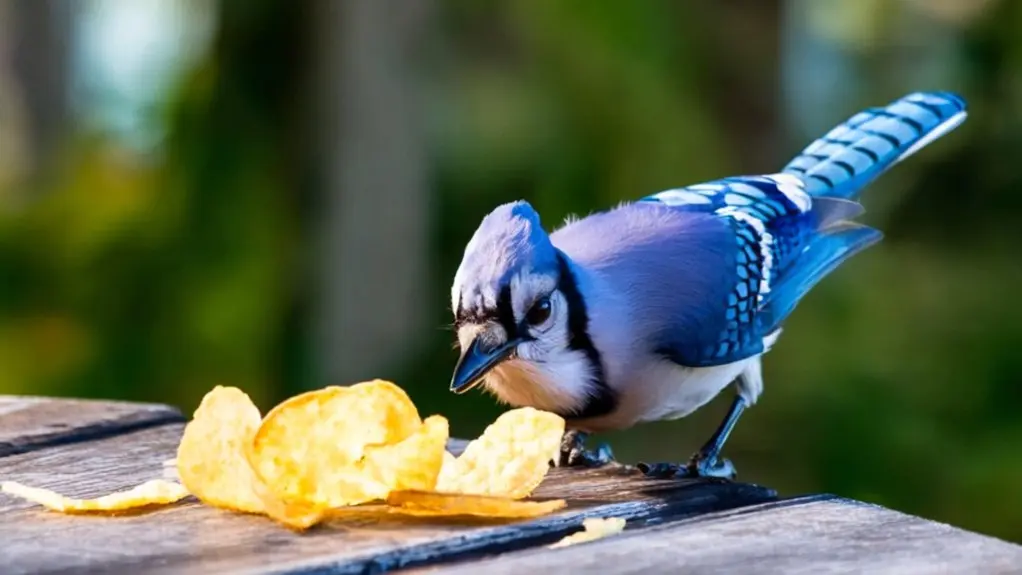
You shouldn’t feed birds salt and vinegar chips because their high salt content disrupts hydration and impairs kidney function. This can lead to dehydration and other health issues. The acidity from vinegar also irritates their digestive tract, causing discomfort and tissue damage.
Processed chips lack the essential nutrients birds need for healthy feathers, migration, and reproduction. It’s much better to offer natural, unprocessed foods that support their well-being and immune system.
Knowing these risks helps you protect birds and provide safer, more nutritious options. So, next time you want to share a snack, stick to bird-friendly treats!
Why Salt & Vinegar Chips Are Harmful to Birds
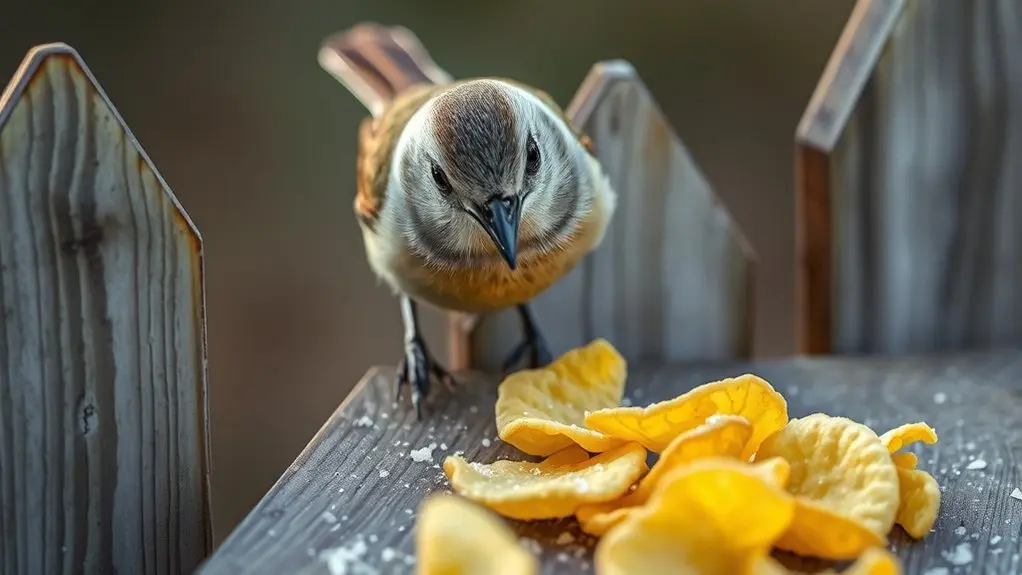
Although salt and vinegar chips might seem harmless, they pose significant health risks to birds. When birds consume these chips, the high salt content disrupts their hydration balance, which is essential for maintaining proper bird habitat conditions. This imbalance can impair kidney function, a critical issue during bird migration when energy and water conservation are paramount.
Plus, the acidity from vinegar affects their digestive system, causing discomfort and potential nutrient absorption problems. These processed snacks also lack essential nutrients, leading birds to replace natural, nutrient-rich foods in their habitat with harmful alternatives.
Such dietary shifts can weaken birds’ health and reduce their ability to complete migration safely. Understanding these impacts helps you see why these chips threaten bird populations in both local habitats and migratory routes. It’s definitely something to keep in mind if you care about our feathered friends.
How Salt and Vinegar in Chips Hurt Birds’ Health
When birds consume salt and vinegar chips, the high salt content quickly disrupts their delicate electrolyte balance. This leads to dehydration and impaired kidney function.
This imbalance can also severely affect bird feathering, causing dullness and loss of structural integrity.
On top of that, the acidic vinegar irritates their digestive system. It harms internal tissues and interferes with nutrient absorption.
You should know these effects hurt birds’ overall health and nesting behavior.
- Salt overload causes dehydration and kidney stress.
- Vinegar acidity damages internal digestive tissues.
- Nutrient absorption declines, impacting bird feathering.
- Disrupted health impairs nesting behavior and offspring care.
Natural Foods Birds Love and Thrive On
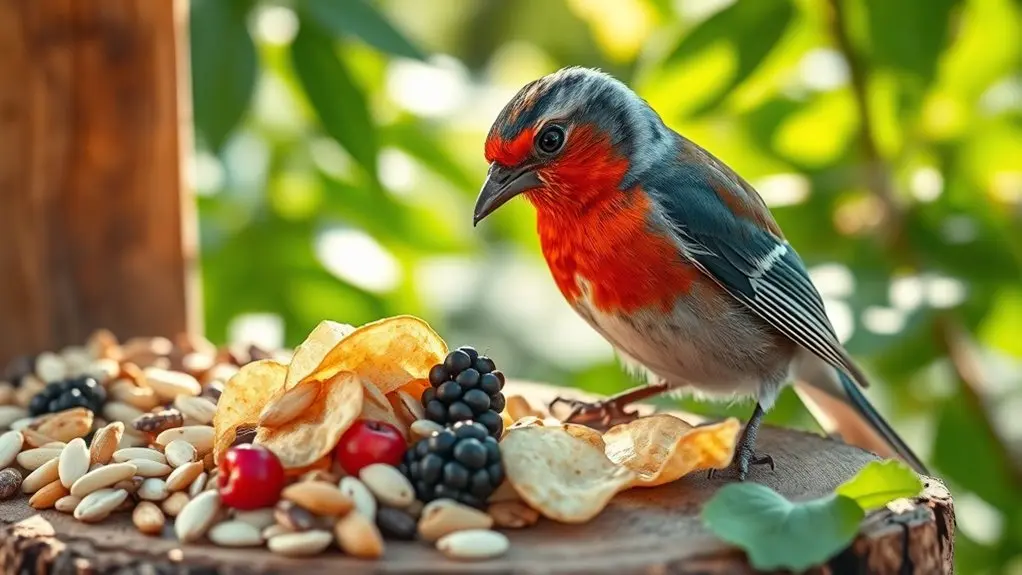
You can support birds by offering natural foods like fruits, nuts, and seeds that closely match what they eat in the wild. These foods give them the essential nutrients and energy they need.
Plus, choosing natural options helps promote healthier bird populations. It’s a simple way to encourage a diverse and vibrant group of birds to visit your yard.
Preferred Natural Bird Foods
Because birds thrive on diets rich in fats and proteins, offering natural foods like seeds, nuts, and fresh fruits closely aligns with their nutritional needs. These preferences support essential behaviors such as bird migration and nesting habits.
When selecting foods, focus on:
- Unsalted nuts provide essential fats that help birds get the energy they need for long migrations.
- Sunflower seeds are high in protein, which supports muscle development during nesting.
- Fresh berries and chopped fruits supply vitamins and antioxidants that are important for overall health.
- Suet offers concentrated fat, which is necessary for cold-weather energy demands.
Feeding birds these natural foods not only helps them stay healthy but also encourages them to visit your yard more often. It’s a simple way to support their natural behaviors and nutritional needs.
Benefits Of Natural Diets
Although birds can adapt to various foods, their health and well-being improve considerably when they consume natural diets composed of seeds, fruits, nuts, and insects that closely resemble their wild food sources. You’ll notice that natural foods support stronger immune systems, promote bird aesthetics, and encourage authentic nesting behaviors.
These diets reduce health risks compared to processed options, helping birds thrive. It’s pretty clear that what they eat really makes a difference.
| Natural Food | Benefit |
|---|---|
| Sunflower Seeds | Rich in fats for energy |
| Fruits | Provide essential vitamins |
| Nuts | Supply proteins and minerals |
| Insects | Boost immune response |
| Suet | Aid in maintaining plumage |
Protecting Birds From Salt and Vinegar Chips
You should avoid giving birds salt and vinegar chips. The high salt content can cause dehydration and kidney damage.
Plus, the acidity and flavorings in vinegar might mess with their digestion or even be toxic.
Instead, try offering safe, natural snacks that support their health and well-being. It’s a much better way to keep your feathered friends happy and healthy!
Risks Of Salt Intake
When birds consume salt and vinegar chips, they risk serious health problems because of the high salt content and artificial additives. Excess salt intake can mess with important functions like bird migration and feather coloration. These changes can impact their survival and reproduction.
You should know about these risks: Salt toxicity causes dehydration, which weakens birds quickly. Their kidneys get damaged as they try to get rid of all that extra sodium. Birds might show symptoms like tremors and weakness fast, and this can threaten their lives.
On top of that, the additives in chips make digestive irritation and overall stress even worse.
Vinegar Effects On Birds
Since vinegar contains acetic acid, ingesting salt and vinegar chips can irritate a bird’s digestive tract and mucous membranes. This irritation causes discomfort and potential harm. It often leads to digestive distress, which can impact a bird’s overall health.
To protect birds, it’s best to avoid exposing them to acidic and processed foods like these.
| Effect | Cause | Impact on Birds |
|---|---|---|
| Vinegar irritation | Acetic acid | Mucous membrane damage |
| Digestive distress | Acidic compounds | Nausea, discomfort |
| Dehydration risk | High salt content | Electrolyte imbalance |
| Toxicity | Additives/preservatives | Organ stress |
| Dietary disruption | Processed snacks | Nutritional imbalance |
You should keep salt and vinegar chips far from birds to prevent these harmful effects. It’s really important to make sure they don’t have access to these kinds of snacks.
Safe Snack Alternatives
Understanding the harmful effects of salt and vinegar chips on birds highlights the importance of providing safer snack options. To protect birds during critical periods like bird migration and maintain ideal feather coloration, you should offer safe alternatives.
Consider these four options:
- Fresh fruits such as berries and apples provide essential vitamins without harmful salt or acid.
- Unsalted nuts supply healthy fats and proteins crucial for energy during migration.
- Seeds like sunflower or millet support feather growth and coloration.
- Avoid processed human snacks entirely to prevent dehydration and digestive issues.
Best Practices for Feeding Birds Nutritious Natural Foods
Although feeding birds can be enjoyable, you should prioritize offering natural foods like fresh fruits, nuts, and seeds to support their health effectively.
Practicing proper bird feeding etiquette means avoiding processed snacks such as salt and vinegar chips, which contain harmful salts and additives. Instead, focus on seasonal food choices that align with local bird species’ nutritional needs.
Think berries in fall, seeds in winter, and fresh fruits in spring and summer. Providing a diverse range of natural foods ensures birds receive essential nutrients while preventing dietary imbalances.
Using recognizable, uncontaminated ingredients helps maintain bird health and encourages more resilient populations in your yard.
Tips to Keep Birds Safe and Healthy While Feeding
To keep birds safe and healthy while feeding, you must avoid offering processed snacks like salt and vinegar chips. These contain high levels of salt and additives that can be harmful to their physiology.
Understanding bird behavior and feeding frequency is essential for their well-being.
Follow these tips:
- Provide natural, unprocessed foods to meet their nutritional needs and prevent digestive upset.
- Limit feeding frequency to mimic natural foraging patterns. This helps reduce their dependency on human food.
- Regularly clean feeders to minimize disease transmission and keep their environment healthy.
- Avoid processed snacks entirely to prevent exposure to toxic preservatives and too much salt.
Frequently Asked Questions
Can Birds Get Addicted to Salty Snacks Like Chips?
You shouldn’t worry about true addiction, but birds can habitually seek salty snacks due to taste preferences.
For ideal bird nutrition and snack safety, avoid offering salty chips to protect their health and natural feeding habits. It’s better to stick with treats that are safe and healthy for them. That way, you’re helping birds stay happy and well-nourished.
Are There Any Bird Species That Tolerate Salt Better?
When push comes to shove, some seabirds like gulls and terns tolerate salt better due to their unique bird nutrition needs. However, salt sensitivity remains high in most species, so avoid feeding salty snacks to protect their health.
It’s pretty interesting how these seabirds have adapted, right? But for most birds, salty foods can be harmful. So, it’s best to stick with fresh, bird-friendly treats instead.
How Quickly Do Salt and Vinegar Chips Affect a Bird’s Health?
You’ll notice toxicity risks emerge within hours after a bird ingests salt and vinegar chips. Poor bird nutrition combined with high salt and acidity leads to rapid health decline, causing dehydration, vomiting, and potential acute toxicity.
It’s pretty serious stuff, so if you think your bird has eaten any, keep an eye out for these symptoms right away. Acting fast can make a big difference in their recovery.
Can Salt and Vinegar Chips Attract Unwanted Pests to Bird Feeders?
Yes, salt and vinegar chips attract unwanted pests to bird feeders, which can compromise bird nutrition and make pest control more complicated.
These snacks tend to encourage ants, flies, and rodents to show up. That’s a real problem because these pests can spread disease and even damage the feeders themselves.
All in all, it disrupts a healthy feeding environment for the birds. So, it’s best to avoid putting these kinds of chips near your bird feeders.
What Should I Do if My Bird Accidentally Eats Chips?
If your bird snacks on chips, don’t throw a party. Remove leftovers immediately to avoid any more sneaky bites.
Keep a close eye on your bird’s nutrition and watch for any signs of distress. If you notice anything unusual, it’s best to consult an avian vet.
To keep your feathered friend safe, offer healthy snack alternatives. This way, they get the treats they love without any risk.
Conclusion
Imagine your bird as a delicate sailboat steering a salty sea. Salt and vinegar chips are like stormy waves threatening its voyage. Just as rough waters can damage the boat, these chips harm your bird’s health with excessive salt and acidity.
Instead, chart a course toward natural, nutritious foods that nourish and protect. By choosing wisely, you guarantee your feathered friend sails safely, thriving in a balanced, healthy environment.