
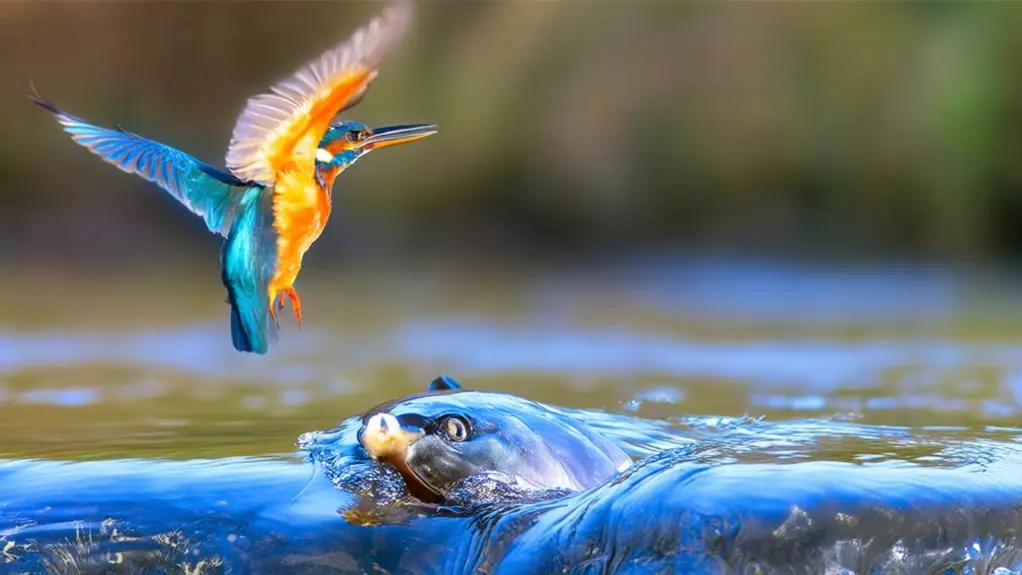
You can feed cooked salmon to certain birds, but you need to prepare it carefully. Always cook it to 145°F to kill harmful parasites and bacteria. Make sure to remove all bones and skin, and serve small, plain pieces at room temperature.
Avoid raw or smoked salmon because they carry health risks like digestive upset and vitamin deficiencies. It’s best to limit feeding to once or twice a week for suitable species. Keep an eye out for any signs that the bird isn’t reacting well.
Knowing these details will help you guarantee safe and beneficial feeding practices for your feathered friends. If you’re unsure, it’s always a good idea to check with a vet or a bird expert.
Are Salmon and Birds a Safe Combination?
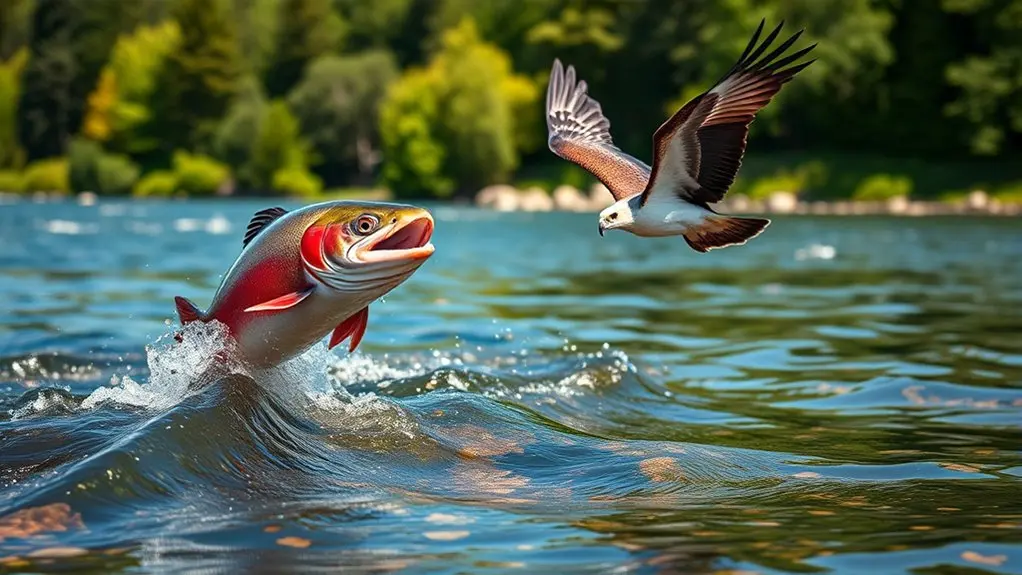
Although salmon can offer valuable nutrients like protein and omega-3 fatty acids, you must guarantee it’s cooked thoroughly and free from seasonings, bones, and oils before feeding it to birds. Proper cooking eliminates parasites and bacteria harmful to birds, securing safety.
Salmon’s nutrient profile can benefit some bird species in moderation, supporting their protein needs and contributing to healthy fats. However, feeding large or frequent amounts risks nutritional imbalances or excess fat intake, which may negatively impact bird health.
To ensure appropriateness and safety, always consult an avian veterinarian before introducing salmon to a bird’s diet.
Risks of Feeding Raw or Smoked Salmon to Birds
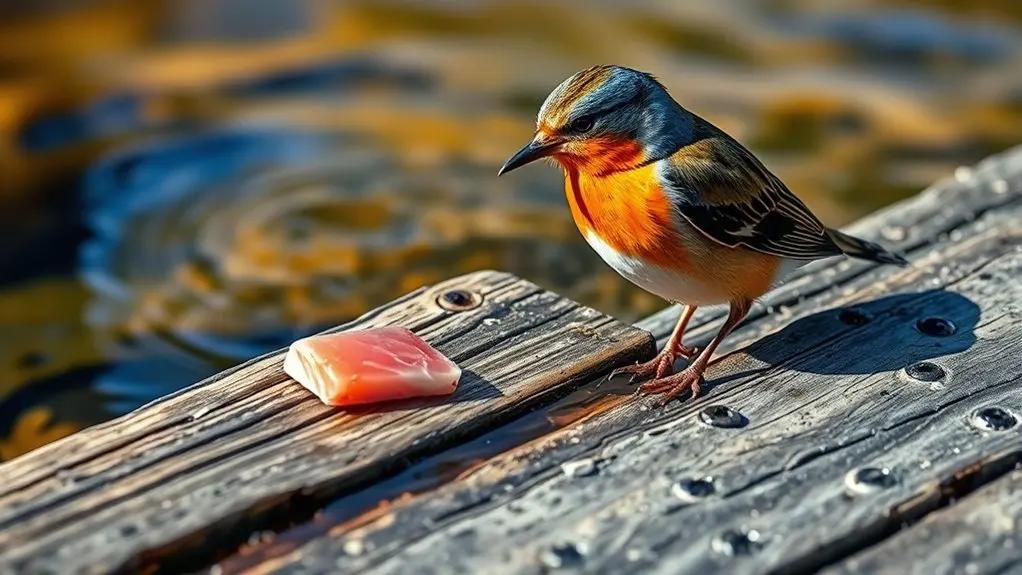
You should be careful when feeding raw or smoked salmon to birds. Raw salmon might carry parasites and harmful bacteria like Salmonella, which can make birds sick.
On top of that, smoked salmon usually has added salt and preservatives. These ingredients aren’t great for birds and can harm their health.
Also, birds’ digestive systems aren’t really designed to handle fish, so feeding them salmon could lead to digestive problems.
It’s best to stick with foods that are safer and more suitable for their needs.
Raw Salmon Parasite Risks
When feeding birds, you should avoid raw or smoked salmon because it can carry parasites such as flukes and tapeworms that may cause illness.
Salmon often harbors the parasite Nanophyetus salmincola, which is known to transmit bacteria responsible for salmon poisoning disease. This disease primarily affects mammals but can occasionally pose a risk to birds.
These parasites can invade a bird’s digestive system, leading to symptoms like lethargy, digestive upset, and potentially severe health complications.
Cooking salmon to an internal temperature of 145°F (63°C) effectively kills these parasites and reduces the risk of infection.
Feeding raw or undercooked salmon increases the chances of parasite transmission and compromises avian health.
Smoked Salmon Salt Concerns
Since smoked salmon contains added salt and preservatives, feeding it to birds poses significant health risks. The elevated salt levels can disrupt a bird’s fluid balance, potentially causing dehydration and impairing kidney function.
Also, smoked salmon often includes seasonings or chemical additives that may be toxic or unsuitable for avian physiology. Beyond salt concerns, both raw and smoked salmon carry the risk of harboring parasites and bacterial pathogens, which can compromise bird health.
Given these risks, it’s best to avoid offering smoked or raw salmon to birds. Instead, you should provide species-appropriate, unseasoned, cooked fish to guarantee nutritional safety and minimize exposure to harmful substances.
This way, you support ideal avian health and reduce preventable medical complications.
Digestive Issues Potential
Although raw and smoked salmon may seem like nutritious options, they carry significant digestive risks for birds that you should consider.
Raw salmon can harbor parasites and bacteria such as Salmonella and Listeria, posing threats of gastrointestinal infections.
Smoked salmon’s high fat content may lead to digestive disturbances or pancreatitis if birds consume it regularly.
Also, salmon contains thiaminase, an enzyme that depletes vitamin B1 (thiamine), which can potentially cause neurological issues in birds.
Preservatives and added salts in smoked salmon can irritate the digestive tract and disrupt electrolyte balance, further compromising digestive health.
Feeding raw or smoked salmon introduces harmful toxins or pathogens, increasing the risk of digestive complications.
Given these factors, it’s best to avoid offering raw or smoked salmon to birds if you want to keep their digestive system healthy.
How to Prepare Salmon Safely for Your Bird
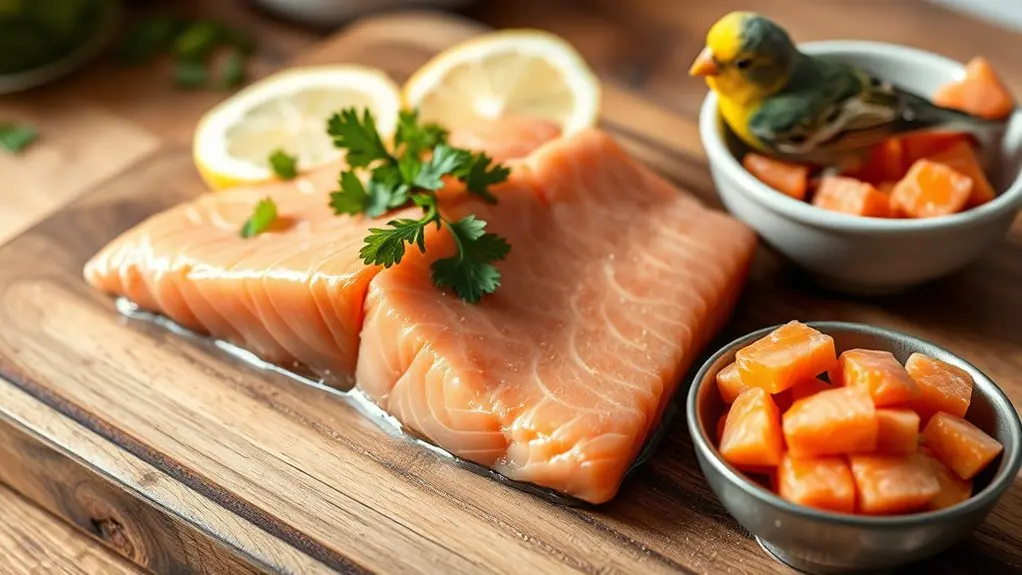
You should start by picking fresh salmon that looks good—no weird colors or smells. This helps make sure it’s safe and high quality for your bird.
Also, skip cooking methods like smoking or adding seasonings, since those can bring in harmful stuff your bird shouldn’t have.
And don’t forget to take out all the bones and skin to keep your bird from choking or having digestion problems.
Selecting Fresh Salmon
How can you guarantee the salmon you offer your bird is both nutritious and safe? Start by selecting fresh, high-quality salmon from reputable sources to minimize contaminants and harmful bacteria.
Before preparation, rinse the salmon thoroughly under cold water to remove surface residues and potential parasites.
It’s essential to cook the salmon to an internal temperature of at least 145°F (63°C) to eliminate pathogens that may endanger your bird’s health.
Carefully remove all bones, as salmon bones are small, brittle, and pose choking or internal injury risks.
Finally, serve the salmon in small, manageable pieces and allow it to cool to room temperature to avoid burns or stress.
These steps guarantee your bird receives salmon safely and nutritiously.
Cooking Methods To Avoid
When preparing salmon for your bird, avoid cooking methods that involve added oils, butter, or seasonings. These substances can introduce toxins or unhealthy fats.
You should never serve raw or undercooked salmon since it may harbor harmful bacteria or parasites that pose health risks.
Smoked, cured, or salted salmon is also unsuitable because of its excessive salt content, which can be harmful to your bird’s health.
Instead, use plain salmon and cook it thoroughly. Make sure it reaches an internal temperature of at least 145°F (63°C) to get rid of any pathogens effectively.
Avoid sauces or marinades, too, as they might contain ingredients that are harmful to birds.
Removing Bones And Skin
Proper preparation of salmon extends beyond cooking methods to include careful removal of bones and skin. You must remove all bones to prevent choking or internal injury. Pay close attention to tiny, sharp fish bones that could damage your bird’s digestive tract.
Use clean, sharp tools to debone and skin the salmon thoroughly. The skin may harbor contaminants or oils that aren’t suitable for birds.
Avoid cross-contamination by handling raw fish separately from your bird’s other foods.
Also, always cook salmon completely before feeding it to your bird. Raw fish can contain parasites or harmful bacteria.
Recommended Salmon Feeding Frequency for Birds
Although salmon offers valuable nutrients, you should feed it to birds sparingly, ideally no more than once or twice a week. This limited frequency helps prevent nutritional imbalances and excessive fat intake, which could negatively impact avian health.
Always verify salmon is thoroughly cooked to eliminate harmful bacteria and parasites before feeding.
Ensure salmon is fully cooked to remove bacteria and parasites before offering it to birds.
Introducing salmon gradually allows you to monitor birds for any adverse digestive reactions.
Overfeeding salmon also raises concerns about environmental contaminants like mercury, which can accumulate in fish tissue.
By restricting salmon to small, well-prepared portions on a controlled schedule, you support a balanced diet that minimizes health risks.
Moderation and careful observation are essential when adding salmon to a bird’s feeding regimen.
This way, you maintain ideal nutritional benefits without unintended harm. It’s all about keeping things balanced and watching how your birds respond.
Which Bird Species Benefit Most From Salmon
Understanding which bird species benefit most from salmon helps you apply feeding guidelines more effectively.
Raptors like eagles and ospreys gain from salmon’s high protein and omega-3 fatty acids, which enhance muscle development and overall health.
Seabirds such as puffins and gulls use salmon nutrients to maintain feather quality and improve reproductive success.
Wild waterfowl, including ducks and swans, can safely consume small amounts of cooked salmon, supplementing their diet without adverse effects.
Migratory species especially benefit from salmon’s essential fatty acids, which boost energy reserves needed for long flights.
Also, captive or rehabilitated birds with higher nutritional demands during breeding or recovery can get significant health benefits from salmon’s rich nutrient profile. This supports their physiological needs effectively.
Signs Salmon May Harm Your Bird
When you feed salmon to your bird, you need to watch for signs of harm caused by parasites, bacteria, or toxins that the fish may carry. Symptoms such as vomiting, diarrhea, lethargy, or loss of appetite can indicate gastrointestinal distress due to bacterial infections like Salmonella or Listeria.
Watch for vomiting, diarrhea, or lethargy in your bird after feeding salmon to catch potential infections early.
Parasites from raw or undercooked salmon, including anisakis, may cause digestive system damage, leading to discomfort or abnormal droppings.
Additionally, prolonged exposure to elevated mercury or heavy metals found in some salmon can result in neurological symptoms, including weakness or coordination issues.
If your bird shows any of these signs after consuming salmon, stop feeding it immediately. Also, avoid salmon prepared with added oils, salt, or seasonings, as these can make things worse or upset your bird’s system.
It’s a good idea to keep an eye on how often you feed salmon, too. That way, you can help prevent nutritional imbalances and keep your bird healthy.
Protein-Rich Alternatives to Salmon for Birds
Because salmon should only be offered in moderation due to potential health risks and nutritional imbalances, incorporating alternative protein sources into your bird’s diet is essential.
Cooked eggs provide a highly digestible protein source rich in essential amino acids. Mealworms supply protein and beneficial fats, mimicking natural insect consumption for many bird species.
Additionally, commercial bird pellets are formulated to deliver balanced nutrition, including protein, vitamins, and minerals tailored to avian needs.
While salmon offers omega-3 fatty acids important for feather health and immunity, relying solely on fish risks dietary imbalances. By rotating these protein alternatives, you guarantee your bird receives diverse nutrients safely.
Always avoid raw or undercooked salmon to prevent exposure to parasites and bacteria that can harm your bird’s health.
It’s better to mix things up and keep your feathered friend happy and healthy!
When to Call the Vet About Salmon Feeding Concerns
If your bird shows any signs of distress, like vomiting, lethargy, or unusual behavior after eating salmon, you should contact a veterinarian right away.
Salmon can sometimes carry parasites or bacteria that are harmful to birds if it’s not cooked properly. This increases the risk of infections such as salmonella.
Keep a close eye on your bird, and don’t hesitate to seek veterinary advice if you notice any of the following:
- Gastrointestinal symptoms like diarrhea or vomiting.
- A noticeable drop in activity or appetite.
- Abnormal behaviors or neurological signs.
- Any doubts about the safety or preparation of the salmon you offered.
It’s always best to check with a vet before introducing salmon or any new food to your bird’s diet. This helps prevent potential health issues.
Getting prompt professional help means your bird can get the right diagnosis and treatment quickly, keeping them safe and healthy.
Frequently Asked Questions
Can Baby Birds Eat Salmon Safely?
Yes, you can safely feed baby birds small portions of cooked, unseasoned salmon after removing all bones. Avoid raw salmon because it might have parasites.
It’s important to be careful about what you feed them, so always consult an avian vet before introducing salmon. This way, you make sure your little feathered friends get the right nutrition and stay safe.
Does Salmon Affect a Bird’s Feather Coloration?
Yes, salmon’s astaxanthin pigment can enhance your bird’s feather coloration, intensifying reds and oranges. However, effects vary by species and intake frequency.
Too much salmon might cause uneven or overly vivid plumage, so it’s good to keep an eye on how much your bird is eating. Just like with anything, moderation is key!
Can Salmon Cause Allergies in Birds?
You might think salmon causes allergic storms in birds, but reactions are pretty rare. Some birds can develop sensitivities though. They might show signs like itching or respiratory issues.
It’s always best to check with an avian vet before adding salmon to your bird’s diet. That way, you can keep your feathered friend safe and healthy.
Is Canned Salmon Safe for Birds?
Yes, canned salmon is safe for birds if you rinse it thoroughly to remove sodium and additives. Avoid skin, bones, and seasoning.
Always consult your avian vet before feeding to verify it suits your bird’s nutritional needs. Better to be safe than sorry!
How Does Salmon Compare to Other Fish for Birds?
Salmon is like the superhero of fish for birds, packed with omega-3s and fats. You’ll find it richer and more calorie-dense than others, so feed it sparingly to avoid overwhelming their diet.
It’s a great choice when you want to give birds a nutritious boost. Just remember, a little goes a long way!
Conclusion
You might think feeding salmon to your bird is a gourmet treat, but nature’s complexities say otherwise. Raw or smoked salmon can harbor risks, from parasites to harmful preservatives. This makes it far from the ideal snack.
Even with careful preparation, moderation is key. Overdoing it could do more harm than good. So, while salmon sounds fancy, sticking to safer protein sources and monitoring your bird’s health is truly the smarter, science-backed choice.