
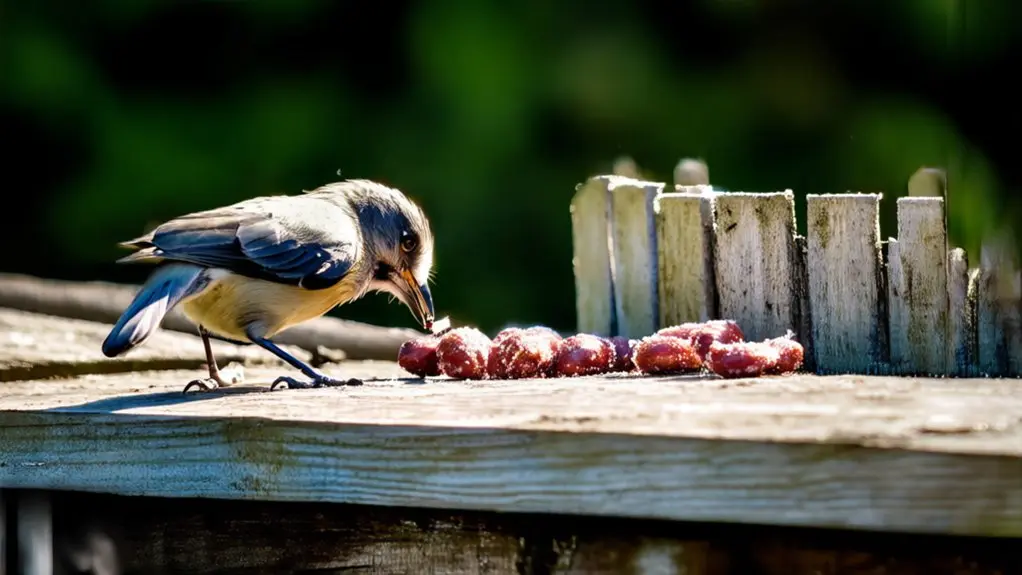
You shouldn’t give birds salted peanuts because their high salt content can disrupt hydration and cause serious health issues like kidney strain and electrolyte imbalance. Birds struggle to process excess sodium, which leads to dehydration, weakness, and even fatal outcomes if eaten regularly.
Instead, choose unsalted peanuts to provide safe, nutritious feeding without any risks. If you want to help birds thrive and avoid common feeding mistakes, there’s more important information you’ll want to know.
Are Salted Peanuts Safe for Birds?
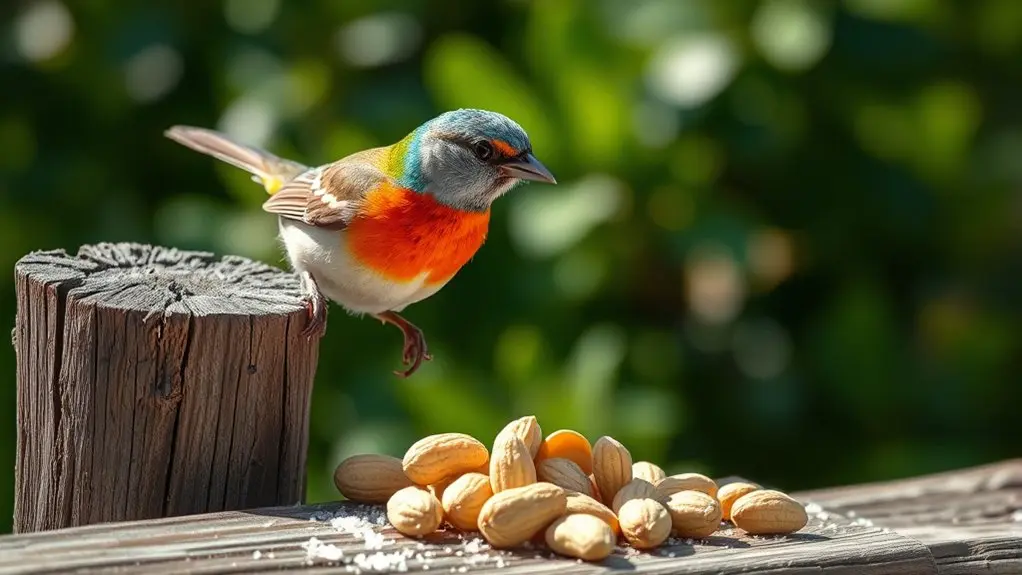
Although salted peanuts are a popular snack for people, they can pose health risks to birds because of their salt content. Birds don’t metabolize salt efficiently, so eating salted peanuts can mess with their hydration.
Salted peanuts can harm birds by disrupting their hydration due to poor salt metabolism.
This is especially important during critical times like bird migration when they need to balance energy and water carefully. Too much salt can make it hard for them to maintain proper fluid levels, which affects their stamina and survival.
When birds are nesting, they need the best nutrition to care for their young, so salted peanuts aren’t the best choice. Even though the peanut shell might reduce direct salt exposure, the salt absorbed inside is still a problem.
To help birds stay healthy during migration and nesting, it’s better to avoid giving them salted peanuts. Instead, offer raw, unsalted nuts, which conservation experts recommend.
How Salt in Peanuts Can Harm Birds
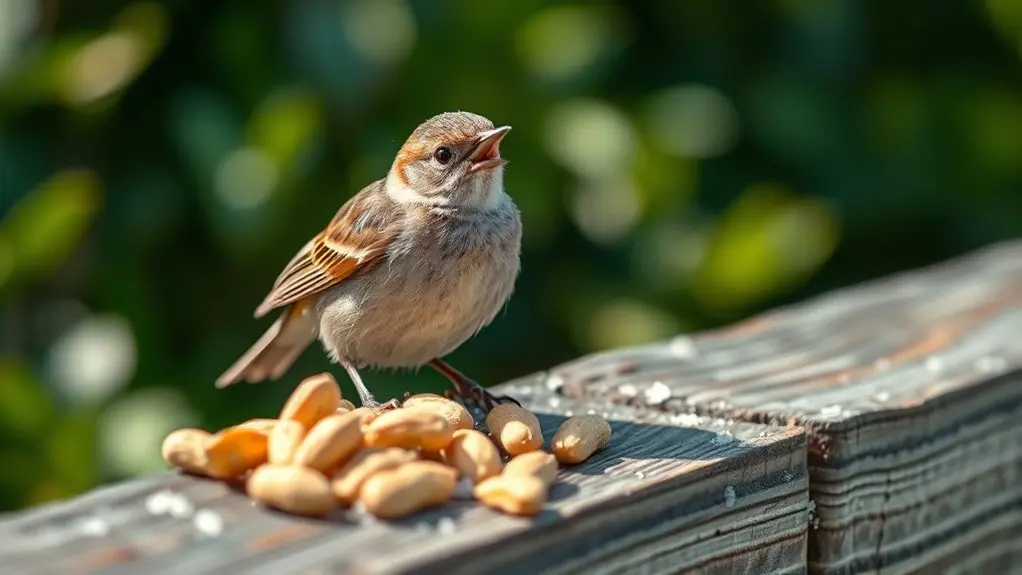
When birds eat salted peanuts, their bodies have a hard time processing all that extra sodium. This can quickly mess up their delicate electrolyte balance. When that balance gets disrupted, it can lead to salt toxicity, which causes serious health problems.
Birds aren’t great at metabolizing salt, so eating salted peanuts often might cause dehydration and other issues.
Here’s how salt in peanuts can harm birds:
- Too much sodium throws off their electrolyte balance, leading to weakness and problems with their nervous system.
- The high salt content (about 300 mg per 50 g) is way above what they’d normally get in nature.
- Eating salted peanuts regularly ups the risk of salt toxicity, which can even be fatal.
Even though peanut shells might help reduce some salt absorption, feeding birds a lot of salted peanuts is still a big health risk you want to avoid.
Why Unsalted Peanuts Are the Best Choice
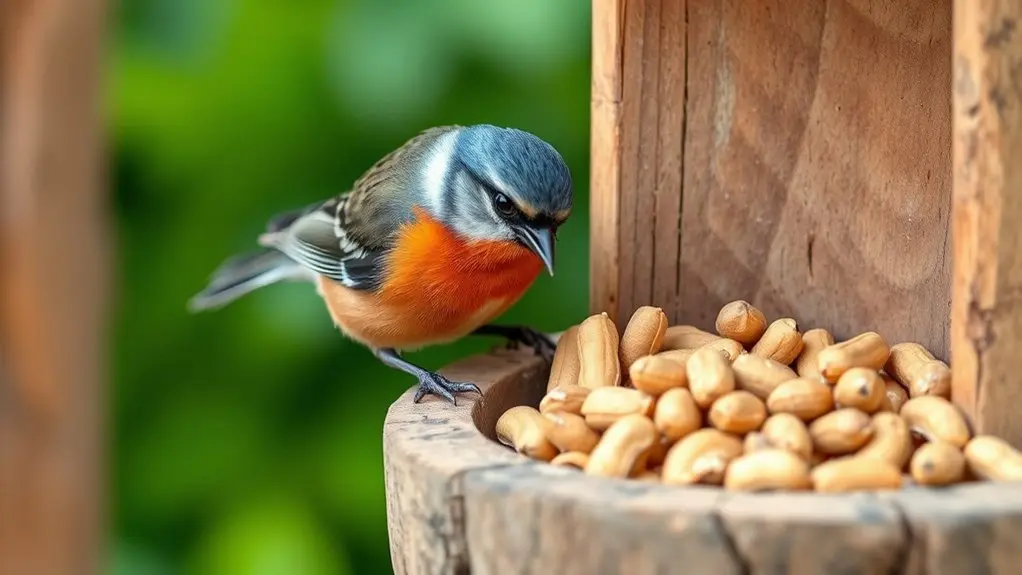
You want to choose unsalted peanuts because they help avoid the health risks that come with too much salt in a bird’s diet. Birds can’t process high sodium levels very well, so keeping the salt out is really important.
Plus, unsalted peanuts still give birds all the essential nutrients they need. So, by feeding them raw, unsalted peanuts, you’re doing a great job supporting their health and well-being.
It’s a simple choice that makes a big difference!
Health Risks Of Salt
Since birds’ natural diets are low in salt, feeding them salted peanuts can pose serious health risks. Salt toxicity is a major concern because birds’ kidneys aren’t equipped to handle high sodium levels like ours. This can lead to kidney stress and dehydration, potentially causing long-term damage.
Regularly offering salted peanuts can cause salt to accumulate in their bodies, increasing these risks over time. To protect your feathered friends, avoid salted snacks and opt for unsalted peanuts instead.
Remember:
- Excess salt intake stresses kidneys and disrupts fluid balance
- Birds’ natural low-salt diet means they can’t process added salt well
- Salt toxicity symptoms include dehydration and organ strain
Choosing unsalted peanuts helps maintain their health and prevents complications linked to salt toxicity. It’s a simple switch that makes a big difference!
Nutritional Benefits Of Unsalted
Although salted peanuts might seem convenient, unsalted peanuts offer clear nutritional advantages that make them the best choice for feeding birds. Without added sodium, unsalted peanuts support nutrient preservation, maintaining their natural flavor and essential health benefits.
They provide high-quality protein, healthy fats, and crucial vitamins that promote bird health without risking dehydration or kidney stress caused by excess salt.
Plus, unsalted peanuts reduce the risk of mold growth often linked to salted peanuts, ensuring birds receive fresher, safer food.
Conservation organizations recommend offering raw, unsalted peanuts to optimize birds’ nutritional intake and avoid harmful effects of salt.
How to Offer Peanuts Safely to Different Birds
When offering peanuts to birds, it’s important to think about the size of the birds you’re feeding. Adjust the peanut portions to match their needs.
Using feeders or trays designed to minimize waste makes the peanuts easier for birds to access.
Always go for unsalted, raw peanuts—they’re the safest choice.
If you have larger peanuts, breaking them into smaller pieces can really help smaller-billed birds feed safely.
And don’t forget to replace the peanuts regularly to keep them fresh and avoid spoilage.
Peanuts By Bird Size
When feeding peanuts to birds, matching the size and form of the peanuts to the bird species guarantees both safety and enjoyment. Considering bird beak size and peanut shape helps you select the right type for each visitor.
Larger birds like jays and crows prefer whole peanuts in shells they can crack open, while smaller birds need easier options.
Large-beaked birds thrive on whole peanuts, using their strength to access the nut inside.
Small-billed birds benefit from peanut hearts or chips, which are easier to handle and consume.
Offering appropriately sized peanut pieces prevents choking and attracts the ideal bird species.
Tailoring peanut offerings ensures safe feeding and enhances your birdwatching experience by accommodating their natural feeding habits.
It’s a simple way to make sure every bird feels welcome at your feeder.
Safe Feeding Techniques
Since different bird species have varying dietary needs and feeding behaviors, offering peanuts safely requires careful attention to the type, preparation, and placement of the peanuts.
Always use unseasoned, unsalted peanuts designed for bird feeding to protect bird feather health and avoid harmful additives.
Depending on the bird’s size and strength, offer peanuts whole, shelled, or broken to guarantee easy consumption without choking hazards.
Practice peanut shell safety by regularly checking for mold or spoilage. Remove any compromised nuts promptly to prevent health risks.
Place peanuts in clean, dry feeders or scatter them on the ground away from moisture.
Use deterrents like baffles and strategic feeder placement to limit access by squirrels and other non-bird animals.
This helps maintain a safe feeding environment for your feathered visitors.
Managing Squirrels and Wildlife at Peanut Feeders
Although squirrels and other wildlife can add charm to your garden, they often interfere with bird feeding by raiding peanut feeders. To manage this, consider strategic birdhouse placement and adjust seasonal feeding practices to reduce unwanted visitors.
Here are effective steps: Use squirrel-proof feeders or install baffles to block access. Place feeders in elevated or enclosed locations, making it difficult for squirrels to reach peanuts. You might also provide alternative food sources like squirrel-specific feeders to divert their attention.
Additionally, regularly clean up spilled peanuts to avoid attracting non-target animals. Opt for unsalted, raw peanuts in secure feeders to keep the food safe and appealing exclusively to birds.
What to Watch for When Feeding Peanuts Regularly
If you feed peanuts regularly, you need to watch for several key factors to keep birds healthy and your feeding area safe. Monitor bird appetite closely to avoid overfeeding, which can cause peanuts to spoil or develop mold. Moldy peanuts can pose serious health risks to birds.
Regular peanut feeding requires careful monitoring to prevent mold and protect bird health.
Proper peanut storage is essential. Keep them dry and replace old nuts often to prevent contamination. This helps ensure the peanuts stay fresh and safe for the birds to eat.
Be mindful that salted peanuts, though generally tolerated, can increase sodium intake if offered too much. It’s best to offer them in moderation.
Also, use baffles or deterrents to limit access by squirrels and other wildlife. This reduces competition and waste at your feeding station.
Finally, balance the diet by providing a variety of natural, unsalted foods alongside peanuts. This helps maintain ideal nutrition and supports bird wellbeing over time. Keeping things balanced is key for happy, healthy birds!
Benefits of Peanut Butter and Alternative Peanut Foods
When you want to diversify your bird feeding options, peanut butter serves as an excellent alternative to whole peanuts. It provides high protein and fat that many bird species readily consume. This energy-rich food supports birds during critical times like bird migration and nesting habits, offering necessary sustenance.
To maximize benefits while minimizing risks, consider these tips: Use natural, unsalted peanut butter to avoid added salt or preservatives that can harm birds. Spread peanut butter on logs, branches, or place it in suet feeders to attract species such as chickadees and titmice.
Try to offer peanut butter especially during colder months or breeding seasons when energy demands increase. It’s a simple way to help your feathered friends stay healthy and active.
Common Mistakes to Avoid When Feeding Peanuts to Birds
Feeding peanuts to birds requires careful attention to avoid common pitfalls that can harm their health. You need to think about peanut shell safety and what birds like to eat to keep your feathered friends safe.
Avoid salted, roasted, or seasoned peanuts because the salt and additives can cause health issues. Only offer raw, unshelled peanuts that have been stored in a dry, cool place to prevent mold growth.
Never feed large quantities at once. Doing so can cause spoilage or attract pests, which is something you definitely want to avoid.
| Common Mistake | Why to Avoid It |
|---|---|
| Salted peanuts | Harmful salt content |
| Roasted/seasoned peanuts | Unsafe oils and additives |
| Store-bought flavored | Not suitable for bird diets |
| Improper storage | Mold growth, toxic to birds |
| Overfeeding | Spoilage and attracting pests |
Frequently Asked Questions
Can Baby Birds Eat Peanuts Safely?
You shouldn’t feed baby birds peanuts due to bird health risks and possible peanut allergy reactions.
Instead, choose unsalted, natural options or specialized formulas to guarantee safe nutrition. This helps avoid potential harm from salt or allergens.
It’s always better to be cautious when feeding baby birds to keep them healthy and safe.
Do Salted Peanuts Affect Bird Migration Patterns?
Salt intake from salted peanuts doesn’t cause a significant migration impact. You won’t see changes in bird migration patterns since environmental factors, not dietary salt, primarily drive their migratory behavior. Salt intake’s effect remains minimal.
Basically, birds rely on things like daylight, temperature, and food availability to decide when and where to migrate. So, eating salted peanuts doesn’t really mess with that. It’s more about the world around them than what’s on their snack list.
Are There Bird Species That Prefer Salted Peanuts?
You won’t find many bird species that prefer salted peanuts, as their nutrition naturally limits salt intake. Some larger birds might eat them occasionally, but most avoid excess salt to maintain proper health and balance.
How Do Birds Naturally Detoxify Salt Intake?
Like a knight shedding armor, birds use salt glands and specialized kidneys for natural detoxification. Their salt tolerance lets them excrete excess salt efficiently, maintaining balance and preventing harmful buildup from salty foods or environments.
It’s pretty amazing how these adaptations work together to keep birds healthy. They basically have their own built-in salt filters. This way, even when they eat salty stuff or live in salty places, they stay just fine.
Can Salted Peanuts Attract Unwanted Pests Besides Squirrels?
Yes, salted peanuts can cause pest attraction beyond squirrels. Their salt sensitivity draws raccoons, rats, ants, and beetles.
You’ll want to avoid salted peanuts to minimize unwanted pests around bird feeding areas. It’s better to stick with unsalted options if you want to keep things under control.
Conclusion
When feeding birds, you’ll want to avoid salted peanuts since even small amounts of salt can harm them. Birds are far more sensitive to salt than humans. Did you know that just a teaspoon of salt in water can be deadly to some bird species?
Stick to unsalted peanuts and peanut butter to keep your feathered friends safe and healthy. Always monitor their reactions and manage wildlife around feeders to guarantee a thriving, happy bird community.