
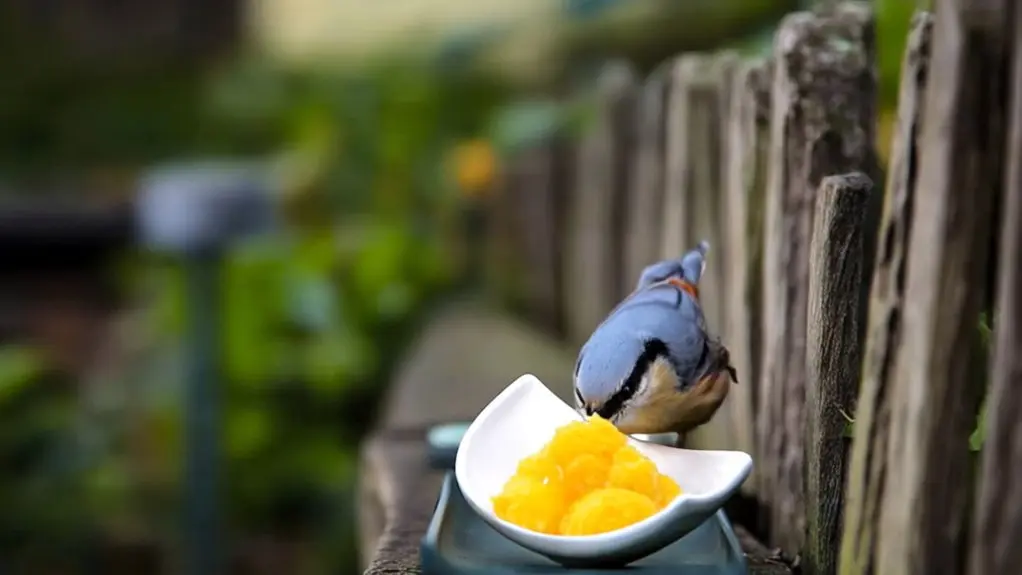
Yes, you can safely feed scrambled eggs to your bird if you cook them fully without any seasonings, butter, or salt. Eggs offer high-quality protein that supports digestion and overall health. Serve small, cooled portions a few times weekly, adjusting for your bird’s size and needs.
Avoid raw or undercooked eggs and any added fats to prevent health risks. If you want to optimize their diet and understand feeding frequency or hormonal effects, there’s more important guidance ahead.
Why Are Scrambled Eggs Safe and Nutritious for Birds?
Because scrambled eggs are fully cooked, they’re safe for birds to eat. Cooking gets rid of harmful bacteria like Salmonella, so you don’t have to worry about your bird getting sick.
Scrambled eggs are safe for birds since cooking eliminates harmful bacteria like Salmonella.
When eggs are cooked, their proteins change shape, which actually helps your bird digest them better. This means your pet can absorb all the good stuff more easily.
Eggs have high-quality protein with all the essential amino acids your bird needs to stay healthy. Just make sure you serve scrambled eggs without adding salt, butter, or any seasoning.
Keeping it plain ensures your bird gets a clean, nutritious protein source. Also, offer the eggs cooled and in moderation to support your bird’s diet without any risks.
How to Prepare Scrambled Eggs for Your Pet Bird
When preparing scrambled eggs for your pet bird, start by selecting fresh eggs and cooking them thoroughly without adding salt, butter, or any seasoning. Proper cooking techniques ensure the eggs are safe and nutritious.
This way, you get the benefits of eggshell nutrition without risking bacterial contamination.
Scramble the eggs until they’re fully cooked and fluffy, making sure there are no runny parts. Then, let the eggs cool to room temperature so your bird doesn’t get burned.
Once cooled, break the eggs into small, manageable pieces that fit your bird’s size.
Remember, don’t add any seasoning or fats since those can harm your pet. It’s best to offer scrambled eggs in small portions to keep your bird’s diet balanced and healthy.
Easy, right?
How Often Should Birds Eat Scrambled Eggs for Best Health?
You should offer scrambled eggs to your bird no more than 2 to 3 times a week. This helps avoid giving them too much fat and protein.
It’s best to stick to small portions—about 1 teaspoon for smaller birds and up to 1 tablespoon for larger species.
Doing this keeps their diet balanced and supports their overall health.
Recommended Feeding Frequency
Although scrambled eggs offer valuable nutrients, feeding them to birds should be done thoughtfully to maintain their health. To protect their well-being, consider these guidelines regarding feeding frequency in relation to bird habitat and proper egg storage.
Feed scrambled eggs 2-3 times per week to avoid overfeeding. Offer small portions suited to bird size, respecting natural dietary balance. You might want to increase frequency slightly during breeding or molting to support physiological demands.
Always serve fully cooked, cooled eggs without seasoning to ensure safety. Store eggs properly before preparation to prevent contamination and nutrient loss. Following these tips will help keep your feathered friends happy and healthy.
Portion Size Guidelines
Since scrambled eggs are rich in protein and fats, offering them in appropriate portion sizes is essential to maintaining your bird’s health.
For smaller birds, serve about 1 teaspoon, while larger parrots can have up to 1 tablespoon per feeding. Use suitable serving containers to control portion size and guarantee the egg texture is soft and fully cooked, then cooled before serving to prevent burns or bacterial risks.
Feed scrambled eggs 2-3 times per week to keep a balanced diet and avoid excess fat intake, which can cause obesity.
Monitor your bird’s response and adjust portions accordingly. Proper portion control and frequency help your bird enjoy the nutritional benefits of scrambled eggs without overfeeding or health complications.
What to Avoid When Feeding Scrambled Eggs to Birds
When feeding scrambled eggs to birds, it’s essential to avoid adding butter, salt, seasoning, or oils, as these substances can be toxic or harmful. You should also be mindful of eggshell hazards and seasoning dangers that could compromise their health.
To guarantee safety, follow these guidelines:
To ensure bird safety, always serve fully cooked, plain eggs without shells or harmful additives.
Serve only fully cooked and cooled eggs to prevent bacterial contamination. Never offer raw or partially cooked eggs to avoid Salmonella risk. Also, avoid mixing scrambled eggs with dairy or processed ingredients that upset digestion.
Limit portions to prevent dietary imbalance and excess fat intake. Make sure to remove eggshell fragments carefully to prevent physical injury or choking.
Taking these steps will help keep your feathered friends safe and healthy!
Do Scrambled Eggs Affect Bird Hormones or Breeding?
When you feed scrambled eggs to birds during breeding season, it can actually influence their hormone levels and even trigger reproductive behaviors.
But here’s the thing — if you offer eggs too often, you might end up disrupting their natural hormonal balance and breeding cycles.
So, it’s really important to manage how often and when you feed them eggs.
That way, you can support healthy breeding without causing any harm.
Hormonal Impact Risks
Although scrambled eggs can provide essential nutrients that support a bird’s reproductive health, feeding them in excess may disrupt hormonal balance and interfere with breeding cycles. You should be aware that hormonal fluctuations caused by overfeeding eggs might lead to breeding disruption and affect overall fertility.
To minimize risks, consider these points:
- Moderate feeding supports reproduction without hormonal imbalance
- Excess protein in eggs can trigger unwanted hormonal changes
- Controlled portions prevent interference with breeding cycles
- Providing eggs only during active reproductive phases is vital
- Consistent feeding habits help maintain healthy hormone levels
Keeping things balanced really helps. So, stick to moderate amounts and feed eggs when the bird is actually breeding. That way, you can support their health without causing any hormonal trouble.
Breeding Season Considerations
Because scrambled eggs can influence hormonal responses, feeding them strategically during the breeding season can help stimulate reproductive behaviors in birds.
You should offer scrambled eggs in moderation during active breeding and chick-rearing phases to support hormonal balance without disrupting natural cycles.
Excessive feeding outside these periods risks interfering with migration patterns and normal breeding timing.
Properly timed supplementation can enhance feather coloration and overall reproductive success by providing essential nutrients.
However, avoid making scrambled eggs a year-round food source, as this may cause hormonal imbalances and negatively affect breeding rhythms.
How to Incorporate Scrambled Eggs Into a Balanced Bird Diet
If you want to provide your bird with a nutritious boost, incorporating plain scrambled eggs into their diet can be highly beneficial. Scrambled eggs serve as excellent dietary supplements, enhancing bird nutrition with protein and calcium.
To do this safely and effectively, follow these guidelines:
- Serve small portions (1 teaspoon to 1 tablespoon) 2-3 times weekly, based on bird size.
- Make sure eggs are fully cooked and cooled to avoid contamination or burns.
- Avoid adding butter, salt, or seasonings to keep eggs plain.
- Mix crushed eggshells into the eggs for extra calcium.
- Use scrambled eggs especially during breeding or moulting when extra protein supports health.
It’s pretty simple, but these tips help keep your bird healthy and safe while enjoying their tasty treat!
Frequently Asked Questions
Can Wild Birds Eat Scrambled Eggs Safely?
Yes, you can safely feed wild birds scrambled eggs by ensuring proper egg preparation. Make sure the eggs are fully cooked and don’t add any seasoning.
This helps support bird nutrition by providing protein and calcium. Just serve the eggs in small, occasional portions.
Adding crushed eggshells can be a nice bonus, too. It’s a simple way to give wild birds a little extra goodness!
Are Scrambled Eggs Suitable for All Bird Species?
Not all bird species tolerate scrambled eggs due to varied dietary preferences. Roughly 60% of pet birds, especially parrots, benefit from their protein.
You should tailor servings to each species’ needs and avoid seasoning for safety. It’s always best to check what’s suitable for your specific bird before offering eggs.
Can Baby Birds Eat Scrambled Eggs?
Yes, you can feed baby birds scrambled eggs, but make sure to fully cook and cool them properly. This is important to guarantee the eggs are safe for the birds to eat.
Scrambled eggs provide essential proteins that support the nutrition of baby birds. Just remember to serve small portions, as this helps prevent choking.
It also makes digestion easier and safer for the little birds. So, go ahead and try this, but always keep their safety in mind!
How Should Scrambled Eggs Be Stored for Bird Feeding?
Like preserving a rare manuscript, you must master egg preparation and storage techniques. Cool scrambled eggs fully, then store them airtight in the fridge.
Don’t forget to label the container with dates. Make sure to use the eggs within 24 hours to keep your bird’s meal safe and fresh.
It’s all about keeping things simple and making sure your feathered friends get the best.
Can Feeding Scrambled Eggs Cause Allergies in Birds?
Yes, feeding scrambled eggs can cause allergies in birds, especially if you ignore the cooking method or include egg shells improperly.
It’s best to introduce eggs gradually and keep an eye on your bird for any adverse reactions. This way, you can prevent sensitivity before it becomes a bigger issue. Just take it slow and watch how your feathered friend responds.
Conclusion
You might worry scrambled eggs are too rich or risky for your bird, but when prepared simply and given in moderation, they’re a safe, nutritious treat. Eggs provide essential protein and vitamins that support your bird’s health without causing harm. Just avoid adding salt or seasoning, and don’t overfeed.
By balancing scrambled eggs with a variety of fresh fruits, veggies, and pellets, you’ll keep your bird’s diet both delicious and wholesome. It’s all about variety and moderation to keep your feathered friend happy and healthy. So go ahead, treat your bird to scrambled eggs now and then!