
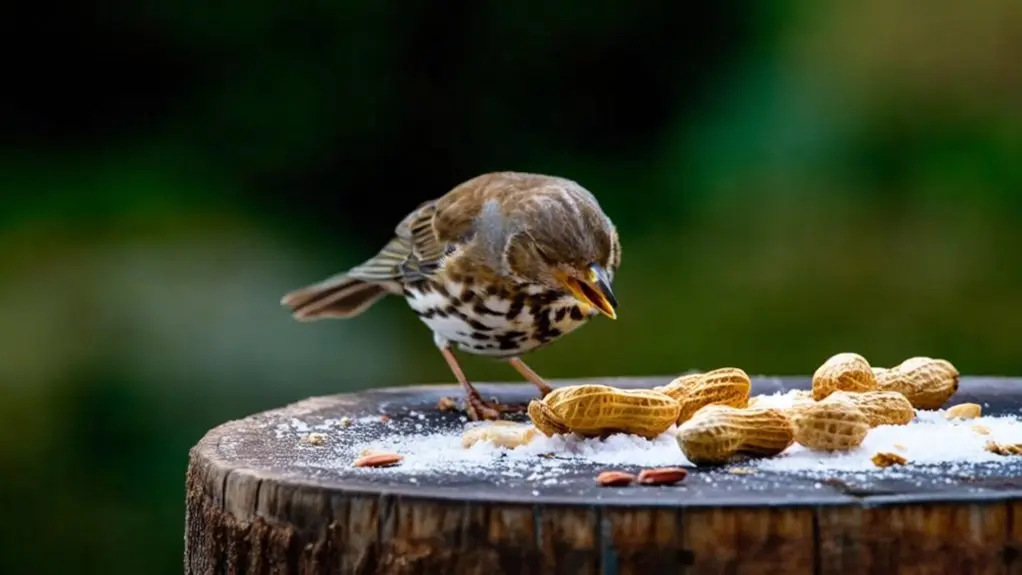
You shouldn’t feed birds salted peanuts in the shell because the high salt content disrupts their electrolyte balance and causes dehydration. This is especially risky for small, sensitive species like nuthatches and finches.
Excess salt strains their kidneys and impairs muscle and neurological functions. It can even change their natural behaviors.
Salted nuts pose serious health risks and may lead to long-term organ damage. If you want to support bird health, it’s important to understand safer feeding options and how to prepare peanuts properly.
Why Salted Peanuts Are Harmful to Birds
Although salted peanuts may seem like a convenient treat, they pose significant health risks to birds because of their high sodium content. Birds have very specific dietary needs, and low sodium is crucial for keeping their electrolyte balance in check.
Salted peanuts may seem convenient but can harm birds due to their high sodium affecting electrolyte balance.
Too much salt throws this balance off, causing problems like dehydration, kidney stress, and overall strain on their bodies.
When birds regularly eat salted peanuts, they might start preferring salty foods, which isn’t great for their nutrition.
While marine birds can handle salt better, most land birds are especially sensitive to it. So, feeding them salted peanuts can unintentionally cause dehydration and stress.
This is especially true for small or more sensitive bird species.
Offering salted peanuts can really mess with their natural diet and overall health. It’s always better to stick with unsalted options to keep our feathered friends safe and healthy.
How Salt Harms Birds’ Health and Behavior
When birds consume excessive salt, their delicate electrolyte balance quickly becomes disrupted, leading to dehydration and impaired physiological functions.
High sodium intake strains their kidneys and stresses neurological and muscular systems, which can reduce their overall fitness.
This physiological stress may alter bird migration patterns, as dehydration and muscle impairment hinder long-distance flights essential for seasonal movement.
Additionally, excessive salt can negatively affect feather coloration by disrupting nutrient absorption critical for pigment development.
This could impact mate attraction and camouflage.
Over time, birds conditioned to prefer salty foods risk chronic health issues, further influencing behavior and survival.
Even small salt amounts pose dangers, especially to smaller species with lower sodium tolerance.
Which Birds Are Most Sensitive to Salted Peanuts?
You should know that small songbirds like finches, sparrows, and nuthatches are especially sensitive to the salt in salted peanuts. Their delicate electrolyte balance means they can easily get dehydrated or face other health problems if they consume too much sodium.
Small Songbird Salt Sensitivity
Because small songbirds like finches, sparrows, and nuthatches have low sodium requirements and less developed kidney function, they’re especially sensitive to salted peanuts. Even minimal salt intake disrupts their electrolyte balance, increasing dehydration risk.
During bird migration, these species require precise hydration and nutrient balance, making excess salt particularly harmful.
Also, their nesting behavior demands ideal health to ensure successful reproduction and chick development, which excess salt can impair. Salted peanuts can condition small songbirds to seek salty foods, potentially causing long-term physiological stress.
Compared to larger birds, these small songbirds face greater adverse effects from salted peanuts, so it’s best to avoid offering salted peanuts to protect their delicate systems during critical life stages like migration and nesting.
Salt Impact On Sparrows
Although sparrows and other small songbirds may seem hardy, they show pronounced sensitivity to salt, especially from sources like salted peanuts. Their low sodium tolerance can cause dehydration, electrolyte imbalance, and kidney strain.
Salt overload risks increase during bird migration when energy demands are high. It’s also a concern during nesting when ideal health is critical. Sparrows’ smaller body size makes them particularly vulnerable compared to larger birds.
| Bird Species | Salt Sensitivity | Impact on Health | Behavioral Effects |
|---|---|---|---|
| Sparrows | High | Kidney strain, dehydration | Salt preference develops |
| Finches | Moderate | Electrolyte imbalance | Avoid salted peanuts |
| Nuthatches | High | Health risks | Salt avoidance advised |
| Larger Birds | Low | Minimal impact | Less salt sensitivity |
Vulnerability Of Nuthatches
While many bird species can tolerate some salt in their diet, nuthatches show a pronounced vulnerability to salted peanuts due to their small size and high metabolic demands. Their bird physiology limits effective salt regulation, making them highly sensitive to sodium levels found in salted peanuts in the shell.
Excess salt intake disrupts their electrolyte balance, leading to dehydration and kidney stress. Unlike larger birds, nuthatches lack the physiological mechanisms to process high salt loads efficiently, which increases health risks.
Given their insectivorous diet and metabolic rate, even moderate salt exposure can cause serious harm. So, it’s really important to be careful about what we feed them.
For these reasons, wildlife experts advise against feeding salted peanuts to nuthatches. They recommend unsalted, natural nut options instead to support their health and help maintain proper salt regulation.
It’s a small change that can make a big difference for these little birds.
Should You Ever Feed Birds Salted Peanuts?
If you’re thinking about feeding birds salted peanuts, it’s important to know that the high sodium content can be really bad for them. Birds don’t need much sodium at all, and eating salted peanuts can mess up their electrolyte balance. This can lead to dehydration and other health problems.
High sodium in salted peanuts harms birds by disrupting their electrolyte balance and causing dehydration.
This is especially important during migration and nesting when birds’ nutritional needs are very specific. If they get used to salty foods, they might start looking for unhealthy options, which can hurt their chances of survival and having chicks.
So, to help birds the best way, just avoid salted peanuts altogether. Instead, offer them unsalted, raw, or dry roasted nuts. These fit their diet much better.
Giving birds the right food keeps them healthy during tough times like migration and nesting, without the risks from too much salt.
What to Do If Birds Eat Salted Peanuts by Mistake
If birds happen to eat salted peanuts by mistake, the first thing you should do is remove any leftover salted nuts from their area. This helps stop them from eating more salt than they should.
Next, make sure they’ve plenty of fresh, clean water. This will help them flush out the extra salt and lower the chances of dehydration.
After that, switch to giving them unsalted peanuts only. This way, you’re supporting their health and helping to avoid any problems down the line.
Immediate Bird Care
Because salted peanuts contain high levels of sodium that can harm birds, you should immediately provide fresh, clean water to help dilute the salt in their system. Sodium overload can disrupt physiological processes critical to bird migration and nesting habits.
Keep an eye on the birds for signs of dehydration, lethargy, or unusual behavior. These might mean the birds are experiencing salt toxicity. If you notice these symptoms sticking around, it’s best to get veterinary help right away.
Make sure to remove any leftover salted peanuts from the feeding area to stop the birds from eating more. Instead, offer unsalted, natural foods like seeds, fresh fruits, or plain nuts. This will help them recover and keep their nutritional balance steady.
Try not to give them salted or processed foods again. Too much sodium can hurt their health and mess with important behaviors like migration and breeding.
Hydration Importance Explained
When birds consume salted peanuts by mistake, providing fresh, clean water right away helps their bodies recover. The water flushes out the extra sodium from their system. Salt throws off their electrolyte balance, which can lead to dehydration and mess with kidney function and overall health.
Hydration dilutes the salt concentration, making it easier for their kidneys to clear it out. It also helps keep fluid levels steady, which is super important for all their metabolic processes. This is especially true during migration when birds need more energy and hydration to keep going and maintain muscle function.
Dehydration can even affect their feather color, which matters for social signaling and staying warm. Keep an eye on the birds for signs like lethargy or odd behavior—these could mean salt toxicity. If symptoms stick around, it’s best to check with a vet.
Offering plenty of water quickly helps birds bounce back and keeps their bodies stable. This is key for successful migration and healthy feathers.
Switching To Unsalted
Providing fresh, clean water after birds consume salted peanuts helps flush excess sodium from their systems and reduce immediate risks. To keep birds healthy and ensure their food is safe, you should act quickly if they accidentally eat salted peanuts.
Here’s what to do: First, switch to unsalted peanuts or low-sodium alternatives right away. This prevents sodium overload and helps maintain their electrolyte balance.
Next, remove any leftover salted peanuts from feeders. This stops birds from developing a taste for salty foods, which isn’t good for their health.
Finally, keep an eye on the birds for signs of dehydration or distress. If you notice anything unusual, it’s best to consult a veterinarian.
Safe Alternatives: Unsalted Peanuts for Birds
Although salted peanuts may seem like a convenient snack, choosing unsalted peanuts offers a safer and healthier option for feeding birds. Unsalted peanuts provide essential fats and proteins crucial for bird migration and nest building without risking dehydration from excess salt.
You should offer raw or dry roasted unsalted peanuts, preferably shelled, to reduce choking hazards and support small birds’ consumption.
| Benefit | Peanut Type | Bird Health Impact |
|---|---|---|
| Essential nutrients | Unsalted | Supports migration energy |
| Hydration | Unsalted | Prevents electrolyte imbalance |
| Safety | Shelled unsalted | Reduces choking risks |
| Long-term health | Unsalted | Avoids salt-related dehydration |
| Storage | Dry, airtight | Prevents mold and spoilage |
Choosing unsalted peanuts consistently promotes ideal bird health. It’s a simple switch that makes a big difference!
How to Store and Prepare Peanuts Safely
To maintain the nutritional value and safety of peanuts offered to birds, proper storage and preparation are necessary. The peanut shell naturally protects the kernel, but it’s not completely impervious to moisture or mold. So, handling them carefully is key for bird feeding etiquette.
Here’s what you should do: Store peanuts in airtight containers in a cool, dry place. Avoid humidity and direct sunlight because they can cause spoilage.
If you have raw peanuts, roast them at 350°F for 15-20 minutes. This helps eliminate mold spores and reduces fungal contamination.
Make it a habit to regularly check peanuts for mold, rancidity, or any off-odor. If you find any nuts that seem compromised, discard them immediately.
Also, always use clean, dry utensils when handling peanuts. This helps avoid introducing any contaminants.
Taking proper care like this ensures peanuts stay safe and nutritious for your birds.
Choosing the Best Peanut Feeders to Keep Birds Safe
When selecting peanut feeders, you should prioritize sturdy, predator-proof designs that securely hold nuts and protect birds from threats. Proper birdhouse placement is essential. Place feeders in sheltered, open areas to help birds detect predators easily and reduce stress.
Regular cleaning prevents mold and disease. Avoid salted peanuts and offer a balanced diet by rotating seeds. Nesting materials near feeders can support breeding success.
| Feature | Recommendation | Reason |
|---|---|---|
| Feeder Material | Metal or heavy-duty plastic | Durability and predator-proofing |
| Location | Sheltered, open area | Predator visibility, bird safety |
| Cleaning Frequency | Weekly | Prevents mold, bacteria spread |
| Nut Type | Unsalted, raw or dry roasted | Minimizes health risks |
Frequently Asked Questions
Can Salted Peanuts Affect the Taste Preferences of Wild Birds?
Yes, salted peanuts can alter bird taste preferences by inducing salted peanut cravings. This may disrupt their natural foraging behaviors.
You’ll notice birds favor salty foods more often, which could impact their electrolyte balance. Over time, this might affect their overall dietary health. It’s something to keep in mind if you’re feeding wild birds regularly.
Do Birds Metabolize Salt Differently Than Mammals?
Think of bird salt tolerance as a fragile glass compared to mammal salt metabolism’s sturdy metal. Birds process salt less efficiently, lacking kidney adaptations mammals have. This makes them more vulnerable to electrolyte imbalances and dehydration from excess sodium.
How Can I Tell if a Bird Has Salt Poisoning?
You can tell if a bird has salt poisoning by observing salt toxicity symptoms like bird dehydration, weakness, lethargy, and tremors. You might also notice increased water intake and frequent urination.
Other signs include diarrhea, swelling, or neurological issues such as disorientation or seizures. Keep an eye out for these symptoms if you suspect salt poisoning in your bird.
Are There Any Long-Term Effects of Occasional Salted Peanut Consumption?
Like a slow tide shaping the shore, occasional salted peanuts can cause nutritional deficiencies and subtle behavioral changes in birds. These effects build up over time, even if you don’t notice anything right away.
It’s kind of like a hidden trickle that eventually adds up. The salt can disrupt their electrolyte balance and mess with kidney function. So, while it might seem harmless, there can be long-term consequences.
Can Salted Peanuts Attract Unwanted Pests or Animals?
Yes, salted peanuts can cause pest attraction and animal intrusion by drawing ants, bees, rodents, and squirrels. The salt and oils increase the risks of unwanted pests invading feeders. This can potentially harm backyard birds and cause feeder damage.
Conclusion
While salted peanuts might seem like a harmless treat, they quietly pose risks to birds’ delicate systems. Salt can subtly disrupt their health and behavior, especially in sensitive species. To keep your feathered friends thriving, it’s wise to avoid salted varieties and opt for unsalted peanuts instead.
By choosing safe options and proper feeders, you’re ensuring their well-being without unintended consequences. Fundamentally, a little caution goes a long way in nurturing nature’s winged companions.