
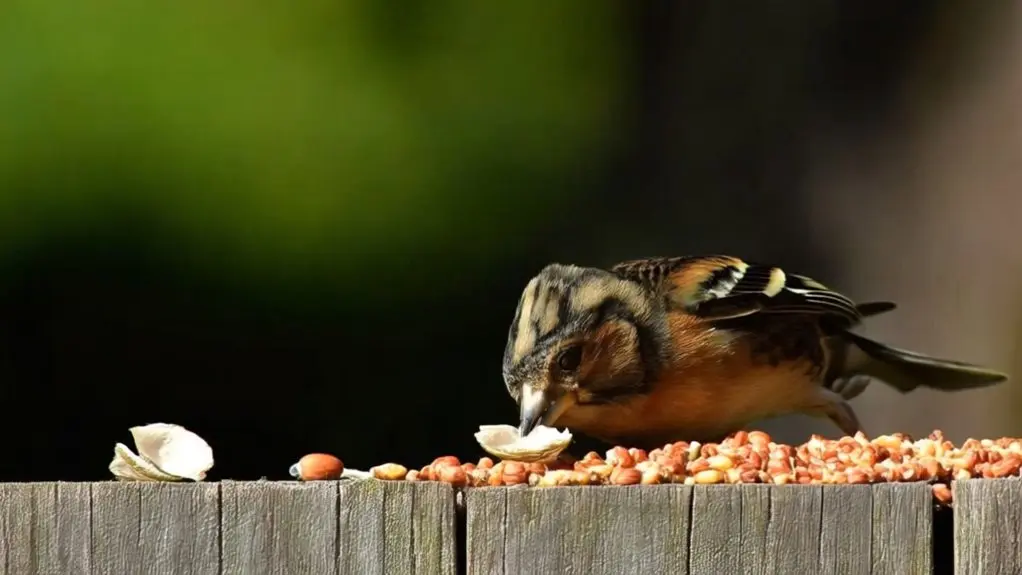
You can confidently feed seeds to most wild birds because they provide essential fats, proteins, carbs, vitamins, and minerals that support energy needs and overall health, especially in colder months.
Different species prefer specific seeds, like sunflower or nyjer, and seed consumption varies seasonally, increasing in winter for fat reserves. However, seeds alone lack some critical nutrients, so birds also need insects and fruits for balanced nutrition.
Explore further to understand safe seed choices, feeding tips, and how to best support your local birds.
Why Are Seeds Important for Birds?
Although you mightn’t realize it, seeds play a crucial role in the diet of many bird species by supplying essential fats, proteins, carbohydrates, vitamins, and minerals that sustain their energy and overall health. Seeds act as a concentrated nutrient source, enabling birds to build fat reserves critical for survival and long-distance bird migration.
Moreover, seed dispersal is an important ecological process facilitated by birds, as they transport seeds to new locations, promoting biodiversity. The availability and type of seeds influence migratory timing and routes, as birds rely on predictable food sources during seasonal movements.
What Seeds Are Safe and Healthy for Birds to Eat?
You’ll want to offer birds seeds like hulled sunflower, millet, safflower, and nyjer. These provide essential nutrients without any harmful additives.
Just make sure to avoid seeds that are treated with chemicals or those containing salts, sugars, or preservatives, since these can really harm your birds’ health.
Also, always keep the seeds fresh and store them properly to prevent mold, which can be seriously toxic to birds.
Common Safe Seed Types
A variety of common seeds provide safe and nutritious food sources for backyard birds. When selecting seeds, focus on options like sunflower, millet, safflower, cracked corn, and nyjer.
Proper seed storage and feeder placement are essential to maintain seed quality and prevent mold or spoilage. Use airtight containers for seed storage and position feeders in sheltered, dry locations to optimize bird access.
| Seed Type | Target Birds | Notes |
|---|---|---|
| Sunflower | Many species | High fat, protein-rich |
| Millet (white) | Sparrows, juncos | Ground feeder staple |
| Safflower | Cardinals, grosbeaks | Squirrel-resistant alternative |
| Nyjer (thistle) | Finches | Small seeds, preferred by finches |
Avoid seeds with coatings or preservatives to guarantee bird health. It’s best to stick with natural seeds to keep your feathered friends happy and healthy.
Nutritional Benefits Of Seeds
When you provide birds with seeds like sunflower, millet, and safflower, you supply them with essential nutrients such as healthy fats, proteins, and energy needed for survival and activity. These seeds vary in nutritional value: sunflower and safflower seeds are particularly rich in beneficial oils that support metabolic functions and sustain energy levels.
Millet offers a valuable source of carbohydrates and proteins, aiding muscle maintenance. Incorporating a seed variety guarantees birds receive a balanced nutrient profile, promoting overall health and attracting diverse species.
Avoid seeds treated with harmful chemicals to maintain safety.
Seeds To Avoid
Although seeds form a vital part of many birds’ diets, not all seeds are safe or beneficial to offer. Avoid bird seed varieties containing added salts, sugars, or artificial coatings. These additives can harm avian health.
Toxic seeds like avocado, poppy, and oleander must never be fed to birds. While corn and sunflower seeds are generally safe, always discard cracked or moldy seeds to prevent illness.
Millet, often used as filler, offers limited nutritional value and should be given sparingly.
To guarantee safety and nutrition, choose seeds specifically formulated for birds or natural, untreated seeds. Proper seed storage methods in cool, dry, and airtight containers are essential to maintain seed quality and prevent mold development. This helps promote healthy feeding practices for your birds.
Which Birds Prefer Different Types of Seeds?
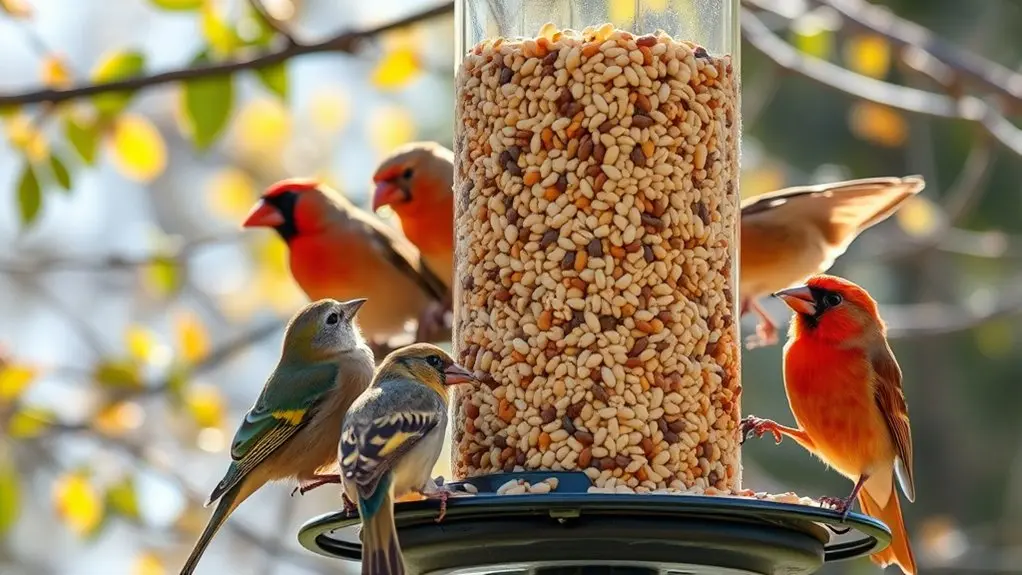
Since different bird species have varying dietary needs and feeding behaviors, understanding which seeds they prefer can help you attract specific birds to your feeder.
Finches and siskins favor small, oil-rich seeds like nyjer. These seeds are ideal for efficient seed storage in their crops to fuel their vibrant bird song.
Cardinals and grosbeaks prefer larger seeds such as sunflower hearts.
Sparrows and juncos, on the other hand, opt for easily cracked millet and cracked corn. It’s interesting how different birds have their own favorites.
Chickadees and titmice are really good at peeling sunflower shells to get to the kernels. This shows their precise feeding adaptations.
Woodpeckers and nuthatches like seeds embedded in suet, often choosing peanuts or sunflower seeds mixed in fat.
By tailoring your seed offerings based on these preferences, you can make feeding more efficient for the birds. Plus, it supports their natural behaviors related to nutrition and song production.
It’s a win-win for you and the birds!
How Does Seed Eating Change With the Seasons?
As natural food sources like insects and fruits become scarce during winter, seed-eating birds increase their reliance on seeds to meet their energy demands. During fall and winter, species such as sparrows and finches consume seeds like sunflower and millet extensively to build fat reserves critical for survival.
In contrast, spring and summer bring a dietary shift toward protein-rich insects, especially during breeding. Seasonal fluctuations in seed availability influence feeding behavior and prompt bird migration to areas with abundant native seed-producing plants.
This dynamic also supports seed dispersal, as birds transport seeds across regions during migration. Understanding these seasonal feeding strategies reveals how seed-eating birds adapt their diets to environmental changes, ensuring survival while contributing to ecosystem processes like seed dispersal.
Which Birds Benefit Most From Eating Seeds?
You’ll find that birds like sparrows, finches, and chickadees benefit the most from eating seeds. That’s because seeds provide essential nutrients that perfectly match what they need.
Plus, seeds pack a nutritional punch that helps meet their energy demands, especially when it’s cold and other food sources are scarce.
It’s also interesting to see how different birds prefer seeds depending on the season. Knowing this helps us understand how seeds play a role in their survival and even their migration patterns.
Seed-Eating Bird Species
While many birds eat a variety of foods, some species depend mostly on seeds for their nutrition. Sparrows, finches, grosbeaks, and buntings are great examples of seed-eating birds. They play an important role in spreading seeds, which helps plants reproduce and keeps ecosystems healthy.
These birds have special beaks designed for their diet. For example, finches have thick, cone-shaped bills that are perfect for cracking open hard seed shells quickly.
When fall and winter come around and insects become harder to find, these birds eat even more seeds to get the energy they need.
Black-capped chickadees and American goldfinches especially benefit from easy-to-find seeds like sunflower, millet, and nyjer.
Understanding these habits and adaptations means you can do a better job supporting seed-eating birds. Plus, you’ll be helping the natural seed dispersal that’s so important for keeping our environment balanced.
Nutritional Benefits Of Seeds
Because seeds contain high levels of fats, proteins, and essential fatty acids, they provide crucial nutritional benefits to many birds, especially sparrows, finches, and chickadees. These nutrients support energy demands, feather maintenance, and reproductive success.
Birds rely on efficient nutrient absorption from seeds to thrive, enhancing their health and aiding in seed dispersal. Resident species like house finches benefit year-round, particularly in scarce winter months.
| Bird Species | Nutritional Benefit |
|---|---|
| Sparrows | High energy from fats & proteins |
| Finches | Essential fatty acids for health |
| Chickadees | Vital nutrients for feather growth |
Understanding these benefits helps you appreciate how seeds sustain diverse avian populations through precise nutrient delivery and ecological seed dispersal. It’s pretty amazing how something so small can make such a big difference.
Seasonal Seed Preferences
Although seeds remain an essential food source year-round for many birds, their importance really ramps up during fall and winter when other food options become scarce.
During these seasons, seed dispersal plays a critical role in keeping bird populations healthy, especially for species that delay or avoid migration.
You’ll notice that sparrows, finches, and juncos rely heavily on seeds like black-oil sunflower because of its high fat content, which is key for energy conservation.
In spring and summer, birds like American goldfinches eat more insects but still enjoy native seeds such as millet and nyjer.
Come late fall and winter, there’s a shift toward berries and fruits as seed supplies dwindle.
This change helps meet the diverse dietary needs of many birds.
Getting a handle on these seasonal seed preferences makes it easier to support your local bird population all year long.
What Are the Risks of Feeding Birds the Wrong Seeds?
If you feed birds the wrong seeds, you risk causing illness, nutritional imbalances, and exposure to toxins. Seed contamination from mold or pesticides can poison birds. Toxic additives in coated seeds may harm sensitive species.
Also, inappropriate seeds can cause nutritional deficiencies. High-fat or salty seeds might attract predators or damage birds’ health.
| Risk Type | Explanation |
|---|---|
| Seed Contamination | Moldy or pesticide-treated seeds cause poisoning |
| Toxic Additives | Coatings harmful to specific bird species |
| Nutritional Imbalance | Unsuitable seeds lack essential nutrients |
| Health Hazards | High fat/salt seeds affect metabolism and safety |
How to Choose the Right Bird Seeds for Your Backyard
When selecting seeds for your backyard feeder, understanding the dietary preferences of local bird species is essential to maximizing attraction and nutritional benefit. You’ll want to choose seeds that cater specifically to your area’s birds while ensuring proper seed storage to maintain freshness.
Consider these points:
- Identify bird preferences: Cardinals and juncos favor sunflower seeds, sparrows prefer millet, and finches thrive on Nyjer seeds, which need specialized feeders.
- Opt for high-quality seeds: Avoid fillers or stale seeds that can deter birds and increase mold risk, compromising bird health.
- Use black oil sunflower seeds: These are energy-rich and attract a broad spectrum of species, ensuring your feeder appeals widely.
Choosing the right seeds can make all the difference in bringing more birds to your yard. It’s worth taking the time to learn what your local birds like!
How to Keep Seeds Fresh and Feeders Clean
To maintain seed quality and protect bird health, you should store bird seeds in airtight containers placed in cool, dry environments to prevent mold and spoilage. Proper seed storage limits moisture exposure, which is critical to inhibit fungal growth and rancidity.
For feeder maintenance, clean and disinfect feeders regularly using hot, soapy water or a diluted bleach solution to minimize pathogen transmission among birds. Avoid leaving seeds in feeders for long periods, as moisture and debris accumulation promote mold development.
Use weatherproof feeders positioned in sheltered areas to reduce exposure to rain and snow, keeping seeds dry. Periodically inspect seeds for pests, mold, or spoilage, and promptly replace contaminated or stale seeds.
These steps guarantee ideal seed freshness and maintain a sanitary feeding environment, promoting healthy bird populations. Taking just a little time with these habits really makes a big difference for your feathered friends.
Tips to Attract More Birds With Seeds
If you want to attract more birds, try offering a variety of seeds like sunflower, millet, and nyjer. Different birds prefer different seeds, and having a mix can cater to various species as well as their seasonal needs.
Also, make sure to keep your feeders filled consistently, especially during peak feeding times. This reliable food source will encourage birds to visit your feeder again and again.
When it gets colder, focus on high-fat seeds. These help birds meet their energy demands during chilly months and can really boost the number of visitors you see.
Best Seed Types
Which seeds will attract the widest variety of birds to your feeder? Selecting the right seeds not only appeals to diverse species but also supports ideal bird digestion. Proper seed storage guarantees freshness, preserving nutrients essential for birds’ metabolic processes.
Here are three top seed types to think about:
- Black oil sunflower seeds: High oil content and thin shells aid bird digestion and attract many species.
- Nyjer seeds: Preferred by finches and siskins; use specialized feeders to minimize waste.
- Millet seeds: Ideal for ground feeders like sparrows and juncos; suited for open-platform feeders.
Mixing these seeds increases bird diversity by catering to different dietary needs. Remember, maintaining seed freshness through proper seed storage maximizes nutritional benefits for your feathered visitors.
Feeding Frequency Tips
Although providing the right seeds is essential, maintaining a consistent feeding schedule considerably increases bird visitation rates. You should refill feeders every 1-2 days to guarantee a steady food supply, which is critical for attracting birds and supporting their habitat.
During intense migration or severe weather, increase feeding frequency to multiple times daily to accommodate higher demand.
Proper seed storage is imperative. Always clean feeders and replace seeds promptly to prevent mold and spoilage because these deter birds.
Consistently offering fresh seeds establishes a reliable routine, encouraging birds to return regularly.
Tailoring feeding frequency to specific bird species and environmental conditions optimizes attraction and promotes healthier populations.
Seasonal Seed Choices
Maintaining a consistent feeding schedule improves bird visitation, but the types of seeds you offer play an equally important role in attracting diverse species throughout the year. Understanding bird behavior helps you select seeds that meet seasonal nutritional needs. Proper seed storage preserves freshness and nutritional value, ensuring effectiveness.
To optimize your feeder’s appeal, consider these seasonal seed choices:
- Winter: Provide high-fat seeds like sunflower and safflower to supply essential energy for cold weather survival.
- Spring and Summer: Offer lighter seeds such as millet and nyjer, supporting nesting and fledgling development.
- Fall: Shift to a mix that includes thistle and millet, attracting a variety of species preparing for migration.
Adjusting seed types seasonally aligns with natural bird behavior. This way, you can maximize feeder visits and keep the birds healthy.
Are Seeds Enough for Complete Bird Nutrition?
While seeds supply essential fats, proteins, and carbohydrates, they don’t provide all the vitamins and minerals birds need for complete nutrition. Seed storage by birds reflects their natural behavior to balance energy intake, but seeds alone lack critical nutrients like calcium, Vitamin A, and certain amino acids.
You’ll notice many bird species supplement their diet with insects, fruits, and vegetables to meet these nutritional gaps. Relying solely on seeds can cause deficiencies, impairing bird health and longevity over time.
To support ideal nutrition, you should offer a varied diet that mimics natural feeding habits, incorporating fresh fruits and insects alongside seeds. This diversity addresses nutrient shortfalls and aligns with birds’ innate foraging behaviors, promoting balanced growth and sustained vitality.
Frequently Asked Questions
Can Birds Eat Seeds That Have Been Treated With Pesticides?
You shouldn’t feed birds seeds treated with pesticides because these chemicals can cause poisoning and neurological harm.
It’s really important to prioritize seed safety by offering only pesticide-free or organic seeds. This helps protect birds’ health and their reproductive systems effectively.
How Often Should I Refill My Bird Seed Feeders?
Like a clock’s steady tick, you should refill feeders every 2 to 4 days, balancing seed storage with bird nutrition.
In cold or humid weather, check daily to prevent spoilage and guarantee ideal feeding conditions.
This way, you keep the birds happy and healthy without wasting seed.
Do Baby Birds Eat Seeds or Only Insects?
Baby birds primarily require a nestling diet rich in insects, as their seed digestion isn’t fully developed. Seeds offer limited nutrition and can strain their digestive system, so insects remain essential for their ideal growth and development.
Basically, baby birds need those protein-packed insects to grow up strong. Seeds might be fine for adult birds, but for the little ones, bugs are the way to go. It’s all about making sure they get the right fuel at the right time.
Can Feeding Seeds Attract Unwanted Animals or Pests?
Yes, feeding seeds can cause wildlife intrusion and pest infestation by attracting squirrels, raccoons, and rodents. You should use squirrel-proof feeders and clean areas regularly to minimize seed spillage. This helps prevent unwanted animal visits effectively.
It’s a good idea to keep an eye on your feeding spots. That way, you can catch any problems early and take action before it gets out of hand. Keeping things tidy makes a big difference!
Are There Seeds That Can Cause Allergies in Birds?
Like a hidden thorn, some seeds can cause seed allergy in birds, triggering respiratory or skin issues. You must prioritize bird food safety by choosing uncontaminated, high-quality seeds to avoid allergic reactions and guarantee their health.
It’s really important to keep an eye on what your bird is eating. Allergies can sneak up on them, so sticking with trusted seed options helps a lot. That way, you’re doing your best to keep your feathered friend happy and healthy.
Conclusion
You’ve seen how seeds play an essential role in birds’ diets, offering fundamental nutrients tailored to different species and seasons. By choosing the right seeds and maintaining clean feeders, you create a thriving buffet that attracts a variety of birds.
Remember, seeds are a significant piece, but not the whole puzzle, of bird nutrition. Feed smart, and you’ll watch your backyard come alive like a well-oiled ecosystem humming with avian life.