
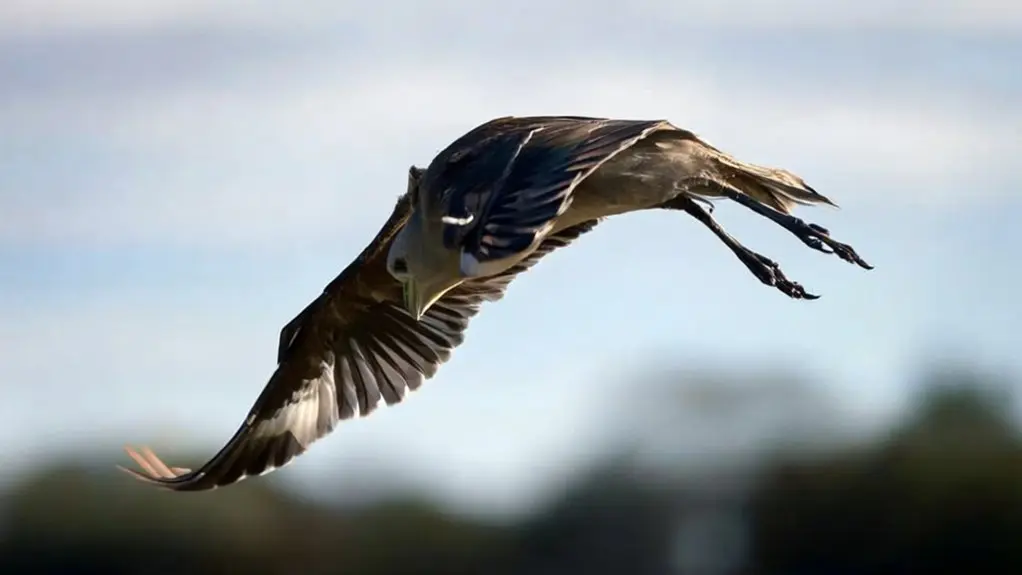
You can’t fly with one wing because birds rely on synchronized wing movements to generate the lift, balance, and thrust needed for stable flight. Losing a wing disrupts this coordination. It forces birds to adapt by increasing wingbeat frequency, shifting to gliding, or relying on climbing and hopping for mobility.
While some species show remarkable resilience through physical and behavioral changes, their flight capabilities remain limited. Exploring these adaptations reveals how birds survive and thrive despite such challenges.
How Birds Fly With Two Wings
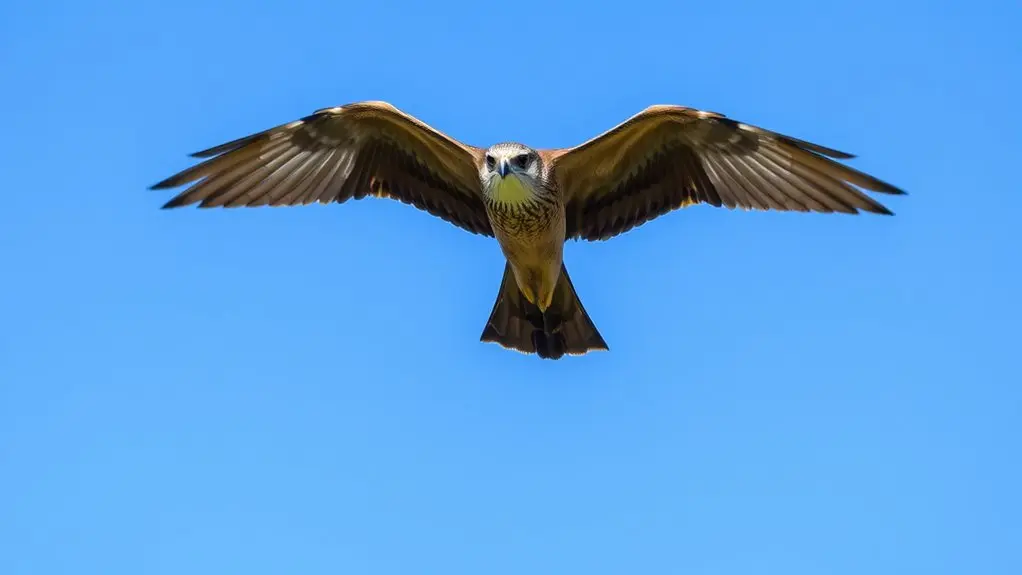
While you might take it for granted, birds depend on the precise coordination of both wings to generate lift and maintain balance in flight. Wing synchronization is critical; each wing moves in harmony to produce consistent lift and thrust forces.
This bilateral coordination ensures aerodynamic stability, allowing the bird to counteract turbulence and maintain controlled trajectories.
When executing complex maneuvers like turning or hovering, subtle adjustments in wing beat timing create lift asymmetry, enabling precise directional control.
The interplay between lift generation and balance maintenance hinges on this synchronization, making it indispensable for efficient flight.
Without it, aerodynamic stability collapses, and flight becomes erratic or impossible.
So, the dual-wing system, through meticulous synchronization, underpins the fundamental mechanics that allow birds to fly smoothly and accurately.
It’s pretty amazing when you think about how much goes into what seems like effortless flight.
What Life Is Like With One Wing
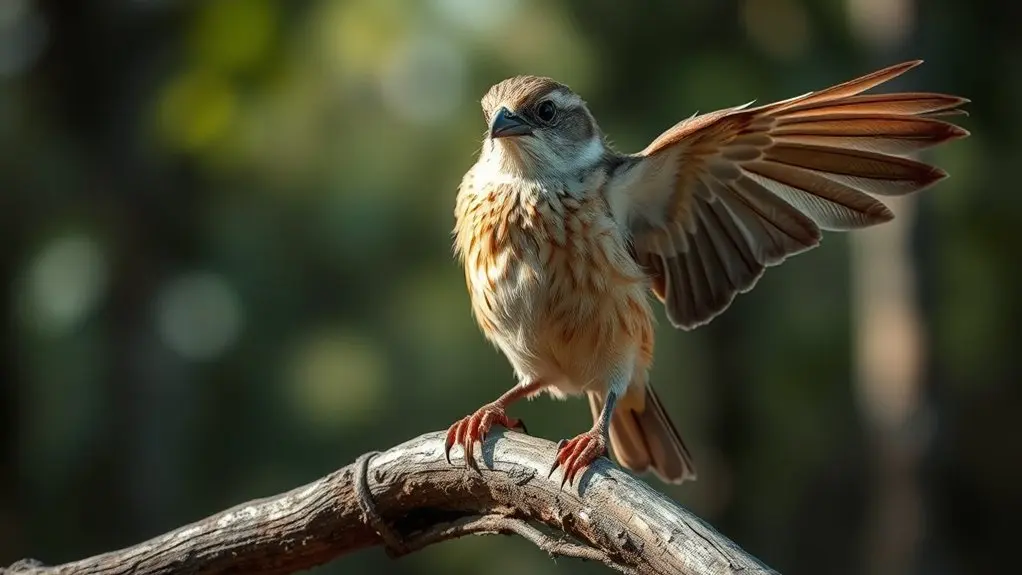
When you lose a wing, you quickly adapt your daily movements. You start relying more on walking and climbing to get around. It’s a big change, and you face mobility challenges that need careful energy management.
Flight attempts become more limited, usually just short bursts here and there.
Even with these obstacles, you develop a strong emotional resilience. You build close social bonds and adjust your behavior to keep yourself feeling well. It’s all about finding new ways to live and thrive despite the loss.
Daily Life Adjustments
Although birds with one wing face significant challenges in flight, they adapt their daily movements by relying heavily on climbing, hopping, and walking to get around. You’ll notice they perform important behaviors like feather maintenance carefully to ensure they stay insulated and balanced even with limited mobility.
Their nesting habits change too. They tend to pick sheltered, easy-to-reach spots that cut down on the need for flight and save energy.
You’ll often see them choose nests close to the ground or within easy reach. This makes feeding and caring for their young much less tiring since they don’t have to fly a lot.
Taking off might be tough, but they save energy by gliding when they can.
All in all, these specific behavior changes help birds with one wing keep an active and functional life in their environments.
Mobility Challenges Faced
Because a bird’s ability to sustain flight depends on balanced wing function, losing one wing drastically impairs its capacity to fly long distances or take off rapidly. You’ll notice that feather loss on the injured wing complicates aerodynamics further, disrupting air flow and lift generation.
Without symmetrical wings, the bird can’t maintain stable flight, often grounding it permanently.
During wing rehabilitation, mobility becomes a focus. You’ll observe the bird compensating through enhanced climbing, walking, and perching skills, relying heavily on its legs and beak.
However, the inability to escape predators quickly increases vulnerability profoundly.
Although some birds adapt physically, their mobility challenges remain substantial and require careful monitoring. Ultimately, these impairments highlight how critical intact wing structure and feather integrity are for functional avian mobility.
Emotional Resilience Displayed
Despite losing a wing, many birds show impressive emotional resilience by keeping up social interactions and showing signs of contentment. Birds like cockatoos and lovebirds, for example, display remarkable emotional strength. They form strong social bonds even with their physical limitations.
They make up for their loss by improving climbing skills, using their beaks more, and increasing vocalizations to engage with their surroundings. These adaptations really highlight how they can thrive and bounce back from trauma. You’ll notice they maintain cheerful and curious behaviors, which are signs of positive well-being.
| Behavior | Adaptation | Outcome |
|---|---|---|
| Social Interaction | Increased Vocalizations | Strengthened Bonds |
| Mobility | Enhanced Climbing | Environmental Exploration |
| Emotional State | Play and Curiosity | Sustained Contentment |
You’ll see that emotional resilience in wingless birds helps them live fulfilling lives despite challenges.
Flight Adaptations in One-Winged Birds
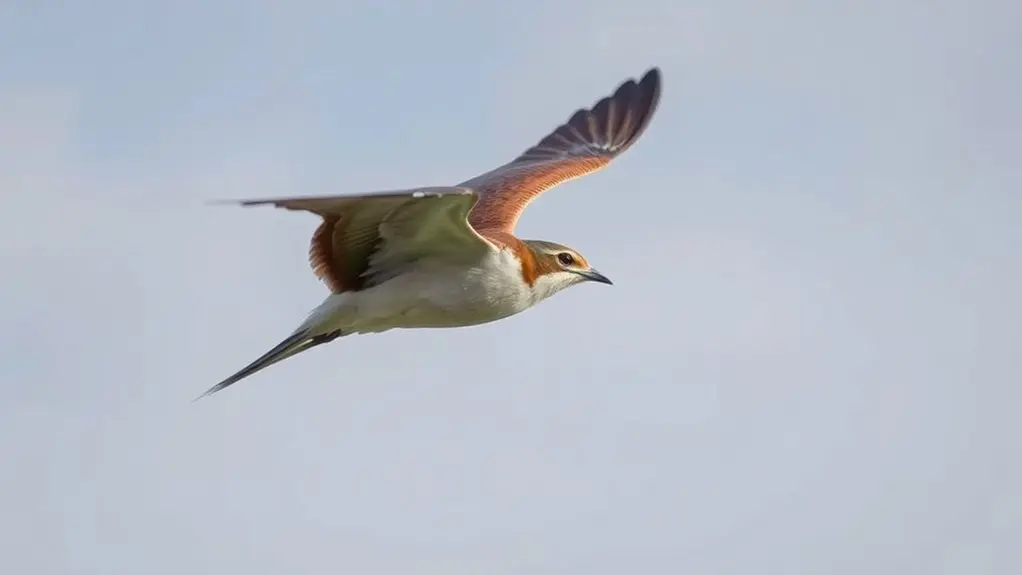
When a bird loses one wing, it adapts its flight mechanics to make the most of its remaining appendage. Changes in wing morphology and flight mechanics become critical for maintaining balance and lift.
You’ll notice these key adaptations:
- Increased Wingbeat Frequency – To compensate for reduced lift, birds often flap their single wing more rapidly.
- Altered Flight Path – They adjust trajectories to stabilize flight, minimizing energy expenditure.
- Behavioral Adaptations – Preferential gliding or soaring helps conserve energy during flight.
These adaptations depend heavily on the bird’s species and size, as well as the extent of wing loss.
Structural and muscular modifications might also develop, enabling partial flight or even hovering in some cases. It’s pretty fascinating how these changes work.
Understanding these precise changes reveals how one-winged birds optimize their flight despite significant physical challenges. It just goes to show how adaptable nature can be.
How Birds Without Flight Adapt Through Climbing and Hopping
While some birds adapt their flight mechanics to cope with having one wing, others shift their focus entirely to ground-based locomotion. You’ll notice these birds increase climbing and hopping to get around, using their beaks and feet to ascend trees or branches. This kind of behavior is super important for accessing food, escaping predators, and doing essential stuff like building nests.
Their leg muscles get stronger, which helps with agility and endurance when hopping between perches or on the ground. Even though they can’t fly much, they still keep their feathers in great shape to stay balanced and insulated during these activities.
It’s pretty interesting how they manage all that.
These adaptations let them forage efficiently and socialize within their environment. By relying on climbing and hopping, birds without flight keep their independence and survival skills sharp every day. It’s amazing how they adjust and thrive despite their limitations.
Care for Birds With Wing Amputations
How do you guarantee the best recovery for a bird after wing amputation? You focus on controlled activity, environmental safety, and behavioral support. First, limit the bird’s movement to prevent strain on the healing site.
Next, create a soft, secure habitat that accommodates hopping and climbing. This reduces fall risks and helps the bird feel safe during recovery. Also, watch feather grooming closely because proper grooming keeps feathers healthy, which supports limited flight and insulation.
Additionally, support the bird’s natural behaviors like nest building. This encourages mental stimulation and physical activity without overexertion.
Make sure to monitor wound healing daily so you can catch any signs of infection early.
Inspiring Stories of Birds Thriving With One Wing
Although losing a wing presents significant challenges, many birds adapt by modifying their flight mechanics and behavior. This lets them continue flying effectively. For instance, cockatoos and lovebirds compensate with their intact wing, adjusting wingbeat frequency and angle to maintain lift and maneuverability.
Their feather coloration remains essential for social signaling within flocks. This helps with acceptance and support, which directly influences their survival and adaptation.
Plus, these birds change their nesting behaviors, like building nests in accessible spots or relying on partners to help out.
Such resilience shows remarkable neuro-muscular plasticity and behavioral flexibility. When you see these birds thriving, you’re witnessing the intricate mix of physiological adaptation and social dynamics.
It’s what enables them to lead active, fulfilling lives despite losing a wing.
Frequently Asked Questions
Can Birds With One Wing Mate and Reproduce Successfully?
Yes, you can observe that birds with one wing reproduce successfully by relying on flight adaptation and wing regeneration to maintain balance and courtship displays. This proves flight isn’t essential for mating, but overall health and behavior are critical factors.
Do One-Winged Birds Face More Predators in the Wild?
Yes, you’ll notice one-winged birds face more predators due to limited flight adaptation. Wing rehabilitation improves maneuverability, but their compromised escape tactics increase vulnerability.
This forces them to rely more on hiding and alternative survival strategies in the wild. It’s a tough situation for these birds, and they have to get creative to stay safe.
How Do One-Winged Birds Communicate Compared to Two-Winged Birds?
You’ll see one-winged birds use vocal signals and exaggerated body language, compensating for limited wing strength and flight adaptation. Their communication relies on visual cues like feather puffing and posture shifts. This replaces symmetrical wing displays typical in two-winged birds.
Basically, since they can’t use both wings, they get creative with sounds and movements to get their message across. It’s pretty fascinating how they adapt!
Are There Specific Bird Species More Prone to Surviving With One Wing?
You’ll find species like cockatoos and parrots better adapted to survive feather loss and wing damage due to their climbing skills and social bonds. These birds can rely on their ability to move around and their flock for support, which helps them cope.
On the other hand, raptors and large soaring birds struggle because they rely heavily on flight for survival. Without full wing function, getting food and escaping predators becomes a huge challenge for them. So, they’re less likely to manage well with just one wing.
Can One-Winged Birds Be Trained for Tasks Like Rescue or Therapy?
You can train one-winged birds for rescue or therapy by leveraging feather repair and flight adaptation techniques. Focus on balance and social behavior to help them adjust.
Using positive reinforcement is key. It helps enhance their task-specific movements and overall effectiveness.
With patience and the right approach, these birds can become surprisingly capable. It’s all about working with their unique abilities.
Conclusion
You might think a bird with one wing can still fly, but physics says otherwise. Two wings are essential for lift and balance. Without both, birds can’t generate enough thrust or maintain stability in the air.
Instead, they adapt by climbing, hopping, or using prosthetics. Understanding these precise biomechanical limits helps you appreciate how specialized avian flight truly is. That’s why one-winged birds inspire us through resilience rather than airborne feats.