
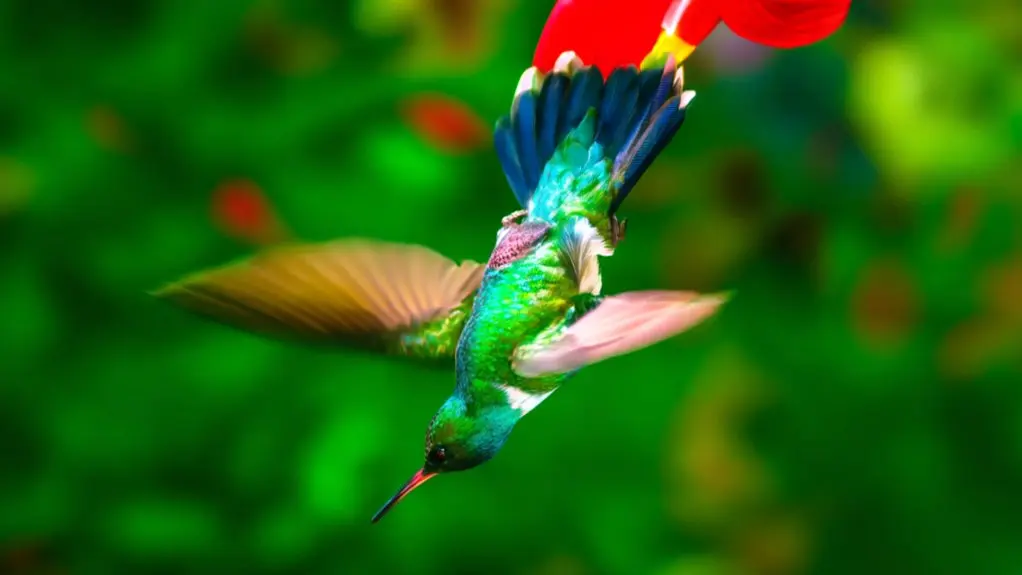
You might be surprised, but only a few bird species can fly upside down for sustained periods. Most birds’ feather mechanics, like locking and alignment, mess with their lift when they’re inverted. So, flying upside down usually only lasts for a brief moment.
That said, hummingbirds are pretty unique. They can hover and even fly upside down during courtship thanks to their special wing and muscle adaptations.
Ravens also pull off extended inverted flights, but mostly during social displays. Peregrine falcons, on the other hand, do quick flips when diving to hunt. It’s pretty cool to explore the fascinating details behind these rare aerial stunts.
Can Birds Fly Upside Down? Understanding the Basics
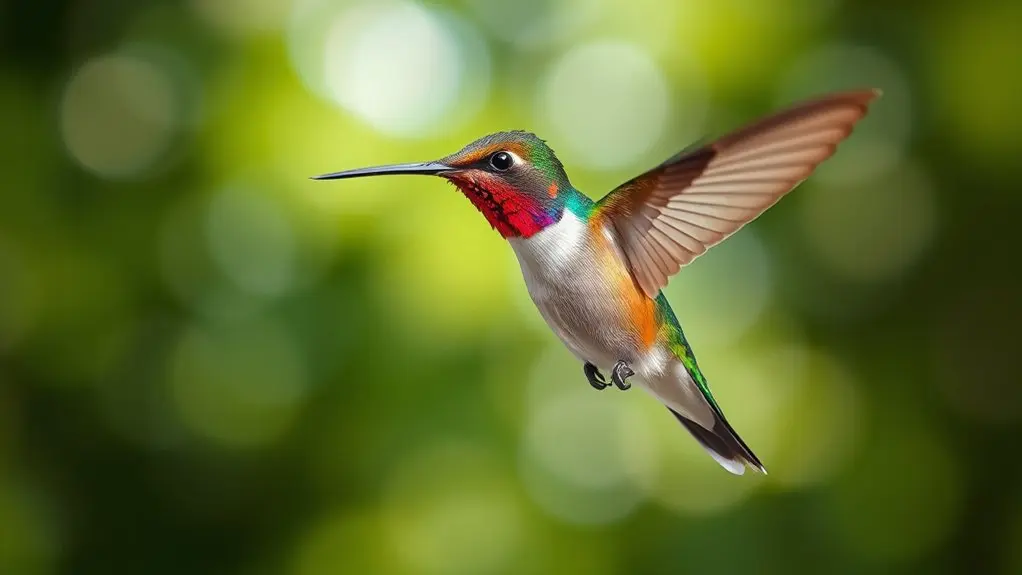
How exactly do birds manage or fail to fly upside down? Most birds can’t keep flying inverted because their feathers, which are designed to lock together, lose this alignment when flipped. This messes with their flight stability.
Most birds can’t sustain inverted flight because flipping disrupts their feather alignment and stability.
Feather flexibility also plays a part. Some movement is needed, but if the feathers are too flexible, they separate, and that reduces lift.
Birds like peregrine falcons can briefly flip upside down during high-speed dives. They rely on precise body control, not on continuous upside-down flight.
Hummingbirds are special though. They’ve unique wing and muscle adaptations that let them hover and even fly backward or upside down.
Usually, when birds fly inverted, it’s for specific reasons like courtship, acrobatics, or hunting—not for regular flying.
How Feathers Shape Upside-Down Flight Ability
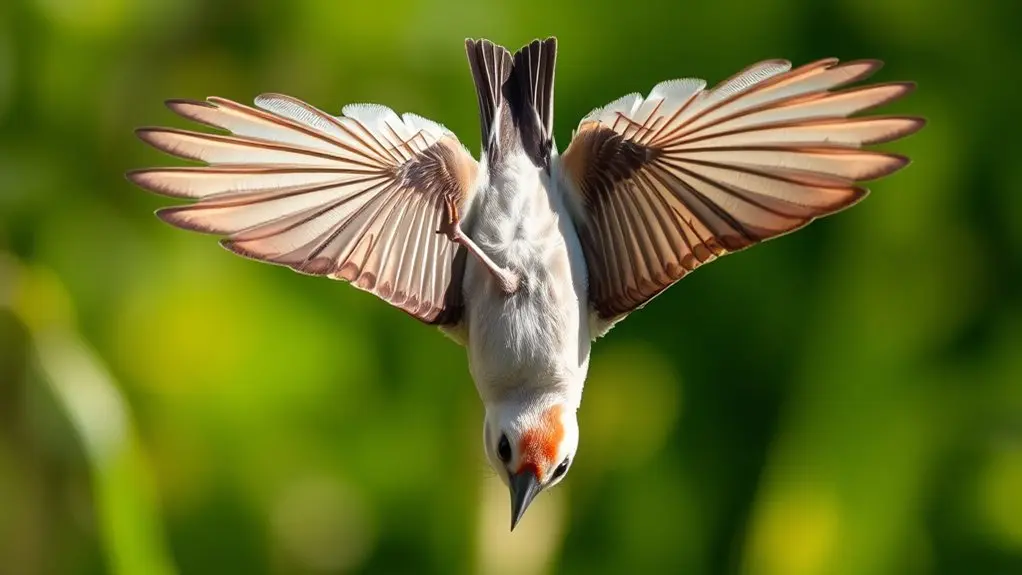
Although you might assume that birds’ feathers simply provide lift during flight, their intricate arrangement plays a vital role in determining whether they can sustain upside-down flight.
Feather mechanics involve the precise locking of wing feathers, arranged like Venetian blinds, to create a continuous aerodynamic surface during normal flight. This aerodynamic design guarantees stability and efficient lift.
But here’s the catch: when a bird flips upside down, these feathers rotate open. This disrupts the aerofoil and allows airflow to pass through instead of generating lift.
Because of this mechanical limitation, most birds can’t maintain inverted flight for long.
So, understanding this interplay between feather structure and aerodynamic function really clarifies why feather mechanics are essential in shaping a bird’s ability or inability to fly upside down with sustained control.
It’s pretty fascinating how much goes into just staying in the air!
Bird Species That Can Fly Upside Down
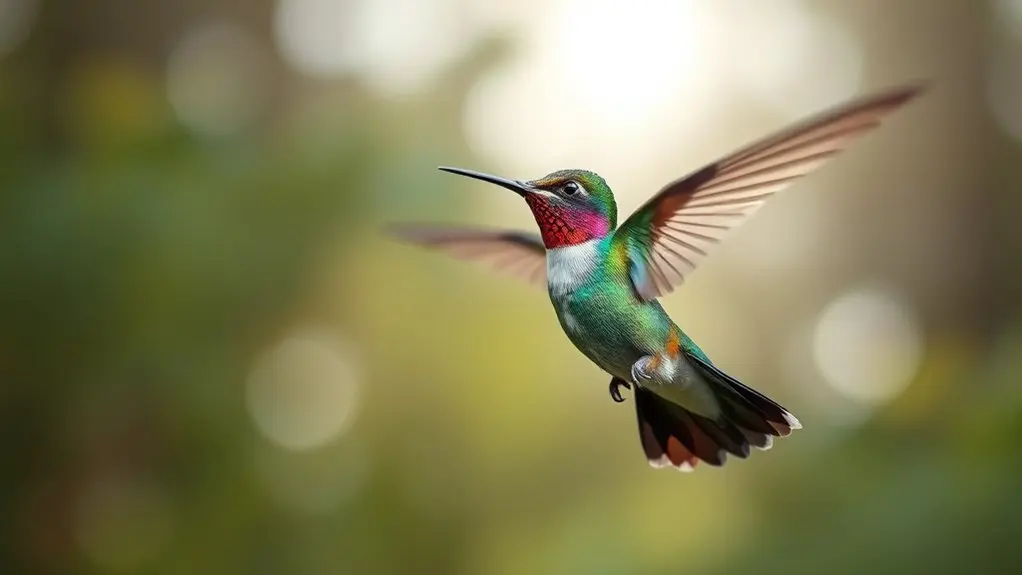
When you observe birds capable of flying upside down, you’ll find that this rare skill is limited to only a few species with specialized flight mechanics. Hummingbirds uniquely perform sustained upside-down flight, particularly during courtship displays.
Ravens also demonstrate long-distance upside-down flight, which may influence their complex migration patterns and nest building behaviors. Peregrine falcons and some gulls, skimmers, and ospreys display brief upside-down maneuvers mainly during hunting or aggressive interactions.
These behaviors reflect adaptations in flight control and sensory orientation.
| Species | Flight Upside Down Type | Ecological Context |
|---|---|---|
| Hummingbirds | Sustained, courtship display | Influences nest building |
| Ravens | Long-distance flight | Affects migration patterns |
| Peregrine Falcons | Brief, during dives | Hunting efficiency |
| Gulls/Skimmers/Ospreys | Momentary, aggressive encounters | Flock maneuvering |
Special Flight Skills of Hummingbirds and Peregrines
Because hummingbirds and peregrine falcons have evolved unique wing structures and musculature, they can pull off some pretty amazing flight moves that most other birds just can’t.
Hummingbirds, for example, use advanced flight mechanics to hover in place and even fly upside down and backward sometimes—especially when they’re showing off during courtship. Their rapid wing beats and flexible joints give them incredible aerial agility.
This helps them out a lot when it comes to mating displays and finding food.
Peregrine falcons, on the other hand, do something different. They dive headfirst at insane speeds, twisting their bodies and heads almost 180 degrees so they can keep their eyes locked on prey during the attack.
This move not only makes them super efficient hunters but also creates optical illusions that confuse their prey and anyone watching.
These special flight skills show how evolution has shaped them to maximize survival by finely tuning the way they control their muscles and the air around them.
Upside-Down Flight in Ravens and Other Birds
If you observe ravens in Iceland, you’ll notice they often fly upside down during courtship displays and aerial maneuvers. Sometimes, they maintain this inverted flight for distances up to 1000 meters. This behavior is more frequent near resting sites and in large flocks, showcasing advanced aerial control.
Ravens twist their necks to keep their heads focused, which demonstrates remarkable agility. Prolonged inverted flight highlights their feather durability and their ability to sustain flight speed despite unconventional positioning. It’s pretty fascinating how they manage this with such ease.
| Aspect | Details |
|---|---|
| Species | Ravens and other birds |
| Flight type | Upside-down during courtship/maneuvers |
| Distance covered | Up to 1000 meters |
| Feather durability | High, supports prolonged inversion |
| Flight speed | Maintained despite inverted posture |
When and Why Birds Fly Upside Down
Observing ravens maintain inverted flight over extended distances raises questions about the specific circumstances that prompt such behavior. Birds rarely fly upside down during normal flight because their feather durability limits aerodynamic efficiency. Feathers tend to open, which disrupts lift.
Ravens rarely fly upside down since feather durability limits lift during extended inverted flight.
However, some species like peregrine falcons and hummingbirds exploit brief upside-down maneuvers during hunting or courtship. They rely on exceptional wing flexibility to execute rapid twists. It’s pretty impressive how they pull that off.
Ravens and other large birds use inverted flight mainly during aerial acrobatics, social interactions, or aggressive encounters. This behavior isn’t a standard flight mode but more of a specialized adaptation.
You’ll also notice that birds twist their necks to keep their heads upright, which helps them maintain visual focus on prey or rivals.
Frequently Asked Questions
Do Birds Experience Dizziness When Flying Upside Down?
You won’t experience dizziness in birds flying upside down because their wing structure and flight mechanics, combined with specialized vestibular systems, enable them to maintain balance and orientation effectively during inverted flight maneuvers.
Birds are pretty amazing when it comes to movement. Their bodies are designed to handle all sorts of crazy flight tricks without getting disoriented. So, flying upside down? They’ve got it covered.
Can Flying Upside Down Harm a Bird’s Health?
You might think flying upside down harms birds, but thanks to bird flight mechanics and evolutionary adaptations, their muscles and skeleton handle brief inversions safely. This minimizes strain and prevents lasting health issues under natural conditions.
How Do Baby Birds Learn to Fly Upside Down?
You learn how baby birds develop upside-down flight by studying their nesting behavior and wing anatomy. They practice controlled flights, gradually improving coordination and muscles. They also mimic their parents’ acrobatics.
This helps them enable brief inverted glides through trial and error. It’s a process of learning by doing, really. They get better bit by bit with each attempt.
Are There Any Predators That Use Upside-Down Flight to Hunt?
You won’t find predators flipping upside down like acrobats in a circus! Bird migration and flight aerodynamics favor high-speed dives or stealth, not inverted hunting.
In fact, upside-down flight is mainly an escape tactic for prey species. So when it comes to hunting, predators usually stick to more straightforward approaches. It just works better for them.
Has Upside-Down Flight Inspired Any Human Aviation Designs?
You’ll find that upside-down flight inspired aerial acrobatics and flight mechanics in aviation. Engineers mimic bird wing structures and dynamic maneuvers to enhance aircraft agility, stability, and control.
This is especially true in drones and aerobatic vehicles. These designs help pilots perform complex stunts and maintain better handling during challenging flight conditions. It’s pretty cool how nature influences technology in this way.
Conclusion
Now that you’ve uncovered which birds can defy gravity and fly upside down, you might wonder what secrets lie behind this rare skill. It’s not just feathers or wing shape. It’s a complex interplay of anatomy, physics, and behavior.
So next time you spot a bird twisting through the air, consider this: what other unseen adaptations allow it to master such astonishing maneuvers? The science behind upside-down flight is far from fully revealed.