
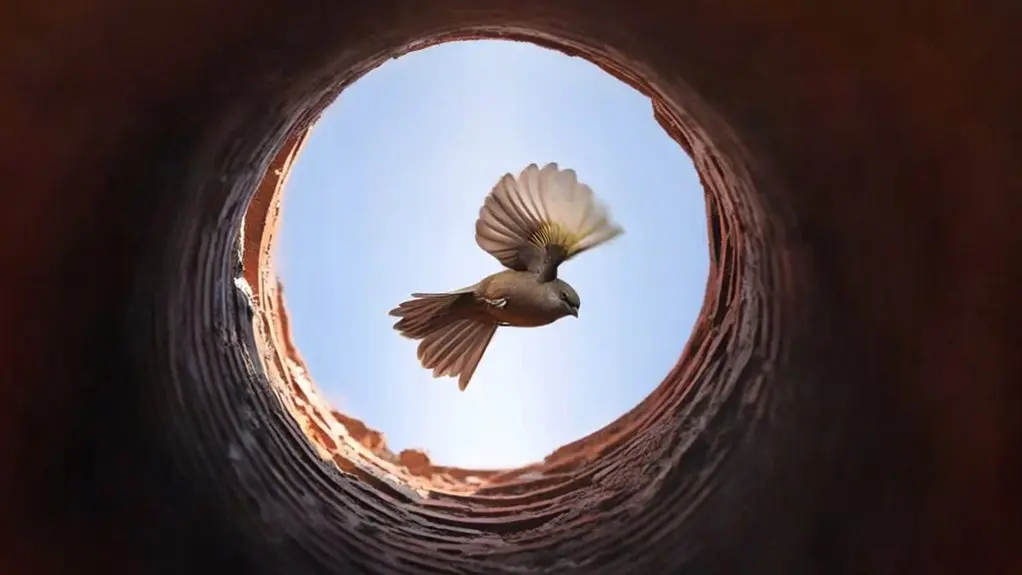
You might wonder if birds can fly up a chimney, but their ability is very limited because of the narrow, smooth flue walls and steep angles. Birds often enter through small gaps or unprotected openings, looking for shelter or a place to nest.
However, they struggle to gain lift or navigate upward, which often leads to them getting stuck. This can cause problems like blockages and even fire hazards.
It’s important to understand why birds get trapped and how to prevent it if you want to manage the issue effectively.
How Do Birds Enter Your Chimney?
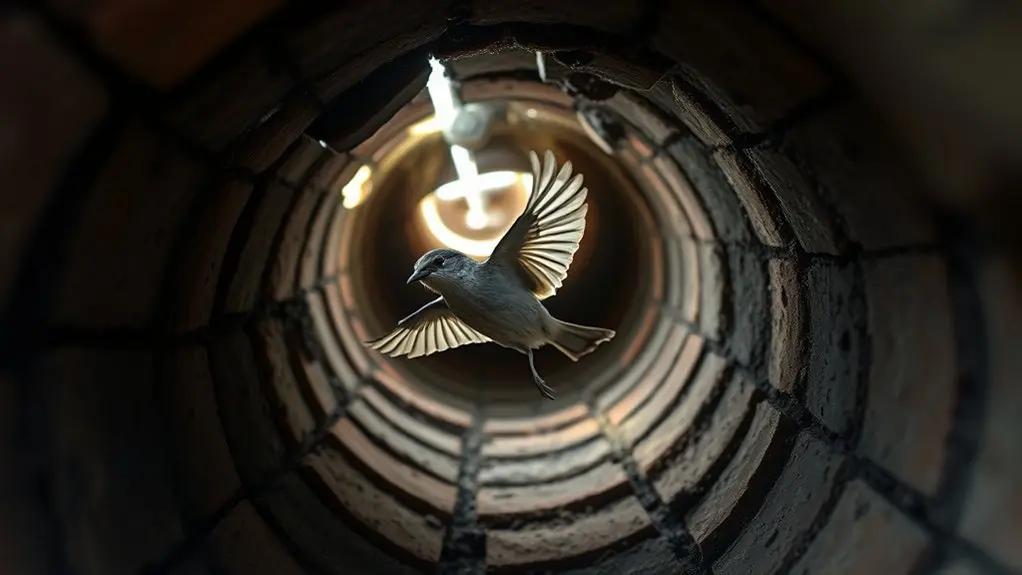
Although chimneys are designed for ventilation, birds can enter them through open or damaged caps, gaps, and unsealed vents. During bird migration, many species look for temporary shelter. Chimneys offer an attractive option because they’re similar to natural nesting sites, like caves or hollow trees.
Smaller birds can slip through even tiny openings or cracks in the chimney structure. If your chimney has unprotected openings, it might accidentally guide birds into the vertical shaft. This is especially true if the cap is missing or damaged.
Birds’ nesting habits drive them to use these enclosed spaces for shelter or breeding. Knowing how they get in is key to stopping birds from flying up your chimney.
This is important during migratory seasons when the chance of accidental or intentional entry goes up.
What Are the Signs of Birds in Your Chimney?
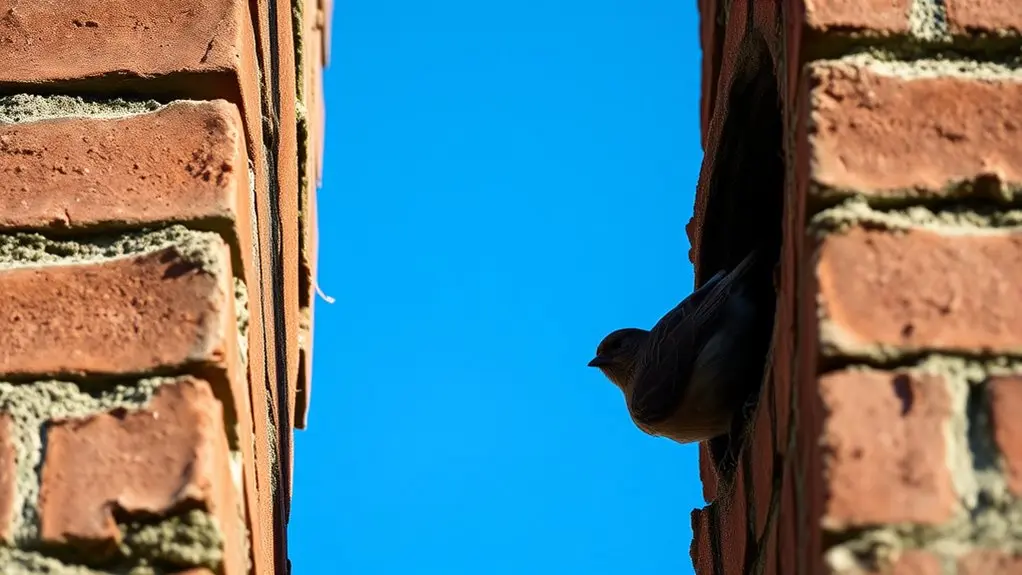
If birds have taken residence in your chimney, you’ll often notice distinct signs that indicate their presence. During bird migration seasons, you might hear chirping, fluttering, or scratching sounds at dawn and dusk, reflecting their nesting habits.
Visually, nests constructed from twigs, feathers, or eggshell fragments near or inside the chimney are evident indicators.
Accumulated droppings produce white streaks on the chimney exterior or roof, accompanied by musty or ammonia-like odors from organic waste and nesting materials.
Observing these signs suggests active bird habitation tied to their natural migration and nesting behaviors.
Monitoring these indicators scientifically helps you confirm avian presence without ambiguity. That way, you can manage the situation appropriately while understanding the ecological context of their chimney occupation.
What Risks Do Birds in Chimneys Pose?
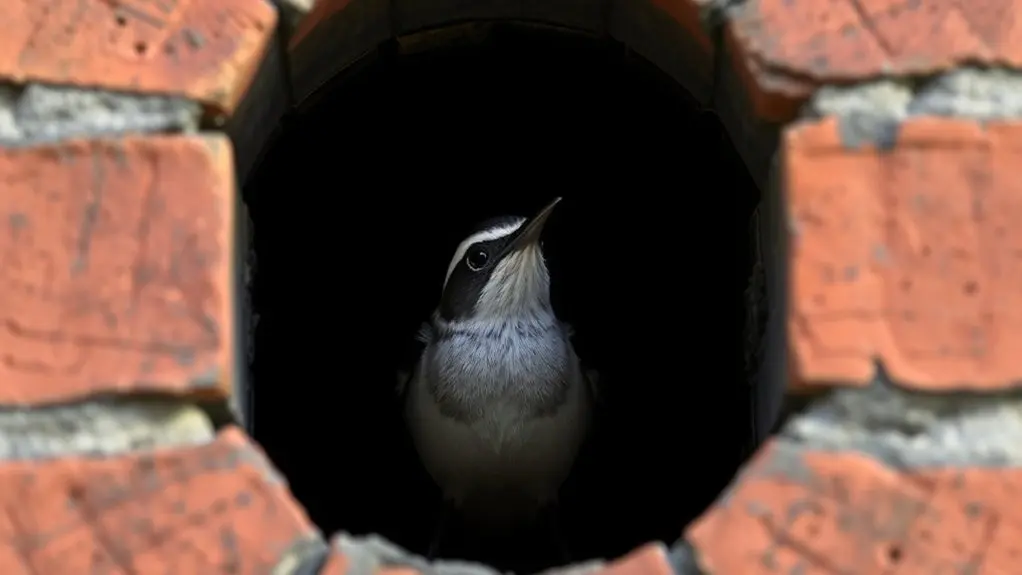
When birds decide to make a nest in your chimney, it can lead to some serious risks. One of the biggest concerns is fire hazards because the nesting materials can easily catch fire.
On top of that, those nests and droppings don’t just sit there harmlessly—they can actually speed up structural damage by causing corrosion and blockages.
And it’s not just about the building itself. You might also notice health issues and unpleasant odors since bird droppings can carry bacteria, fungi, and parasites.
Fire Hazards From Nests
When birds build nests inside chimneys, they introduce significant fire hazards that you need to address promptly. Nest safety becomes essential because bird behavior leads them to gather highly flammable materials like twigs, leaves, and feathers. These materials can easily ignite from heat sparks or fireplace malfunctions.
These nests often block the chimney flue, causing smoke and toxic gases to back up into your home, which increases fire risk. Plus, blocked chimneys encourage creosote and combustible debris buildup, making chimney fires even more likely.
You must handle nest removal carefully. If done improperly or too soon, it can damage the chimney and actually make fire risks worse.
Structural Damage Risks
Although birds nesting in chimneys may seem harmless, their presence can cause significant structural damage over time. Chimneys become a habitat for birds, which means they accumulate nesting materials and droppings. This buildup can obstruct ventilation and speed up the deterioration of chimney walls and mortar.
When airflow is blocked, it increases the risks of smoke backing up and even fire. Plus, organic debris creates the perfect environment for mold growth and corrodes metal components inside the chimney. All these factors can make chimney maintenance more complicated.
| Structural Damage Risk | Explanation |
|---|---|
| Ventilation Blockage | Nests block airflow, impairing proper ventilation |
| Wall and Mortar Deterioration | Droppings and debris erode masonry |
| Fire Risk Increase | Dry nesting material can ignite from sparks or heat |
| Mold Growth | Organic waste promotes mold development |
| Metal Corrosion | Droppings corrode internal chimney components |
Health Concerns And Odors
Because birds frequently nest in chimneys, their droppings can harbor harmful bacteria, fungi, and parasites that pose health risks to residents. Bird droppings accumulate alongside nesting materials, creating an environment conducive to fungal growth, including mold.
This fungal growth can trigger respiratory issues and allergic reactions in occupants.
Additionally, decomposing droppings and birds emit ammonia-like odors that degrade indoor air quality and attract pests. The buildup of debris often obstructs airflow, reducing ventilation and increasing indoor air pollution.
Warm weather makes these odors worse, which just adds to the discomfort.
You should know that these health concerns aren’t just nuisances—they can be real hazards. So, it’s important to address bird infestations promptly. Doing so helps prevent microbial contamination and keeps the air quality inside your home safe.
When Do Birds Usually Leave Chimneys on Their Own?
How long birds remain in chimneys depends largely on their breeding and migration cycles. Bird nesting habits mean most birds leave once their young have fledged. This typically happens about 4 to 6 weeks after eggs are laid.
Migratory patterns also play a big role in when birds leave. Species like chimney swifts usually vacate chimneys in late summer or early fall. They do this in response to environmental cues.
| Time Period | Reason for Leaving | Bird Activity |
|---|---|---|
| 4-6 weeks post-laying | Fledging of young | Parents and fledglings depart |
| Late summer/fall | Migration onset | Migratory birds vacate chimneys |
| Spring | Nesting and incubation | Birds remain to care for eggs |
| End of nesting season | Young capable of flight | Natural departure occurs |
Which Birds Like to Nest in Chimneys?
When you observe chimneys during nesting season, you’ll find that chimney swifts are the primary species using these structures. They build nests from twigs and saliva inside the vertical shafts. Bird nesting in chimneys happens because these spots offer sheltered, elevated locations that are perfect for protection and raising young.
Besides chimney swifts, other birds often nest in chimneys too. House sparrows like enclosed spaces for breeding. Pigeons are drawn by the height and shelter chimneys provide. Starlings and swallows also take advantage of chimneys during nesting season, popping in when they can.
Chimney safety can become an issue since these birds tend to reuse nests year after year. This can block ventilation and even increase the risk of fire.
Knowing which birds use chimneys helps you figure out the risks and handle bird nesting responsibly and scientifically.
How Can You Prevent Birds From Entering Your Chimney?
You can keep birds out of your chimney by installing a durable, critter-proof chimney cap that fits snugly at the base. It’s a simple step that really makes a difference.
Also, make sure to check your chimney regularly. This way, you can spot and seal any gaps that birds might use to get inside.
On top of that, using bird deterrents during the non-nesting seasons can help. It’s a gentle way to discourage birds from landing or trying to build nests without disturbing them when they’re raising their young.
Chimney Caps Importance
Although chimneys provide essential ventilation, they can also be an open invitation for birds looking for shelter or a place to nest. Installing a properly fitted, critter-proof chimney cap with a fine mesh is the best way to keep birds out. It stops them from entering or nesting inside the chimney, which helps reduce blockages and fire hazards.
When you’re picking out a chimney cap, make sure it has a tight seal and is the right size to keep birds from getting in. It’s also a good idea to choose durable materials like stainless steel or copper because they last longer and provide better protection.
Don’t forget to maintain and inspect the chimney cap regularly. Adding this to your routine chimney maintenance will help keep it working effectively over time.
Regular Chimney Inspections
Proper chimney maintenance goes beyond installing a secure chimney cap; it requires regular inspections to identify and address vulnerabilities that birds might exploit. During these inspections, you can detect and seal small gaps or cracks that serve as entry points for birds.
Installing a high-quality, critter-proof chimney cap during maintenance further enhances bird deterrents by preventing nesting and intrusion.
Routine checks also help you spot early signs of bird activity, such as droppings or nesting materials, minimizing infestation risks. Scheduling inspections seasonally, particularly before and after migration periods, ensures timely detection of potential problems.
Employing professional chimney services allows thorough cleaning and assessment of the flue and damper, making sure all bird deterrents are intact and effective in preventing bird entry.
It’s definitely worth having the experts take a look to keep your chimney safe and bird-free.
Seasonal Bird Deterrents
When migration seasons approach, preventing birds from entering your chimney requires a combination of targeted deterrents and timely maintenance. Seasonal migration periods, typically early spring and late summer, increase the risk of birds seeking nesting sites in chimneys.
To effectively apply bird deterrents, focus on the following:
Install a high-quality, critter-proof chimney cap with a tight seal to block entry points. Conduct regular inspections and cleanings before migration periods to eliminate nesting opportunities.
Apply physical deterrents such as spike strips, electric shock tracks, or bird-off gels around the chimney opening to discourage landings.
Additionally, ensure any gaps at the base of chimney caps are sealed. Timing these measures outside nesting seasons complies with wildlife protection laws and maximizes deterrent effectiveness during seasonal migration.
Taking these steps at the right time really helps keep your chimney bird-free.
How to Safely Remove Birds Stuck or Nesting in Your Chimney
If birds fly up your chimney and become trapped because the flue or damper is closed, you should try to create a safe exit. Open windows and doors to help calm them down and guide them outside. Using a flashlight can help you see where the bird is and figure out if it’s stuck or has already escaped.
Bird migration season often lines up with nest building, so sometimes trapped birds might be nesting inside your chimney. That makes removing them a bit more complicated. If the bird is injured or stuck, it’s best to call a professional wildlife rescue service.
These experts know how to safely remove birds while following protection laws. To keep this from happening again, consider installing a chimney cap that blocks animals from getting in. This simple step helps stop birds from nesting or getting trapped during migration. It’s a smart way to protect your chimney and keep local birds safe too.
Why Do Birds Struggle to Fly Out of Chimneys?
Understanding why birds often struggle to exit chimneys after becoming trapped reveals important aspects of their behavior and the physical environment inside the flue.
Birds trapped in chimneys face unique behavioral and environmental challenges that hinder their escape.
The steep angle of chimney architecture challenges bird flight mechanics, as birds can’t easily ascend vertically in confined, smooth spaces. Inside, they often become disoriented, which makes it harder for them to find the exit.
You should consider these factors: limited momentum generation due to narrow, smooth surfaces impedes flight control and lift. Also, disorientation caused by a lack of visual cues inside the flue reduces their navigation accuracy.
On top of that, blockages from debris or nesting materials can physically obstruct escape routes.
All these things combined cause birds to panic and flap ineffectively, which decreases their chances of flying out without help.
Frequently Asked Questions
Can Birds Cause Structural Damage to Chimneys Over Time?
Yes, bird nesting can cause structural damage over time by introducing moisture and debris. These elements weaken mortar and masonry, which are essential to your chimney’s integrity.
To keep your chimney in good shape, regular inspections are a must. Prompt removal of nests and droppings helps prevent deterioration before it becomes a bigger problem. Taking these steps will go a long way in preserving your chimney.
Are Certain Chimney Materials More Attractive to Birds?
Yes, you’ll find bird nesting prefers rough chimney materials like brick, which offer crevices for shelter. Smooth liners tend to deter birds. But warm metal chimneys may attract migratory birds seeking shelter during their journeys.
It’s kind of interesting how the texture and temperature of the chimney can influence where birds decide to nest. So, if you’re thinking about bird activity around your chimney, the material really does make a difference.
Do Birds in Chimneys Affect Indoor Air Quality?
Yes, birds in chimneys create a bird habitat that compromises nest safety and indoor air quality. Their droppings and nesting materials introduce allergens, fungi, and bacteria. This can risk respiratory health and ventilation efficiency inside your home.
It’s not just about the mess—they can actually affect how well your chimney works. Plus, those allergens and bacteria might make breathing indoors tougher than it should be. So, keeping birds out of your chimney is really important for a healthy home.
Can Bird Droppings in Chimneys Lead to Health Issues?
You might encounter unwelcome surprises in chimneys, as bird droppings can cause health concerns by harboring harmful bacteria, fungi, and parasites.
These contaminants increase respiratory risks and demand regular cleaning to maintain safe indoor air quality.
Is It Legal to Remove Bird Nests From Chimneys?
You can only remove bird nests legally after the birds have left. This is important to follow bird nesting laws and chimney cleanup regulations.
Disturbing active nests is against federal protections. It can also lead to fines and legal problems. Sometimes, you might need permits to handle the nests properly.
Conclusion
Understanding how birds interact with your chimney helps you maintain both safety and harmony at home. While these feathered visitors might find chimneys inviting, they often face challenges finding their way out.
By recognizing signs and implementing preventive measures, you can gently guide them back to their natural habitats without harm. Taking thoughtful action ensures your chimney remains clear, protecting your household and supporting local wildlife in a balanced, respectful way.