
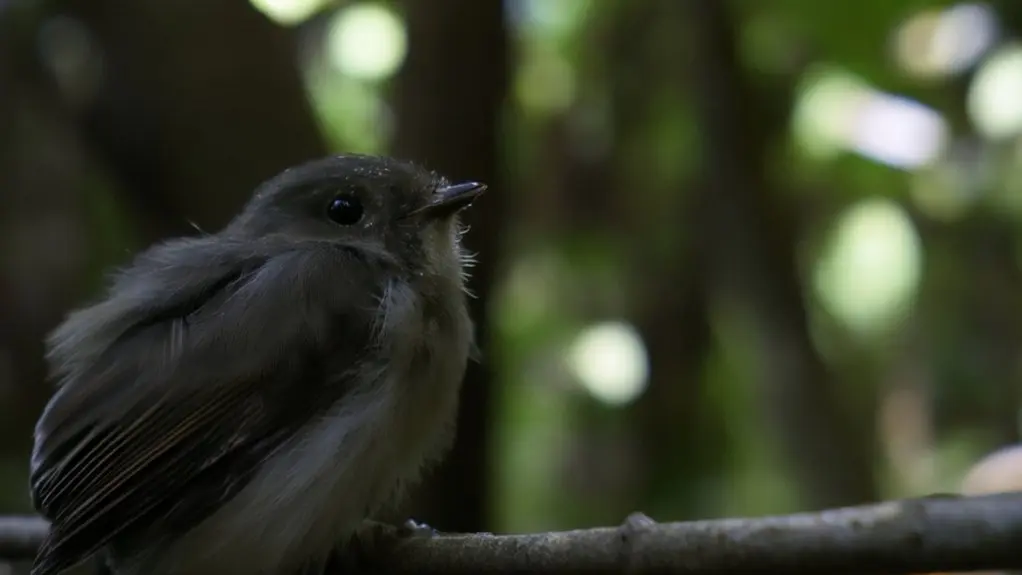
Yes, birds can get concussions, especially from high-speed collisions with reflective or transparent windows. These impacts cause internal brain trauma without visible wounds. This can lead to symptoms like disorientation, unsteady movements, and trouble perching or flying.
Immediate care is really important, especially if the bird is bleeding or unconscious. Getting help quickly can improve their chances of recovery and prevent serious complications.
Knowing the signs, handling injured birds properly, and using prevention methods can really make a difference. It helps support their survival after these kinds of accidents.
How Window Collisions Cause Bird Concussions
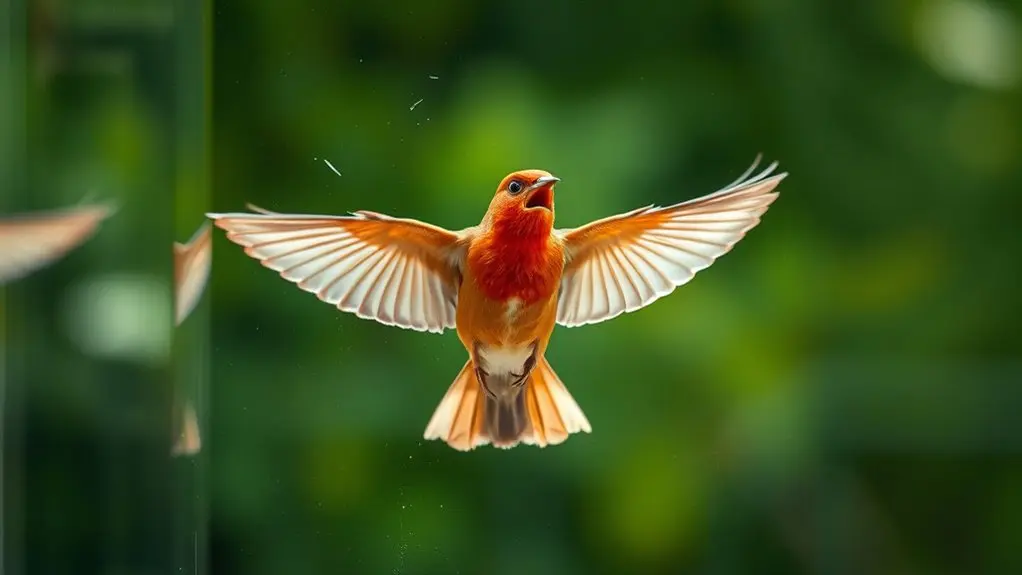
When birds strike windows at high speeds, they often sustain concussions similar to traumatic brain injuries in humans. The bird flight mechanics involve rapid, precise movements, but when a bird collides with window glass types like reflective or transparent panes, it can’t detect the barrier.
The kinetic energy from the impact causes the bird’s brain to shift inside the skull, leading to neurological trauma. Studies reveal that 95% of window-struck birds display concussion-like symptoms such as disorientation and loss of coordination.
Even without visible wounds, the internal injuries and brain swelling impair the bird’s ability to fly, forage, and navigate. These impacts disrupt essential functions and often result in long-term health complications or death due to the severe trauma sustained during window collisions.
How to Tell If a Bird Has a Concussion
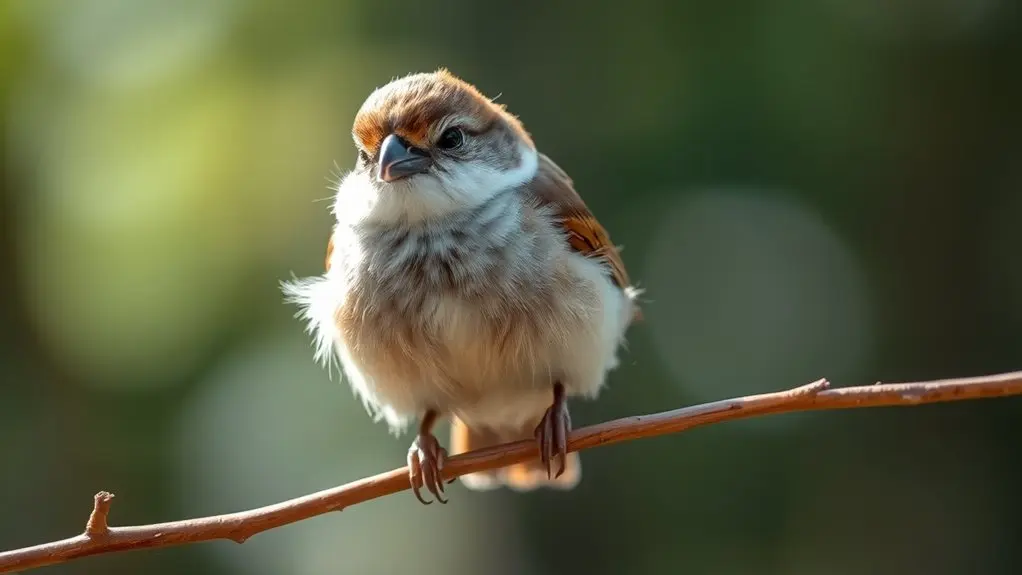
Birds that collide with windows often sustain concussions that impair their neurological functions. You can identify a concussion by closely observing their behavior and physical condition. Look for these signs:
- Disorientation or unsteady movements, including difficulty maintaining feather health due to compromised preening.
- Inability to perch properly, which may disrupt normal nesting habits.
- Head tilt, glazed, or unfocused eyes indicating neurological trauma.
- Persistent sluggishness or unresponsiveness, especially if the bird struggles to fly despite flapping its wings.
Since internal brain injuries aren’t immediately visible, monitor the bird carefully. If symptoms worsen or don’t improve within hours, contact a wildlife rehabilitator.
Prompt detection is vital to protect the bird’s survival and guarantee it can resume normal feather maintenance and nesting behaviors.
When and Why to Provide Immediate Care After a Bird Collision
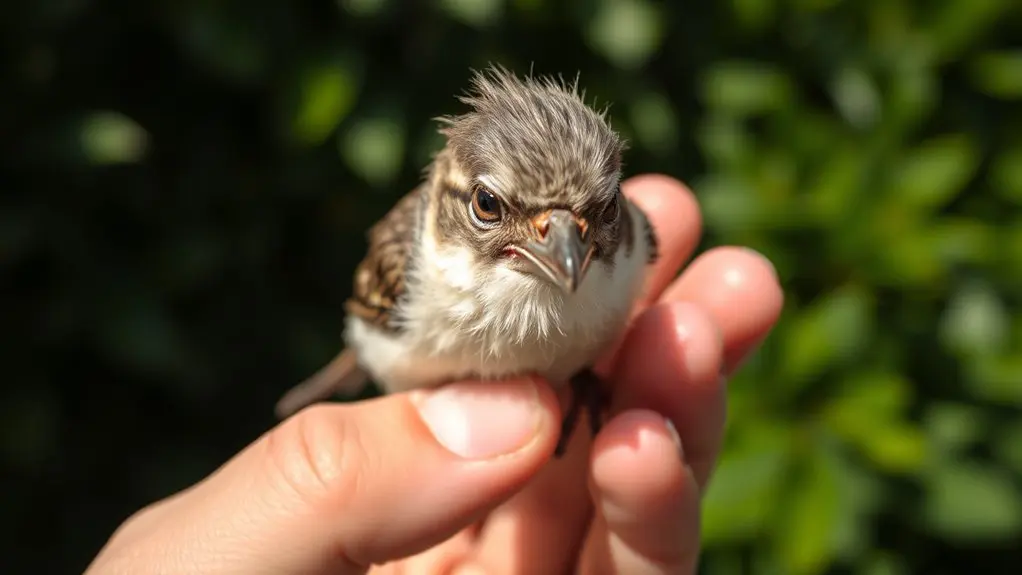
You should provide immediate care if you notice the bird can’t perch or move properly. These signs often point to serious internal injuries or a concussion.
When you handle the bird, be very gentle. Then, place it in a quiet, dark container to help reduce stress while you’re getting it ready for transport.
Getting the bird to a wildlife professional quickly is really important. It boosts the bird’s chances of recovery and helps prevent complications like hypothermia or neurological damage.
Signs Indicating Immediate Help
Although collisions with windows can seem minor, they often cause concussions that lead to serious neurological symptoms in birds. These injuries can be especially harmful during critical times like feather molting or bird migration.
When birds get hurt during these periods, their chances of survival drop a lot.
You should provide immediate help if you notice any of these signs:
- Disorientation or inability to perch properly, which shows neurological problems.
- Fluffed feathers, a possible sign of shock or internal injury.
- Immobility or helpless fluttering, meaning the bird can’t control its movements.
- Visible bleeding or black spinal fluid from the mouth, which points to severe trauma needing urgent care.
Getting the bird stabilized quickly and transporting it to a wildlife rehabilitator can really improve its chances of recovery. This is especially true during vulnerable stages like molting and migration.
Safe Handling Techniques
Noticing signs of injury after a bird collision is only the first step. Knowing how to handle the bird safely can prevent further harm and increase its chances of recovery. Always use thick gloves to protect yourself from sharp talons or beak.
Place the bird in a small, dark, quiet container lined with soft material. This helps reduce stress and allows the bird to groom its feathers naturally. Avoid feeding or giving water right away, because improper care can cause aspiration.
Take a moment to observe if the bird moves or perches normally before seeking professional help. Understanding the bird’s nesting habits is also helpful—it can minimize disturbance during handling.
| Action | Reason |
|---|---|
| Wear thick gloves | Prevent injury from talons or beak |
| Use dark, quiet container | Reduce stress, support feather grooming |
| Avoid immediate feeding | Prevent aspiration and further injury |
| Observe movement | Assess need for professional care |
Transporting Injured Birds
When should you provide immediate care and transport an injured bird after a collision? You need to act quickly if the bird shows signs of concussion, internal injuries, or shock. Rapid intervention can prevent hypothermia, starvation, and predation.
Proper feather maintenance is really important. So, avoid wetting or damaging the feathers during handling. This helps support insulation and flight recovery. Also, preserving natural nesting behaviors helps with long-term rehabilitation.
Here’s what you should do for safe transport:
- Place the bird gently in a secure, dark container to reduce stress and prevent further injury.
- Avoid feeding or watering to prevent aspiration and complications.
- Transport quickly to a licensed wildlife rehabilitator for professional care.
- Handle the bird minimally to keep the feathers intact and reduce shock.
Acting swiftly really improves the bird’s chances of survival after a collision.
How to Safely Handle an Injured Bird
Because injured birds can react unpredictably, you should always wear thick gloves to protect yourself from bites or scratches, especially when handling species like hawks or owls.
Gently support the bird’s body without squeezing to avoid worsening any existing injuries, including feather condition or beak damage.
Approach the bird slowly from behind to minimize stress and prevent shock.
Place it on a soft, stable surface or inside a small, lined box to restrict movement and safeguard fragile feathers.
Avoid feeding or giving water immediately, as this can cause complications.
Instead, keep the bird warm and quiet until you can transfer it to a wildlife rehabilitator or veterinarian.
Proper handling reduces additional trauma, increasing the bird’s chances for recovery.
Consequences of Untreated Bird Concussions
How seriously can untreated concussions impact a bird’s survival? In avian anatomy, the brain controls critical functions like navigation and foraging, which are essential during bird migration. Untreated concussions cause prolonged neurological impairments that disrupt these functions. This drastically reduces their chances of survival.
Untreated concussions disrupt vital brain functions like navigation and foraging, severely endangering a bird’s survival during migration.
You should understand these key consequences:
- Progressive internal brain damage worsens over time and can risk death without treatment.
- Delayed neurological signs such as disorientation, confusion, and loss of coordination impair essential survival behaviors.
- Internal injuries like hematomas or air sac damage can become life-threatening if they go unnoticed.
- Impaired abilities lead to starvation, hypothermia, and increased predation because the bird fails in foraging and evasion.
Recognizing these impacts shows why prompt attention to concussed birds is so important. It can make all the difference for their survival during demanding activities like migration.
When Should You Seek Help for a Bird With a Concussion?
If your bird seems disoriented, can’t perch properly, or shows any neurological symptoms after a collision, it’s important to get professional help right away.
And if the bird is unresponsive or bleeding, don’t wait—urgent veterinary care is essential.
Even when your bird looks alert and okay, it’s still a good idea to have a wildlife rehabilitator check on it within a few hours to make sure it gets the proper treatment.
Identifying Serious Symptoms
When a bird sustains a head injury, recognizing serious symptoms promptly can be critical for its survival. Changes in feather color or disrupted nesting habits may signal distress but are subtle compared to urgent signs.
You should seek help immediately if you observe:
- Blood or black spinal fluid from the mouth, indicating severe trauma.
- Inability to stand, perch, or fly, suggesting major physical impairment.
- Persistent unconsciousness or unresponsiveness lasting hours, reflecting neurological damage.
- Seizures, disorientation, or visible fractures, which require urgent veterinary care.
Prompt identification of these signs guarantees timely intervention, improving recovery chances in concussed birds.
Always consider these symptoms as red flags demanding swift action. Especially since birds rely on intact motor functions and nesting behaviors for survival.
Timing Professional Intervention
Although some concussion symptoms may seem mild at first, getting professional help quickly can really make a big difference in a bird’s recovery. If you notice unusual bird sounds, changes in nesting habits, or signs like bleeding and unconsciousness lasting more than a few minutes, reach out to a wildlife rehabilitator right away.
In the first few hours after a collision, acting fast is key to handle internal injuries or neurological signs that mightn’t show up immediately.
If the bird can’t perch or fly within one to two hours, it’s important to get a vet to check it out without waiting.
Delaying care for more than 24 hours raises the chances of shock, hypothermia, and lowers the bird’s chances of survival.
Getting a professional evaluation promptly means treatment can start sooner, which helps the bird get back to normal vocalizations and nesting behaviors quicker.
How to Support a Bird’s Recovery After a Concussion
Since a bird’s neurological system is highly sensitive after a concussion, placing it in a quiet, dark, and warm environment right away is super important. This helps keep stress low and supports its recovery.
A quiet, dark, and warm space is crucial for a bird’s recovery after a concussion.
Protecting the bird’s feathers is key too, because damaged feathers can mess with its ability to stay warm and nest properly.
To help your bird get better, you should handle it gently and try to keep movement to a minimum. This prevents making the injury worse.
Keep a close eye on neurological signs for about 24 to 48 hours. Watch for any improvements in how it perches or flies.
Don’t feed or give water until you see clear signs that the bird is recovering. This helps avoid the risk of aspiration.
If you notice severe symptoms or no improvement, reach out to a professional wildlife rehabilitator as soon as possible.
Following these steps creates the best environment for your bird’s brain to heal. Plus, it keeps the feathers in good shape so the bird can nest successfully after it recovers.
Preventing Window Collisions to Protect Birds
How can you effectively reduce the risk of birds colliding with your windows? You can deter collisions by making glass more visible to birds. This helps prevent feather damage and nest disturbance caused by impacts.
Try using hanging cords, applying dots, or drawing vertical lines every four inches on exterior glass. UV-reflective films also make windows easier for birds to see because they enhance visibility according to avian vision.
Closing blinds during peak migration nights reduces light attraction. This simple step lowers the chances of collisions. Also, position bird feeders and baths either within three feet or beyond thirty feet of windows. Doing this minimizes how severe collisions can be.
| Method | Effectiveness |
|---|---|
| Hanging cords/dots | Reduces collisions by up to 80% |
| UV-reflective films | Improves detection by birds |
| Vertical lines on glass | Discourages impact with visible barrier |
How Reporting Bird Injuries Supports Conservation Efforts
Taking steps to prevent window collisions substantially reduces bird injuries. But reporting any incidents you observe plays a key role in advancing conservation efforts. Your reports help scientists and urban planners analyze bird migration patterns and identify high-risk areas. This guidance leads to more effective mitigation strategies.
Reporting bird-window collisions is vital for improving conservation strategies and protecting vulnerable bird populations.
Here’s how reporting bird injuries supports conservation efforts:
- Provides data to map collision hotspots, informing urban planning decisions.
- Enables targeted window modifications in critical bird migration corridors.
- Enhances understanding of collision impacts, improving bird-safe building designs.
- Supports advocacy and public awareness campaigns to reduce future incidents.
Frequently Asked Questions
Can Concussions in Birds Affect Their Migration Patterns?
Yes, concussions can disrupt your bird flight by impairing migration navigation. You’ll experience disorientation and cognitive deficits, which interfere with spatial memory. This increases risks of missed cues and predation during migration.
All of this ultimately affects your survival and success. It’s like losing your internal GPS when you need it the most. So, concussions are more serious than just a temporary bump on the head.
Do Certain Bird Species Have Higher Concussion Risks?
You’ll find that birds with distinct feather coloration and specific nesting behaviors, like urban robins nesting near glass, face higher concussion risks due to frequent collisions.
Other birds’ habits and colors influence their vulnerability differently. It’s interesting how these factors play a role in their safety.
How Long Do Concussion Symptoms Last in Birds?
Concussion symptoms in birds last like fading echoes, from hours to weeks. You’ll notice feather loss or beak injuries as signs. Minor cases heal in 24-48 hours, while severe ones need veterinary care.
If your bird seems off for more than a couple of days, it’s best to get a vet involved. They can make sure nothing serious is going on and help your feathered friend recover. Taking quick action can make all the difference!
Can Bird Concussions Lead to Long-Term Brain Damage?
Yes, bird concussions can cause long-term brain damage, impairing bird flight and foraging skills. Ensuring nest safety reduces head trauma risk, helping prevent lasting neurological deficits that could compromise survival and cognitive function.
Taking simple steps to protect birds can make a big difference. After all, their ability to fly and find food depends heavily on a healthy brain. So, keeping their environment safe is key to their well-being.
Are There Specific Diets That Help Birds Heal Faster?
You absolutely need to fuel birds with recovery diets rich in nutritional supplements like calcium, vitamin D, and high-protein insects. These precise nutrients accelerate healing, support tissue repair, and boost immune function for faster, effective recovery.
It’s all about giving them what they need to bounce back quickly. When birds get the right nutrients, their bodies can repair damaged tissues and fight off infections more efficiently. So, focusing on these key supplements really makes a difference.
Conclusion
Just like a fragile glass vase, a bird’s brain can shatter from a sudden window collision. If you spot an injured bird, acting quickly to provide care can mean the difference between life and death.
By understanding concussion symptoms, seeking prompt help, and preventing these accidents, you play an essential role in safeguarding their delicate health. Your informed actions not only aid recovery but also contribute to crucial conservation efforts protecting our feathered friends.