
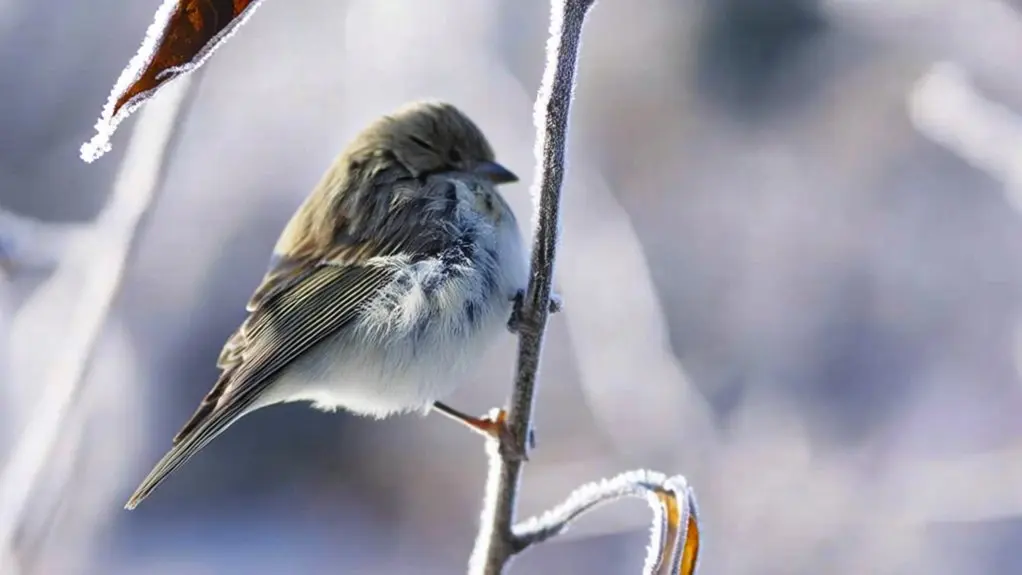
Yes, birds do feel cold and use specialized adaptations to survive winter’s chill. They fluff feathers to trap warm air, adjust blood flow, and huddle together to share body heat. Small birds even lower their body temperature to conserve energy.
Many seek insulated roosting spots and shift diets to high-fat foods for fuel. Species vary in cold tolerance, with some surviving extreme subzero temps. Understanding these strategies reveals how birds thrive despite freezing conditions.
Do Birds Get Cold in Winter?
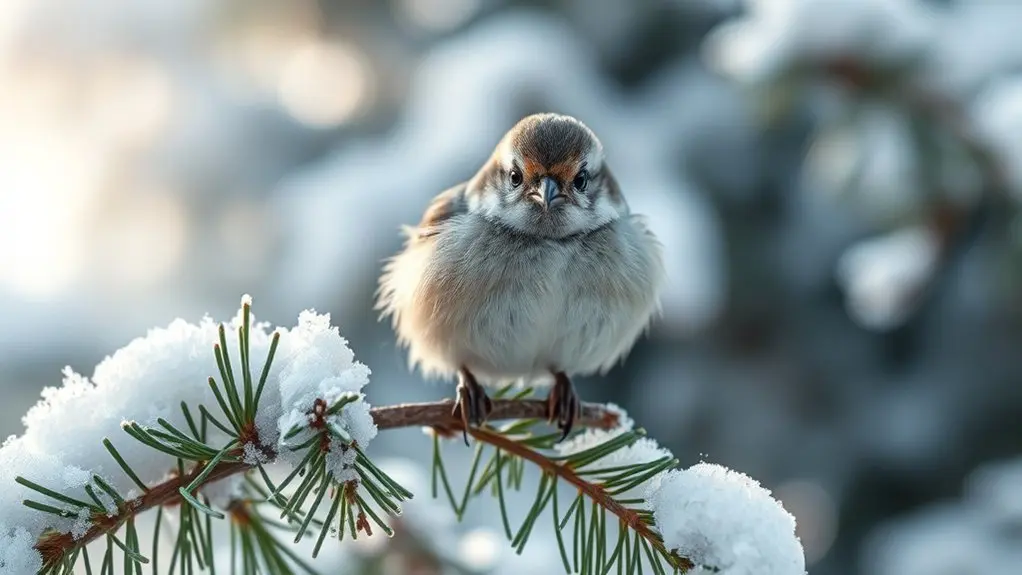
Although birds are well adapted to cold environments, they can still get cold in winter. You’ll notice that many species adjust their migration patterns to avoid extreme cold. They relocate to milder climates to preserve energy and bodily heat.
Those that stay exhibit specific nesting behaviors, like seeking insulated cavities or dense foliage to shield themselves from harsh winds and low temperatures. Despite these strategies, small birds sometimes lower their body temperature markedly. This helps them conserve heat during severe cold spells.
Species such as snowy owls and redpoll finches tolerate temperatures down to -40°F and -16°F, respectively, thanks to these adaptations. However, prolonged exposure to cold combined with food scarcity can still jeopardize their survival.
It really shows the delicate balance between their behavioral strategies and environmental challenges.
How Birds’ Feathers Keep Them Warm in Winter
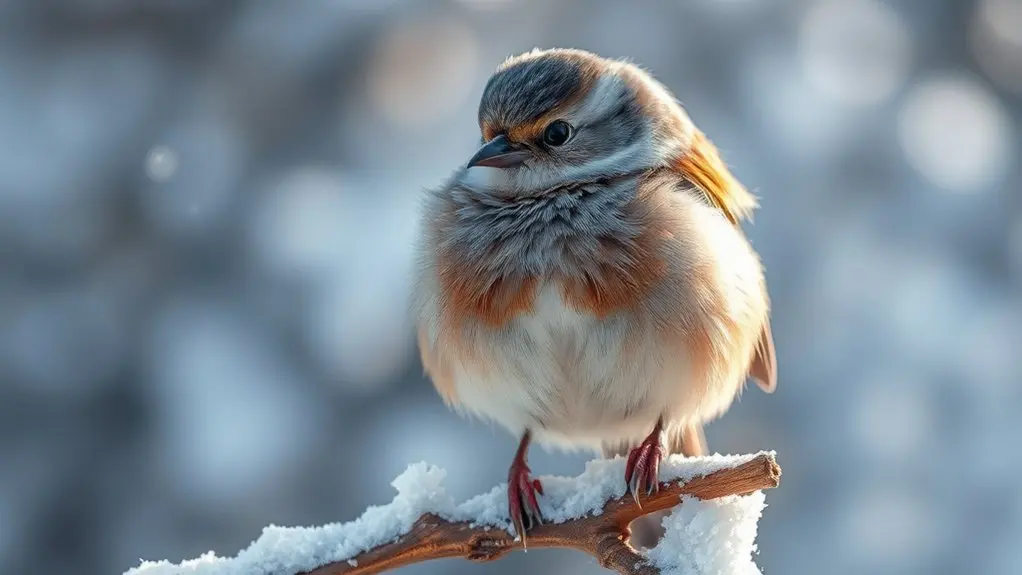
You know, birds’ feathers are pretty amazing when it comes to keeping them warm in winter. Their feathers have a really intricate structure that traps layers of air. This trapped air acts like insulation, helping to conserve their body heat when it’s cold outside.
What’s also interesting is how their plumage changes with the seasons. Birds fluff up their feathers and grow more downy ones, which makes their thermal barrier even better. It’s like they’re putting on a cozy winter coat!
And there’s more to it than just fluffing up. The pigmentation of their feathers and the way they preen themselves also play a big role in holding in heat. All these adaptations work together to keep birds nice and warm during those chilly months.
Feather Insulation Mechanisms
When temperatures drop, birds rely on their feathers’ intricate structure to conserve body heat efficiently. Their feathers contain tiny air pockets that trap warm air close to the skin, enhancing insulation efficiency. Downy feathers, in particular, have numerous air-filled bubbles specialized for maximizing this heat retention during winter.
Birds actively fluff and preen their feathers, increasing the volume of trapped air and maintaining waterproofing, which prevents heat loss through moisture. The feather structure also influences heat absorption. Pigments like dark or white coloration can affect how much solar heat is retained.
Seasonal Plumage Changes
As temperatures decline, many birds grow thicker, denser plumage in autumn to enhance insulation against the cold. This seasonal molt replaces worn feathers with those optimized for warmth. Feather coloration also shifts; darker feathers absorb more solar radiation, aiding thermoregulation.
White feathers, despite lacking pigment, trap heat efficiently due to air-filled spaces. Down feathers play a critical role, too. Their fine barbs create insulating air layers that keep birds warm.
| Feature | Function |
|---|---|
| Thicker Plumage | Increases insulation |
| Feather Coloration | Darker shades absorb more sunlight |
| Down Feathers | Trap air, enhancing thermal insulation |
Understanding these seasonal plumage changes helps you appreciate how birds adapt to cold by optimizing feather structure and coloration. It’s pretty fascinating how nature works, isn’t it?
How Birds Stay Warm Using Behavior in Winter
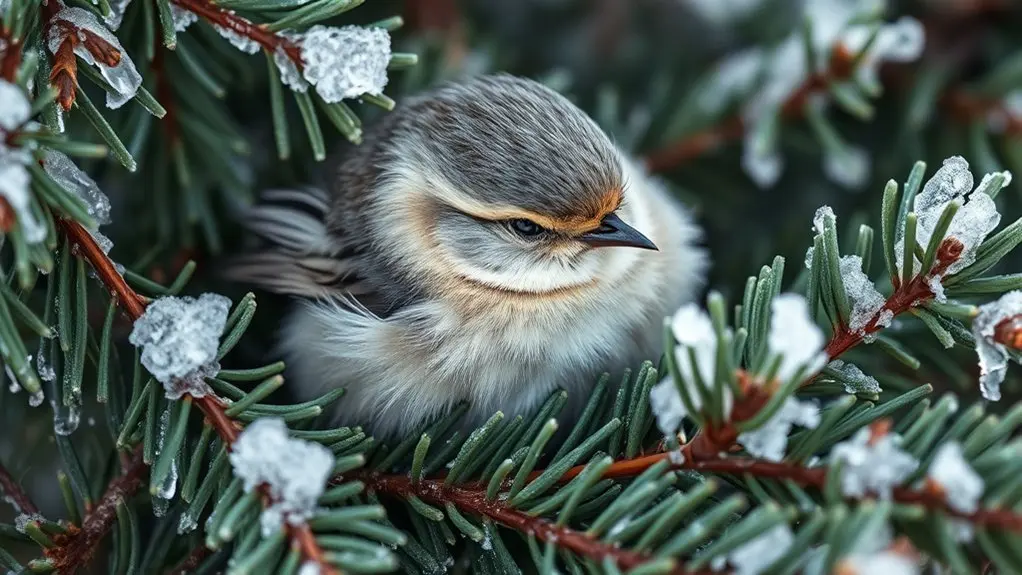
You might’ve noticed that many birds huddle together in groups, called communal roosts, to share body heat. This way, each bird loses less energy overnight.
They also try to avoid the wind by finding shelter behind things like trees or buildings. This helps keep the cold air from stealing their warmth.
Communal Roosting Benefits
Although winter temperatures can drop drastically, many bird species conserve heat by gathering in communal roosts. This behavior markedly reduces individual heat loss as shared body warmth raises the group’s temperature by several degrees. That helps them survive in extreme cold.
Species like chickadees and nuthatches use nest building techniques to seek out natural cavities or dense foliage where they form tight, insulated clusters. It’s a smart way to stay warm.
This strategy complements migration patterns. Birds that remain in colder regions rely on communal roosting to offset the thermal challenges they face.
Besides thermal benefits, roosting in groups also increases safety from predators. By understanding these behaviors, you can appreciate how birds adapt their social and nesting habits to endure winter’s harsh conditions without relying solely on migration.
Wind Avoidance Strategies
When birds face cold winter winds, they actively seek shelter on the leeward side of trees to minimize exposure and conserve heat. You’ll notice that many species select nest placement carefully, often behind dense branches or shrubs that provide effective wind shelter.
By positioning themselves in these microclimates, birds reduce convective heat loss.
They also adjust their body posture, turning or crouching to minimize the surface area exposed to wind. Tucking their beaks under wings or into feathers further protects vulnerable areas from chilling effects.
These behaviors combine to considerably decrease heat loss, enabling birds to maintain stable body temperatures during harsh winter conditions.
Understanding these wind avoidance strategies highlights the critical role of behavioral adaptations in avian thermoregulation. It’s pretty amazing how these small changes can make such a big difference in their survival during cold weather.
How Small Birds Safely Lower Their Body Temperature
Because small birds face considerable heat loss during cold nights, they use a remarkable physiological process called controlled hypothermia to conserve energy. This process lets them lower their body temperature by up to 22 degrees Fahrenheit below normal resting levels.
Small birds use controlled hypothermia to lower body temperature and conserve energy during cold nights.
By doing this, they notably reduce their metabolic rate and minimize heat loss.
You’ll notice that birds like chickadees fluff their feathers. This traps insulating air close to their bodies, which helps keep the heat in. They also engage in beak warming, a behavior where blood flow to the beak is regulated to prevent too much heat from escaping this exposed area.
By deliberately and carefully dropping their core temperature, these birds avoid cellular damage while saving essential energy.
This clever strategy enables them to endure harsh winter conditions safely and effectively.
Why Do Birds Flock Together During Winter?
As temperatures drop, birds flock together during winter to conserve body heat and improve their chances of survival. By huddling, they share body heat, reducing heat loss despite diminished feather waterproofing caused by wear or moisture.
This social behavior also enhances vigilance; more eyes in the flock detect predators early, which increases individual safety. Plus, flocking helps them find scarce food sources more efficiently, which is super important when migration timing limits access to richer habitats.
Many birds even form mixed-species flocks. This way, they benefit from different foraging strategies and combined protection against harsh weather. These collective adaptations let birds endure cold periods much better than when they’re alone.
How Birds Use Food to Survive Cold Weather
Although cold weather challenges birds’ survival, they rely heavily on consuming high-fat, calorie-dense foods like suet, nuts, and sunflower seeds to generate the body heat necessary for thermoregulation. Their feeding habits adapt to prioritize these energy-rich sources, enabling them to maintain metabolic rates crucial for sustaining body temperature in freezing conditions.
Birds prioritize high-fat, calorie-rich foods like suet and seeds to stay warm in cold weather.
Meeting their nutritional needs through increased food intake is essential, especially when snow and ice limit natural foraging. Birds actively seek out abundant food, often engaging in flocking and competitive feeding to access sufficient calories.
This strategic consumption supports their energy reserves, preventing starvation and frostbite during prolonged cold spells.
Understanding these feeding behaviors highlights how fundamental nutrition is for birds’ winter survival. It’s pretty amazing how they adjust their eating to stay warm and healthy when it gets really cold outside.
How Birds Use Roosting Spots to Avoid the Chill
When temperatures drop, birds select small, enclosed roosting spots like tree hollows and nest boxes that help retain body heat and reduce exposure to harsh elements. You’ll notice that effective nest box placement and cavity preservation are critical to providing these safe havens.
Here’s how roosting spots help birds avoid the chill:
- Heat Conservation: Enclosed cavities reduce heat loss by shielding birds from wind, rain, and snow.
- Group Roosting: Birds often huddle together inside cavities, sharing body heat to increase survival rates.
- Shelter Variety: Birds utilize natural cavities, nest boxes, and even snow tunnels or old woodpecker holes to maintain warmth.
How Different Bird Species Adapt to Extreme Cold
You’ll find that different bird species rely on unique physical adaptations, like dense feathers and fat reserves, to withstand extreme cold. But it’s not just about their bodies.
Behavioral strategies, such as seeking shelter or flocking together, also play critical roles in their survival.
When you put these factors together, it really shows how each species manages to meet its specific temperature limits.
Unique Physical Adaptations
Because cold environments pose severe survival challenges, bird species have developed unique physical adaptations to maintain body heat. These adaptations are vital, especially when bird migration routes lead to frigid climates or when nest building occurs in cold habitats.
You can observe these key adaptations:
- Layered Feathers and Fat Reserves: Snowy owls and emperor penguins have dense feathers and thick fat layers that insulate against temperatures as low as -80°F and -40°F, respectively.
- Variable Body Temperature: Redpoll finches reduce their body temperature through controlled hypothermia, conserving energy in extreme cold.
- Morphological Features: Birds like ravens possess highly insulated feathers and optimized beak sizes to minimize heat loss while maximizing warmth retention.
These physical traits collectively enable survival in environments where behavioral strategies alone would be insufficient.
Behavioral Cold Strategies
Physical adaptations provide birds with the necessary insulation and heat retention to survive cold environments. But these traits work alongside a variety of behavioral strategies that enhance survival during extreme temperatures.
Birds like chickadees enter controlled hypothermia, lowering body temperature to conserve energy. Others roost communally or seek sheltered locations to reduce heat loss. Increased feeding builds fat reserves, while reduced activity helps conserve energy.
Feather shedding timing also adjusts to optimize insulation before winter. Migration timing varies too, with some species leaving early to avoid extreme cold altogether.
| Behavioral Strategy | Example Species |
|---|---|
| Controlled hypothermia | Chickadees, Nuthatches |
| Communal roosting | Sparrows, Finches |
| Shelter seeking | Kinglets, Snow Buntings |
Species Survival Limits
Although extreme cold poses significant challenges, various bird species have evolved remarkable adaptations that enable them to survive temperatures far below freezing. You’ll find these adaptations vary widely depending on species survival limits and environmental demands.
Snowy owls withstand temperatures down to -80°F by developing dense feather coverage and substantial fat reserves. Their migration patterns also help minimize prolonged exposure to extreme cold.
Emperor penguins endure -40°F by layering feathers and accumulating fat. Their nest construction on ice optimizes heat retention during harsh Antarctic winters.
Redpoll finches survive over 100°F below freezing through specialized insulation and metabolic adjustments. This helps them maintain activity even in severe cold.
What Human Actions Support Birds’ Winter Survival
When you provide birds with natural shelters like evergreen trees or brush piles, you enhance their ability to withstand harsh winter conditions by reducing exposure to wind and snow. This protection supports feather maintenance, which is critical for thermal insulation.
You can also offer high-fat foods such as suet, peanut butter, and nuts to boost birds’ energy reserves, helping them sustain body heat during cold nights.
Heated water sources prevent freezing, ensuring hydration critical for metabolic processes that regulate temperature. Placing birdbaths in sunny spots allows birds to bask and increase internal body temperature.
Consistently cleaning and refilling feeders supports energy needs, reinforcing survival.
These human actions influence migration triggers by helping some species delay departure or enhance winter resilience, aligning survival strategies with environmental conditions. It’s amazing how a few simple steps can make such a big difference for birds through the winter!
How Climate Change Impacts Birds’ Cold Weather Survival
As climate change disrupts established weather patterns, birds face increasingly unpredictable cold conditions that challenge their survival strategies. You’ll notice that their climate resilience is tested as they contend with sudden temperature drops and habitat shifts.
Specifically, you should consider:
- Unpredictable temperature fluctuations hinder birds’ ability to adapt to consistent cold, increasing risks of frostbite and starvation.
- Habitat shifts force cold-adapted species to migrate to new areas, often with limited food availability and shelter.
- Altered migration patterns expose some species to colder, unexpected climates rather than their usual milder winter environments.
These changes demand that birds rapidly adjust their behaviors or face population declines. Understanding these impacts helps you appreciate the delicate balance birds maintain amid a changing climate.
Frequently Asked Questions
Can Birds Feel Cold Indoors or in Heated Environments?
Yes, birds can feel cold indoors despite their feather insulation and flight adaptation. If the temperature fluctuates or airflow is poor, their thermoregulation struggles.
Do Birds Shiver Like Mammals to Generate Warmth?
Yes, birds do shiver like mammals to generate warmth. You’ll find their bird feather insulation complements shivering, boosting bird metabolic warmth efficiently.
This is especially true in small species that rapidly contract muscles to maintain body temperature in cold environments. It’s pretty amazing how their bodies work together to keep them cozy!
How Do Baby Birds Cope With Cold Temperatures?
You might think baby birds survive Arctic winters solo, but they rely on feather insulation, parental brooding, and sibling huddling. These strategies help them maintain warmth until mature feathers develop. It’s pretty clever how they manage without flying south.
Unlike bird migration, these methods keep the little ones cozy right where they are. So, even though they can’t escape the cold, they’ve got their own ways to stay warm. It’s teamwork all the way!
Are There Any Birds That Hibernate in Winter?
Yes, a few birds like the common poorwill enter torpor, which is a hibernation-like state. Most birds don’t do this, though. Instead, they rely on avian migration and feather insulation.
These adaptations help them stay safe and warm. They change their behavior and body functions to avoid freezing during winter’s coldest periods. So, while hibernation is rare, birds have other smart ways to survive the cold.
Can Pet Birds Suffer From Cold Weather at Home?
Yes, your pet birds can suffer from cold weather at home since their feather insulation varies. You’ll need to support their warmth regulation by providing a warm, draft-free environment.
This helps prevent hypothermia or cold stress. It’s important to keep an eye on them during chilly days. Birds can be more sensitive to cold than we might think.
Conclusion
Now that you know how birds use feathers, behavior, and even controlled body temperature drops to survive winter, you might wonder how these adaptations truly safeguard them against the cold?
By flocking together and choosing insulated roosting spots, birds optimize warmth effectively. Understanding their strategies helps you appreciate the delicate balance birds maintain. This is especially true as climate change alters their environment.
Supporting their habitats guarantees these remarkable survivors thrive through harsh winters. It’s amazing how much they do to stay safe and warm!