
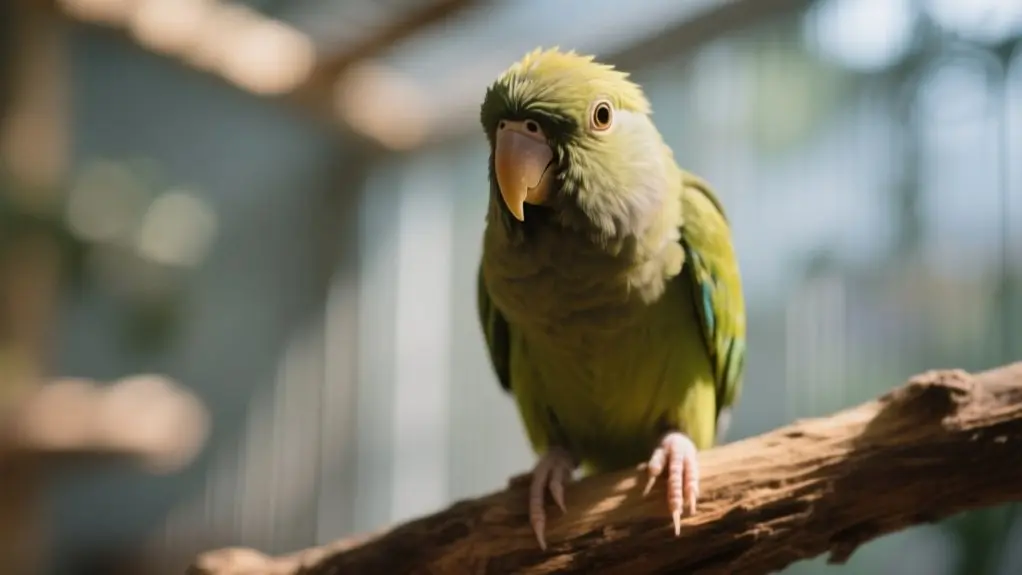
Yes, birds can get constipated, often due to low-fiber diets, dehydration, limited exercise, or health issues like egg binding. You’ll notice signs like straining, hard droppings, lethargy, or a swollen abdomen.
Larger species and those under stress are more prone. Keeping your bird hydrated, active, and on a balanced diet helps prevent constipation. If symptoms persist, prompt care is vital.
Understanding these factors guarantees you can support your bird’s digestive health effectively. Just paying attention to their habits can make a big difference!
What Causes Constipation in Birds
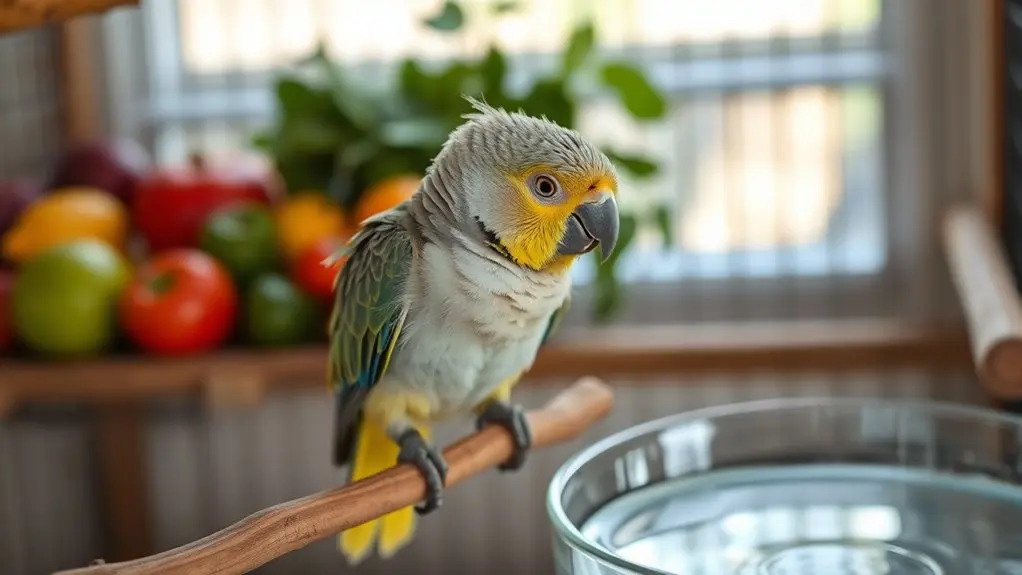
Although constipation in birds might seem uncommon, it often results from several manageable factors. You need to take into account bird feathering and nesting behaviors, which can influence activity levels and digestive health.
A diet low in fiber or lacking fresh vegetables and fruits can slow digestion, while dehydration hardens stool, making elimination difficult.
Limited space restricts movement, reducing exercise essential for proper digestive function.
Additionally, medical conditions like egg binding or gastrointestinal issues affect normal bowel movements.
Medications such as antibiotics or pain relievers may disrupt digestive processes, increasing constipation risk.
Spotting Constipation Signs in Your Bird
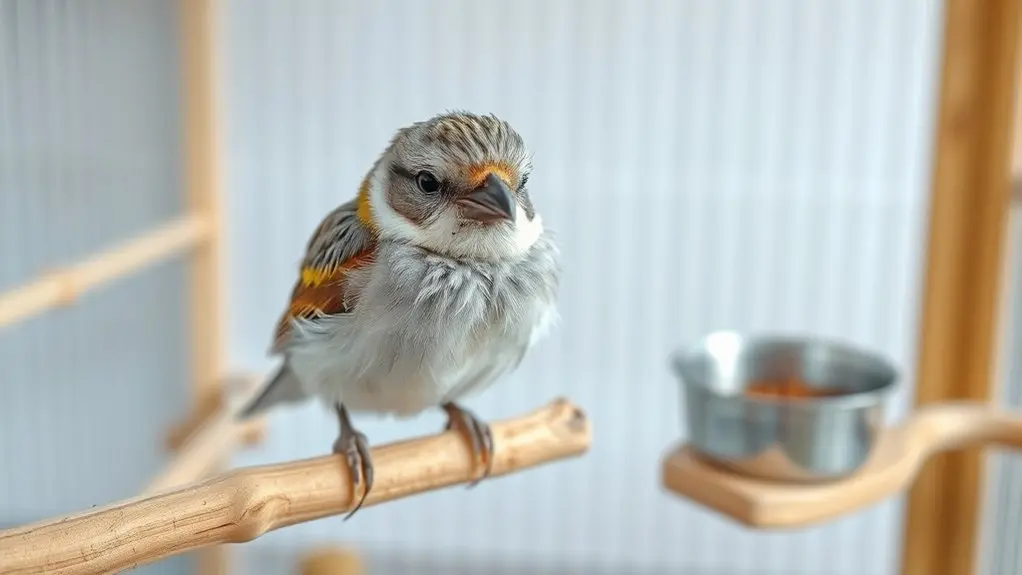
When your bird shows signs like straining during bowel movements or has infrequent droppings, it’s vital to recognize these as potential indicators of constipation. You might notice hard, dry, or pellet-like droppings, along with a swollen abdomen.
Changes in bird feathering, such as ruffled or unkempt feathers, can suggest discomfort.
Ruffled or unkempt feathers often signal that your bird may be feeling unwell or uncomfortable.
Also, watch for shifts in nesting behavior. If your bird begins hiding more or vocalizing excessively, it could be responding to digestive distress.
Lethargy and reduced appetite are key symptoms to keep an eye on too.
When to Call the Vet About Bird Constipation
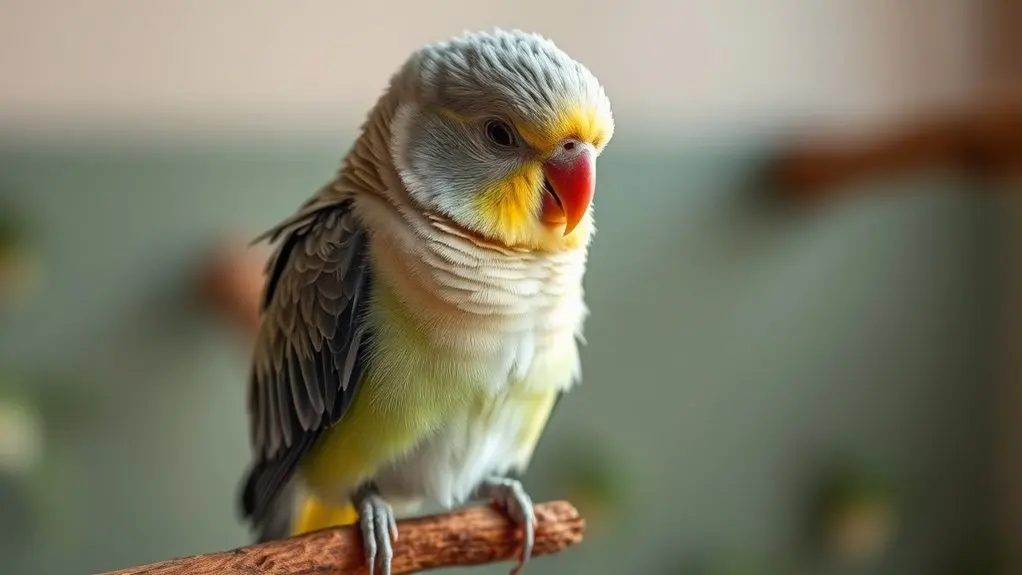
If your bird exhibits persistent straining, lethargy, or a swollen abdomen, you should contact a veterinarian immediately. Timely intervention is essential to prevent serious complications.
Besides these urgent signs, watch for changes in feather grooming or nesting behavior. These can indicate discomfort linked to constipation.
Here are key signs to prompt a vet visit:
- Constipation persisting over 24 hours
- Hard, dry droppings or significant reduction in droppings
- Signs of pain or distress during bowel movements
- Loss of appetite, vomiting, or abnormal behavior
Recognizing these symptoms early helps ensure proper diagnosis and treatment. This way, your bird stays healthy and comfortable.
Don’t hesitate to seek veterinary advice when these signs appear.
Bird Species Most Prone to Constipation
Since birds vary widely in size, metabolism, and diet, some species face a higher risk of constipation than others. Larger birds like parrots, cockatoos, and macaws tend to be more prone due to their size and specific dietary needs. Raptors with slower metabolisms also show increased vulnerability.
You should watch birds with limited mobility or overweight conditions closely, as they often develop constipation regardless of species. While budgerigars and finches are less commonly affected, stress and low-fiber diets can still cause issues.
Poor feather maintenance and intense nesting behaviors may stress your bird, indirectly impacting digestive health. Recognizing these species-specific risks helps you provide targeted care and timely intervention to keep your feathered companion healthy and comfortable.
How Diet and Hydration Affect Bird Constipation
Although birds have unique dietary needs, maintaining proper hydration and a balanced diet is essential to preventing constipation. Your bird’s feeding habits and water consumption directly influence digestive health.
Here’s what you need to take into account:
- Provide fresh fruits and vegetables rich in fiber to promote gastrointestinal motility.
- Avoid diets overly reliant on seeds, which lack variety and can disrupt digestion.
- Make sure constant access to clean water to prevent dehydration and hardened stool.
- Monitor water intake, as insufficient hydration is a primary cause of constipation.
How Environment and Exercise Affect Bird Constipation
You’ll want to make sure your bird’s cage is roomy enough to encourage plenty of movement. When space is tight, digestion can slow down, which ups the chances of constipation.
Birds that don’t get much exercise tend to have slower gut motility, so it’s really important to give them chances to fly and stay active.
On top of that, stress from their environment can mess with their digestion, so creating a calm and engaging space is key to keeping your bird’s digestive system healthy.
Cage Size Impact
How much space does your bird really need to stay healthy? Cage size directly impacts digestion and constipation risk. A cramped environment limits movement, causing decreased exercise and potential digestive issues.
You want to make sure your bird has enough room for natural behaviors like flying, stretching, feather grooming, and perch selection. Consider these points:
- Larger cages enable regular exercise, supporting healthy digestion and bowel function.
- Restricted space increases stress, negatively affecting gastrointestinal health.
- Proper perch selection within a spacious cage encourages movement and comfort.
- Adequate room helps maintain feather grooming, indirectly promoting overall well-being.
Activity Levels Influence
Giving your bird ample space to move within its cage sets the stage for maintaining healthy activity levels. These levels play a direct role in preventing constipation. When you encourage flight and varied movement, you stimulate your bird’s digestive system, which helps reduce sluggishness.
Observe your bird’s perching habits. Providing multiple perches at different heights promotes exercise and natural behaviors that aid digestion.
Also, adding toys for environmental enrichment can motivate physical activity and support regular bowel movements.
Don’t overlook feather grooming. It’s a natural behavior that requires mobility and helps overall well-being.
If your bird leads a sedentary lifestyle, its digestion can slow down, increasing the risk of constipation.
Environmental Stress Factors
Although birds are resilient, environmental stressors like loud noises, sudden changes, or overcrowding can disrupt their digestive processes and lead to constipation. You must consider how perching habits and vocalization patterns reflect stress levels that affect gut motility.
Limited exercise due to cramped spaces slows digestion, increasing constipation risk. Here are key factors to monitor:
- Loud or persistent noises that alter vocalization patterns and stress your bird.
- Sudden changes in environment disrupting perching habits and routine.
- Insufficient space limiting natural movement and exercise.
- Poor lighting or exposure to drafts impacting overall digestive health.
Home Remedies for Bird Constipation
When your bird shows signs of constipation, you can try several home remedies to encourage regular digestion and relieve discomfort. Start by offering small amounts of warm, unsweetened applesauce or pureed vegetables to stimulate bowel movements.
Make certain fresh, clean water is always available, and gently massage your bird’s abdomen to promote digestive activity.
Adding a pinch of olive or mineral oil to its food can lubricate the digestive tract, easing stool passage. Incorporate high-fiber foods like sprouts and leafy greens to support regularity.
Remember, bird grooming and feather health often reflect overall well-being, so maintaining these can indirectly aid digestion.
If constipation persists beyond 24 hours or your bird shows distress, consult an avian veterinarian promptly to prevent complications. It’s always better to be safe and get professional advice when you’re unsure.
Your bird’s health is worth it!
How to Prevent Constipation With Long-Term Care
To prevent constipation in your bird over the long term, you’ll need to focus on consistent care that supports digestive health. Chronic constipation can sometimes relate to stress from breeding behaviors or feather plucking, so managing these factors is really important.
Start by providing a balanced diet rich in fiber, including fresh vegetables and high-quality pellets. Make sure your bird always has access to clean, fresh water to stay properly hydrated.
Offer a fiber-rich diet with fresh veggies and quality pellets, plus constant access to clean water.
Regular exercise is also key because it helps stimulate healthy bowel movements. When you introduce dietary changes, do it gradually to avoid any digestive upset.
Keeping an eye on your bird’s health regularly lets you catch any issues early before they lead to constipation.
Tips for Keeping Your Bird’s Digestive Health Healthy
You can support your bird’s digestive health by offering a balanced diet that’s full of fiber, especially from veggies and whole grains. It really makes a difference.
Also, always make sure your bird has access to fresh, clean water—this helps keep them properly hydrated and aids digestion.
On top of that, regular exercise is important. It helps keep their gut functioning well and boosts their overall health. So, keeping your bird active is definitely a good idea!
Balanced Diet Essentials
Although birds have diverse dietary needs, maintaining a balanced diet is vital for supporting their digestive health and preventing constipation. When your bird enjoys proper nutrition, it not only aids digestion but also promotes feather grooming and vibrant singing behavior. These are all signs of overall well-being.
To keep your bird’s digestive system in top shape, focus on these essentials:
- Provide a mix of fruits, vegetables, and grains to supply necessary fiber.
- Use high-quality pellet-based feeds to ensure balanced nutrient intake.
- Avoid excessive seeds and fatty foods that can disrupt digestion.
- Incorporate fiber-rich leafy greens and grated vegetables to promote healthy bowel movements.
Following these simple steps will help your feathered friend stay healthy and happy!
Hydration Importance Tips
Since hydration plays a crucial role in your bird’s digestive health, ensuring constant access to fresh, clean water is essential. Dehydration often leads to constipation by hardening stool, making digestion difficult.
You can support hydration by offering water-rich fruits and vegetables, which also enhance your bird’s overall nutrition.
Pay close attention to signs like lethargy, dry skin, or decreased droppings, as these indicate insufficient fluid intake. Proper hydration not only aids digestion but also promotes effective bird grooming and maintains vibrant feather coloring, reflecting overall well-being.
Regularly monitoring water intake helps prevent digestive issues and supports your bird’s vigor.
Prioritize hydration as a foundational step to keep your bird’s digestive system functioning smoothly and to maintain their healthy appearance.
Regular Exercise Benefits
When birds engage in regular exercise, their intestinal motility increases. This directly supports healthy digestion and reduces the risk of constipation.
You can enhance your bird’s digestive health by encouraging physical activity that mimics natural behaviors.
Focus on these key areas: Promote varied perching habits to stimulate movement and prevent stagnation. Encourage flight or wing-flapping exercises to activate gastrointestinal function.
Provide toys and enrichment for dynamic feather grooming and physical engagement.
Establish consistent exercise routines to maintain overall digestive system efficiency. It’s all about keeping your bird active and happy!
Frequently Asked Questions
Can Bird Constipation Affect Their Feathers or Plumage?
Bird constipation rarely affects feather health directly, but if it gets severe, it can cause discomfort that leads to poor grooming. When birds don’t groom well, their plumage can start to look a bit rough.
Are Certain Bird Medications Known to Cause Constipation?
Yes, certain bird medications can cause constipation as a side effect. You should watch for medication side effects and consider dietary influences.
It’s important to work closely with your vet to prevent discomfort and support your bird’s digestive health. Keeping an eye on these factors can really make a difference.
How Does Stress Influence Constipation in Birds?
Stress-induced discomfort disrupts your bird’s gut motility, causing constipation. Anxiety-related symptoms, like feather plucking, signal digestive distress.
Can Bird Constipation Lead to Other Health Complications?
Yes, bird constipation can cause serious complications like impaction and weakened immunity. You’ll want to guarantee adequate dietary fiber and water intake to prevent dehydration, abdominal pressure, and potentially life-threatening conditions like egg binding.
Making sure your bird stays hydrated and gets enough fiber is key. It helps keep things moving smoothly and avoids the build-up that can cause those problems. So, keeping an eye on their diet and water is really important for their health.
Is Constipation Common in Baby or Young Birds?
Yes, constipation is common in baby birds due to their immature digestive systems.
You should focus on providing a balanced bird diet and maintaining excellent cage hygiene. This helps prevent blockages and keeps your young bird healthy and comfortable.
Taking these steps can make a big difference in your bird’s wellbeing. Just keep an eye on their habits and consult a vet if you notice any issues.
Conclusion
You might not realize it, but your bird’s digestive health is the heartbeat of its overall well-being. By staying vigilant for constipation signs and understanding its causes, you can act swiftly to keep your feathered friend comfortable and healthy.
Remember, prevention through proper diet, hydration, and environment is your best defense. When in doubt, don’t hesitate to seek veterinary care. Because a happy bird is a bright spark in your life.