
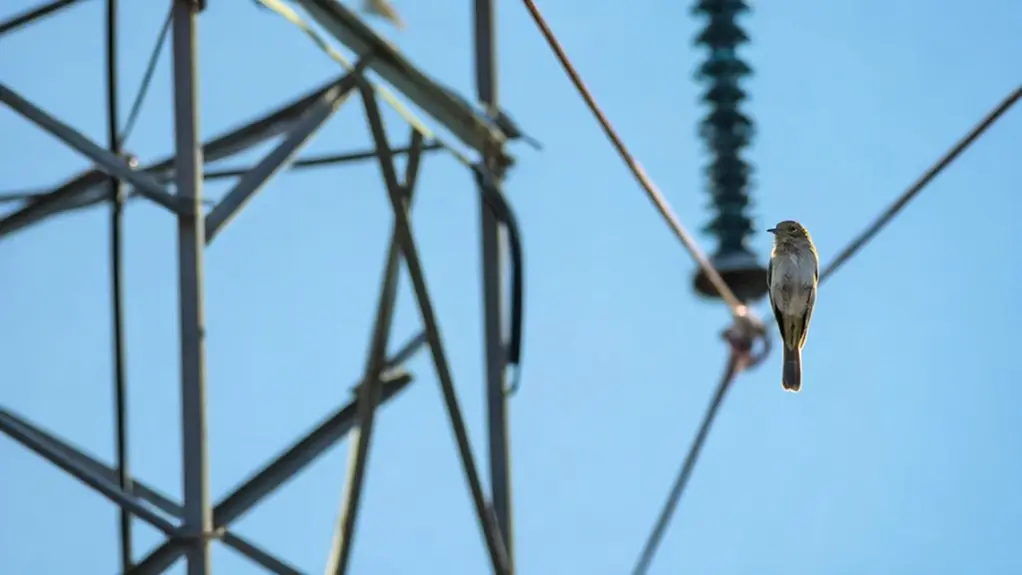
You won’t see birds getting electrocuted simply by sitting on power lines because they don’t create a complete electrical circuit. They avoid touching wires at different voltages or the ground at the same time.
Their small size and insulated feathers also reduce the risk. But bigger birds can bridge electrical conductors, which increases their chances of getting electrocuted.
Power lines are designed with safeguards like proper spacing and insulation to keep birds safe. Keep exploring to understand how design and maintenance help protect birds from these hazards.
Why Birds Can Safely Sit on Power Lines
Although power lines carry high voltage, birds can safely perch on a single wire because they don’t complete an electrical circuit by touching the ground or another wire at a different voltage.
When you observe birds during migration, their feather insulation plays a critical role in maintaining body temperature, but it also indirectly aids their safety on power lines by limiting moisture that could increase conductivity.
Electricity remains confined to the wire since these birds don’t provide a path to the ground, preventing current flow through their bodies.
Power lines are engineered with adequate spacing and insulation to reduce accidental contact risks.
Also, the small size and shape of birds result in minimal electrical capacitance, which further reduces the likelihood of shocks while they rest during long migratory journeys.
It’s pretty fascinating how nature and engineering work together to keep these birds safe!
Causes of Bird Electrocution on Power Lines
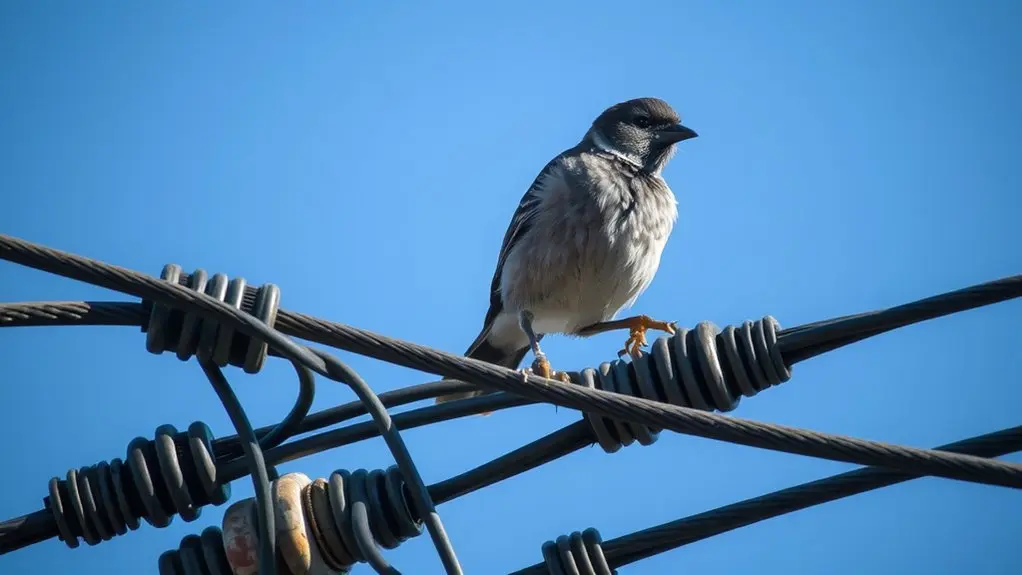
You get bird electrocution when a bird completes an electrical circuit by touching two wires at different voltages or a wire and grounded equipment at the same time. It’s basically like the bird becomes a bridge for electricity to flow through.
Wire spacing is super important here because if the gaps between wires aren’t big enough, it’s way easier for birds to touch both points and get shocked.
Electrocution Circuit Formation
When a bird simultaneously contacts two wires carrying different voltages or a wire and a grounded structure, it completes an electrical circuit that causes electrocution. You’ll find that large birds, due to their wingspan, are more prone to bridging these electrical points during flight or while perching.
Bird flight patterns often bring them close to power lines, especially near nesting sites where birds repeatedly approach the same structures. Their nesting behaviors increase exposure to hazardous configurations, as they may perch or build nests on poles or crossarms.
This raises the risk of contact with multiple energized components. The circuit forms only when the bird’s body creates a conductive path between different voltage potentials or to ground. This allows current flow through the bird, leading to electrocution.
Wire Spacing And Risks
Because large birds often have wide wingspans, inadequate spacing between power lines considerably increases their risk of electrocution. When wires are spaced too closely, a bird can accidentally contact two conductors simultaneously, completing an electrical circuit and receiving a shock.
This risk escalates during bird migration and nest building seasons, when larger species perch frequently on power infrastructure.
Proper vertical and horizontal wire spacing is critical to accommodate varying bird sizes and behaviors. Without sufficient separation, birds may also bridge a wire and grounded equipment, further increasing electrocution chances.
Implementing infrastructure modifications that increase wire spacing has proven to be an effective strategy to reduce these incidents.
Understanding these spatial dynamics helps you appreciate how wire design directly impacts bird safety on power lines. It’s really about creating safer spaces where birds can rest without the risk of harm.
Why Big Birds Are at Greater Risk of Electrocution
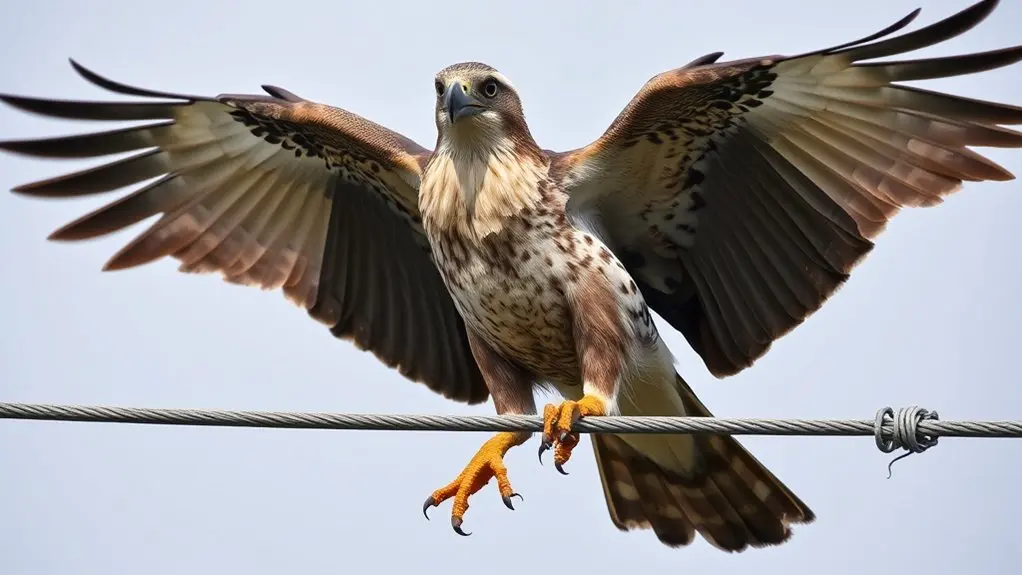
Although power lines serve critical infrastructure needs, they pose significant electrocution risks to large birds because of their physical dimensions. When you think about a bird’s wingspan, especially in species like eagles or pelicans, it’s easy to see how they can bridge the gap between two wires or between a wire and a grounded structure.
Their wide wingspan makes perching less safe since it’s harder to avoid touching multiple energized components at the same time. Plus, power line spacing often doesn’t accommodate these larger sizes, which increases the chances of electrical bridging during flight or while perched.
Big birds are more likely to perch on high-voltage lines, so their size directly relates to a higher risk of electrocution from connecting different electrical potentials. It’s a real problem that comes down to their physical presence around these power lines.
How Power Line Design Reduces Bird Electrocution Risks
Since large birds face heightened electrocution risks due to their wingspan, power line designers implement specific measures to mitigate these dangers. These designs consider bird migration patterns and nesting habitats to reduce harmful interactions.
You’ll see these key design strategies employed:
- Increased spacing between wires to prevent large birds from bridging circuits
- Protective covers and insulation on poles and equipment to block contact with live parts
- Specialized spacers and bird diverters directing birds away from hazardous points
- Strategic wire and equipment placement minimizing simultaneous contact risks
- Ongoing maintenance and adjustments preserving the effectiveness of these physical safeguards
These steps really help keep birds safe around power lines. It’s all about thoughtful design and regular care to make sure the risks stay low.
How Utilities Protect Birds From Electrocution
When protecting birds from electrocution, utilities implement targeted measures that focus on insulating energized components and optimizing pole design. You’ll find insulation covers on exposed live parts, preventing direct contact. Increased conductor spacing accommodates large-winged birds, reducing simultaneous wire contact during bird migration.
Protective devices like bird guards and perch guards are strategically installed to shield birds, especially near nesting behaviors when birds frequent poles. Pole configurations minimize grounded metal elements, reducing circuit completion risks through birds.
Regular maintenance guarantees these protections remain effective, adapting to changing bird migration patterns and nesting habits.
What You Can Do to Help Prevent Bird Electrocution
Utilities have made significant strides in reducing bird electrocution through engineered solutions, but your involvement can further enhance these efforts. You can actively support bird safety by advocating for and participating in initiatives that address risks associated with power lines and bird nesting behaviors.
Focus on practical measures that complement utility efforts and promote avian protection.
Encourage installation of power line markers and insulation to increase visibility and prevent contact. Support creating designated safe perching areas away from electrical infrastructure. Report bird nests near power lines to utility companies for proper management.
Promote regular inspection and maintenance of power lines to identify hazards. Back utility avian protection programs aiming to redesign hazardous equipment for safer bird interactions.
Your proactive engagement helps reduce bird electrocution risks efficiently and sustainably. Every little action counts, so get involved and make a difference!
Frequently Asked Questions
Can Birds Recover After Being Electrocuted on Power Lines?
You can improve bird safety by advocating better power line design. But once birds get electrocuted, their chances of recovery are pretty slim. Prompt treatment can help, though.
Still, internal injuries often make full recovery tough. Even with rehabilitation efforts and medical intervention, many birds don’t bounce back completely. It’s a serious issue, and prevention is definitely the best approach.
Do Different Bird Species Have Varying Electrocution Risks?
You’ll find species-specific vulnerabilities impact electrocution risks, as avian physiological differences like wingspan and perching behavior alter exposure. Larger birds face higher risks, while smaller species’ limited wingspans reduce chances of electrical contact.
It’s really about how these physical traits play out in real-world settings. For example, bigger birds might touch two wires at once because of their size, increasing their risk. Meanwhile, smaller birds usually don’t span that distance, so they’re less likely to get electrocuted.
How Do Weather Conditions Affect Bird Electrocution Chances?
You’ll find weather factors like rain, wind, snow, and lightning increase electrocution hazards by altering wire conditions and bird stability. This raises accidental contact risks with live or grounded wires, thereby considerably elevating bird electrocution chances.
Basically, when the weather is rough, birds have a harder time keeping their balance. Wet or icy wires can also become more dangerous. So, these conditions really add up to make things riskier for our feathered friends.
Are There Specific Times When Bird Electrocution Is More Common?
You’ll find bird electrocutions spike like lightning strikes during dawn, dusk, and migration. This is when bird nesting activity and flawed power line design combine, increasing contact risk through limited visibility and crowded perching opportunities.
It’s kind of like a perfect storm for the birds, making those times especially dangerous for them. So, being aware of these peak times can really help in taking preventive measures.
Can Power Line Electrocution Impact Nearby Bird Populations?
Yes, power line electrocution can disrupt avian navigation and reduce local populations.
You should consider power line design improvements, like insulation and bird-safe equipment, to minimize electrocution risks.
This way, you can protect nearby bird communities more effectively.
Conclusion
You might think birds are flirting with danger when perched on power lines, but their clever balance keeps them safe from nature’s electric embrace. However, larger birds face hidden hazards when crossing risky gaps.
Thanks to thoughtful engineering and protective measures, utilities are turning potential traps into safe passageways. You can join this effort by supporting bird-friendly initiatives, helping keep these feathered acrobats gracefully maneuvering our electrified landscapes without harm.