
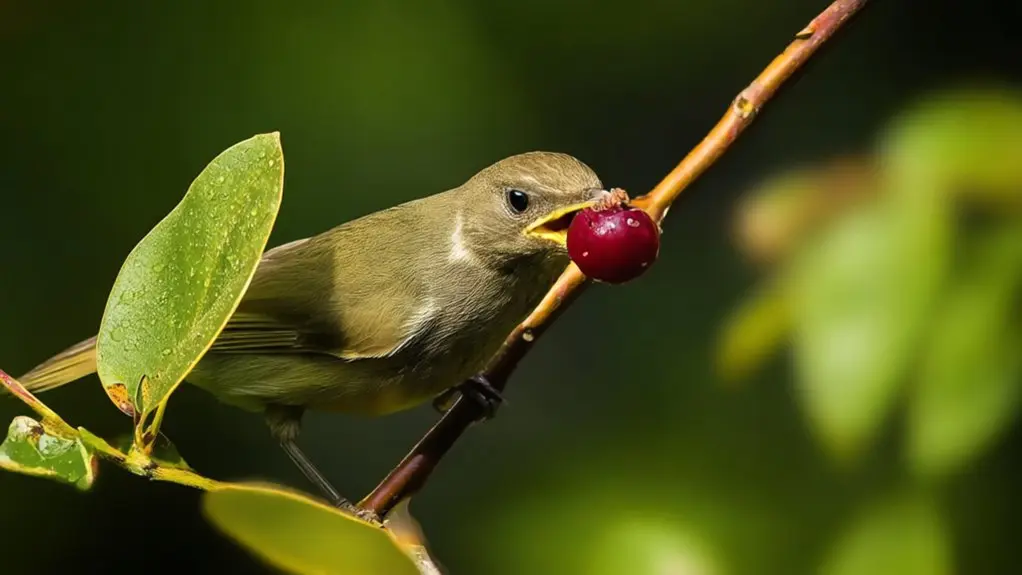
Yes, birds can get drunk on berries when yeast ferments the sugars into alcohol, especially in damaged or overripe fruit. Weather, like frost or temperature swings, influences fermentation and alcohol levels. Species such as cedar waxwings are more prone due to their diet and liver capacity.
Intoxication impairs flight and cognition, posing risks during migration. You can learn how environmental factors, bird behavior, and safety measures all play a role in this intriguing natural phenomenon.
How Do Berries Turn Into Alcohol That Gets Birds Drunk?
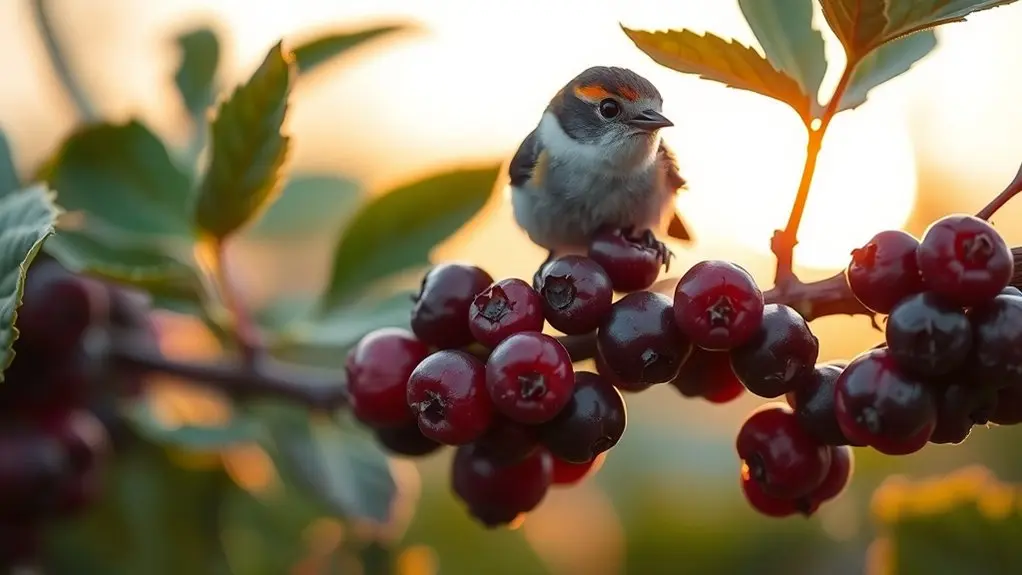
Although you mightn’t realize it, berries can turn into a natural source of alcohol that intoxicates birds. During berry harvesting, damaged or overripe fruits become vulnerable to yeast spores. These yeasts start the fermentation process by converting the sugars within the berries into ethanol.
This biochemical reaction happens more easily in compromised berries, where the fruit’s protective barriers weaken. The fermentation produces alcohol concentrations similar to beer or vodka, enough to change how birds behave.
To get what’s going on here, you need to know that yeast infestation is key for fermentation. Without yeast, berries just stay non-intoxicating.
How Does Weather Affect Fermented Berries and Bird Intoxication?
When weather conditions shift, they considerably influence the fermentation process in berries, directly affecting how intoxicated birds can become. Climate patterns, especially temperature fluctuations, play a critical role in fruit ripening and subsequent fermentation.
First frosts trigger fermentation by breaking down fruit cells, increasing sugar concentration, which intensifies alcohol production.
First frosts break down fruit cells, boosting sugar levels and intensifying alcohol production during fermentation.
Cold temperatures slow sugar degradation but concentrate sugars, producing more potent alcohol in fermented berries. Conversely, warmer winter conditions accelerate sugar breakdown, hastening fermentation and boosting alcohol levels.
Early frost events, such as those in 2018, lead to earlier and more intense fermentation.
Additionally, temperature swings like spring thaws speed up fermentation rates, elevating alcohol content.
Understanding these climate-driven processes helps clarify variations in bird intoxication linked to fermented berries under different weather conditions.
Which Birds Are Most Likely to Get Drunk on Berries?
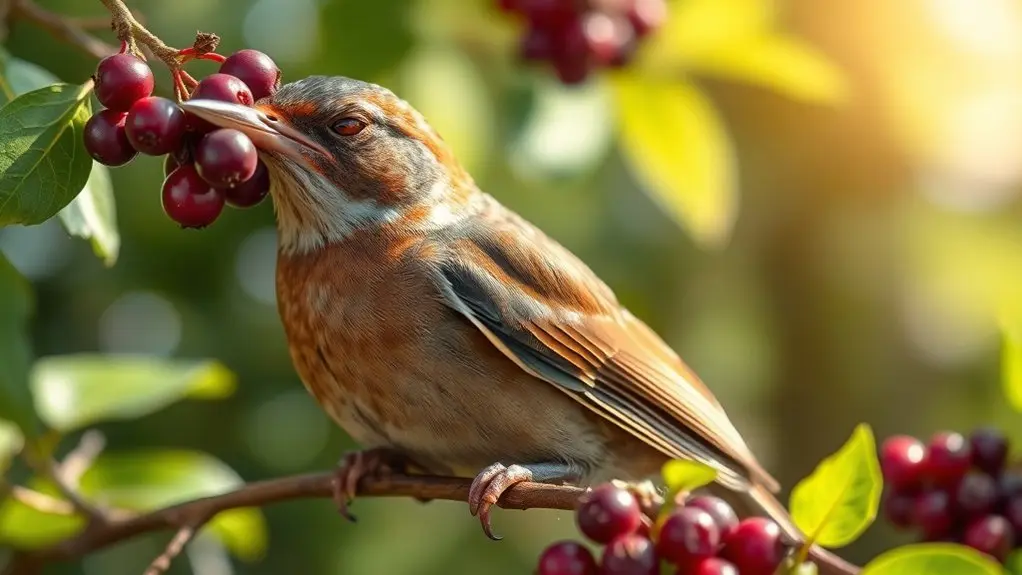
You’ll notice that cedar waxwings and Bohemian waxwings are especially likely to get intoxicated. That’s because they’ve large livers, which help them break down the alcohol from fermented berries.
On the other hand, younger birds don’t have this same advantage, so they’re more sensitive and at a higher risk of alcohol poisoning.
Plus, birds that eat a lot of overripe or damaged fruit—especially in cities—tend to get drunk more often.
Species Prone to Intoxication
Because some birds have evolved to metabolize fermented berries efficiently, certain species are more prone to intoxication than others. Cedar waxwings and Bohemian waxwings possess large livers adapted over millennia to process alcohol from overripe berries, making them especially susceptible.
During bird migration, these species often rely on fermenting fruit as a critical food source. They occasionally consume potent alcohol produced by early frosts or warm winter spells. This increases intoxication risk, which can compromise nest protection behaviors essential for reproductive success.
Additionally, fruit-dependent birds in urban environments face higher exposure to fermenting berries, further elevating intoxication chances. Understanding these species’ physiological adaptations and ecological behaviors clarifies why intoxication incidents occur. It highlights the delicate balance between nutritional reliance and alcohol toxicity in their natural life cycles.
Age and Alcohol Sensitivity
Building on how species differences influence intoxication risk, age plays a big role in a bird’s sensitivity to alcohol from fermented berries. Younger birds have immature livers, so they metabolize alcohol less efficiently. That makes them more vulnerable to getting drunk.
Older birds, on the other hand, have larger, more developed livers that help them process alcohol better. This means they’re less likely to get intoxicated.
Bird migration and nesting habits also come into play. Juveniles often encounter fermented berries during important developmental stages, which ups their chances of getting drunk.
Here are some things to think about:
- Juvenile birds show more obvious drunken behaviors because their livers aren’t as efficient.
- Experienced birds tend to learn to avoid berries that are highly fermented, so they lower their risk.
- Some species, like cedar waxwings, have adapted bigger livers to handle alcohol better, especially when they’re young.
Knowing how age affects sensitivity helps us figure out which birds are most likely to get drunk on berries.
What Happens When Birds Eat Fermented Berries?
When you watch birds eating fermented berries, you might notice they can get a bit tipsy. That’s because the fermentation process produces alcohol, which can be too much for their livers to handle.
Some birds, like cedar waxwings, have actually evolved bigger livers to help break down the alcohol. But even then, if they eat too many fermented berries, their coordination and ability to fly can still take a hit.
Interestingly, things like frost and warm weather speed up fermentation, making the berries more alcoholic. This means birds in cities, where overripe berries are more common, might be more at risk of getting intoxicated.
It’s a wild side effect of nature you don’t always think about!
Effects Of Alcohol
Although birds naturally consume fermented berries, the alcohol content can impair their motor skills and cognitive functions. When you observe birds after eating these berries, you may notice significant effects that influence their behavior and survival. This is especially true during critical periods like bird migration when a precise bird diet is essential.
These effects include unsteady flight and wobbliness, making navigation difficult. You might also see erratic movement and disorientation, which increases the risk of collisions with obstacles. Physical impairments are common too, such as difficulty standing or supporting wings properly.
Such intoxication can lead to serious health issues, including liver damage and, in severe cases, death. While species like cedar waxwings have larger livers that provide some protection, younger and smaller birds remain more susceptible to alcohol’s adverse effects.
This can affect their flight and feeding efficiency quite a bit.
Bird Vulnerability Factors
The degree to which birds experience impairment after consuming fermented berries depends on several vulnerability factors. Younger or immature birds, with underdeveloped livers, are more susceptible to alcohol poisoning. Species like cedar waxwings, possessing larger livers, process alcohol more effectively.
Environmental conditions also play a role. Cold temperatures accelerate berry fermentation, increasing alcohol concentration. Birds consuming overripe or damaged berries ingest higher ethanol levels.
During periods of food scarcity, natural behaviors such as feeding on fermenting fruit elevate intoxication risk.
Additionally, bird migration patterns influence exposure, as migrating birds may consume large quantities of fermented berries along their routes. Nesting habits affect vulnerability too. Nesting birds may be less mobile and more prone to consuming available fermented fruit.
Understanding these factors helps clarify what happens when birds eat fermented berries.
When Should You Worry About Drunk Birds?
If you encounter a bird that appears unsteady, disoriented, or unable to fly properly, you should be concerned about potential intoxication.
During vital periods like bird migration or nesting habits, impaired birds face increased risks because they need precise navigation and energy conservation.
Signs that should catch your attention include frequent collisions with windows or obstacles. This usually means the bird’s coordination is off. You might also notice lethargy or difficulty supporting themselves, which can be dangerous during migration.
Another thing to watch for is uncoordinated, drunken behavior that could affect how the bird forages or nests. These symptoms might suggest alcohol poisoning from fermented berries.
If you see any of this, it’s a good idea to contact a wildlife rehabilitator right away.
Try to minimize handling the bird and provide a quiet environment to help it recover safely.
Keeping an eye on intoxication during sensitive life stages is really important to protect overall bird populations.
How Do Experts Help Birds Sober Up?
When you find an intoxicated bird, experts typically place it in a quiet, dark environment to promote rest and metabolic recovery from alcohol exposure. They often use ventilated cardboard boxes to safely contain the bird, reducing injury risk while observing its behavior.
Monitoring continues for several hours until the bird shows sober signs like steady posture and normal flight patterns. Since bird migration and nesting habits are super important, minimizing stress during recovery is key to preserving their natural behaviors.
Supportive care, including hydration and a calm setting, also helps the bird detox metabolically. Once the bird is fully sober, it’s gradually reintroduced to its habitat to make sure it can get back to essential activities like migration and nesting without any problems.
This careful approach helps keep the bird’s ecological roles and overall health intact.
What Can You Do to Keep Birds Safe From Fermented Fruit?
Although birds naturally consume fruit, you can reduce their risk of intoxication by managing the availability of fermented berries. Understanding bird feeding habits and the impact on bird migration patterns helps you provide safer environments.
Managing fermented berries lowers birds’ intoxication risk and supports safer migration environments.
To protect birds effectively, focus on these key actions:
Remove overripe or damaged berries from trees and shrubs to prevent fermentation and alcohol formation.
Promptly clean up fallen fruit to minimize access to fermenting berries that may impair birds’ navigation during migration.
Plant native, non-fruiting trees and shrubs to offer alternative food sources and reduce dependence on potentially intoxicating fruit.
Taking these steps makes a real difference in keeping birds safe and healthy.
Frequently Asked Questions
Can Birds Become Addicted to Alcohol From Fermented Berries?
You won’t find evidence that birds become addicted to alcohol from fermented berries. Bird behavior and fermentation effects show temporary intoxication only. Their metabolism and lack of dependency mechanisms prevent addiction or craving development.
Do All Types of Berries Ferment and Intoxicate Birds Equally?
You won’t find all berries equal in fermentation variations. Berry toxicity depends on species, ripeness, and environment. Some ferment easily, intoxicating birds.
Others resist fermentation, reducing risks of intoxication because of their chemical makeup. So, it really varies from berry to berry. Not all berries are created equal when it comes to fermentation and how they affect birds.
How Long Does Alcohol Intoxication Last in Birds?
Alcohol intoxication in birds lasts a few hours, causing bird flight impairments and varying berry toxicity effects. Smaller birds metabolize alcohol slower, so you’ll notice extended impairments. But recovery typically completes within 24 hours.
It’s pretty interesting how different species handle alcohol differently. So, if you see a wobbly little bird, it might just need some time to sober up. Usually, they bounce back on their own without any issues.
Are There Natural Predators That Take Advantage of Drunk Birds?
Yes, predators like hawks exploit drunk birds, especially during habitat disruption and bird migration when intoxicated birds are disoriented. Their impaired flight makes them vulnerable, increasing predation risk as predators opportunistically capitalize on weakness.
It’s kind of like when someone’s not at their best—predators notice and take advantage. Birds that can’t fly straight or react quickly become easy targets. So yeah, these predators do make the most of the situation when birds are a bit worse for wear.
Can Fermented Berries Affect Bird Reproduction or Lifespan?
Think of bird migration as a delicate symphony; fermented berries rarely disrupt it. While berry digestion might cause short-term intoxication, it doesn’t considerably affect bird reproduction or lifespan.
That said, severe poisoning can happen, but it’s pretty uncommon. So, for the most part, birds handle fermented berries just fine without any major issues.
Conclusion
So, can birds really get drunk on berries? Absolutely. But it’s not as wild as it sounds. Fermentation turns ripe fruit into a natural cocktail, especially when weather conditions are just right.
Some birds may wobble after indulging, but it’s usually temporary. Remember, your role in protecting these feathered friends from fermented fruit is essential. Like a careful guardian, you help keep their skies clear and their flights steady.