
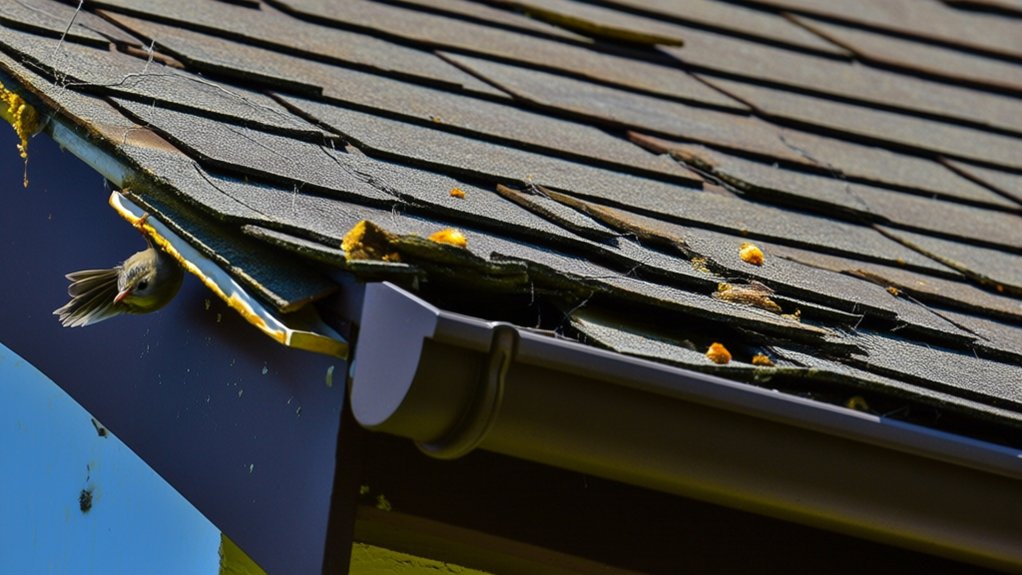
Yes, birds can damage your roof by causing corrosion through acidic droppings that weaken shingles and sealants. Their nests block gutters, vents, and chimneys, leading to leaks, poor ventilation, and increased fire hazards from flammable materials near heat sources.
Birds also introduce pests and promote mold growth, which can compromise both your health and the roof’s integrity. Taking preventive measures and timely maintenance can protect your roof’s durability.
Want to keep your roof in great shape? Discover practical strategies and detailed insights to safeguard your home effectively.
How Bird Droppings Damage Your Roof’s Materials
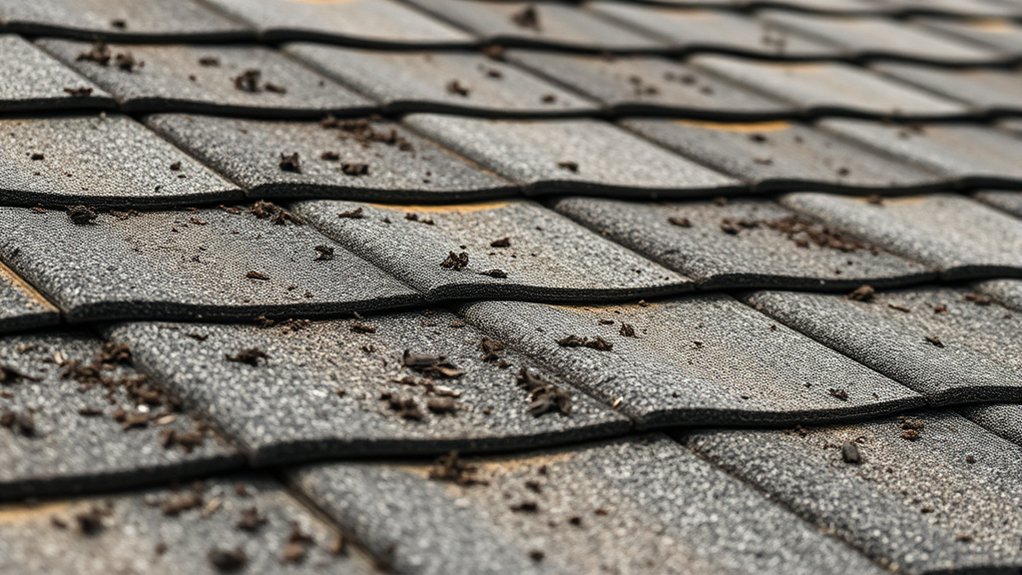
Because bird droppings contain uric acid, they actively corrode roofing materials such as asphalt shingles, tar paper, and sealants. This acid weakens the structural integrity of these components, causing premature deterioration. You’ll notice that the acidic waste erodes roof tar and breaks down protective sealants, which can lead to leaks.
Additionally, when droppings accumulate, they create a moist environment conducive to algae, moss, and mold growth, accelerating surface degradation. You should also be aware that bird waste hastens the breakdown of roof paint and coatings, reducing your roof’s lifespan.
On flat roofs, large deposits of droppings can trap water, raising the risk of leaks and damage to the underlying structures.
Regular removal of droppings is essential to preserve your roofing materials effectively. Keeping your roof clean not only helps maintain its appearance but also extends its durability. So, make it a habit to check for and clean off bird droppings whenever you can.
How Bird Nests Cause Structural Damage and Fire Risks
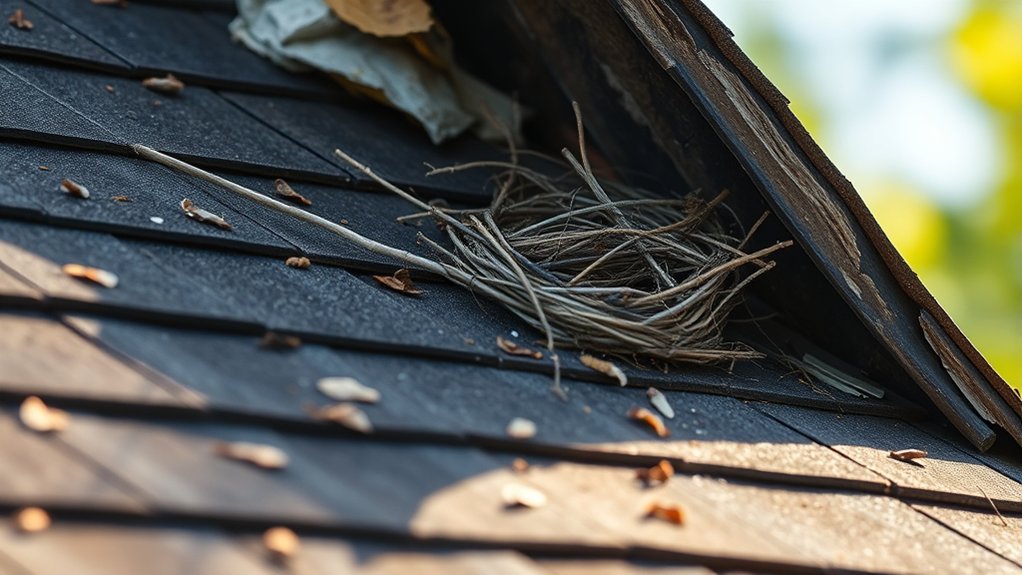
You should know that bird nests can block vents and chimneys, which restricts airflow and causes smoke or gases to build up inside your home.
The dry twigs and grass used in nests are really flammable, especially if they’re near electrical equipment or heat sources, so that raises the risk of fire.
On top of that, the moisture trapped by these nesting materials can cause your roofing structures to corrode. This weakens them and adds to the potential hazards you might face.
Nest Blockage Consequences
Although bird nests may seem harmless, their presence in gutters, vents, and chimneys can cause significant structural damage and fire hazards. When nests block gutters or vents, water accumulates, increasing the risk of roof leaks and compromising structural integrity.
Nesting debris also fosters mold, moss, and algae growth, which deteriorate roofing materials over time.
Nests in chimney flues trap smoke and gases, potentially causing dangerous carbon monoxide buildup. Additionally, the flammable materials birds use, such as twigs and straw, elevate fire risks, especially near electrical systems and heat sources.
Improper nest removal can further damage roofing components, leading to costly repairs and increasing fire danger.
You need to address nests promptly and carefully to prevent these serious consequences and maintain your roof’s safety and durability. Waiting too long or removing nests incorrectly just makes things worse.
Fire Hazards From Nests
When dry, flammable materials like twigs, straw, and grass accumulate in bird nests near electrical systems and vents, they considerably increase the risk of fires. These nests can ignite from electrical sparks or heat sources, causing significant hazards.
You should recognize that:
Nests in chimneys or near heating equipment raise chimney fire risks. Flammable materials on rooftops are vulnerable to sparks, lightning, or electrical faults. Fires originating from nests may cause extensive structural damage.
Resulting damage often requires costly repairs and poses safety threats. Regular inspection and removal of nests from critical areas reduce fire risks. It’s a simple step that can make a big difference in keeping your property safe.
How Birds Clog Roof Gutters and Cause Leaks
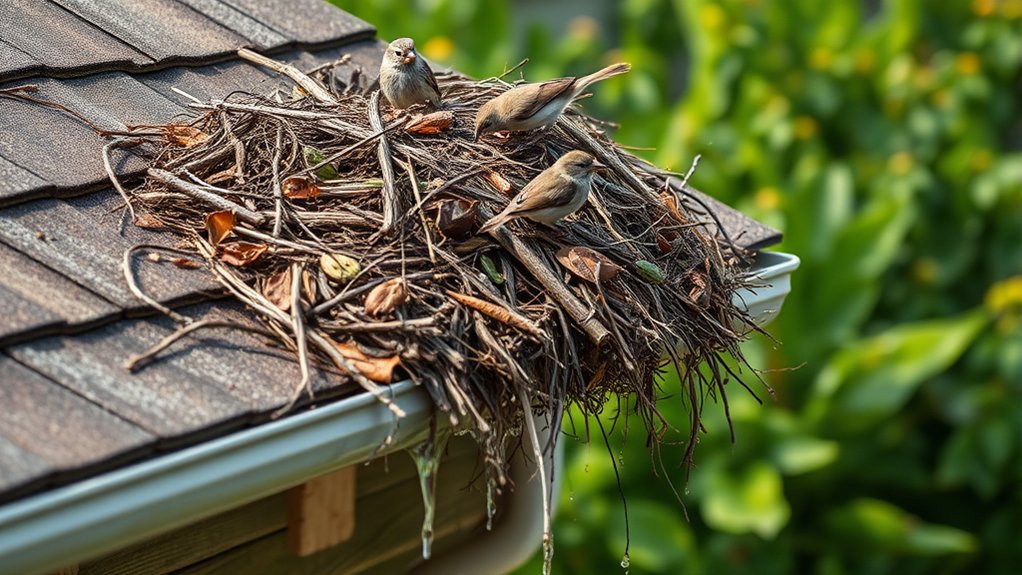
Since birds frequently build nests in roof gutters, they often cause blockages that disrupt proper water drainage. You’ll find that accumulated nesting materials, droppings, and trapped debris clog gutters, leading to water overflow. This overflow can cause leaks damaging your roof and fascia.
Bird droppings contain corrosive uric acid, which deteriorates gutter materials over time, weakening their structure. Nests also promote mold growth by trapping moisture and debris, further obstructing water flow.
| Issue | Cause | Consequence |
|---|---|---|
| Gutter blockage | Nests and debris | Water overflow |
| Material corrosion | Bird droppings (uric acid) | Weakened gutters |
| Mold development | Moisture retention in nests | Further obstruction |
| Roof leaks | Overflowing gutters | Structural damage |
| Fascia damage | Water exposure | Rot and decay |
How Birds Threaten Chimneys and Roof Ventilation
You should know that when birds decide to build nests inside your chimneys, they can block the airflow. This can cause dangerous smoke and gas to build up inside your home.
On top of that, if birds make nests in your roof vents, it often blocks proper ventilation. This can lead to your system overheating or even malfunctioning.
The good news is, you can prevent these problems by installing chimney caps. Plus, scheduling regular inspections helps catch any issues early before they become serious.
Chimney Nesting Hazards
How do birds like swifts create hazards by nesting inside chimneys? When birds build nests in your chimney, they can block airflow and trap smoke and toxic gases indoors. This is a serious health and safety risk.
Plus, their nests are highly flammable, which makes the fire hazard even worse.
You might also run into problems if fledglings fall into your home through the chimney. This can cause injury and damage inside your living space.
Key hazards include:
- Blocked airflow leading to smoke buildup
- Increased fire risk because nesting material is flammable
- Fledgling birds possibly entering your living areas
- Partial or full chimney blockage that messes with ventilation
- Structural damage from debris and blockages building up
It’s super important to have regular chimney inspections. Installing chimney caps can also help prevent these nesting problems.
Ventilation Blockage Risks
Beyond chimney nest blockages, birds also pose significant risks by obstructing roof ventilation systems. When birds nest inside roof vents, they block airflow, which leads to poor ventilation and increased indoor humidity.
This trapped moisture can accelerate roofing material deterioration and cause roof overheating.
Plus, nests inside vents can trap combustion gases and smoke, creating health hazards and increasing fire risk. Specifically, blocked chimneys prevent proper exhaust of carbon monoxide, a dangerous and potentially fatal gas.
These ventilation blockages compromise both structural integrity and indoor air quality.
To minimize these risks, regular inspection of roof vents is essential. While prevention methods like chimney caps exist, understanding how bird nests obstruct ventilation helps you address these threats promptly and keep your roofing system safe and functional.
Chimney Cap Benefits
A properly installed chimney cap plays a crucial role in preventing birds from entering and nesting inside chimneys. This can severely obstruct airflow and pose health risks. Birds like swifts often build nests in chimneys, which increases the risk of blockages and fires.
Without a cap, nests can trap dangerous fumes. This potentially leads to carbon monoxide buildup inside your home. So, it’s really important to keep that chimney capped and secure.
Installing and maintaining chimney caps offers several benefits:
- Blocks bird entry and nesting sites
- Preserves proper chimney ventilation
- Reduces fire hazards from combustible nesting materials
- Prevents toxic gas accumulation indoors
- Protects chimney structural integrity from damage
How Birds Damage Your Attic and Roof Structure
When birds take up residence in your attic or roof structure, they can considerably compromise the integrity of insulation, wiring, and stored items. Their nesting materials often block vents and chimneys, reducing airflow and causing moisture buildup, which may lead to structural deterioration.
Bird droppings, highly acidic, corrode wood, metal, and roofing components, accelerating material degradation.
Bird droppings’ acidity rapidly damages wood, metal, and roofing materials, speeding up structural wear.
Additionally, birds introduce pests such as mites and fleas, increasing infestation risks that further damage insulation and wiring.
Fledglings occasionally fall into your living spaces, creating safety hazards and necessitating professional removal to prevent further harm.
All these issues together weaken your attic and roof structure, potentially leading to costly repairs if nothing is done.
Understanding how birds cause damage helps you spot problems early and deal with them effectively. That way, you can protect your home and avoid bigger headaches down the line.
Health Risks From Birds and Their Pests on Your Roof
You should know that bird droppings on your roof can carry bacteria like E. coli and salmonella, which can spread diseases.
Plus, birds often bring pests like fleas, mites, and ticks into your home through their nests, which raises the risk of parasite-related problems.
On top of that, when droppings build up, they create unsanitary conditions that encourage mold growth and can cause respiratory issues if you breathe in the contaminated dust.
Disease Transmission Risks
Although birds may seem harmless, their presence on your roof can pose significant disease transmission risks. Bird droppings and nesting materials can harbor harmful pathogens that affect human health. When you maintain or inspect your roof, direct contact with these contaminants increases your exposure risk.
Key concerns include bacteria in droppings, such as E. coli, salmonella, and psittacosis. There’s also mold and fungi growth on accumulated droppings, which can cause respiratory infections.
Plus, nesting sites often attract pests carrying zoonotic diseases.
Diseases can be transmitted through contact with contaminated materials during roof work. Birds may also carry parasites that could infest your home.
Understanding these risks helps you take precautions to protect your health and maintain a safe living environment.
Parasites Carried By Birds
How do birds contribute to parasite infestations on your roof and nearby living spaces? Birds frequently carry parasites such as fleas, mites, lice, and ticks, which can infest roofing structures, attics, and adjacent areas. Their nests and droppings create environments conducive to these pests, increasing infestation risks.
Fleas and mites may transfer to humans, causing itching, allergic reactions, and potential disease transmission. Additionally, bird droppings harbor bacteria, fungi, and viruses like E. coli and salmonella, which indirectly support parasite proliferation.
Contaminated nests attract other pests, compounding infestation challenges within your home and roof framework.
To minimize these risks, you should conduct regular inspections and engage professionals to remove bird nests and droppings promptly. This helps prevent the spread of parasites and safeguards your living environment’s health.
It’s a smart way to keep your home safe and comfortable.
Sanitation Hazards On Roof
What health risks do bird droppings and their associated pests pose when left on your roof? Bird droppings contain uric acid, which corrodes roofing materials and weakens structural integrity.
Plus, accumulated waste harbors bacteria, fungi, and viruses, exposing you to infections through contact or airborne particles.
Pests like fleas, mites, and ticks often infest bird nests, increasing disease transmission risks inside your home. Unsanitary conditions from heavy droppings attract more pests and encourage mold growth, which ramps up health hazards.
When cleaning, you should wear protective gear to avoid zoonotic diseases.
Key sanitation hazards include:
- Corrosion of roofing materials by uric acid
- Bacterial, fungal, and viral contamination
- Pest infestations from nests
- Mold proliferation due to organic waste
- Risk of zoonotic disease during cleanup
Effective Bird-Proofing to Protect Your Roof
When you want to protect your roof from bird damage effectively, implementing physical barriers like roof spikes and anti-roosting strips is essential. These tools make it difficult for birds to land or nest. Bird netting over vents and gutters adds another protective layer.
Combining deterrents such as decoys, reflective surfaces, and sound devices enhances long-term success. Regular inspections help maintain barrier effectiveness because birds tend to adapt over time.
| Barrier Type | Function |
|---|---|
| Roof Spikes | Prevents birds from landing |
| Anti-Roosting Strips | Discourages perching and nesting |
| Bird Netting | Blocks access to vents and gutters |
| Reflective Surfaces | Creates visual disturbance |
| Sound Devices | Emits noises to deter birds |
Place deterrents at nesting hotspots to reduce damage risks markedly. It’s all about targeting the right spots to get the best results.
When and How to Remove Bird Nests Safely and Legally
Although removing bird nests can help protect your roof from damage, you need to make sure the process follows legal and ecological guidelines. In many places, it’s actually illegal to disturb active nests during breeding season. So, you should only remove nests after the chicks have left the nest, which is usually in late summer or early fall.
Here’s how to remove nests safely and legally: first, check if the birds are protected species to avoid any legal trouble. Make sure the nest is inactive, with no eggs or young birds around. It’s also a good idea to wear protective gloves to prevent contamination or injury.
You might want to consult local wildlife authorities or licensed professionals for advice.
And remember to schedule the removal outside of breeding seasons to minimize the impact on local wildlife.
Following these steps helps you stay on the right side of wildlife protection laws while keeping both yourself and the bird populations safe.
Repairing Bird-Related Roof Damage: What You Need to Know
Since bird-related damage can compromise your roof’s integrity, addressing it promptly is essential to prevent costly repairs. Bird droppings contain uric acid, which erodes shingles, tar paper, and roof tar, reducing their lifespan. You should replace any damaged shingles and reseal holes caused by birds to restore the roof’s protective barrier.
Nests in gutters or vents can cause water buildup, so removing these nests quickly prevents leaks and structural harm. On flat roofs, be sure to resolve any ponding water issues resulting from blocked drainage.
Regular inspections by roofing professionals help you identify early signs of bird damage, allowing timely intervention. Repair focuses on restoring material integrity and preventing water infiltration, ensuring your roof maintains its durability and functionality over time.
Ongoing Maintenance to Keep Birds Off Your Roof
Maintaining a bird-free roof requires regular inspections and proactive measures to prevent nesting and damage. By consistently monitoring your roof, you can identify early signs of bird activity and mitigate potential harm.
Here are some key strategies to keep in mind:
- Inspect and clean gutters and roof surfaces to remove nests and droppings promptly.
- Install physical barriers such as spikes, netting, or anti-roosting strips to deter landing.
- Employ deterrents like predator decoys or reflective materials to repel birds.
- Seal gaps and holes to block access to roof cavities.
Also, make sure to schedule seasonal maintenance, especially after the breeding season, to keep your roof protected all year round.
Using these scientific and systematic approaches will help you maintain the integrity of your roof and reduce costly repairs caused by bird damage. It’s definitely worth the effort!
Frequently Asked Questions
What Types of Birds Are Most Likely to Damage Roofs?
You’ll find pigeons, starlings, house sparrows, swifts, and woodpeckers most likely to damage roofs. They build nests, clog gutters, block vents, or peck wood, causing structural harm and ventilation issues you should address promptly.
These birds can really cause a headache if you don’t deal with them. Keeping an eye out early can save you a lot of trouble down the line. So, it’s best to take action as soon as you notice any signs of damage or nesting.
Can Bird Damage Affect My Roof’s Insurance Coverage?
You’d think birds could wreck your roof overnight, and they can impact your insurance coverage. Insurers often require proof of maintenance and bird-proofing. Without it, claims for bird-related damage might be denied or limited due to wear and tear exclusions.
It’s important to stay on top of regular roof inspections and keep bird deterrents in place. That way, you can help protect your roof and make sure your insurance has you covered if issues pop up.
How Quickly Can Bird Damage Worsen if Untreated?
Bird damage can worsen within months if untreated. Droppings corrode materials quickly, nests cause water pooling, and acidity degrades shingles.
You’ll see leaks, structural damage, and pest issues develop rapidly. This can increase repair costs considerably, so it’s best to address the problem sooner rather than later.
Are Certain Roofing Materials More Resistant to Bird Damage?
Like a fortress against invaders, metal and rubber roofing resist bird damage because they’re hard and smooth. Birds find it tough to perch or peck on these surfaces, so they usually avoid them.
On the other hand, asphalt shingles are softer and organic, which tends to attract birds. They might see these shingles as a good spot to land or even nest.
Concrete and clay tiles have rough textures that deter birds from nesting. This roughness helps keep the roofing durable and bird-free for longer.
Can Bird Sounds Indicate Roof Damage or Nesting Activity?
Yes, bird sounds can indicate nesting activity or damage. You’ll notice high-pitched chirping or scratching near your roof, signaling nests or trapped birds.
These noises could lead to structural issues, so it’s important to keep an ear out. Timely inspection and maintenance might be needed to prevent bigger problems.
Conclusion
Now that you understand how bird droppings corrode roofing materials, nests pose fire hazards, and clogged gutters lead to leaks, it’s clear that bird activity can seriously compromise your roof’s integrity.
Don’t overlook chimney and attic damage either. These issues affect ventilation and structure.
So, why risk costly repairs when effective bird-proofing and safe nest removal methods exist? Regular maintenance is essential to safeguard your investment and keep your roof sound and secure year-round.