
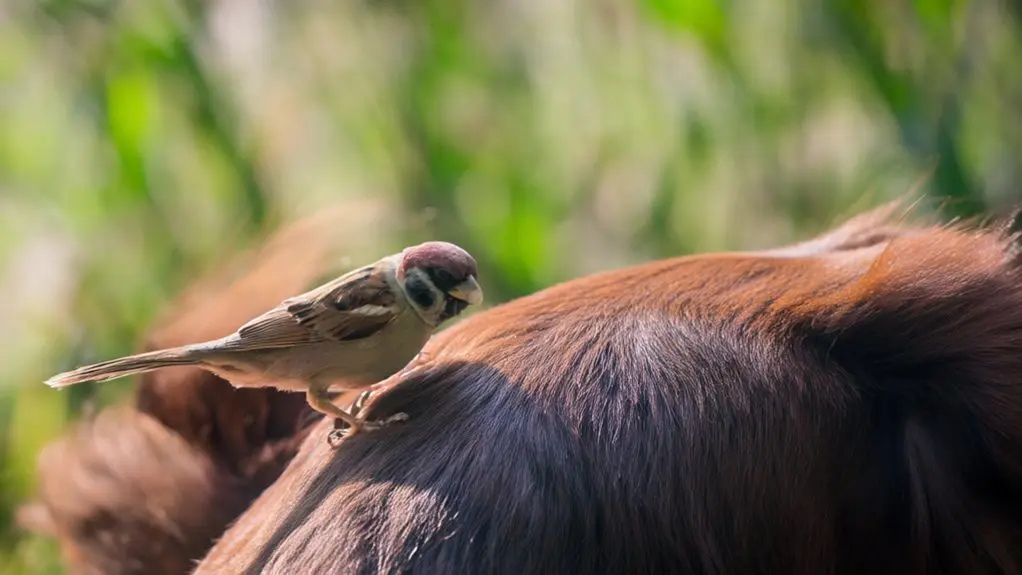
You generally don’t need to worry about your bird getting fleas directly from your dog. Fleas are picky about their hosts and thrive best on animals they’re adapted to, like dogs or cats.
Bird feathers, skin, and grooming habits make it tough for dog fleas to survive or reproduce on birds. While some fleas might bite birds occasionally, infestations are rare.
If you want to know more about how fleas behave and how to keep both pets safe, keep exploring the information ahead.
Why Birds Rarely Get Fleas From Dogs
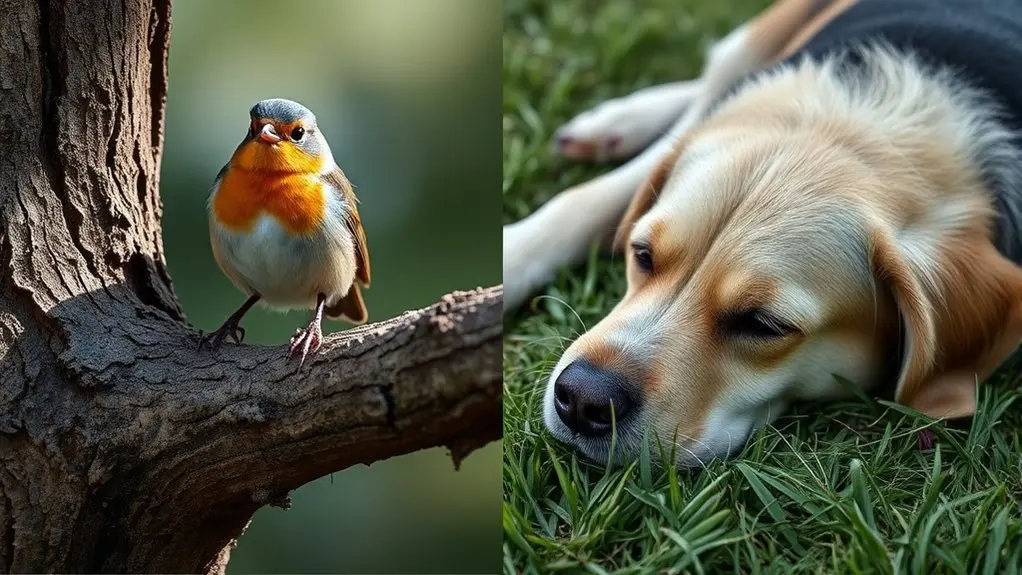
Although you might worry that your dog’s fleas could jump onto nearby birds, it’s unlikely because fleas usually stick to their preferred hosts. Flea genetics play a big role here.
Fleas have evolved with strong host specificity, meaning they adapt to thrive on certain animals only.
Fleas have evolved to thrive exclusively on specific hosts, showing strong adaptation to particular animals.
Dog fleas, like Ctenocephalides felis, prefer the warmth, hair, and environment of mammals, which differ greatly from birds.
This genetic specialization limits their ability to survive on birds. Birds’ feathers, skin temperature, and grooming behaviors make a hostile environment for dog fleas.
So, even if a flea briefly lands on a bird, it generally can’t establish itself or reproduce there.
Understanding flea genetics and host specificity helps you see why cross-species flea infestations are rare. It also explains why your bird is likely safe from your dog’s fleas.
Which Flea Species Affect Birds and Dogs
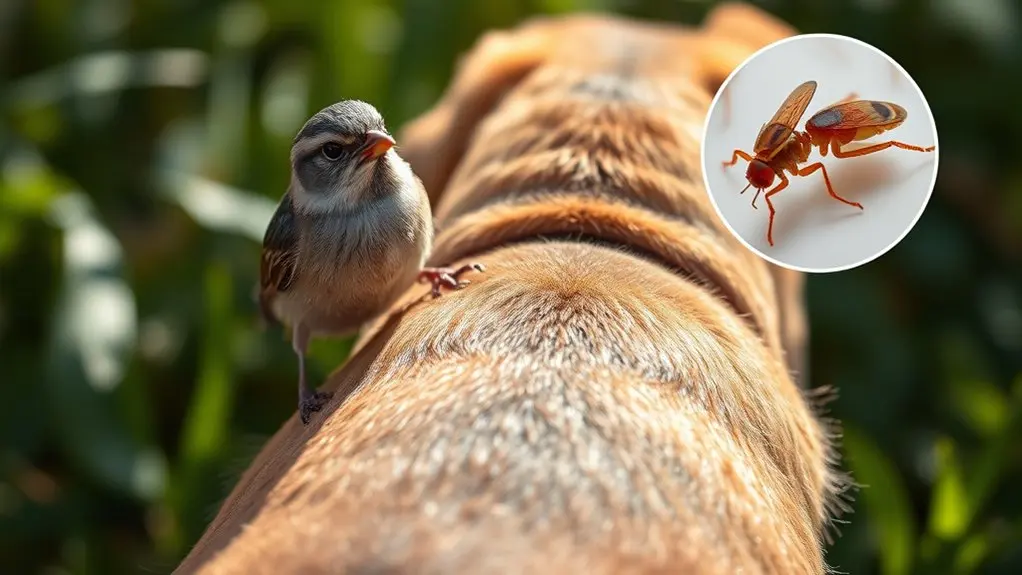
When you consider flea infestations, it’s important to recognize that different flea species prefer different hosts, but some can affect both birds and dogs. Flea evolution has shaped host specificity, meaning many fleas, like Ctenocephalides felis (the cat flea), primarily target cats and dogs but can occasionally infest birds.
Similarly, dog fleas (Ctenocephalides canis) might bite birds but usually fail to complete their life cycle on them.
Birds are more commonly affected by species like the stick-tight flea (Echidnophaga gallinacea), which can also infest dogs in shared environments. This adaptability depends on environmental conditions and flea species traits.
Understanding these distinctions helps you grasp why cross-infestation happens yet remains limited due to fleas’ evolutionary host preferences.
Signs Your Bird Has Fleas
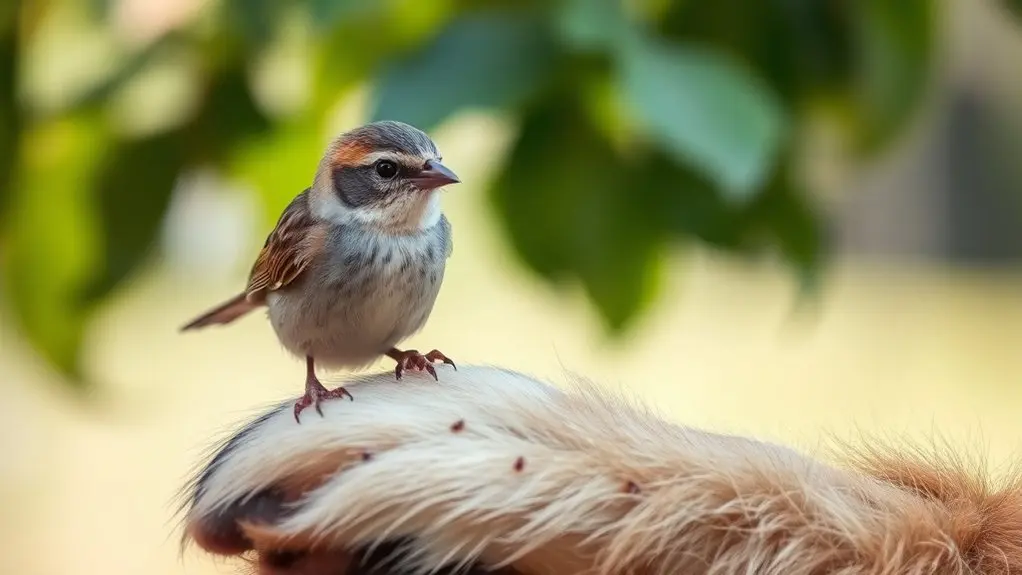
Understanding which flea species affect birds helps you recognize the signs of an infestation early. You might notice your bird scratching excessively or developing bald patches from irritated skin.
Flea bites often show up as small, red, itchy spots, especially around the neck and vent areas.
Check for flea dirt, tiny black specks on feathers or skin, which is a clear indicator of fleas.
If your bird starts grooming excessively or plucking feathers, it’s a sign of discomfort that shouldn’t be ignored.
Sometimes, you can even see fleas moving at the base of feathers if you take a close look.
Keep in mind, flea infestations can affect your bird’s diet and overall activity, so addressing signs promptly helps maintain their health and comfort.
It’s always better to catch these issues early before they become a bigger problem.
How Fleas Act on Dogs and Birds
How exactly do fleas affect both dogs and birds when they share the same environment? Fleas like Ctenocephalides canis primarily target dogs, feeding on their blood and completing their flea life cycle efficiently on this host. However, because they’re not super picky, these fleas can also bite birds if they’re close by.
Fleas like Ctenocephalides canis mainly target dogs but will also bite nearby birds.
When fleas infest birds, they cause itching and irritation. It can even lead to anemia since birds’ feathers and skin don’t offer much protection.
You’ll notice fleas reproduce quickly on both animals, which leads to rapid infestations that need attention fast. Understanding how fleas act on dogs and birds helps you spot the risks of cross-infestation.
It also shows why it’s important to keep an eye on pets that share spaces to protect their health and comfort.
How to Prevent Flea Spread Between Dogs and Birds
Since fleas can easily jump between dogs and birds sharing the same space, you need to take proactive steps to prevent their spread. Understanding the flea lifecycle is essential. Fleas lay eggs in the environment, which hatch and reinfest pets.
You should regularly clean and disinfect bird cages and dog areas to break this cycle through effective environmental control. Limit direct contact between your dog and bird, especially during flea outbreaks or treatments. This helps minimize cross-infestation.
Monitor both pets closely for flea signs and promptly address any infestations. Using veterinarian-recommended flea preventatives on your dog reduces the risk of fleas transferring to your bird.
Safe Flea Treatments for Birds and Dogs
What flea treatments can you safely use for both your dog and bird without risking their health? You need species-specific products because many flea medications are toxic to birds. Some veterinarian-approved topical or oral treatments are safe for both, but always follow professional guidance.
Treating both pets at the same time is really important to break the flea lifecycle and stop re-infestation. Cleaning your pets’ living areas regularly helps reduce flea eggs and larvae. Environmental control plays a big role in managing fleas.
Simultaneous treatment and thorough cleaning of living spaces are key to stopping flea reinfestation effectively.
Natural remedies like diatomaceous earth can help, but use them cautiously and only under veterinary supervision to avoid toxicity. Before starting any treatment, make sure to consult your veterinarian. They’ll verify what’s safe for each species and consider their health status.
Taking this careful approach protects your pets and helps you manage fleas effectively. It’s all about keeping your furry and feathered friends safe and comfortable.
What to Do If Your Bird Has Fleas
When your bird shows signs of itching or feather plucking, fleas might be the cause, especially if it shares space with a dog. Act quickly to safeguard your bird’s feather health by consulting an avian veterinarian. Never use dog flea treatments, as they can be toxic to birds.
Your vet can recommend safe, bird-specific flea control options.
Meanwhile, improve environmental cleaning by thoroughly washing the bird’s cage, toys, and surrounding areas to eliminate flea eggs and larvae. Regularly inspect your bird and living space to prevent reinfestation.
Maintaining a clean environment and monitoring feather health closely are key to keeping your bird comfortable and flea-free. Taking these steps promptly helps ensure your feathered friend stays healthy and happy.
Frequently Asked Questions
Can Fleas on Birds Transmit Diseases to Humans?
Fleas on birds rarely transmit diseases to humans because bird immunity limits flea breeding on them. You shouldn’t worry much about it.
That said, controlling fleas on all pets helps reduce any risk of disease transfer effectively. So, it’s always a good idea to keep an eye on your pets and manage fleas regularly.
Do Indoor Birds Need Flea Prevention Regularly?
You want your feathered friend to thrive, so yes, you should keep up with flea prevention regularly. Maintaining bird nutrition and cage cleanliness helps protect them from discomfort and keeps their environment safe and healthy.
It’s all about creating a comfy space for your bird. Regular flea checks and prevention make a big difference. Plus, a clean cage means fewer pests and a happier pet overall.
How Long Can Fleas Survive Without a Host?
Fleas can survive without a host for up to two weeks, depending on the flea lifecycle stage and environment. It really varies based on where they are in their life and the conditions around them.
You’ll want to focus on environmental flea control to break this cycle and protect your pets effectively. Taking care of your pet is important, but don’t forget the area they live in too. That’s where fleas can hang out and come back again.
Are Flea Bites on Birds Painful or Harmful?
Yes, flea bites on birds are painful and harmful. They disrupt bird grooming, damage feather health, and cause itching or infections.
You should address infestations quickly to protect your bird’s comfort and overall well-being. Taking action early can make a big difference for your feathered friend.
Can Other Pets Besides Dogs and Birds Get Fleas?
Yes, several small species, like cats and rabbits, can catch fleas.
You’ll want to focus on flea prevention and regular pet grooming to protect your precious pets. This helps prevent pesky parasites from spreading throughout your home.
Conclusion
You might wonder if your bird can catch fleas from your dog, but thankfully, flea transfer between these two is rare. By recognizing the signs, safely treating both pets, and staying proactive with prevention, you’ll protect your feathered friend and furry companion from pesky parasites.
Remember, preventing problems is always better than patching them up. Stay vigilant, stay kind, and keep your critters comfortable and flea-free for a happy home.