
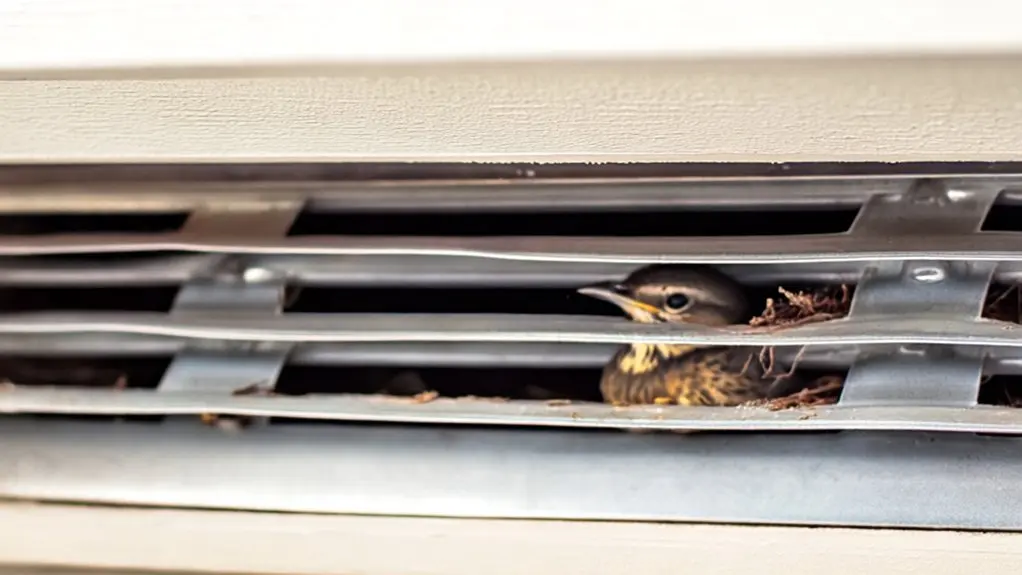
Yes, birds can get into your dryer vent because these warm, enclosed spaces mimic natural nesting sites. They offer shelter from predators and harsh weather, which makes them pretty attractive to birds.
This can block airflow, reduce dryer efficiency, and create fire hazards since nesting materials are flammable. Plus, nests can bring health risks from bacteria, mold, and parasites.
You should inspect and clean vents regularly. Using pest-resistant covers helps too. And if you find active nests, it’s a good idea to get professional help.
Learn how to recognize, safely address, and prevent this issue so your dryer runs safely and smoothly.
Why Birds Choose Dryer Vents for Nesting
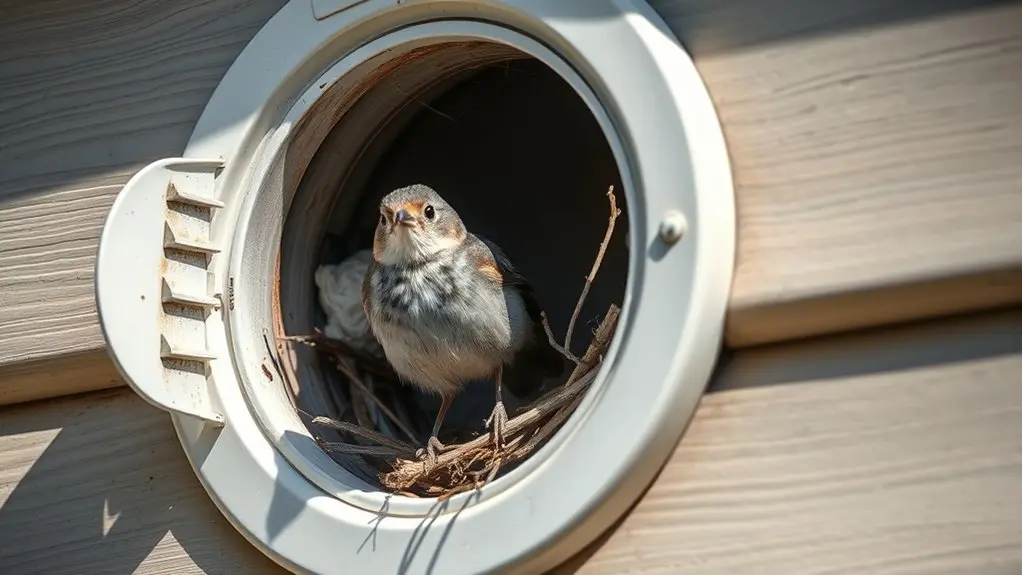
Why do birds choose dryer vents for nesting? You’ll find that these vents mimic natural cavities, providing an ideal bird habitat. Their enclosed and small structure aligns perfectly with common nesting behavior, offering a secure space to build nests.
The warmth from indoor heating and dryer airflow creates a cozy microenvironment, especially appealing during colder months. Additionally, dryer vents shield birds from predators and harsh weather, enhancing their safety.
You should note that lightweight vent caps with dampers can be easily pushed open, granting birds access to the vent system.
Understanding this combination of factors—enclosure, warmth, and protection—clarifies why dryer vents become favored nesting sites. It really reflects how birds adapt their habitat selection and nesting behavior in urban settings.
How to Spot Birds or Nests in Your Dryer Vent
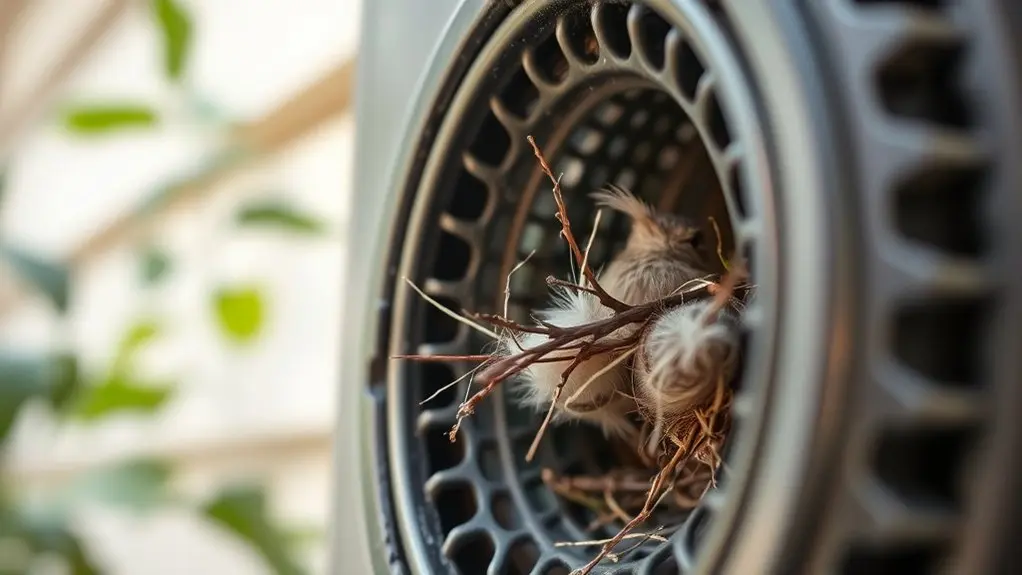
If you suspect birds have taken up residence in your dryer vent, you can identify their presence by observing several specific signs.
Look for visible nesting materials such as twigs, grass, or feathers protruding from the vent opening. Different bird species use characteristic materials, which can help you determine the type of bird involved.
Listen for chirping, scratching, or rustling sounds inside the vent, indicating active nesting.
Notice any decrease in dryer efficiency, like extended drying times or premature shutdowns, which may signal a blockage from nests.
Check the vent exterior for bird droppings or debris accumulation around the opening.
A loose or open vent cap also suggests potential entry points.
These objective indicators offer clear evidence of bird nesting activity within your dryer vent system.
Fire and Health Risks of Birds in Dryer Vents
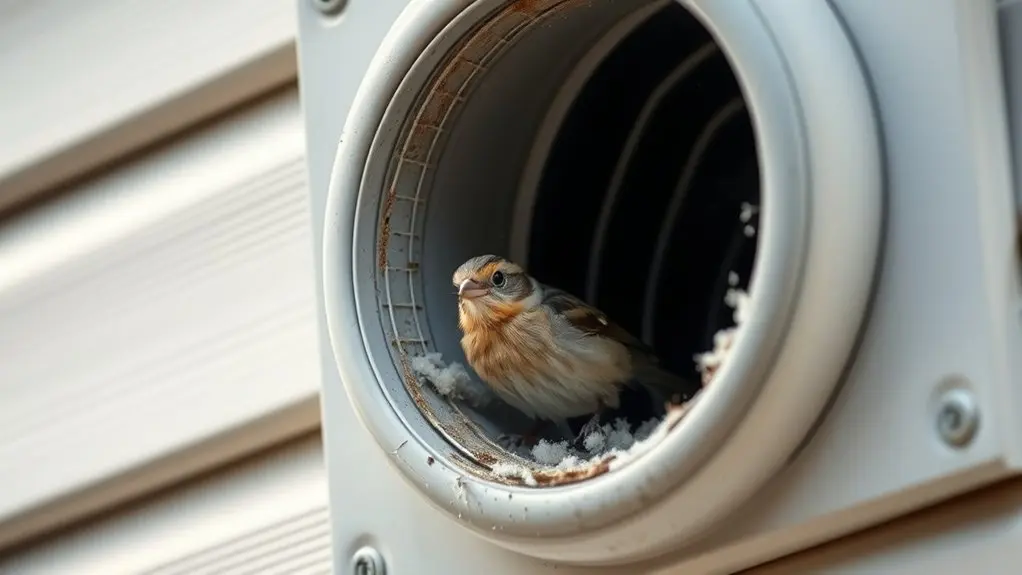
You should know that bird nests in dryer vents can be a serious fire hazard. The materials birds use to build nests are flammable, and when combined with lint buildup, it can cause the vent to overheat.
On top of that, if the vent gets blocked, gas dryers might leak carbon monoxide, which is really dangerous.
Plus, these nests can become a home for mold, bacteria, and fungi, creating health risks from airborne germs.
Fire Hazards Explained
Because bird nests are made of dry twigs, grass, and other organic stuff, they can be a big fire hazard when they end up inside your dryer vents. Birds tend to pick cozy, warm spots, so it’s no surprise they build nests inside these ducts.
When you combine the nest materials with the lint that collects there, it creates a real problem.
This buildup blocks airflow, which makes your dryer work harder and can cause it to overheat. When things get too hot, the dry, flammable nest materials can catch fire.
The mix of heat, lint, and nest stuff makes the vent system a perfect place for a fire to start.
Blocked vents don’t just cause fire risks—they can also trap moisture. This moisture can lead to mold growth and release toxic fumes, making the situation even worse.
Knowing how birds choose where to nest and what their nests are made of helps you see why this is such a serious fire hazard.
Health Risks Overview
Beyond the fire hazards posed by bird nests in dryer vents, their presence also introduces significant health risks. During bird migration, many species build nests inside vents, blocking airflow. This blockage can cause carbon monoxide buildup in homes with gas dryers, which is a serious respiratory danger.
Also, organic debris and moisture trapped in nests encourage mold growth. Mold releases spores that can be harmful to your lungs. Parasites like mites, lice, and bacteria thrive in these environments, increasing the risk of diseases such as histoplasmosis and salmonellosis.
On top of that, overheating caused by vent blockages damages your dryer and raises fire risks. Knowing about these health hazards is really important for preventing illness and keeping your dryer safe and efficient.
How to Safely Remove Birds and Nests From Dryer Vents
Before you remove any nests, make sure to check if they’re active. You definitely want to avoid disturbing any eggs or chicks until they’ve left the nest.
Once you’re sure it’s safe to go ahead, put on some protective gloves and grab the right tools to carefully take out the debris without harming the vent system.
After you’ve cleared the nest, give the vent a good cleaning to stop any blockages from happening.
Finally, don’t forget to put back a secure, bird-proof cover to keep them from coming back.
Removing Active Nests
When you suspect an active bird nest inside your dryer vent, start by turning off and unplugging the appliance to guarantee your safety during inspection.
Begin vent inspection by carefully removing the vent cover with a screwdriver. Then, use a flashlight to check for bird nesting, eggs, or live birds.
If you find eggs or birds, avoid disturbing the nest. Wait until it’s naturally abandoned or contact a professional wildlife removal service.
When it’s safe, wear gloves and use a vacuum to gently remove nest materials and debris without harming any remaining birds or chicks.
Finally, securely reattach the vent cover. You might also want to consider installing a bird-proof vent cover to prevent future bird nesting and maintain proper vent function.
This way, you keep your dryer working well and the birds safe too.
Post-Removal Cleaning
Although removing birds and nests from your dryer vent is an important step, thorough post-removal cleaning is essential to restore proper airflow and reduce fire risks. After extraction, inspect the duct and vent cover for any leftover debris. Use the right cleaning tools, like a vent brush or vacuum, to get rid of lint, twigs, feathers, and droppings.
These materials can block airflow and increase the chance of fire. Make sure to follow strict safety precautions by wearing protective gloves, a mask, and safety goggles. This will help you avoid exposure to dust, mold, and other biological contaminants.
Once everything is cleaned, securely reattach the vent cover. It’s best to replace it with a bird-proof or pest-resistant model if you can. To keep your vent system safe and efficient, schedule regular inspections and cleanings. This will help prevent future bird infestations and keep your dryer running at its best.
DIY Steps for Removing Bird Nests From Dryer Vents
Since bird nests can block dryer vents and create safety hazards, you’ll want to unplug and disconnect your dryer before you start removing the nests. This step is important for your safety and helps keep the ventilation working well. Good airflow is key to your dryer running at its best.
Unplug your dryer before removing nests to ensure safety and maintain proper ventilation for optimal performance.
Here’s how you can get rid of those nests safely and effectively:
- Grab a screwdriver to take off the vent cover. Then, use a flashlight to check inside for any nests or birds.
- Put on gloves and a mask to protect yourself from droppings, dust, and any parasites when you’re cleaning things out.
- Gently remove the nest using your gloved hands or tongs. After that, clean out any leftover debris with a vent brush or vacuum before putting everything back together.
Doing all this helps restore proper airflow, which stops your dryer from overheating and lowers the risk of fire.
Plus, it keeps your dryer running smoothly and lasting longer.
How to Prevent Birds From Nesting in Dryer Vents
To prevent birds from nesting in your dryer vents, you should install bird-proof vent covers made of heavy-gauge metal mesh. These covers effectively block entry without restricting airflow. Many bird species look for enclosed spaces like vents to build their nests.
It’s a good idea to regularly inspect and clean vents before nesting season. This helps you spot any vulnerable entry points early on. You can secure vent openings with caulk, screws, or specialized guards to keep birds from pushing past dampers or unprotected areas.
Upgrading to pest-resistant vent caps with inner flaps creates a physical barrier while still allowing proper ventilation. You might also consider landscaping with native plants or providing alternative nesting sites to encourage birds to nest elsewhere.
Using these strategies together helps reduce the risk of bird intrusion and keeps your dryer system running safely and efficiently.
When to Call Professionals for Bird Nest Removal and Vent Cleaning
Even with proper preventive measures in place, bird nests can still form in dryer vents, posing serious risks. When you identify nesting materials or bird species activity, call professionals immediately. Handling nests with eggs or chicks without permits is illegal and risky.
Experts guarantee safe removal and thorough vent cleaning, preventing fire hazards, system damage, and health risks. You should contact professionals if you:
- Discover active nests containing eggs or chicks, to avoid legal issues and protect wildlife.
- Notice reduced airflow or longer drying times, indicating debris buildup from nests.
- Detect bird activity during nesting season, reducing parasite and droppings-related health concerns.
Trained technicians safely access difficult vents, ensuring complete removal of nests and contamination. It’s always better to leave this job to the pros who know how to handle it safely and effectively.
Frequently Asked Questions
Can Bird Droppings Damage My Dryer Machine?
Yes, bird droppings can damage your dryer machine by corroding vent components and causing blockages.
It’s important to prioritize vent maintenance. This not only protects your dryer but also helps keep birds healthy by preventing harmful buildup and pest attraction.
Keeping things clean benefits both your machine and the local wildlife.
Do Birds Prefer Dryer Vents Over Other Vents?
Yes, birds prefer dryer vents for bird nesting because these vents provide warmth and shelter. You should prioritize vent safety by ensuring covers are secure and dampers closed to prevent nesting and maintain proper airflow in your dryer system.
It’s pretty common for birds to choose these spots since they’re cozy and protected. Keeping an eye on your vents can save you from potential blockages and damage. So, make sure everything is in good shape and free from any bird nests.
What Types of Birds Are Most Likely to Nest in Vents?
You wouldn’t expect sparrows and starlings to be bird species experts in dryer vent nesting behaviors, but they are. Their aggressive adaptability makes them prime candidates, alongside finches and wrens seeking warm, sheltered cavities for nests.
These birds are pretty clever when it comes to finding cozy spots. Dryer vents offer the perfect mix of warmth and protection, which is why these species often choose them. It’s all about finding a safe place to raise their young.
Can Bird Nests Cause Insurance Issues for Homeowners?
Yes, bird nests in dryer vents can cause insurance issues. You must understand bird habitat and nesting behavior to prevent blockages. These blockages increase fire risks and may lead insurers to deny claims due to neglect or improper maintenance.
Are Ultrasonic Devices Effective in Deterring Birds From Vents?
Ultrasonic deterrents are like invisible walls of sound, but you’ll find bird repellent technology often falls short as birds adapt quickly. You shouldn’t rely solely on these devices; combine them with physical barriers for best results.
It’s kind of like giving birds a little nudge at first, but they figure out the trick pretty fast. So, if you really want to keep birds away from vents, it’s smart to mix up your methods.
Think of ultrasonic devices as one tool in your toolkit, not the whole solution. Adding things like nets or screens can make a big difference in keeping those pesky birds out.
Conclusion
If you find birds nesting in your dryer vent, act quickly to prevent fire hazards and health risks. Removing nests yourself requires caution and the right tools. Sometimes, though, calling professionals is the safest bet.
Think of your vent as a delicate ecosystem. Disruptions can lead to bigger problems down the line.
By staying vigilant and proactive, you’ll protect your home’s safety. Plus, you’ll keep your dryer running efficiently without unwelcome feathered tenants.