
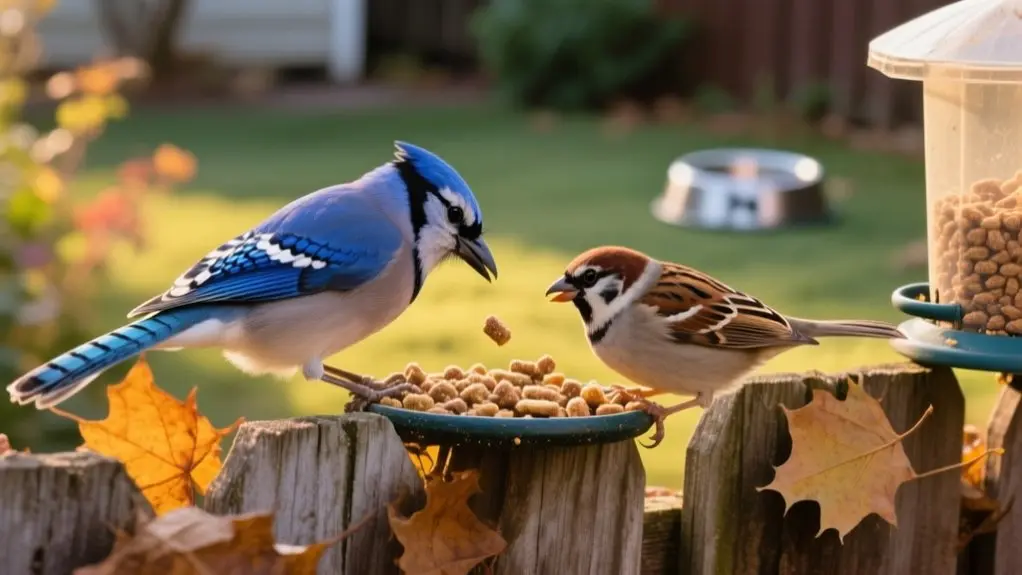
You can safely offer dry dog food to many wild birds like crows and blue jays. It provides high protein and fat that help during colder months. Just soak the kibble to soften it and watch for signs of poor health.
Long-term feeding may cause malnutrition or attract unwanted pests. Keep an eye on how different bird species respond. If you’re curious about the healthiest feeding habits and risks, there’s plenty more to explore.
Identifying Wild Birds That Eat Dry Dog Food
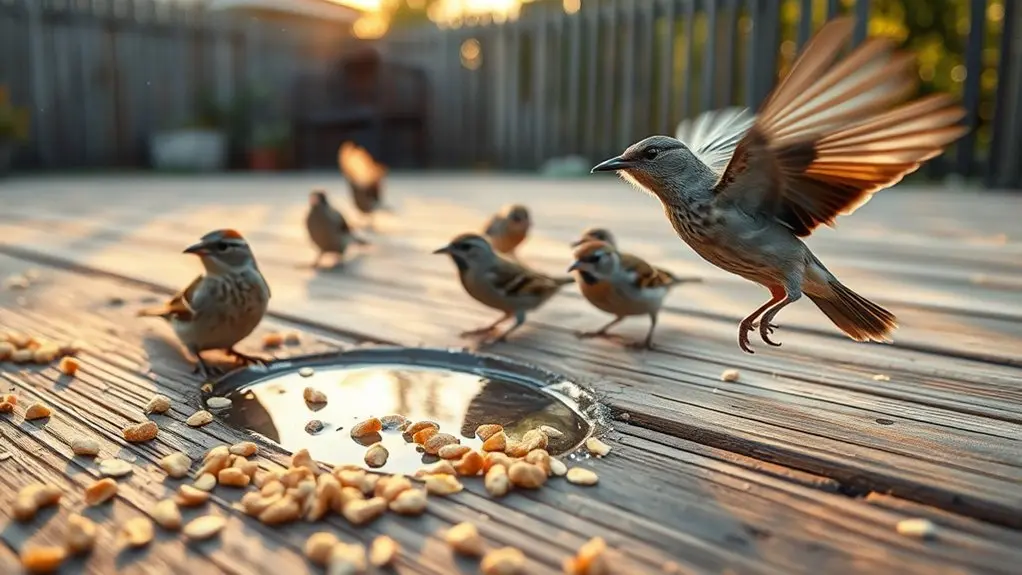
Which wild birds are most likely to eat dry dog food? You’ll often spot American crows, blue jays, and common grackles feeding on it. These larger birds tend to dominate feeding spots, making it tricky for smaller birds to get their share.
However, species like house sparrows, dark-eyed juncos, and Eastern bluebirds also eat dry dog food when it’s available. Many birds soak the dry kibble in water before eating, which helps soften it for easier digestion.
House sparrows, dark-eyed juncos, and Eastern bluebirds often enjoy softened dry dog food when available.
While you might notice a diverse group of birds accepting this unconventional food source, keep in mind that dry dog food doesn’t fully meet their nutritional needs like traditional bird feed does.
Still, it’s clear that various birds have adapted to include it in their diets.
Why Some Birds Prefer Dog Food Over Traditional Feed
Because dry dog food offers higher protein and fat content than traditional bird feed, many larger bird species like crows and blue jays find it especially appealing.
You’ll notice these birds often prefer dog food pellets as a more energy-rich alternative, especially during winter when natural food is scarce.
By choosing dog food pellets, larger birds reduce competition for seeds and grains, letting smaller birds feed peacefully nearby.
You might also observe birds like blue jays soaking dog food pellets in water to soften them, showing their adaptability.
Many backyard bird watchers report attracting diverse species by offering dog food pellets, highlighting a broader acceptance of this unconventional food source among wild birds.
This preference isn’t just about taste; it’s about availability, energy needs, and feeding strategy.
What Nutrients Does Dog Food Provide to Birds?
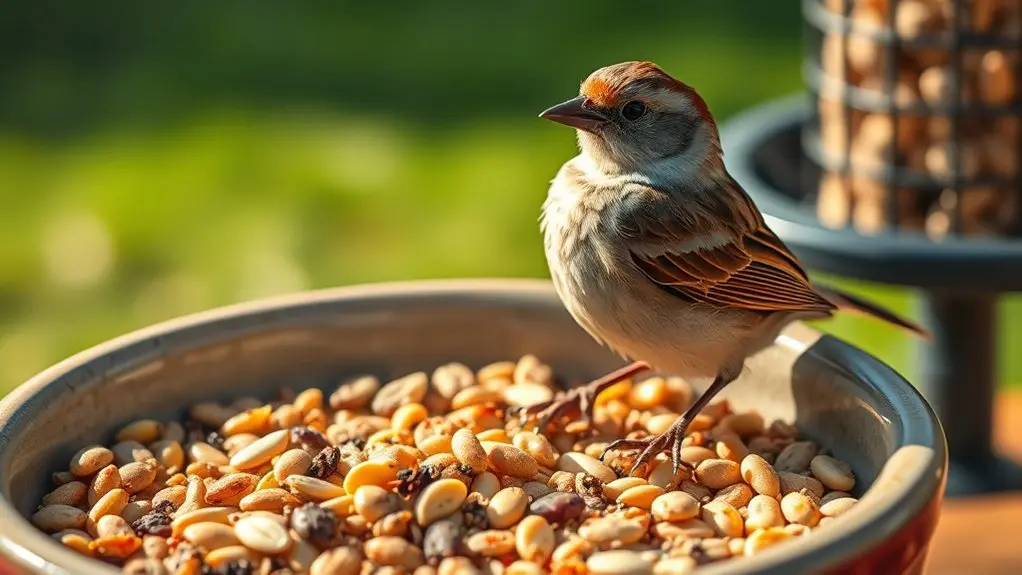
You’ll find that dog food offers protein, carbohydrates, vitamins, and minerals that birds can use for energy and growth.
But keep in mind, since it’s made for dogs, it mightn’t meet all the unique nutritional needs of wild birds.
Nutritional Components Overview
While dog food isn’t designed specifically for birds, it does provide a range of nutrients that can benefit them, especially when other food sources are limited.
Dog food typically contains protein, carbohydrates, vitamins, and minerals, offering a more balanced nutritional profile than some traditional bird foods.
The protein in dog food supports birds during high-energy times like breeding seasons. Moreover, essential fatty acids found in some dog food promote healthy feathers and skin. Added vitamins and minerals help boost overall health and immunity.
However, remember that dog food doesn’t meet the specific dietary needs of all bird species. Feeding it long-term may cause health issues, so it’s best used as a temporary supplement rather than a primary food source for birds.
Suitability For Wild Birds
Dog food offers a variety of nutrients that can support certain wild birds, especially larger species like crows and blue jays that have been seen eating it. It contains protein, carbohydrates, vitamins, and minerals, which might provide a more balanced nutritional profile than some traditional bird foods.
However, dog food isn’t tailored to meet the specific dietary needs of most wild birds, whose diets are often more varied. While dry dog food can serve as an occasional alternative, relying on it long-term could cause health risks or nutritional imbalances.
If you decide to offer dog food to wild birds, monitor their health and behavior closely to make sure it doesn’t lead to malnutrition or other issues.
Use dog food cautiously and sparingly for wild birds.
Health Risks of Feeding Dog Food to Wild Birds
Although it might seem harmless to offer your leftover pet food to wild birds, doing so can lead to serious health risks.
Dog food doesn’t meet the specific nutritional needs of birds, which can cause malnutrition over time. Its high protein and fat content may be excessive, increasing the risk of obesity and related health problems like heart issues and digestive disturbances.
Since dog food ingredients aren’t designed for avian diets, long-term consumption might trigger unknown health effects.
If you decide to feed wild birds anything other than their natural diet, closely monitor their health and behavior to catch any adverse reactions early.
Avoiding these health risks is essential to keeping wild bird populations safe and thriving.
How Dog Food Affects Small vs. Large Bird Species
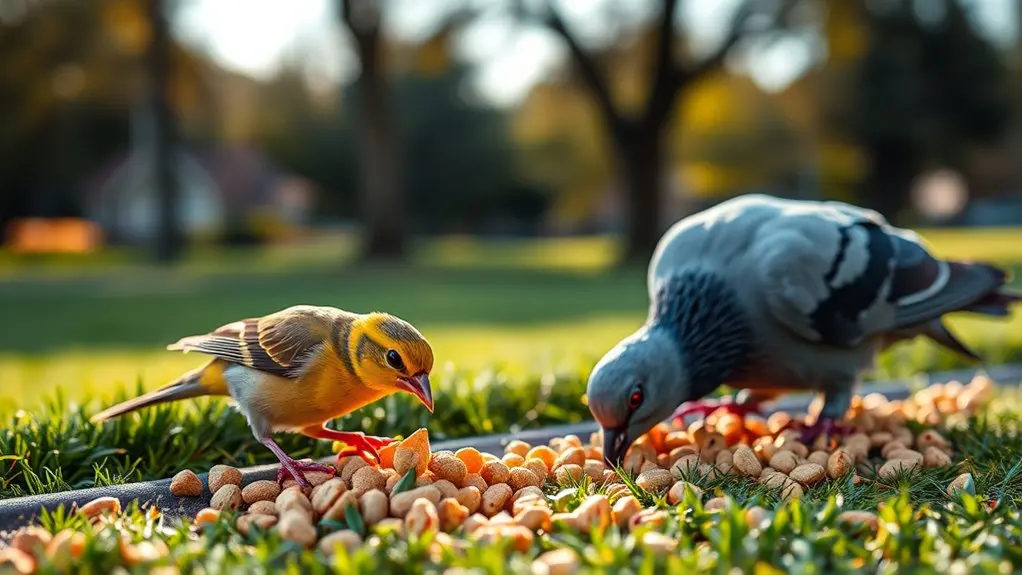
When larger birds like crows and blue jays find dry dog food, they often dominate the feeding area. This can change how smaller birds interact with the food sources.
You’ll notice smaller birds, such as nuthatches and titmice, take advantage of this by feeding more peacefully while the big birds focus on dog food.
However, it’s important to remember that dry dog food doesn’t meet the nutritional needs of wild birds. So if birds eat it long-term, they might face health problems.
Dry dog food lacks essential nutrients for wild birds and can cause long-term health issues.
While species like blackbirds and starlings may enjoy dog food, its presence shifts feeding dynamics and competition.
Understanding these effects helps you see how feeding dog food impacts small versus large bird species differently.
Ecological Effects of Feeding Wild Birds Dog Food
If you feed wild birds dog food, you’ll likely notice shifts in local wildlife behavior and ecosystem balance. Dog food attracts larger birds like crows and blue jays, which can dominate feeding spots. This indirectly allows smaller birds to feed undisturbed when these larger birds are occupied.
This shifts the natural competition for traditional bird food, changing feeding dynamics. Birds often adapt by soaking dry dog food in water before eating, showing their resourcefulness.
However, dog food doesn’t meet wild birds’ nutritional needs, raising concerns about their long-term health.
Furthermore, dog food can draw unwanted wildlife, such as raccoons and rats, posing risks to both birds and the broader ecosystem. These ecological effects highlight the complex impact of introducing dog food into wild bird diets.
Safer Alternatives to Dog Food for Wild Birds
Feeding wild birds dog food can disrupt their natural diet and attract unwanted animals, but you don’t have to rely on it to support your local birds.
Safer alternatives like sunflower seeds offer high fat and energy, perfect for many bird species.
You can also provide suet, which is nutrient-dense and especially helpful during colder months for woodpeckers and nuthatches.
Raisins and dried fruits attract robins and waxwings, giving them a sweet, nutritious treat.
Mealworms, whether live or dried, appeal to insect-eaters like bluebirds and warblers.
Using a variety of seeds in platform feeders caters to diverse birds and promotes healthier feeding habits.
Tips for Watching and Feeding Dog Food to Birds
When you’re feeding dog food to birds, it’s a good idea to use large, deep dishes. This helps keep the food contained and makes it easier for the birds to access. You might also want to soften the kibble a bit—this makes it easier for them to eat, especially for smaller birds.
It’s interesting to watch how different bird species interact with the food. You’ll start to notice their preferences and behaviors, which can be really helpful. Plus, keeping an eye on things ensures that the smaller birds stay safe around the bigger, more aggressive ones.
Just remember to always practice safe feeding habits. This way, you’re creating a healthy and welcoming environment for all the feathered visitors at your feeder.
It’s all about making sure everyone gets along and stays healthy!
Safe Feeding Practices
Although dog food isn’t a traditional choice for bird feeding, you can safely offer it by using larger ceramic dishes to reduce mess and prevent competition among different bird species.
To make dry dog food easier for birds like starlings and robins to eat, soak it in water before serving.
Practice safe feeding practices by regularly monitoring the birds’ health and behavior to guarantee they adapt well, since long-term effects on wild birds remain unclear.
Avoid leaving old or unused dog food outside to prevent attracting pests and creating unsanitary conditions.
Observing Bird Behavior
Since birds show varied preferences when it comes to dog food, paying close attention to their behavior can help you create a better feeding experience. You’ll notice larger birds like crows and blue jays often dominate feeding areas, while smaller birds take advantage when competition lessens.
Watching bird behavior closely lets you see if they soak dry dog food in water, which many do to soften it before eating. Experiment with feeding softened dog food, as robins and starlings often prefer it.
Keep an eye out for unwanted wildlife like raccoons and rats, and adjust your feeding methods to minimize their presence.
Observing flock dynamics and food-sharing habits not only enriches your experience but also helps you feed responsibly and understand local wildlife better.
What Experts Say About Feeding Dog Food to Wild Birds
If you’re considering feeding dog food to wild birds, experts caution that it often falls short of their nutritional needs.
While larger birds like crows and blue jays might eat dry dog food, it doesn’t provide the balanced diet wild birds require and could lead to health problems over time.
Some species, such as starlings and blackbirds, have adapted by soaking dog food in water to make it easier to eat.
You should be careful not to offer old or spoiled dog food, as it can harm birds and attract pests like rats and raccoons.
Experts also recommend closely monitoring the birds’ health and behavior when introducing dog food to guarantee you’re supporting their well-being without disrupting local feeding patterns.
How to Prevent Unwanted Wildlife When Feeding Dog Food
When you feed dog food to wild birds, preventing unwanted wildlife from invading your feeding area becomes essential.
Use enclosed feeders designed to keep larger animals out, allowing only birds to access the dog food.
Opt for enclosed feeders that exclude larger animals, ensuring only birds can reach the dog food.
Keep the feeding area clean and free of spills, as leftover bits attract pests like rats and raccoons.
Consider automatic dog feeders that close after dispensing food to limit access when you’re not around.
Feeding during the evening rather than daytime can also reduce visits from non-target wildlife.
Furthermore, set up physical barriers or place decoys, such as owl figures, nearby to discourage larger animals.
Signs to Tell If Birds Are Thriving or Struggling on Dog Food
You’ll want to keep an eye on physical signs like their feather condition and any changes in weight. These can really tell you if birds are doing well or having a hard time on dog food.
Also, watch how they behave—birds that are active and social usually mean things are going okay. But if they seem lethargic, that could be a warning sign.
Don’t forget to check how often they’re eating, too. Spotting any unusual feeding patterns might help you catch nutritional problems early on.
Physical Health Indicators
Physical health indicators offer clear signs that can help you determine whether your bird is thriving or struggling on a dog food diet. When birds eating dog food display bright plumage, clear eyes, and stay active, it’s a good sign they’re healthy.
However, if you notice dull feathers, lethargy, or respiratory distress, your bird might be struggling. Keep an eye on weight changes, as loss or poor body condition often means inadequate nutrition.
Also, watch their droppings; unusual color or consistency can signal gastrointestinal trouble. Frequent feather plucking and reduced vocalizations may indicate stress or poor health linked to diet.
Difficulty flying or altered feeding habits are red flags.
Regularly checking these physical signs helps you guarantee your bird’s well-being while on dog food.
Behavioral Changes Observed
Although birds adapt in various ways to dog food diets, their behavior offers key clues about their well-being. You’ll notice behavioral changes like increased flocking, especially among larger species such as crows and blue jays. These birds dominate feeding areas and let smaller birds feed nearby peacefully.
Birds like starlings and blackbirds often show thriving signs by successfully foraging on dog food. Pay attention to activity levels; healthy birds stay active and social, while lethargy may signal diet-related issues.
Also, watch how often birds visit dog food sources. More frequent visits during winter suggest reliance on this alternative food.
Monitoring droppings helps too; consistent color and shape indicate good health, while changes can reveal dietary distress linked to dog food consumption.
Feeding Frequency Patterns
When birds visit dog food sources regularly, it often signals they’re thriving and adapting well to this alternative diet. You’ll notice consistent feeding frequency, with birds like crows and blue jays returning often, especially in winter.
This steady pattern shows they find dog food appealing and can balance it with natural foraging. Increased activity and social interactions during feeding also indicate good health.
However, if you observe irregular feeding frequency, lethargy, dull plumage, or fewer social behaviors, these could be warning signs that the birds struggle nutritionally.
Monitoring their droppings and overall activity helps you assess if their diet meets their needs. Paying attention to feeding frequency patterns enables you to tell whether birds thrive or face challenges when consuming dog food.
Best Practices for Feeding Dog Food Safely to Wild Birds
Because feeding dog food to wild birds can impact their health, you should take specific precautions to do it safely. Always offer fresh dog food, avoiding expired or stale kibble that can harm birds and attract pests.
Soften the kibble in water before feeding to help smaller birds eat easily and reduce choking risks. Use large ceramic dishes to limit mess and prevent competition among birds, allowing different species to feed comfortably.
Keep dog food away from traditional bird feeders to minimize stress and competition. Monitor the birds’ health and behavior closely, as dog food may cause nutritional imbalances over time.
Frequently Asked Questions
Can Pet Birds Eat Dog Food Safely at Home?
You shouldn’t feed your pet birds dog food regularly, as it lacks the right nutrients and can contain harmful ingredients.
While a tiny bit mightn’t cause immediate harm, it’s not safe to rely on it.
Instead, focus on dietary alternatives specifically designed for birds, like pellets, seeds, fruits, and vegetables.
Always consult your vet to find the best diet to keep your bird healthy and thriving at home.
How Should Dog Food Be Stored to Keep It Safe for Birds?
You’ll want to treat dog food like treasure, guarding it from moisture and pests with airtight containers.
Storage tips include keeping it in a cool, dry place, away from heat that can spoil the food like a thief in the night.
Regularly check for any off smells or discoloration.
Using a five-gallon bucket with a secure lid creates a fortress, keeping dog food safe and fresh for your feathered friends.
Does Cooked Dog Food Pose Different Risks to Birds Than Dry Dog Food?
Yes, cooked dog food poses different risks to birds than dry dog food.
You’ll find cooked risks include added spices, fats, and higher moisture content, which can encourage bacterial growth harmful to birds.
Also, cooking alters nutrients and texture, making it harder for birds to digest and potentially leading to malnutrition if they prefer it over their natural diet.
Dry kibble is generally safer, but you should still monitor what your birds eat closely.
Are There Specific Dog Food Ingredients That Are More Harmful to Birds?
You might be surprised to learn that some dog food ingredients pose serious risks to birds due to ingredient toxicity. Ingredients like garlic and onion are downright toxic to birds and can cause severe health problems.
High fat, salt, and artificial preservatives also wreak havoc on their delicate systems.
Plus, excessive protein and fillers disrupt their nutrition, leading to long-term issues.
Can Feeding Dog Food to Birds Affect Their Breeding or Migration Patterns?
Yes, feeding dog food to birds can have a significant breeding impact.
You’ll find that it disrupts their natural diet, leading to nutritional imbalances that affect their reproductive success.
It also alters their migration patterns since birds might rely on this easy food source, delaying migration or changing routes.
Over time, this can reduce fledgling survival rates and harm local bird populations, so it’s best to avoid offering dog food to wild birds.
Conclusion
While it might seem like a kind gesture to share your dog’s food with visiting birds, it’s wise to contemplate their delicate dietary needs. Dog food isn’t exactly a feast designed for feathers, and prolonged meals of it may leave your feathered friends less than chirpy.
Instead, think of it as an occasional treat rather than a staple. By offering thoughtful alternatives, you’ll help your wild visitors flourish in their natural, vibrant way.