
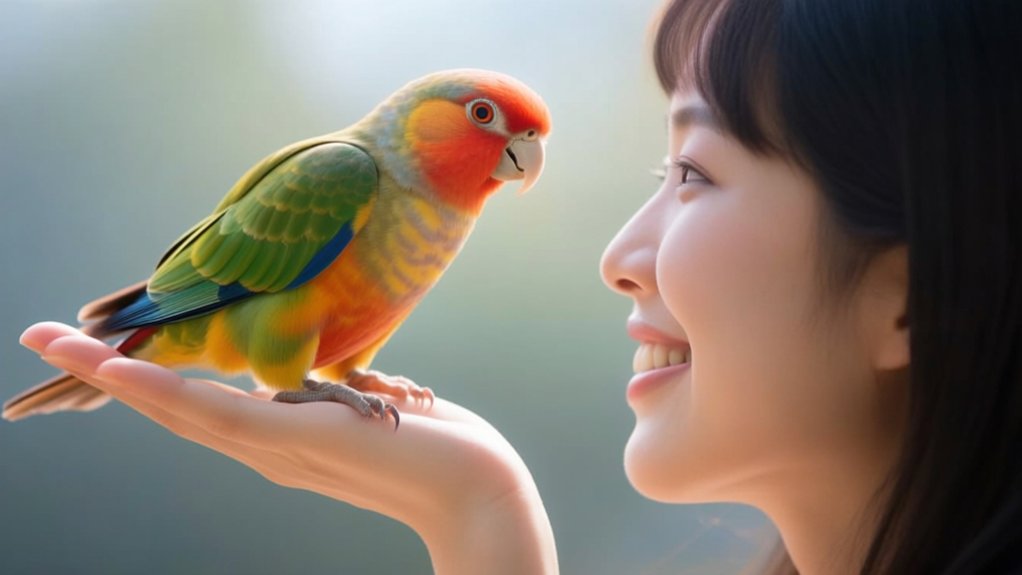
Yes, many bird species can bond deeply with you, forming complex social and emotional attachments based on trust and mutual recognition. Parrots like African greys, cockatoos, and macaws show strong bonding behaviors such as approaching, vocalizing, and preening.
However, bonding varies by species, personality, and consistent positive interaction. Understanding their body language and communication cues is key to building and maintaining these connections.
Explore how these bonds develop and what signs indicate their strength.
What Does Bonding With a Bird Really Mean?
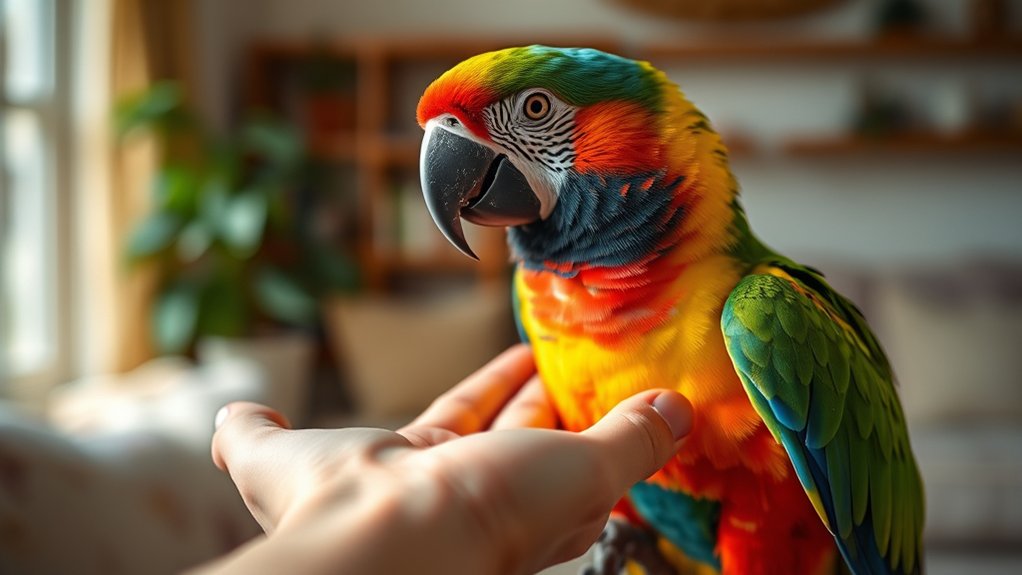
Although bonding with a bird may seem simple, it involves a complex interplay of mutual trust, consistent positive interactions, and the bird’s willingness to seek closeness and physical contact with you.
Parrots, as highly social and intelligent creatures, often form emotional attachments, perceiving you as part of their social group.
You can identify this bond through behaviors like vocalizing, preening, and actively seeking your attention.
Developing such a connection requires understanding the bird’s unique personality and respecting its boundaries while maintaining ongoing positive engagement.
This relationship can become profound, with owners sometimes viewing their parrots as family members and experiencing significant emotional responses if separated.
Bonding is therefore a dynamic, reciprocal process grounded in trust and consistent, respectful interaction over time.
Which Bird Species Form the Strongest Bonds With People?
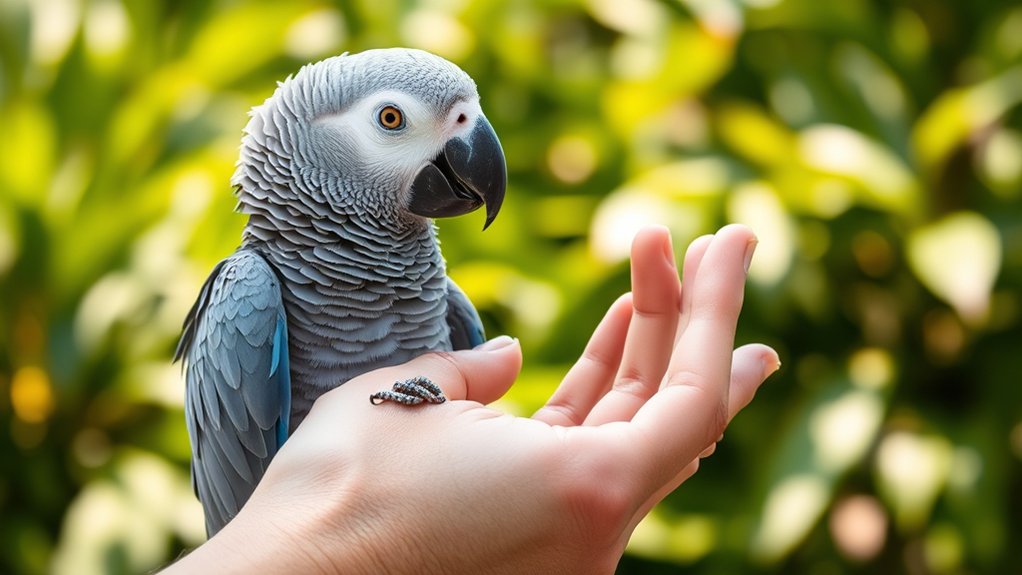
You’ll find that African grey parrots, Amazon parrots, cockatoos, and macaws consistently form the strongest bonds with humans. That’s mainly because of their advanced cognitive abilities and social behaviors.
These birds are pretty amazing—they show traits like vocal mimicry, affectionate physical contact, and responsive communication, all of which help deepen their attachment to people.
Plus, when you have regular positive interactions with them, it really boosts the strength and durability of the bond you share.
Top Bonding Species
Which bird species form the strongest bonds with humans? Several species show notable attachment behaviors because of their intelligence, social tendencies, and interactive abilities.
African grey parrots develop lifelong bonds thanks to their advanced cognition and social interaction. Amazon parrots mimic speech and respond to emotional cues, which really helps deepen their connection with people. Cockatoos love physical contact, which reinforces their affection.
Macaws cuddle and vocalize to express closeness, while conures form tight bonds by engaging playfully.
| Species | Bonding Behavior | Key Trait |
|---|---|---|
| African Grey | Lifelong attachment | High intelligence |
| Cockatoo | Physical contact seeking | Social nature |
| Macaw | Cuddling, vocalization | Expressive communication |
These species are among the top bonding birds with humans based on what we see in their behavior.
Traits Enhancing Attachment
Because certain traits enhance a bird’s capacity for attachment, species like African grey parrots and cockatoos stand out for their ability to bond deeply with humans. African greys exhibit exceptional vocal mimicry and cognitive skills, which help with complex social interactions and emotional connections.
Cockatoos, especially Moluccans and umbrella cockatoos, show strong social tendencies and love physical closeness. This promotes attachment through tactile interaction.
Amazon parrots are known for their outgoing and affectionate behavior, which supports consistent bonding with their owners.
Hyacinth macaws, even though they don’t vocalize much, show loyal companionship and form enduring bonds.
Conures and lovebirds, with their playful and social nature, can develop close relationships when properly socialized.
These traits—vocal ability, sociability, affection, and playfulness—together boost a bird’s potential to form strong, lasting bonds with humans.
It’s pretty amazing how these qualities work hand in hand to create such meaningful connections.
Can All Birds Develop Emotional Connections With Humans?
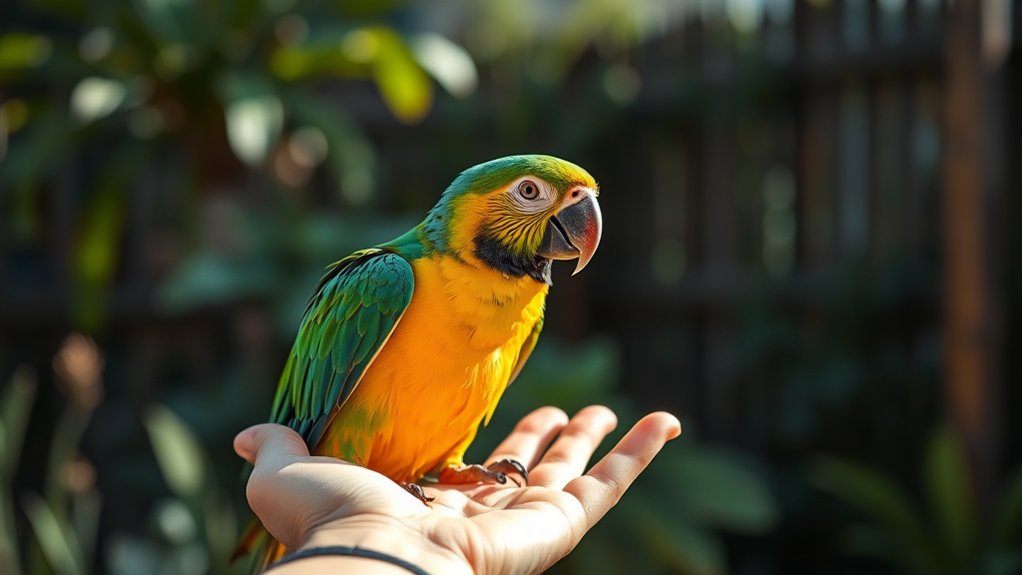
Although many bird species, particularly parrots, can develop strong emotional connections with humans, this ability isn’t universal across all birds. Parrots’ high intelligence and social nature often promote bonding through behaviors like mimicry and seeking physical contact.
Many birds, especially parrots, form strong emotional bonds with humans through intelligence and social behaviors.
However, bonding success varies widely among species and individuals.
Some birds remain naturally independent or solitary and consequently don’t form deep attachments to humans. Your bird’s capacity to bond depends considerably on socialization, environment, and individual personality traits.
While you might observe strong emotional ties in species adapted for social interaction, less social birds may exhibit limited emotional responsiveness.
What Behaviors Show a Bird’s Bond and Trust With You?
You can tell a bird trusts and bonds with you by the little things it does. For example, if your bird steps onto your hand without hesitation, that’s a great sign. They might even gently preen your fingers, which shows they’re comfortable and affectionate.
You’ll also notice other behaviors like relaxed feathers, slow blinking, and even head-bobbing. These all mean your bird feels safe and happy around you.
Plus, if your bird consistently responds positively when you interact and stays calm during handling, it’s clear you’ve built a strong, trusting relationship.
Signs of Affection
When a bird bonds with you, it often demonstrates its trust through specific physical behaviors. You can observe these clear signs of affection that indicate a strong bond.
The bird may lean its head toward you or nuzzle your hand, showing a desire for physical contact and closeness. It often relaxes its feathers, lowers its head, or tilts its head gently, reflecting comfort and trust in your presence.
Preening your hair or clothing is another affectionate behavior, signaling acceptance and social bonding.
Additionally, birds that trust you tend to seek your company by perching nearby and responding positively to gentle touch, such as head rubs. These behavioral cues show a bird’s emotional connection and comfort with you.
It’s pretty amazing how they communicate without words, right?
Trust-Building Behaviors
Physical signs of affection in birds often come with deeper trust-building behaviors that strengthen your relationship. When a bird leans into your touch, lowers its head, and relaxes its feathers during head rubs, it shows comfort and bond formation.
A bird that steps willingly onto your hand or perches calmly on your finger demonstrates confidence and trust in your presence.
You can foster this trust by consistently using positive reinforcement. This encourages relaxed body language and reduces fear responses.
Birds that seek your company, vocalize happily, and respond calmly to your gestures show a strong bond.
It’s really important to respect rejection cues like feather puffing or leaning away. Ignoring these signals can damage trust and slow down bonding progress.
Common Challenges That Hinder Bonding With Pet Birds
Although bonding with pet birds can be deeply rewarding, several common challenges often impede this process. You might face difficulties due to behavioral issues, environmental factors, or handling inconsistencies. Specifically, consider these three main obstacles:
- Behavioral problems such as fear, aggression, or biting often block trust formation, making bonding difficult.
- Inconsistent socialization and handling can cause your bird to feel insecure and less willing to engage.
- Environmental stressors, including loud noises or unsuitable cages, elevate anxiety, reducing your bird’s receptiveness to interaction.
Additionally, misinterpreting natural behaviors like screaming or biting may lead you to withdraw, which only makes bonding harder. Lack of patience during early socialization phases also gets in the way of forming a strong connection.
Understanding and addressing these challenges scientifically improves your chances of creating a strong, lasting connection. So hang in there—it’s worth the effort!
How Do Touch and Interaction Build Trust With Parrots?
Since parrots rely heavily on tactile cues to communicate and assess safety, gentle and consistent touch plays an essential role in building trust between you and your bird. When your parrot displays relaxed body language and lowers its head, gentle touches such as head rubs reinforce positive associations.
You have to recognize and respect rejection signals like leaning away or dilated pupils. This helps you avoid forcing interactions that could actually undermine trust.
Using positive reinforcement during touch encourages your parrot to link physical contact with safety and affection.
Properly socialized parrots often initiate contact, like head nuzzles, which shows they feel comfortable.
Establishing permission cues, like asking “Touch?” before petting, helps create mutual understanding. This reduces fear or aggression and strengthens the trust between you and your parrot.
How Anthropomorphism Shapes Our Bond and Care for Parrots
When you attribute human emotions and intentions to parrots, you risk misunderstanding their true behaviors and needs. Anthropomorphism can distort your perception, leading to care decisions that don’t align with their biology. Consider these points:
You might misinterpret parrots’ actions, assuming human-like motives, which overlooks their unique communication and social cues.
Feeding toxic foods such as chocolate or avocado, thinking they share human tastes, endangers their health.
Expecting complex human emotions like revenge or guilt can mislabel normal defensive or aggressive behaviors, increasing stress.
Recognizing that parrots sense the world differently through ultraviolet vision and acute smell helps you avoid imposing unrealistic human-centered expectations.
Maintaining objectivity ensures you meet their actual needs, fostering a healthier, more accurate bond.
How Can Owners Strengthen and Maintain Bonds With Their Birds?
To strengthen and maintain a bond with your bird, you must engage in regular positive interactions that build trust and mutual understanding. Talk, play, and offer treats consistently to encourage familiarity and comfort.
Observe your bird’s body language carefully, respecting signals of discomfort to avoid stress and foster mutual respect.
Implement consistent training using positive reinforcement methods, such as clicker training, to promote cooperation and deepen your connection.
Guarantee your bird’s environment is safe and enriched with toys and opportunities for flight or exercise, supporting both physical and psychological well-being.
Spend quality time daily, incorporating shared routines like singing or gentle preening. These evidence-based practices enhance attachment and maintain a strong, healthy relationship founded on trust and responsiveness.
What Are the Signs of a Deeply Bonded Bird-Owner Relationship?
Although bonding can vary among individual birds, certain behaviors consistently indicate a deeply bonded relationship between you and your bird. You’ll notice your bird prefers your presence, often perching close or on your shoulder. It will allow gentle touch and preening, signaling trust.
A deeply bonded bird seeks your presence, perching nearby and welcoming gentle touch as a sign of trust.
Vocal responses and recognition of your voice or gestures further reinforce the connection.
Key signs of a deep bond include:
- Seeking proximity and physical contact, such as leaning in or offering its beak for grooming.
- Displaying relaxed body language, like lowered feathers and a calm posture.
- Showing excitement during reunions, like calling out or enthusiastically approaching.
These behaviors objectively demonstrate trust, affection, and emotional attachment. They confirm a strong bird-owner relationship.
Frequently Asked Questions
How Long Does It Typically Take to Bond With a Bird?
It typically takes you a few weeks to several months to bond with a bird, depending on species and personality. Consistent daily interaction, patience, and positive reinforcement accelerate trust-building and create a lasting connection.
Can Bonding With a Bird Improve Their Mental Health?
Like a soothing balm, bonding with your bird releases oxytocin, reducing anxiety and boosting confidence. You’ll notice improved behavior and emotional stability.
Consistent positive interactions scientifically enhance their mental health and overall well-being. It’s pretty amazing how a little love can make such a big difference!
Do Birds Remember Their Human Companions After Long Separations?
Yes, birds like parrots remember their human companions after long separations by recognizing visual and auditory cues. Their strong memory retention reflects cognitive complexity. This is especially true when positive interactions and emotional bonds occurred during prior caregiving.
Are There Specific Toys That Help Strengthen Bird-Human Bonds?
Yes, interactive puzzle feeders, soft-textured toys, and objects mimicking natural behaviors help strengthen bonds. By engaging your bird mentally and physically, you foster trust and reduce boredom.
This, in turn, enhances your mutual emotional connection during play and exploration. It’s all about keeping things fun and stimulating for your feathered friend. When your bird feels challenged and entertained, they’re more likely to open up and connect with you.
Can a Bonded Bird Become Jealous of Other Pets or People?
Yes, your bonded bird can exhibit jealousy toward other pets or people by vocalizing, biting, or displaying possessive behaviors. These reactions stem from their social intelligence and emotional attachment.
It’s important to carefully manage these behaviors to maintain harmony. Birds can be surprisingly sensitive, so understanding their feelings helps a lot. Just keep an eye on their interactions and give them plenty of attention.
Conclusion
You can indeed form strong bonds with birds, especially species like parrots known for their social nature. Studies show that up to 70% of pet parrots demonstrate behaviors indicating trust and attachment to their owners. Recognizing these signs, such as vocalizations and preening, helps deepen your connection.
By understanding bird behavior scientifically and engaging in consistent, gentle interaction, you strengthen this unique interspecies relationship. This enhances both your bird’s well-being and your mutual trust. It’s pretty amazing how much connection you can build with these feathered friends when you pay attention and care.