
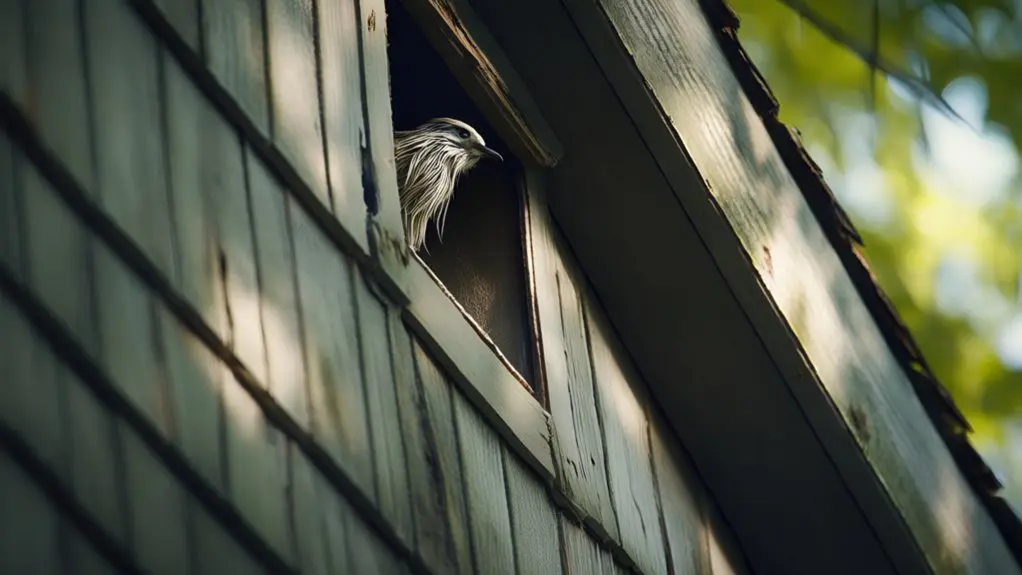
Yes, birds can definitely get in your attic through small gaps, vents, and damaged openings near the roofline. If they nest there, you might hear chirping and find droppings, nesting materials, or insulation damage.
They can cause structural harm and health risks like allergies or infections. There’s also a fire hazard if they build nests near wiring. Plus, you could end up attracting pests.
Taking swift action is key. There are effective ways to remove them and prevent their return. More details ahead.
Birds’ Common Entry Points Into Attics
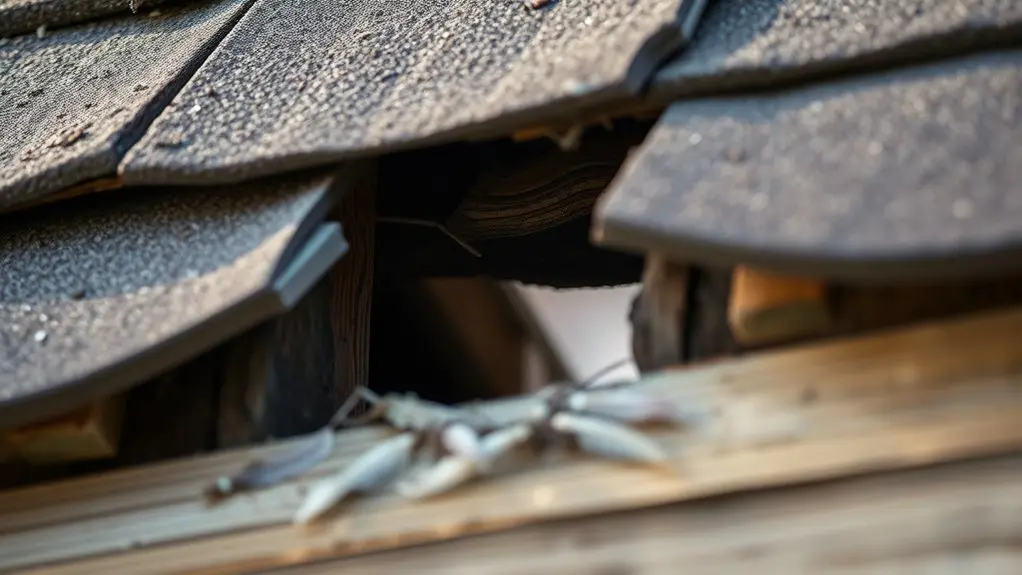
Although attics might seem secure, birds often find their way inside through small gaps and openings you might overlook. Common entry points include damaged or unscreened gable vents, soffit vents, and unsealed attic openings near the roofline or eaves.
Birds can enter attics through unnoticed gaps like damaged vents and unsealed openings near the roofline.
Birds’ feeding habits and migration patterns influence their search for accessible nesting sites, making chimneys, vents, and open attic gaps attractive spots. These areas provide shelter during migration and convenient locations to build nests.
If you don’t seal these vulnerabilities, large colonies can establish themselves, causing damage and noise. Regularly inspect vents and roof edges for cracks or damage and make sure all openings are properly screened and sealed.
Understanding these entry points helps you prevent unwanted avian visitors in your attic. Taking a little time to check can save you a lot of trouble later on.
Signs That Birds Are Living in Your Attic
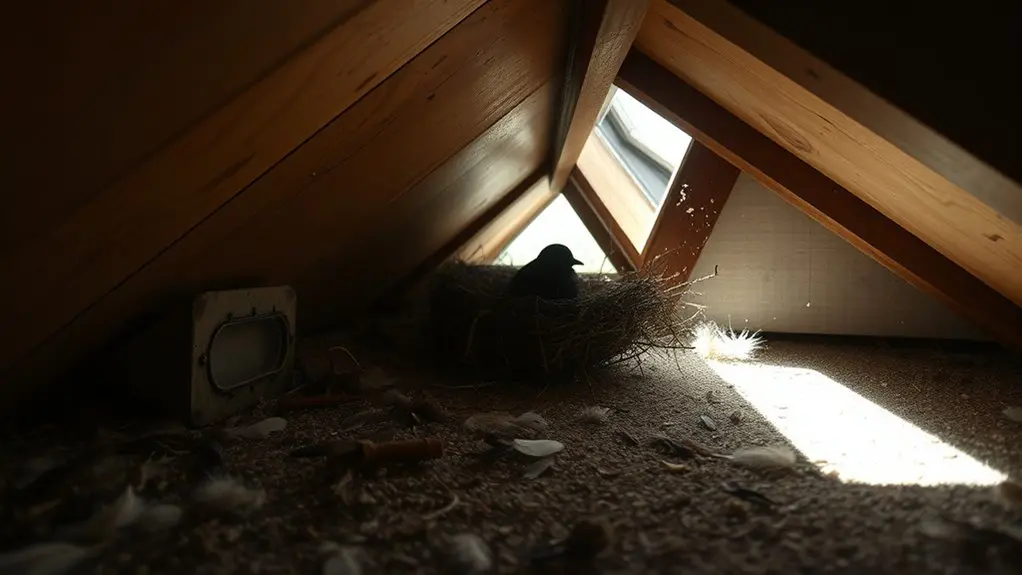
You might hear chirping, fluttering, or scratching sounds in your attic, especially around dawn or dusk. That’s often a good sign that birds are active up there.
Also, keep an eye out for nesting materials like feathers, twigs, or leaves scattered near vents or in the corners.
When you notice these signs, it usually means birds have made your attic their home.
Audible Bird Noises
When bird noises like chirping, tweeting, or screeching echo from your attic, they often signal more than just passing activity. These sounds, especially bird song heard during early morning or late evening, frequently indicate nesting behavior.
You might notice rustling or fluttering near vents or ceiling areas, showing birds are moving inside.
Continuous calls or aggressive squawks near entry points suggest resident birds guarding an active nest.
If you hear persistent bird noises over several days without seeing the source, it’s a strong sign birds have made your attic their home.
Paying attention to these audible cues helps you confirm bird presence early, so you can take appropriate action before damage or infestation worsens.
Visible Nesting Materials
Sounds from your attic often come with physical signs that birds have made themselves at home. One of the clearest indicators is visible nest materials like twigs, feathers, leaves, or pieces of fabric scattered near attic vents or openings. These materials point right to an active bird habitat inside.
You might also notice bird droppings nearby or disorganized debris gathering in attic corners, which usually means there are hidden nests. Keep an eye out for damage to insulation or small gaps in vents and eaves. Birds often create or enlarge openings to build and maintain their nests.
Spotting these signs early helps you confirm their presence and take the right action. Recognizing visible nest materials is key to dealing with bird infestations before they cause serious damage.
Which Birds Are Most Likely to Nest in Attics
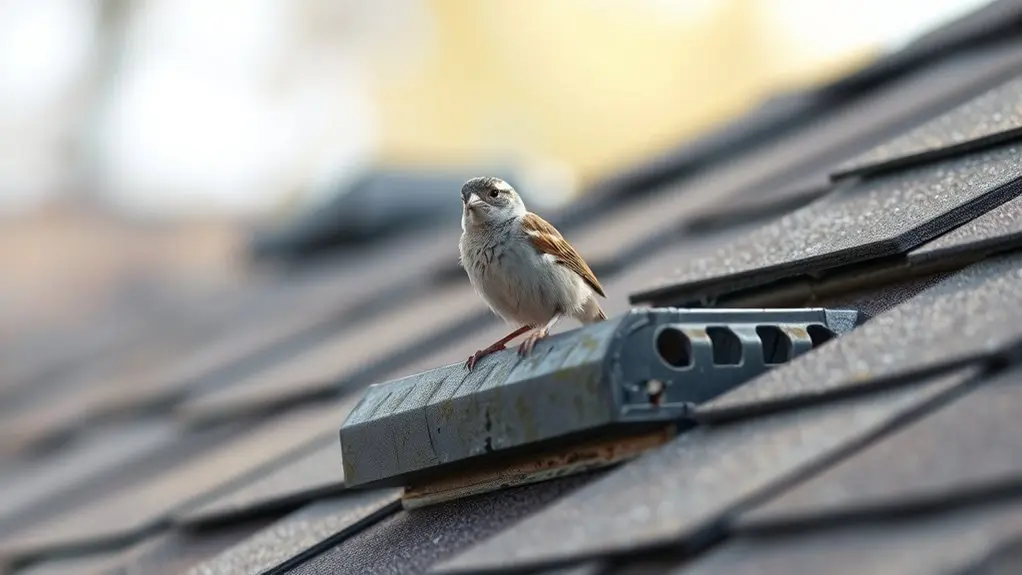
Although many bird species might visit your property, House Sparrows and European Starlings are the most common birds likely to nest in attics across North America. These bird species favor small openings like vents and eaves, taking advantage of your home’s structure to build nests.
Their aggressive nesting habits and adaptability make them frequent attic invaders.
Swallows also nest in attics, particularly under sheltered eaves and soffits, using mud to create enclosed nests.
Occasionally, native birds such as chickadees and woodpeckers may choose attic cavities, especially if damaged wood or tree hollows are nearby.
Understanding these bird species and their nesting habits helps you identify potential attic nesting issues early.
That way, you can take the right steps to protect your home before it becomes a bigger problem.
How Bird Nests Damage Your Home
Because bird nests often accumulate in hidden attic spaces, they pose serious risks to your home’s structure and safety. Different bird species have unique nesting behavior that can weaken wooden beams, corrode metal supports, and pull apart insulation.
Nest materials and droppings block vents, disrupt airflow, and raise humidity, causing mold and rot. Large nests may interfere with electrical wiring and HVAC systems, increasing fire risks and malfunctions. You’ll also face higher energy bills as nests reduce insulation effectiveness.
| Damage Type | Impact on Your Home |
|---|---|
| Structural Weakening | Compromised beams, supports |
| Airflow Blockage | Mold growth, rot |
| Electrical Hazards | Fire risk, system failures |
Health Risks From Attic Birds and Droppings
You should know that bird droppings in your attic can carry some pretty dangerous diseases, like histoplasmosis and Salmonella.
On top of that, feathers and nesting materials often trigger allergies and can make respiratory problems worse, especially if you have asthma.
And it doesn’t stop there—parasites like mites and ticks often hitch a ride on these nests, which raises the risk of infestations and other health issues.
Disease Transmission Risks
When birds take up residence in your attic, their droppings and nesting materials can introduce serious health hazards. Bird migration and nesting behavior bring pathogens like histoplasmosis and Salmonella into your home. The acidic droppings damage building materials, increasing exposure risks.
Feathers and nests often carry mites, ticks, and fleas, which spread disease. These parasites and pathogens can become airborne, posing infection threats.
| Risk Factor | Health Impact |
|---|---|
| Bird droppings | Bacterial and fungal infections |
| Nesting materials | Ectoparasite infestation |
| Airborne pathogens | Respiratory infections |
| Building damage | Increased exposure to microbes |
You should address these risks promptly with professional removal and sanitation. That way, you protect your household and reduce potential health problems.
Allergies and Respiratory Issues
Although attic birds might seem harmless, their droppings and nesting materials pose significant risks to your respiratory health. The fungi and bacteria in their droppings, linked to their bird diet, can cause infections like histoplasmosis when inhaled.
You may also find feathers and nest debris triggering allergies or worsening asthma.
Since birds’ flight patterns bring them into close contact with various environments, they carry diverse allergens into your attic. Inhaling dust from dried droppings and nesting materials irritates your lungs, increasing risks of chronic respiratory issues.
Prolonged exposure only heightens these dangers.
To protect yourself, it’s essential to address bird presence quickly and safely. This helps minimize your contact with airborne contaminants in the attic environment.
Parasites and Infestation Threats
Because birds bring more than just droppings into your attic, understanding the parasite and infestation risks they carry is essential for your health. During bird migration, birds often seek shelter in your attic, bringing nesting materials that harbor parasites like mites, ticks, and fleas.
These parasites can transmit diseases such as histoplasmosis, salmonella, and encephalitis. Their nesting behaviors also increase the risk of secondary pests like carpet beetles, which can make infestations worse. Here’s what you need to watch for:
- Bacteria and fungi in droppings that threaten your health.
- Structural damage from acidic droppings, especially from starlings and sparrows.
- Allergens from feathers and nesting debris that can make respiratory issues worse.
You should act promptly to remove nests and sanitize affected areas to protect your home and health. It’s better to handle this sooner rather than later!
Fire and Electrical Risks From Attic Birds
If birds choose your attic as a nesting site, you face serious fire and electrical hazards. Their nesting behavior during bird migration often leads them to build nests near wiring. Dry materials can catch fire when close to heat sources, and birds pecking at wires may damage insulation, causing sparks or shorts.
Blocked vents from nesting debris can overheat HVAC systems, increasing fire risks. It’s important to keep an eye out for signs of birds in your attic to avoid these dangers.
| Risk Factor | Explanation |
|---|---|
| Nesting Near Wiring | Sparks and short circuits |
| Dry Nest Materials | Highly flammable near heat sources |
| Wire Damage | Insulation damage causes electrical faults |
| Blocked Vents | Overheating HVAC systems poses fire hazard |
Stay vigilant to prevent costly and dangerous attic fires caused by nesting birds. Taking quick action can save your home and give you peace of mind.
How Bird Nests Attract Other Pests
When bird nests take up residence in your attic, they don’t just bring birds, they invite a host of other pests. Different bird species have varying nesting habits, and these habits create ideal conditions for pests to thrive.
You should be aware of these three main ways bird nests attract pests: Parasites like mites, fleas, and ticks latch onto nesting materials, potentially spreading throughout your home. Organic nesting materials attract insects such as beetles and ants by providing a food source. Rodents are drawn to the debris and food remnants left behind, leading to infestations that worsen structural damage.
Understanding these risks helps you recognize that bird nests can trigger a chain reaction, endangering your attic’s integrity and your household’s health. It’s a good idea to keep an eye out and take action if you notice any signs of nesting in your home.
How to Remove Birds From Your Attic
Although removing birds from your attic requires patience, you can do it humanely by waiting until the birds have fledged, usually about 21 days, before sealing entry points.
First, identify the bird species inside by observing feather patterns. This helps determine the best removal method.
Use exclusion devices like one-way doors that let birds exit but block re-entry.
After the birds leave, promptly remove all nesting materials and droppings. This eliminates health risks and discourages future nesting.
If you’re unsure about handling this yourself, professional bird removal services use specialized traps and deterrents tailored to different bird species.
Acting carefully and methodically ensures the birds’ safety while effectively clearing your attic.
Then, you’ll be ready for the next step: preventing their return.
How to Prevent Birds From Returning to Your Attic
Once you’ve safely removed the birds and cleaned your attic, the next step is to guarantee they don’t find their way back. Different bird species have unique nesting behaviors, so understanding this helps you target prevention effectively.
Here are three essential steps:
Seal all potential entry points like vents, gaps, and cracks using durable materials such as metal flashing or caulk. Install vent covers or bird-proof caps on chimneys and openings to block common nesting sites.
Regularly inspect your attic and home’s exterior, especially before nesting season, to identify and repair any new damage.
Also, trim trees and shrubs near your home to reduce natural perches. Using humane exclusion devices can help birds exit without returning.
Taking these steps will make sure your attic stays bird-free.
Frequently Asked Questions
Can Birds Cause Structural Damage Beyond Nesting Materials?
Yes, birds can cause structural damage beyond nesting behavior. Their droppings are corrosive, damaging wood, metal, and electrical components.
This, combined with blocked vents and repeated entry, weakens your attic’s integrity over time.
Are There Humane Traps for Capturing Attic Birds?
Humane trapping acts like a gentle handshake, letting you safely capture attic birds using live cage traps with one-way doors. You’ll want to monitor and practice bird relocation carefully to keep both birds and your home safe.
It’s really about being kind and careful. Checking the traps often helps make sure the birds aren’t stressed. And when you move them, pick a spot where they’ll be safe and have plenty of food.
How Long Can Birds Stay in an Attic Without Leaving?
Birds can stay in your attic for several weeks, often until their chicks fledge. The timing of bird migration plays a big role in how long they stick around.
If they stay too long, they might cause damage to your attic insulation. So, it’s a good idea to seal any entry points quickly to stop them from nesting inside.
That way, you can avoid bigger problems down the road.
Do Birds in Attics Affect Home Insurance Policies?
Like a ticking clock, bird habitats and nesting materials in your attic can affect insurance policies. If you don’t act quickly to remove them and seal entry points, your coverage might get denied or premiums may rise.
It’s important to stay on top of this issue. Otherwise, you could face unexpected costs or trouble with your insurer. So, keep an eye out and take action as soon as you notice any signs of birds in your attic.
Can Bird Noise in Attics Disturb Neighbors?
Yes, bird noise in attics can disturb neighbors, especially during bird migration when avian behavior intensifies. You’ll hear chirping and wing flapping, which carry through walls. This can cause noise complaints and disrupt neighborhood peace.
It’s pretty common for people to notice these sounds more at certain times of the year. So, if you’re hearing a lot of bird activity in your attic, it might be bothering those around you without you even realizing it.
Conclusion
Think of your attic as a fortress. Once birds invade, they can turn it into a fragile nest of risks. You don’t want your home’s sanctuary compromised by hidden damage, health hazards, or fire threats.
Taking swift action to remove birds and seal entry points protects more than just your attic. It safeguards your peace of mind. Stay vigilant and proactive. Your home deserves a secure, bird-free refuge where safety and comfort always soar.