
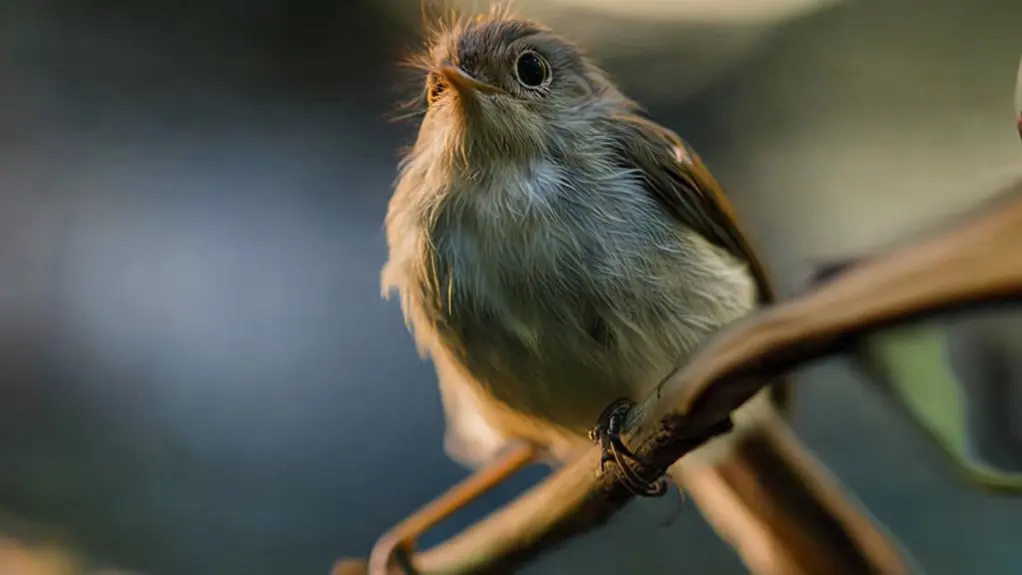
Yes, your bird can experience anxiety, showing behaviors like biting, screaming, feather plucking, or sudden personality changes. Loud noises, routine shifts, and environmental stressors often trigger this anxiety, affecting their health and mood.
You can help by creating a calm, consistent environment with enrichment and gentle care. Knowing the signs and how to manage them is important for your bird’s well-being. Keep exploring to better support your feathered friend’s emotional health.
What Does Anxiety Look Like in Birds?
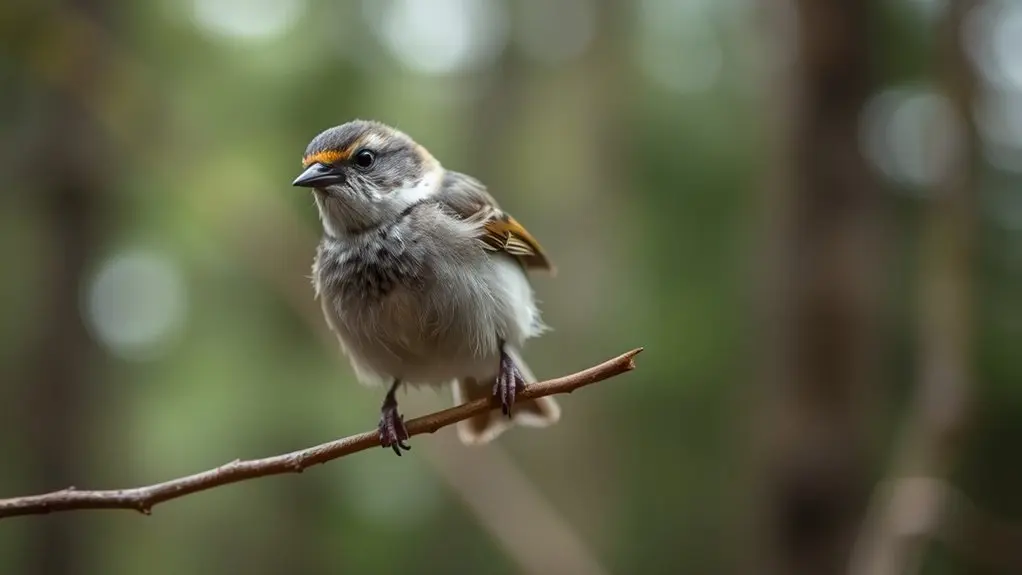
When your bird feels anxious, you might notice behaviors like biting, lunging, or increased screaming, especially when faced with stress. You may also see decreased vocalization or feather plucking, which signals distress or boredom.
Pay attention to pacing, toe tapping, or head swinging. These repetitive actions often indicate anxiety.
Physical signs include wide eyes, tightly held feathers, or an elongated neck.
Changes in feather color or condition might occur due to over-preening or plucking tied to anxiety. Beak shape usually remains constant, but increased biting can make you focus on it more.
A decreased appetite leading to weight loss is another concern.
Recognizing these signs helps you respond promptly. That way, you can ensure your bird’s well-being and comfort.
Common Causes of Bird Anxiety in Pet Birds
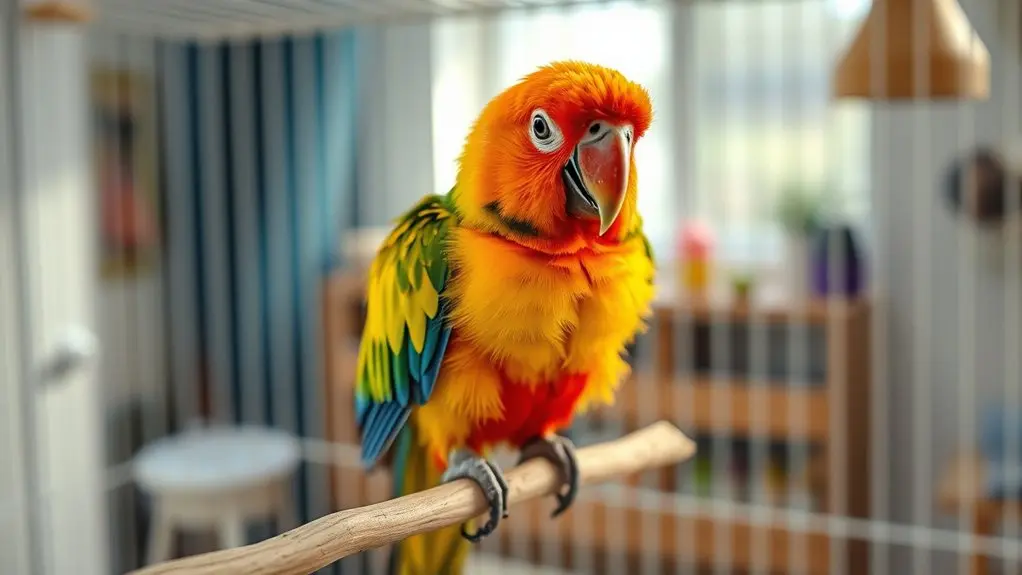
You’ll notice that things like loud noises or moving their cage can really make your bird feel uneasy. It’s not just that, though—changes in their daily routine and how they interact with people or other birds also play a big part in causing anxiety.
When you understand these triggers, it becomes easier to create a calmer, more secure space for your feathered friend.
Environmental Stressors
Although pet birds often adapt well to their environments, certain stressors can considerably increase their anxiety levels. Loud noises, sudden cage moves, or bright flashing lights can trigger behaviors like feather plucking and vocalization changes in your bird. Being aware of these stressors helps you create a calmer space for your feathered friend.
| Environmental Stressor | Effect on Bird Behavior |
|---|---|
| Loud noises (construction, storms) | Increased vocalization, restlessness |
| Cage relocation | Heightened fear, feather plucking |
| Sudden new objects | Anxiety, hiding or aggression |
| Drafts or temperature shifts | Stress, changes in vocal patterns |
Recognizing and minimizing these factors will ease your pet’s anxiety and improve their well-being. It’s all about making your bird feel safe and comfortable in their home.
Social And Routine Changes
Since pet birds thrive on predictability, sudden changes in their daily routines or social environment can quickly raise their anxiety levels. Altered feeding times, out-of-cage schedules, or moving the cage can disrupt their sense of security. This often causes nervousness and changes in their vocalizations.
Introducing new pets or family members can trigger social stress, which may lead to behavioral shifts like feather plucking.
Even household renovations or loud noises can startle your bird and make anxiety worse.
To help, maintain consistent routines and introduce changes gradually. This approach promotes safety and reduces stress, which in turn minimizes anxiety-related behaviors.
Environmental Triggers of Bird Anxiety
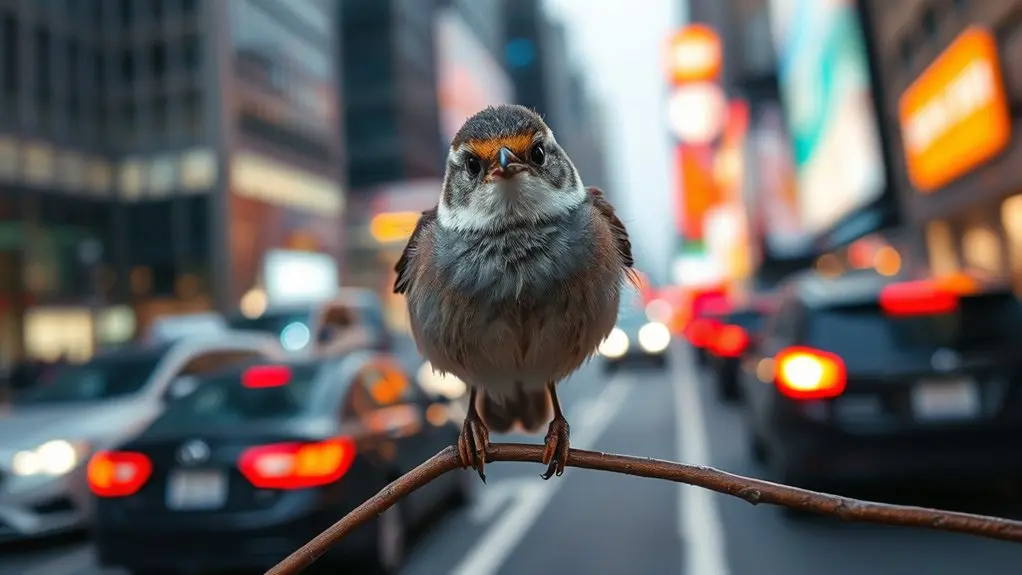
When your bird encounters loud noises, sudden movements, or unfamiliar sounds like construction, it can trigger significant anxiety. Placing their cage near windows or busy areas exposes them to outside wildlife and moving shadows, which can increase stress. You might notice changes in feather grooming or shifts in vocalization patterns, signaling discomfort.
Introducing new furniture or altering household routines disrupts their sense of security, often causing nervousness. Bright flashing lights, unfamiliar fabrics, drafts, or noisy appliances also act as environmental stressors. To help your bird feel safe, minimize exposure to these triggers where possible and maintain a calm, stable environment.
Recognizing these environmental factors is key to supporting your bird’s emotional well-being and preventing anxiety before it escalates. It’s all about creating a peaceful space where your feathered friend can feel comfortable and secure.
Just a little awareness goes a long way in keeping your bird happy and stress-free.
How Anxiety Changes Your Bird’s Behavior and Health
If your bird starts showing sudden personality changes, increased screaming, or unusual tiredness, these could be signs that anxiety is affecting its behavior and health. Anxiety often disrupts your bird’s vocal patterns, causing excessive noise or silence, reflecting emotional distress.
You might notice feather plucking or damage, directly harming feather health and indicating chronic stress. These behaviors don’t just affect appearance. They can lead to weight loss and weaken your bird’s immune system, making it more vulnerable to illness.
Even after removing the initial stressor, anxious behaviors may persist, impacting your bird’s overall well-being. Recognizing these signs helps you respond with care. This way, you can support your bird through anxious periods and protect both its mental and physical health.
How to Tell If Your Bird Has Anxiety or Stress
Recognizing anxiety in your bird starts with observing its behavior closely. Notice if your bird changes its feather grooming habits, like excessive plucking or picking, which could signal stress. Pay attention to sleep patterns; anxious birds may sleep less or at irregular times.
Watch for physical signs such as wide eyes, an elongated neck, or head twisting. Behavioral changes like biting, lunging, or sudden screaming also indicate anxiety. A drop in vocalization, appetite, or activity level can further confirm your bird’s distress.
If your bird holds feathers tightly or shows persistent self-mutilation, it’s likely experiencing chronic stress and needs veterinary care.
Environmental Changes to Reduce Bird Anxiety
Adjusting your bird’s environment plays an essential role in easing its anxiety. You can help your feathered friend feel safer and more relaxed through thoughtful cage customization and birdproofing hazards in their space. Consider these tips:
Move the cage to a quiet, interior spot away from windows, doors, and heavy household traffic. Cover part of the cage with a light cloth to reduce visual stimuli and create security. Place the cage against a solid wall to avoid startling flashes of light or movement.
Minimize loud noises and sudden activity near the cage to lower stress triggers.
Implement these changes gradually, so your bird gets used to them without feeling overwhelmed. This careful approach helps reduce anxiety and promotes a calmer environment.
How Enrichment Helps Calm Anxious Birds
When you introduce enrichment activities into your bird’s routine, you provide essential mental stimulation that can considerably reduce anxiety. Offering a variety of toys and foraging opportunities encourages natural behaviors, which helps your bird stay mentally engaged.
Introducing enrichment activities offers vital mental stimulation that helps reduce anxiety and keeps your bird engaged.
Puzzle feeders that incorporate elements of the bird diet give your pet a rewarding challenge, while chewing toys satisfy innate needs and promote calmness. Be sure your bird’s cage size allows space for these enrichment items without overcrowding.
Regularly rotating toys prevents boredom, maintaining emotional balance. You can also add environmental enrichment like soft music or safe outdoor time to soothe your bird further.
These activities build confidence and reduce stress, supporting your bird’s overall well-being and helping it feel secure in its environment. It’s all about keeping your feathered friend happy and relaxed!
How to Help Your Bird Recover From Anxiety
Although anxiety can be challenging for both you and your bird, establishing a predictable daily routine helps create a sense of security that supports recovery. You’ll want to focus on diet planning and feather grooming as part of overall care.
Here’s how to help your bird recover from anxiety:
- Maintain consistent feeding times and lighting to provide stability.
- Use gentle feather grooming to comfort your bird and build trust.
- Introduce new experiences gradually with positive reinforcement to avoid overwhelm.
- Create a calm environment with soft music, quieter cage placement, and enriching toys to redirect nervous energy.
When to Get Help for Your Bird’s Anxiety
If your bird suddenly becomes aggressive, starts feather plucking, or shows signs like weight loss or trouble breathing, it’s important to get veterinary care right away. These changes can be serious and shouldn’t be ignored.
Sometimes, even after you make changes to your bird’s environment, the stress behaviors don’t get better. When that happens, it’s definitely time to talk to an avian vet.
Catching these warning signs early can really help keep your bird healthy and happy.
Signs Requiring Veterinary Care
Because your bird can’t tell you how it feels, recognizing signs that call for veterinary care is essential to managing its anxiety effectively.
Some behaviors and symptoms indicate that stress might’ve escalated into a serious health concern requiring professional help. Watch closely for:
- Feather plucking or self-mutilation, which signals severe anxiety or medical issues
- Unusual vocalizations like intense screaming or persistent aggression
- Respiratory distress signs such as wheezing, open-mouth breathing, or tail bobbing
- Physical changes including weight loss, skin infections, or abnormal droppings
If you notice any of these, don’t delay in consulting an avian veterinarian. Early intervention can prevent further harm and improve your bird’s quality of life.
Your attentive care makes all the difference.
Behavioral Warning Signals
When your bird starts showing sudden changes in behavior like increased screaming, biting, or repetitive movements, these are clear warning signals of anxiety that shouldn’t be overlooked.
Look out for feather plucking or self-mutilation, as these indicate significant stress.
Pacing behaviors, toe tapping, or head swinging often signal boredom or anxiety, serving as self-stimulation attempts.
You should also notice if your bird’s vocalization decreases, appetite drops, or energy wanes. These subtle signs might point to anxiety or underlying health issues.
If you observe physical symptoms like weight loss, feather damage, or unusual tiredness alongside behavioral changes, seek immediate veterinary care.
Addressing these warning signs early helps prevent worsening anxiety and ensures your bird’s well-being and comfort.
How to Prevent Bird Anxiety With Routine
Establishing a consistent daily routine for your bird creates a stable environment that considerably reduces anxiety. You can help your feathered friend feel secure by maintaining regular feeding times, incorporating diet modifications suited to their needs, and ensuring consistent out-of-cage time.
Gradual introductions of new cage accessories and environmental changes prevent overwhelming your bird.
Use predictable cues and rituals to reinforce stability. Here’s how to implement a routine effectively:
- Keep feeding, playtime, and bedtime consistent.
- Introduce diet modifications slowly to avoid stress.
- Add or change cage accessories gradually.
- Maintain steady household noise and activities.
Frequently Asked Questions
Can Certain Bird Species Be More Prone to Anxiety?
Yes, certain bird species have higher anxiety susceptibility.
If you care for intelligent, social birds like African greys or cockatoos, you’ll notice they’re more prone to stress. This is especially true without proper interaction and environmental enrichment.
These birds really thrive on attention and stimulation, so it’s important to keep that in mind if you want them to feel secure and happy.
Does Diet Affect a Bird’s Anxiety Levels?
Long before smartphones, you’d know that nutritional deficiencies can spike your bird’s anxiety.
You should use dietary supplements wisely, making sure your feathered friend gets a balanced diet. This helps keep them calm, healthy, and emotionally stable every day.
Can Anxiety in Birds Affect Their Lifespan?
Yes, anxiety can shorten your bird’s lifespan by disrupting feather grooming and altering flight behavior. These stress signs hurt their health.
But with your care, you can improve their well-being and longevity effectively. It’s all about paying attention and making small changes to help them feel safe and calm.
Are There Medications Safe for Treating Bird Anxiety?
Yes, you can use bird behavioral medications safely for anxiety management, but only under an avian vet’s guidance. They’ll guarantee the right dosage and combine treatment with environmental changes to support your bird’s wellbeing effectively.
It’s really important to follow their advice closely. That way, you make sure your feathered friend stays happy and healthy while managing anxiety.
How Does Bird Anxiety Impact Their Social Interactions?
Birds with anxiety show that “actions speak louder than words” through altered vocalization patterns and disrupted feather grooming. You’ll notice they withdraw socially, making bonding tough. Sometimes, this also causes aggressive or excessive screams that strain relationships.
It’s like they’re trying to tell us something without using words, but it’s not always easy to understand. When they’re anxious, their behavior changes in ways that can make social interactions tricky. So, patience and understanding go a long way with these feathered friends.
Conclusion
Imagine your bird perched calmly, feathers smooth and eyes bright, free from the restless flutter anxiety brings. By understanding the signs and causes of bird anxiety, you can create a nurturing environment filled with enriching activities and consistent routines.
With your care, patience, and timely support, you’ll help your feathered friend regain confidence and joy. Remember, your attentive presence is the safest haven your bird needs to thrive and feel secure.